REVIEW · VENICE
Venice Walking Tour with Audioguide on Your Smartphone
Book on Viator →Operated by TouringBee · Bookable on Viator
Venice, but you control the pace. This is a self-guided walk that uses a smartphone audio guide plus an offline route map, so you can explore iconic sites and smaller corners without waiting for a group. You’re stitching together your own Venice day, usually anchored around San Marco and Rialto.
What I like most is the stop-and-restart feel of it. You can pause, come back later, and continue when your legs and attention span cooperate. I also love that the audio covers the big names (Doge’s Palace, St Mark’s Basilica, Rialto) and then nudges you toward the stuff people miss, like Rialto market energy and the quieter churches.
One thing to keep in mind: this is GPS-and-app dependent. If your phone’s geolocation is slow, or you’re not watching the map closely, you can lose the exact point markers and end up wandering.
In This Review
- Key things to know before you walk
- A self-guided Venice route that fits real life
- How the smartphone audio guide actually works in Venice
- Stop-by-stop: the San Marco power block (and why it matters)
- Café Florian and the “official Venice” texture
- Torre dell’Orologio: a time-and-sight stop
- A rare detour: Casinò di Venezia
- Crossing to Rialto: Bridge of Rialto and the canal pulse
- Campo San Giacomo, Il Gobbo, and Rialto Market: local flavor
- Ca’ d’Oro and San Cassiano: Venice beyond the postcard
- Ponte delle Tette and Basilica dei Frari: the darker, the artistic
- Timing, pacing, and what 2 hours can really mean
- Price and value: what $8.42 gets you (and what it doesn’t)
- Where this works best: who should book it
- Final verdict: should you book this Venice smartphone audio tour?
- FAQ
- How long is the Venice walking tour with the smartphone audio guide?
- What’s included in the price?
- Is there a human guide with this experience?
- Do I need headphones?
- Do I need internet during the walk?
- Are entrance tickets included for churches and monuments?
- Where does the tour start and where does it end?
- Can I cancel for a refund?
Key things to know before you walk
- Self-guided with 25 audio recordings: built for learning while you stroll, not for a fast checklist.
- Offline map + illustrated landmark ID: helpful when Venice streets twist and signage is minimal.
- You bring your own headphones: no earphones means no audio.
- San Marco to Rialto is the spine: most of the route is concentrated around the two easiest-to-navigate Venice zones.
- A mix of power, art, and local life: Gothic palaces, Byzantine mosaics, and Rialto’s market buzz all show up.
- Viapoint flexibility: the app lets you stop and restart so you can pace it across a few days.
A self-guided Venice route that fits real life
This tour is designed for the kind of Venice day that doesn’t run on rails. Instead of marching with a group, you follow the app’s map and audio prompts, then linger when something catches your eye—whether that’s stonework on a bridge or the view from a bell tower.
The best value part isn’t just the low price. It’s that you’re paying for a long, structured “what am I looking at?” experience, with 1 year access to the audio in your chosen language. That matters in Venice, where you can easily spend two hours and still feel like you only saw surfaces.
You can also read our reviews of more walking tours in Venice


How the smartphone audio guide actually works in Venice
The experience is delivered through a mobile app for iOS and Android. You download the tour, activate your purchase in the app, and follow the route on the mobile map, using the audio recordings that play as you reach each stop.
A few practical notes that make a big difference:
- Bring your own headphones (not included). Venice is loud in the best way, but you still need audio clarity.
- Use the offline map when you can. Your signal may vary along canals and between buildings.
- Expect the GPS to sometimes lag. If the location marker seems off, don’t panic—check the nearest landmark in the illustration and realign yourself.
- The audio guide is available at checkout at approximate date/time, but it’s usable during your access window. In plain terms: you’re not locked into a strict guided-tour start time.
Also, the meeting point is given as Calle Seconda de la Fava, 4196, 30122 Venezia VE, and the tour ends back there. Even though this is self-guided, I’d still treat that address as your anchor for getting oriented, not as something you must “reach correctly” to make the audio work.
Stop-by-stop: the San Marco power block (and why it matters)
The route starts with one of Venice’s most poetic links between privilege and punishment: Ponte dei Sospiri (Bridge of Sighs). You’ll stand in the right place to understand the bridge’s mood—connecting the Doge’s Palace to the New Prison. The audio frames the legend of prisoners’ sighs, which is exactly the kind of story that makes stone feel alive.
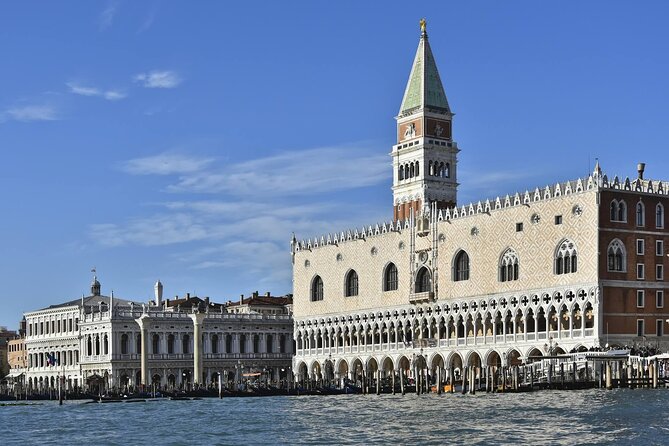
Next comes Palazzo Ducale (Doge’s Palace). This isn’t just “a palace.” It’s a Gothic architecture showpiece tied to the political engine of the Venetian Republic. The stop is built around what you can appreciate visually: the opulent chambers, famous artists such as Tintoretto and Veronese, and the iconic Bridge of Sighs crossing again from the palace side.
Then you move into height and sightlines with Campanile di San Marco. The bell tower rises in Piazza San Marco and rewards you for the effort with panoramic views of the city and lagoon. The narration highlights details like the bronze Moors striking the hours—small visual facts that make it easier to spot the right things when you’re up there.
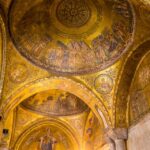
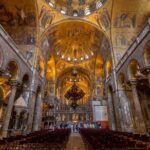
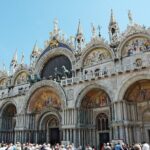
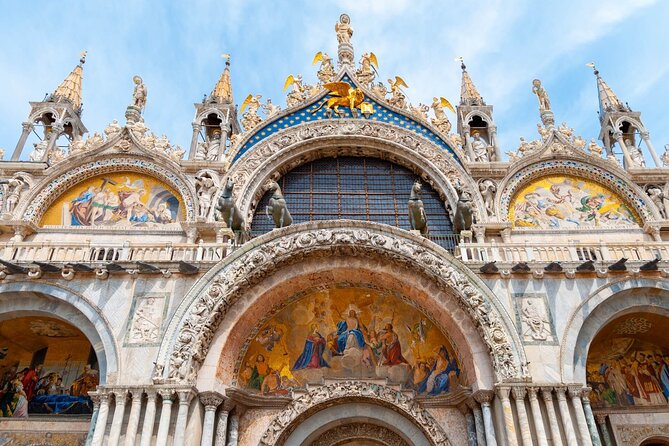
After that, you hit Basilica di San Marco—Venice’s Byzantine masterpiece in a golden-mosaic package. The audio focuses on the big identifiers: golden mosaics, the intricate marble façade, and the famous horses of St. Mark. If you’ve ever felt overwhelmed by St Mark’s, this kind of structured approach helps you notice what matters first: the symbolism, the craftsmanship, and the sheer confidence of the building.
Café Florian and the “official Venice” texture
From churches and state power you step into a more human rhythm with Caffè Florian in Piazza San Marco. The audio gives the real hook: since 1720, it’s been a meeting place for big names like Casanova. You’re not required to spend a fortune here—this is mainly about situating the square historically and understanding why cafés became social rooms in Venice.
Then walk the architectural arcades with Procuratie Vecchie (and the ensemble of Procuratie buildings around Piazza San Marco). This stop helps you read the square as more than scenery. You see it as a former governmental and commercial zone, now repurposed for modern life (cafés and shops), which is exactly how Venice survives: change the function, keep the bones.
Torre dell’Orologio: a time-and-sight stop
Torre dell’Orologio (the Clock Tower) is one of those places where people glance and move on. This audio point pushes you to notice the Renaissance design and the two bronze Moors striking the hours.
It also sets up a useful idea for planning your day: Venice is a maze, but the landmarks with clear visual “signature moments” help you navigate. The clock tower is one of those signatures—once you register it, you feel less lost in the surrounding streets.
You can also read our reviews of more tours and experiences in Venice






A rare detour: Casinò di Venezia
Most walking routes keep you on obvious museum and church tracks. This one includes Casinò di Venezia, housed in Palazzo Vendramin-Calergi. The audio frames it as the world’s oldest casino, and the stop is about the vibe as much as the facts: Baroque opulence, Grand Canal setting, and that small thrill of doing something a little glamorous in a city built for spectacle.
Because transportation and entrance fees aren’t included, I treat this stop as a “view and read the place” moment unless you choose to gamble or enter. Even that depends on opening hours, which aren’t specified here—so if you want the inside, check locally when you’re there.
Crossing to Rialto: Bridge of Rialto and the canal pulse
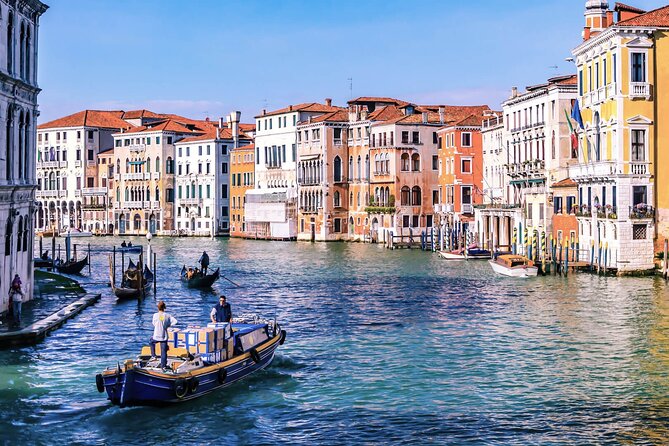
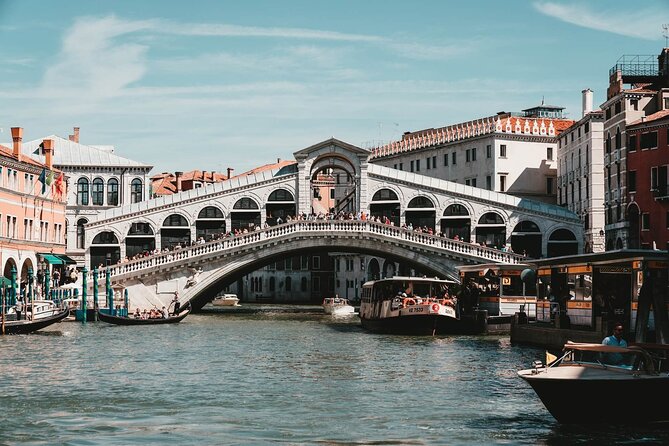
The route then reaches Ponte di Rialto. This is Venice’s commerce bridge: built for movement, crowded with atmosphere, and famous for the views from its arched walkways. The audio encourages you to absorb two things at once—how it functions as a market artery and what the Grand Canal looks like from the span.
Next, you get a Canal Grande moment. The audio guide suggests experiencing the canal from the water—typically via a vaporetto—so you can see palaces lining the banks in a way walking can’t replicate. Since transportation isn’t included, treat this as optional, but it’s a smart idea if you want the route to feel like Venice rather than just a sidewalk tour.
Campo San Giacomo, Il Gobbo, and Rialto Market: local flavor
Now the route shifts toward neighborhood energy with Campo San Giacomo di Rialto. This stop isn’t meant to be fancy. It’s meant to show you the daily Venice pattern: market activity, cafés, a historic church, and a clock tower in the background.
Then you get a quirky detour: Il Gobbo di Rialto (the Hunchback of Rialto). This is a small sculpture near the bridge with legends attached—good luck stories and moneylender lore. The audio makes a nice point here: Venice is full of tiny symbols, and those symbols often teach you more about local imagination than the big monuments do.
After that comes Mercato di Rialto, a sensory stop with fresh produce, seafood, and local specialties. The key value is contrast. You just came from power and sacred architecture, and now you’re back in the practical engine room of the city.
If you like taking photos, this part is also easier. Market colors and close textures give you framing options that aren’t dependent on perfect light over grand canals.
Ca’ d’Oro and San Cassiano: Venice beyond the postcard
From Rialto, the route nudges you toward Ca’ d’Oro (Golden House). This is a Venetian Gothic façade facing the Grand Canal, with an art collection inside (Renaissance treasures). The stop’s value is in learning the exterior identity first—then deciding if you want to pay for interior viewing, since entrance fees aren’t included.
Next is Chiesa di San Cassiano, described as a quieter, less-crowded Baroque church. The audio points you toward what to look for: artistic treasures and specific altarpieces. This stop is for the moment you start thinking, I’ve seen enough major attractions—now I want a calm room to reset.
If you’re doing this route at a fast pace, San Cassiano is a great place to slow down. A church stop can also give your feet a break without turning your day into a long sit-down.
Ponte delle Tette and Basilica dei Frari: the darker, the artistic
The route finishes with two very different vibes.
Ponte delle Tette (Bridge of Breasts) is the history-and-eccentricity stop. The audio explains it was once tied to courtesans and a boundary for a red-light district. Even if you’re not into that type of history, it’s useful because it shows Venice wasn’t only holy and royal. It was also human—messy, regulated, and full of unofficial realities.
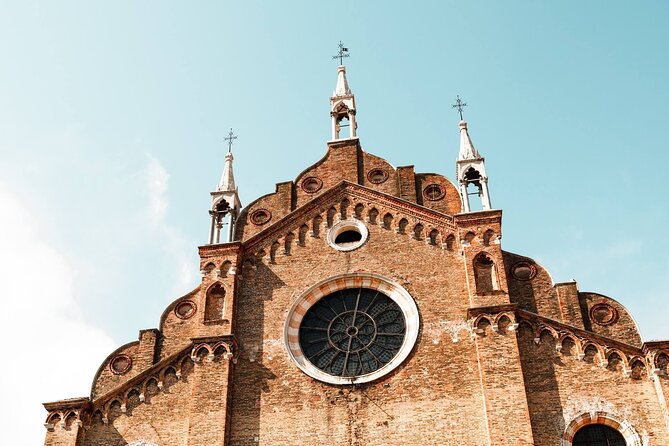
Then the walk wraps with Basilica dei Frari. This Gothic church is framed through art highlights: Titian’s Assumption and Bellini’s Madonna. The audio also mentions the vast interior and the serene cloisters, giving you a final chance to cool down after a long, active day.
Timing, pacing, and what 2 hours can really mean
The tour is listed as about 2 hours, but Venice doesn’t behave like a clock. If you want photos, or if you pause for café/rest moments, plan on it taking longer—especially around San Marco, where everything is close but attention spans get hijacked.
The good news is that the app is built for “do it your way.” You can take breaks and resume later, so you’re not forced into rushing through churches and bridges back-to-back.
Price and value: what $8.42 gets you (and what it doesn’t)
At $8.42 per person, you’re buying structure and audio, not ticketed access. The included items are a big part of the bargain:
- Audio guide app for iPhone and Android
- Offline map with a route
- 25 audio recordings
- Illustrated help to recognize landmarks
- 1 year access
Not included is where you might spend extra if you want to go beyond exterior viewing. Transportation and entrance fees aren’t included. That matters for places where you may want interiors, climbs, or special exhibits—like towers or palace sections—even if the audio points are free to approach.
So the real question is: do you want a “stand here and learn” day or a “stand here and enter” day? If you’re okay with learning from the outside and choosing a couple of paid moments, this tour is excellent value.
Where this works best: who should book it
This is a strong fit if:
- You’re traveling solo and want independence.
- You like learning through short, targeted storytelling.
- You want flexibility for rain, fatigue, and changing plans.
- You’re okay using your phone for navigation and audio.
It’s less ideal if:
- You dislike GPS-based navigation.
- You hate troubleshooting apps or downloading audio.
- You prefer human guidance for ticket strategy and on-the-spot questions.
- You want a fast, tightly guided group pace with zero pauses.
Final verdict: should you book this Venice smartphone audio tour?
I’d book it if you want a smart, low-cost way to understand Venice while you walk, especially between San Marco and Rialto. The mix of big icons (Bridge of Sighs, Doge’s Palace, St Mark’s) plus street-level moments (Rialto market and the quirky sculpture detour) gives you a fuller picture than the usual single-neighborhood stroll.
I would hesitate only if you’re worried about phone navigation or you plan to rely on perfect geolocation. If you go in with a calm attitude—download first, use the offline map, and double-check the landmark illustrations—you’ll get a day that feels planned without feeling controlled.
If you want the best experience, come prepared: headphones, a charged phone, and enough time to stop when the city asks you to.
FAQ
How long is the Venice walking tour with the smartphone audio guide?
It runs for about 2 hours, approximately. You can usually take breaks and restart in the app, so your actual time may vary.
What’s included in the price?
The price includes the audio guide app, an offline map with the route, 25 audio recordings, illustrated landmark help, and 1 year access in the language you choose.
Is there a human guide with this experience?
No. This is a self-guided tour where you follow the route on your mobile app map and listen to the audio recordings.
Do I need headphones?
Yes. Your smartphone can play the audio, but headphones are not included.
Do I need internet during the walk?
The experience provides an offline map, which helps. Your phone’s GPS/geolocation may still vary, but the offline map is meant to make navigation easier.
Are entrance tickets included for churches and monuments?
No. Entrance fees or tickets are not included. The tour focuses on the route and audio, and you may need separate tickets if you want to enter certain places.
Where does the tour start and where does it end?
It starts at Calle Seconda de la Fava, 4196, 30122 Venezia VE, Italy. The activity ends back at the meeting point.
Can I cancel for a refund?
Yes. You can cancel up to 24 hours in advance for a full refund, and cancellations within 24 hours aren’t refunded.