REVIEW · VENICE
Venice Sightseeing Small Group Walking Tour with a Local Guide
Book on Viator →Operated by Raphael Tours & Events · Bookable on Viator
Venice can feel like a maze. This 2-hour walking tour gives you a clear route across the city’s key quarters, with a local guide who explains Venice as a maritime republic. You can go on a morning or afternoon departure, and it runs in a small group capped at 15, or you can choose a private option.
I especially like how the walk mixes headline sights with the kind of context that makes them click. Seeing the route connect Rialto Bridge energy to St. Mark’s Square helps you understand why these places mattered, not just what they look like on a postcard.
The main catch is physical: you’ll be on foot for the full stretch, with bridges and stairs, and there usually isn’t a structured stop to grab coffee. If you need frequent breaks or step-free movement, plan carefully.
In This Review
- Key things I’d circle before you book
- Two hours to get your bearings in Venice, not just photos
- Where the walk starts in Dorsoduro and how it ends at San Marco
- Campo San Pantalon: the first taste of Venice’s street-level logic
- Scuola Grande di San Rocco: why this building matters beyond the name
- Campo Santa Margherita and Frari: Titian’s burial in your line of sight
- Ponte di Rialto and the Rialto Bridge: trade power in stone and footsteps
- Casa di Marco Polo: why this stop feels bigger than a birthplace
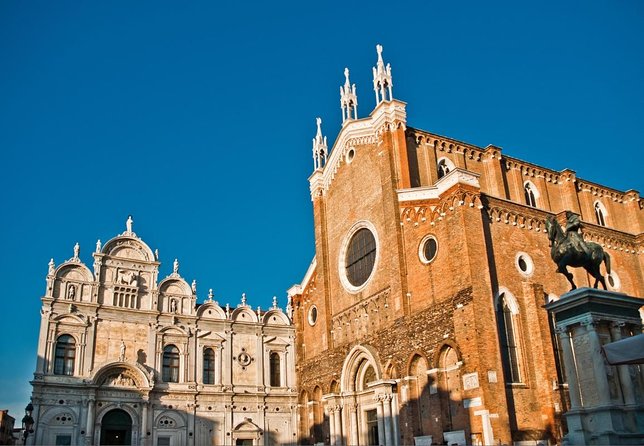
- San Zanipolo (Basilica dei Santi Giovanni e Paolo): where doges rest
- Piazza San Marco finish: turning a guided walk into a smart next step
- What you pay (and what you get) for $48.37
- Pace, stairs, and hearing: how to stay comfortable
- Who this Venice walk suits best (and who may want a different plan)
- Should you book this Venice walking tour?
- FAQ
- How long is the Venice Sightseeing small-group walking tour?
- How many people are in the group?
- What languages is the tour offered in?
- Where does the tour start and where does it end?
- What’s included in the tour price?
- Which major sights does the route include?
- Does this tour include admission tickets to attractions?
- Is the walk manageable if I’m not great with stairs?
- Is there a Venice access fee on certain dates?
- What is the cancellation and weather policy?
Key things I’d circle before you book
- Small group (max 15) keeps the pace human and questions welcome
- Local guide with Venice depth who ties sights to trade, power, and everyday life
- Top landmarks plus smart neighborhoods like Rialto, San Marco, and Cannaregio
- A route that crosses between islands so Venice makes sense as a real city
- Guides like Gianmarco, Valentina, Julia, Flavia, Anna, and Irene get praised for keeping it lively and clear
- Ends in Piazza San Marco, so your afternoon (or evening) starts with direction
Two hours to get your bearings in Venice, not just photos
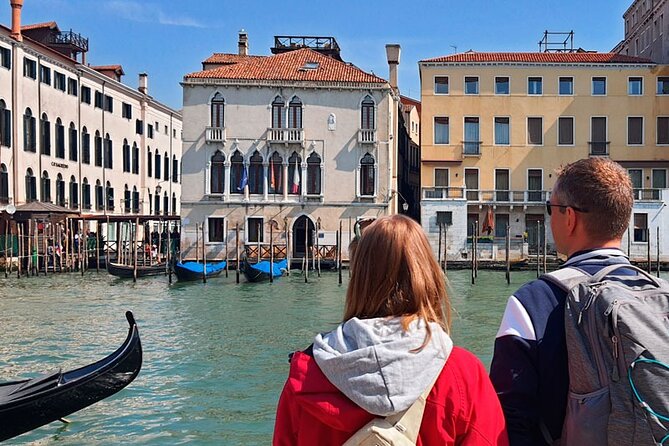
This tour is designed for the first days in Venice. You get an efficient circuit that links major sights and several distinct neighborhoods without you having to navigate canal-by-canal on your own. The format is simple: walk, pause, learn, then walk again.
Pick the morning or the afternoon. Morning often feels easier because the city is calmer, while afternoons can mean more heat and more people around the headline areas. Either way, you’re moving through pedestrian streets and across footbridges that connect Venice’s small islands—so the city stops being an abstract map and starts feeling like a place you can walk.
What makes this tour work well is the local framing. A good guide doesn’t just name buildings. They explain how Venice functioned as a sea-based trading power, and how that shaped everything from where people lived to what got built—and what got buried—over centuries.
You can also read our reviews of more walking tours in Venice


Where the walk starts in Dorsoduro and how it ends at San Marco
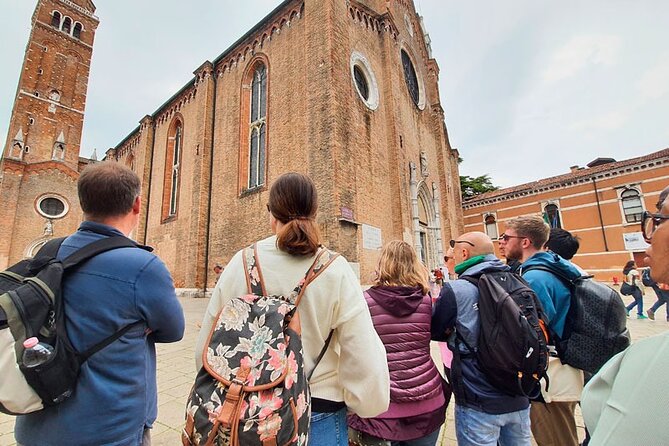
The meeting point is Campiello dei Squelini, in the Sestiere Dorsoduro area (Sestiere Dorsoduro, 2766, 12242 Venezia). The tour ends at Piazza San Marco (St. Mark’s Square, 30124 Venezia).
Dorsoduro to San Marco is a classic “learn-the-city” flow. You start on the side that often feels more grounded and residential, then you gradually work your way toward the most famous public spaces. Ending in the square is practical. Once you’re there, you can stay put for views, wander into smaller streets around it, or use the guide’s free-time suggestions to pick a meal and a next stop.
Do yourself a favor: plan a little buffer to find the meeting spot. One guide praised in the experience gets described as starting from a location that isn’t instantly obvious unless you’re looking for the right corner. Use Google Maps before you go, then check again when you’re nearby.
Campo San Pantalon: the first taste of Venice’s street-level logic
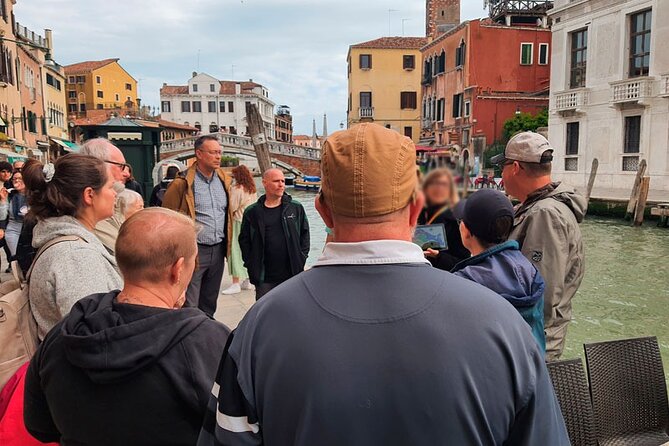
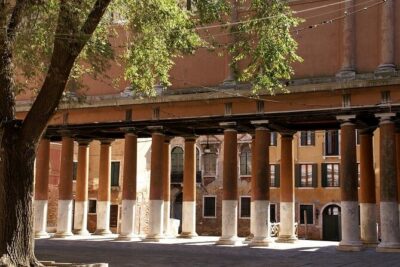
Your first stop is Campo San Pantalon. It’s a good opening move because campo spaces (Venice’s public squares) help you orient fast. From here, you get into the rhythm of the city: short lanes, small turns, and canal moments that look like they were arranged to keep you curious.
This early stage matters because it sets the tour’s tone. Venice looks simple until you try to find your way twice. Starting in this area helps you understand how the city’s grid works in real life—where you can cut across, where you’ll likely need to go up steps, and how “a short walk” can turn into a mini journey.
You’ll also hear the guide connect what you’re seeing to how Venice operated as a maritime republic: who had power, who made money, and why certain neighborhoods rose as trade centers.
Scuola Grande di San Rocco: why this building matters beyond the name
Next up is Scuola Grande di San Rocco. This is one of those Venice sights that people recognize from images, but don’t always understand at street level. A guide’s job here is to give you context that makes the stop feel purposeful instead of random.
You’ll learn how confraternities and civic institutions shaped daily life and public culture. Venice wasn’t only grand palaces and saints—it was also organized community life tied to wealth, charity, and social status. The Scuola helps you see that side.
It’s also a “pause and look” moment. This tour is walking-focused, so you’re not meant to spend hours inside. Instead, you get explanations that help you notice details you might otherwise skip.
Campo Santa Margherita and Frari: Titian’s burial in your line of sight
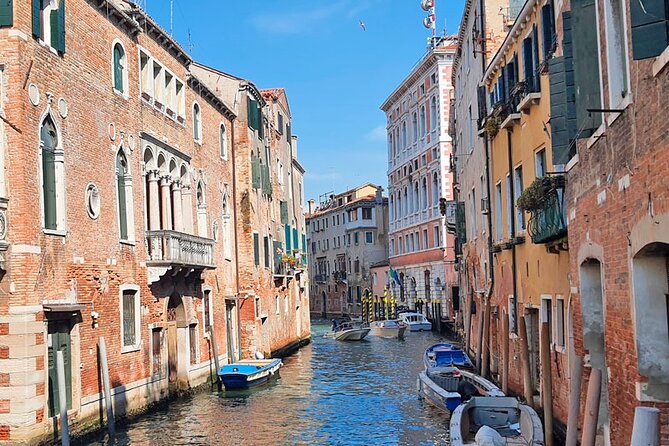
Along the route, you pass Campo Santa Margherita and reach Basilica di Santa Maria Gloriosa dei Frari, where Titian is buried. Even if you’re not planning an interior visit right away, this stop gives you a big anchor point: it ties Venice’s identity to Renaissance art and to the way Venice honored major cultural figures.
Titian’s burial is the kind of fact that makes you slow down and look again. A local guide can also connect why Venice invested in art and symbolism in the first place—so the city’s artistic reputation doesn’t feel like marketing. It feels like a legacy.
Practical note: if you strongly want church interiors, the tour is not built around long indoor time. You’re mostly seeing key sights from outside or at designated stops. Treat this as a smart orientation, then choose later, separate visits for interiors that matter most to you.
You can also read our reviews of more guided tours in Venice


Ponte di Rialto and the Rialto Bridge: trade power in stone and footsteps
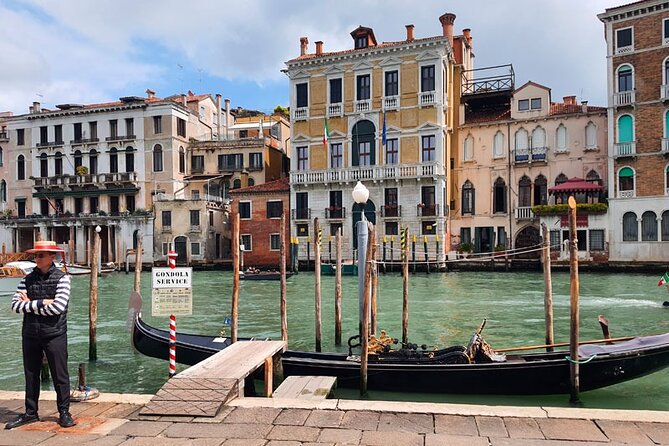
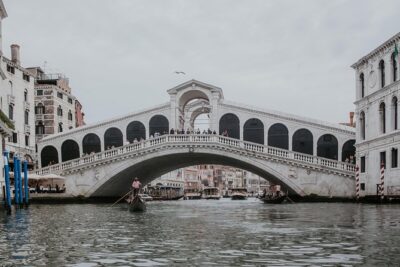
Then comes Ponte di Rialto—the Rialto Bridge area. If you want the postcard Venice moment, this is it. The difference here is that you’re not just standing in the crowd. You’re learning why the Rialto area was the city’s financial and trade center.
This stop helps you understand Venice in its most practical form: money moving, goods arriving by sea, and the city organizing itself around that reality. When you look at the bridge and the nearby streets after hearing that story, the whole setting feels more logical.
Keep expectations realistic. The Rialto area is famous, so it can be busy. Your guide may route you through pedestrian corridors and less congested lanes when possible, but you’re still in one of Venice’s headline zones.
Casa di Marco Polo: why this stop feels bigger than a birthplace
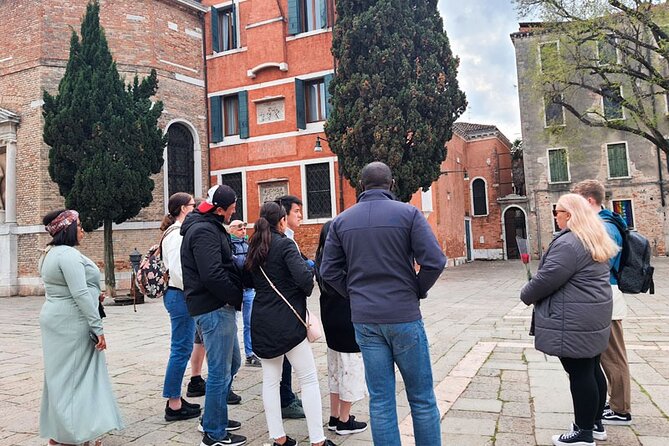
You’ll walk past Marco Polo’s house, tied to his birth. It’s an easy stop to underestimate until you hear the guide explain how Venice’s seafaring identity connected to the wider world.
This is one of the tour’s strengths: it links personal stories to the city’s larger engine. Venice sent and received people, ideas, and goods. Marco Polo is a symbolic figure for that. When the guide frames him in Venice’s trade-and-travel context, you start to see why his story belongs right in the middle of the city’s street network.
This part of the route also threads through neighborhoods you might otherwise skip—like Cannaregio—so you get more than just the official highlights.
San Zanipolo (Basilica dei Santi Giovanni e Paolo): where doges rest
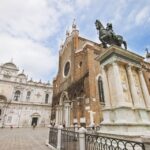
Stop five is Basilica dei Santi Giovanni e Paolo (San Zanipolo). You’re also likely to cross Campo San Bartolomeo before arriving there. This is a powerful contrast within the tour: you go from trade and exploration to civic power and remembrance.
This basilica is known as the resting place of many Venice doges. That fact changes how you look at the church setting. A guide’s explanation can connect burial traditions to legitimacy—why Venice honored leaders in ways that reinforced order and continuity.
It’s a good moment to slow down and absorb the city’s seriousness. Venice can feel like a theater of beauty, but the city also built institutions that managed authority and public life. San Zanipolo points you toward that side.
Piazza San Marco finish: turning a guided walk into a smart next step
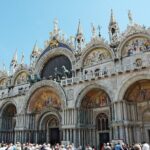
The tour ends at St. Mark’s Square. This is the payoff. You’ve spent the last couple of hours learning how the city is organized, and now you’re dropped at its most iconic public space.
Your guide should also offer recommendations for what to do next—where to eat and how to spend your free time. That’s one of the most practical parts of the experience. Venice can overwhelm you with options, and a good local suggestion can save you from the classic tourist trap pattern: walking a long way, picking a mediocre meal, then realizing you overspent.
After the tour, I’d use the guide’s advice to pick a short plan:
- one easy meal near where you already ended
- one additional sight you can reach without backtracking
- one “wander until you find something good” segment, with a clear end point
What you pay (and what you get) for $48.37
At about $48.37 per person for an approximately 2-hour small-group walk, you’re paying for something more valuable than a list of landmarks: you’re buying a local brain that helps you interpret what you’re seeing.
The tour is limited to 15 people, which matters. With bigger groups, it becomes a lecture you barely hear. Here, the format supports questions and pacing that still feels like a shared walk. If you go private, the tour becomes exclusive to your party, and language options expand for that private option (English, Spanish, and German).
Also, the tour is built around major stops that normally take time to line up yourself. You get multiple districts—Rialto, San Marco, and Cannaregio—plus bridges between islands. That’s real efficiency. Venice is small, but getting anywhere isn’t always quick.
One more point: the tour stops include admission marked as free. That doesn’t mean you’ll necessarily spend time entering every building, but it does suggest you’re not paying separate attraction fees during the walk. For first-time visitors, that keeps costs under control while you learn what you want to return for.
Pace, stairs, and hearing: how to stay comfortable
Venice walking tours succeed or fail on comfort. This one involves plenty of movement, including footbridges and stairs. Some people report the walk includes numerous stair steps, which is normal for Venice. Wear comfortable shoes and accept that you’re going to climb a bit.
It also isn’t a tour with built-in rest stops. One concern raised is that there isn’t a scheduled moment to grab a drink or coffee. In hot weather, it can feel relentless. If you’re visiting in summer heat, plan to carry water and pace yourself.
Audio can also be a factor. A couple of people noted issues hearing the guide through a headset. If that happens, don’t just suffer silently—alert your guide or staff right away so they can help you adjust.
The good news: guides are praised for keeping people in shade on hot days and maintaining a steady, doable pace. That’s the difference between Venice “walking” and Venice “surviving.”
Who this Venice walk suits best (and who may want a different plan)
This tour is ideal if you want:
- an organized overview in a short window
- a local guide to connect sights to how Venice worked
- a route that helps you find your way to major areas like Rialto and St. Mark’s Square
- practical guidance on where to eat after the walk
It also fits solo travelers and couples who want a social element without big-group chaos, thanks to the max-15 size.
I’d be more cautious if you’re traveling with kids. One person specifically said it wasn’t a good choice for children, and another comment points to the experience being straightforward rather than entertainment-heavy. If your group needs a break from history facts every few minutes, you might prefer a shorter, more playful format.
Should you book this Venice walking tour?
I’d book it if you want a fast, guided way to understand Venice’s shape and meaning. The mix of Rialto Bridge, Marco Polo, Titian’s Frari connection, and San Zanipolo’s doge legacy gives you both the famous moments and the context that makes them make sense. Ending in Piazza San Marco is also a practical win.
I wouldn’t book it if your top priority is inside-visit time, long stops for breaks, or a fully step-free experience. This tour is about walking and learning at street level. If you want quiet sitting and lots of interior time, you’ll likely want a different kind of outing.
If you’re on the fence, here’s your decision rule: if you enjoy facts, urban wandering, and building a mental map quickly, this is a strong way to start. If you’d rather slow down with fewer steps and more downtime, consider a gentler alternative.
FAQ
How long is the Venice Sightseeing small-group walking tour?
It runs for about 2 hours.
How many people are in the group?
The maximum group size is 15.
What languages is the tour offered in?
The standard tour is offered in English. The private option can be done in English, Spanish, and German.
Where does the tour start and where does it end?
It starts at Campiello dei Squelini (Sestiere Dorsoduro, 2766) and ends at St. Mark’s Square (Piazza San Marco).
What’s included in the tour price?
You get an English-speaking local guide. A mobile ticket is included. Hotel pickup and drop-off are not included.
Which major sights does the route include?
Key stops and areas include Rialto (Rialto Bridge area), Marco Polo’s house area, San Zanipolo (Basilica dei Santi Giovanni e Paolo), and Piazza San Marco, plus stops such as Campo San Pantalon and Scuola Grande di San Rocco.
Does this tour include admission tickets to attractions?
Admission tickets are listed as free for the stops. The tour is a walking format with stops rather than a long indoor visit plan.
Is the walk manageable if I’m not great with stairs?
There are stairs and footbridges involved, so comfortable shoes help and you should be ready for climbing.
Is there a Venice access fee on certain dates?
On certain dates, people staying outside Venice who plan to visit for the day may need to pay a €5 access fee. Check the city’s official guidance for applicable days and exemptions.
What is the cancellation and weather policy?
You can cancel for a full refund up to 24 hours in advance. The experience requires good weather; if it’s canceled due to poor weather, you’ll be offered a different date or a full refund.