REVIEW · VENICE
Basilica San Marco, Pala D’oro, Loggia Cavalli Priority Entrance
Book on Viator →Operated by Golden Ticket · Bookable on Viator
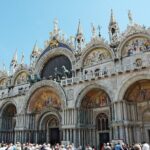
Venice can feel like a choose-your-own-adventure book, and St. Mark’s is the hardest chapter to time. This pass lets you step into St. Mark’s Basilica with fast entry, then keep going to see the Pala d’Oro and the museum highlights without getting stuck at the front door. Two things I especially like are the close-up focus on the gold mosaics route and the way the visit ends with the Horses Loggia view over St. Mark’s Square. The only real drawback: this is a one-shot ticket system, so you should plan to arrive ready and stay in the flow.
The format is built for convenience. You get e-tickets sent online and a 24/7 virtual assistant, so you’re not hunting for a meeting point before you start. One more thing to factor in is the dress code for a holy place: shoulders and knees must be covered.
In This Review
- Key highlights you’ll notice right away
- Entering St. Mark’s Basilica through Porta San Pietro
- The Pala d’Oro: why that gold takes center stage
- Museum time at Loggia dei Cavalli (with the Horses view)
- What you’re really buying: time saved inside a bottleneck
- Practical rhythm: how to make this visit feel un-rushed
- Dress code and on-the-ground tips (so you don’t get turned away)
- Who this small-group pass is best for
- Should you book this Basilica + Pala d’Oro priority entrance?
- FAQ
- What’s the total time for this experience?
- Where does the experience start and end?
- Do I need a meeting point to get in?
- Is the Bell Tower included?
- What parts of the basilica and church are included?
- What dress code do I need for entry?
Key highlights you’ll notice right away
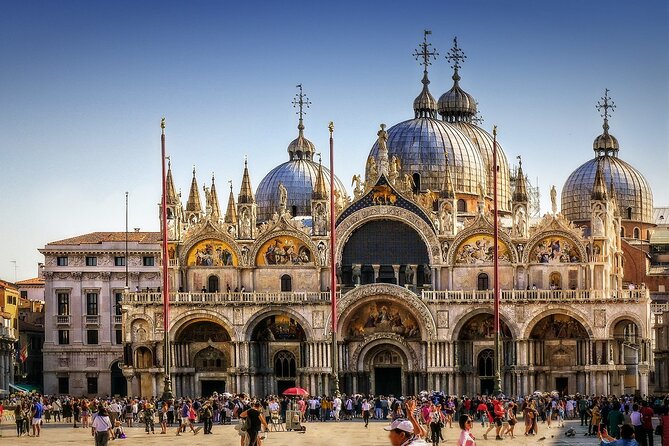
- Porta San Pietro fast-track entry: you start by crossing the threshold at the St. Peter’s Door entrance.
- Dome of Genesis route: you pass under this landmark as you enter the lower part of the basilica.
- Pala d’Oro close viewing: the focus is the world’s only intact example of large Gothic goldsmithing.
- St. Mark’s relic area context: the high altar setting is part of why the gold looks so dramatic.
- Foresti staircase to the museum: you climb to shift from big-picture church views to collectible details.
- Loggia dei Cavalli exit photo moment: you finish with the Horses Loggia view toward the square.
Entering St. Mark’s Basilica through Porta San Pietro
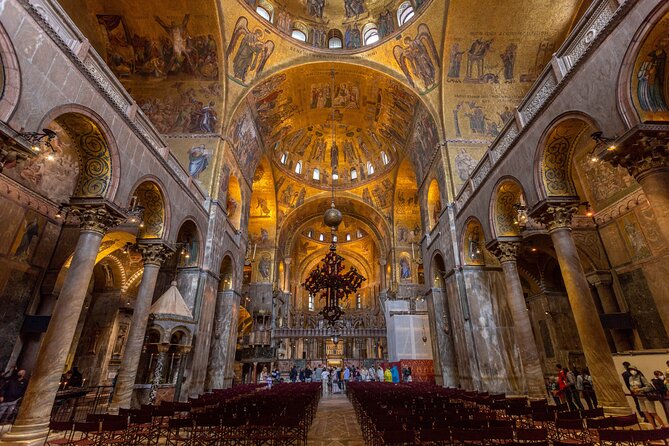
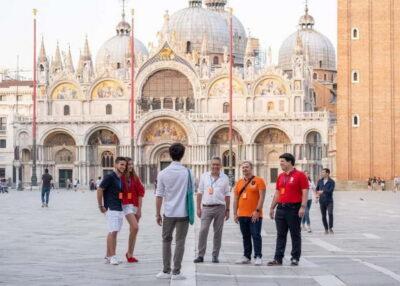
St. Mark’s Basilica is famous for two things: art on an absurd scale, and lines that can stretch longer than your patience. What I like about this visit is that you begin at Porta San Pietro, the St. Peter’s Door, using a skip-the-line entrance instead of joining the general crowd shuffle. That single move helps you actually spend time looking, not just waiting.
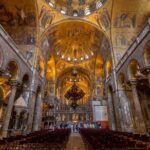
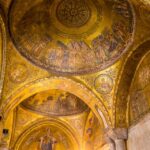
Once inside, you’re routed through the lower part of the basilica under the Dome of Genesis. This matters because St. Mark’s can feel like visual overload. Starting with the lower sections first gives you a steadier rhythm: look at the dome, orient yourself, and then let the golden mosaics pull you forward at your own pace.
You’ll also be following a set route rather than wandering randomly. That’s a plus if you want structure, and a small trade-off if you prefer to roam freely. Still, with this kind of ticket, “efficient” is usually the difference between a memorable visit and a stressed one.
You can also read our reviews of more tours and experiences in Venice.
The Pala d’Oro: why that gold takes center stage
The Pala d’Oro is the star of the show for a reason, and this itinerary treats it like one. After entering the church and getting your first big reveal of the Byzantine-style mosaics, you continue to the high altar area where the remains of St. Mark are located. Then you move behind the high altar to see the Pala d’Oro.
This is described as the world’s only intact example of large Gothic goldsmithing. Translation: you’re not just looking at decoration. You’re seeing an object that’s rare enough to be a once-per-lifetime focal point, especially when you’re standing close enough to really study the craftsmanship.
The time you get here is intentionally focused, about 30 minutes. That’s enough to take it in properly without turning it into a rushed glance. If you love art that rewards close looking—goldwork, religious icons, and layered design—this stop is worth the price by itself.
Museum time at Loggia dei Cavalli (with the Horses view)
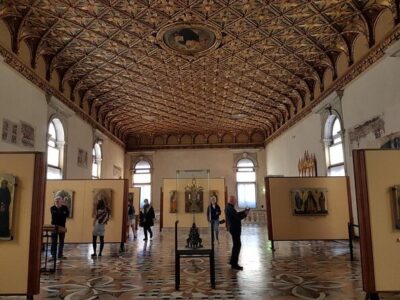
After the basilica sections, the route climbs via the striking Foresti staircase into the museum. This shift is smart. The basilica is about space and surface—scale, light, and mosaics. The museum is where you can slow down and notice materials and designs you might miss while staring up.
In the museum, you’ll have time to admire pieces that range from altar frontals to textiles and rugs. You might also spot details described as Flemish and Medici tapestries, Persian rugs, and the triumphal Quadriga, the four-horse carriage used for chariot racing. Even if you’re not a specialist in these categories, seeing them grouped here helps you understand how Venice collected and displayed art like it was part of everyday power and prestige.
Your visit ends at the Horses Loggia (Loggia Dei Cavalli). That’s where you step back out into a wider view, looking toward St. Mark’s Square. It’s a good finishing trick: you go from close-up objects to the big Venice picture in one smooth transition, so the experience doesn’t leave you feeling flat when you exit.
What you’re really buying: time saved inside a bottleneck
The price ($52.36 per person) makes sense only if you value two things: entry speed and included access. This pass includes admission elements across the route, including fast-track entrance to the Basilica, the Pala d’Oro, and the museum (Loggia Dei Cavalli), plus the listed sights like the Narthex, Dome Of Creation, and Marangona.
In Venice, time is not just time. It’s also stress. When St. Mark’s is crowded, you can lose the best part of the trip to queues and timing uncertainty. Getting priority entry means you spend your Venice minutes on the art, not your Venice minutes walking in circles.
Also, the group size is small—maximum 6 people. Smaller groups tend to move with less friction, so you’re more likely to pause when you see something you want to stare at longer than planned. That matters at St. Mark’s, where you’ll keep spotting new details even when you think you’ve already seen the main scene.
Practical rhythm: how to make this visit feel un-rushed
This tour is listed at about 1 to 2 hours, and the stops are arranged with roughly 30 minutes each. That pacing is helpful because it prevents the common mistake: spending too long at the first wow spot and then feeling rushed at the last two.
Here’s how I’d approach it:
- At the basilica entry, get your bearings quickly, then let your eyes settle into the gold mosaics.
- When you reach the Pala d’Oro, plan to stand still for a few breaths rather than moving constantly.
- In the museum, focus on fewer objects longer, because the room can become a “see everything” trap.
One more timing note: the tickets are one-time use only, and a second entrance isn’t guaranteed. So when you arrive, treat it like a start line, not like something you can stretch or pause midstream.
Dress code and on-the-ground tips (so you don’t get turned away)
Because this is a holy place, there’s a clear requirement: shoulders and knees must be covered. That means you’ll want clothing that actually covers, not fabric that just barely meets the rule. If you’re traveling in warmer months, bring a light layer you can throw on quickly and still feel comfortable.
Good footwear helps too. You’re moving through the basilica and then up the Foresti staircase to the museum. Nothing is described as difficult, but Venice walking plus stairs adds up if you’re wearing shoes that don’t support you.
Also, plan to be on-site in time. With one-time entry tickets, showing up late can shorten what you get to see. Aim to arrive ready to go, then enjoy the flow.
Who this small-group pass is best for
This is a great fit if you want a high-impact St. Mark’s experience without wrestling lines or hunting for ticket pickup. The included fast-track access to the basilica, the Pala d’Oro, and the museum route is ideal for first-timers who want the “must-see” sequence handled.
It’s also a solid option for couples or solo art lovers who like structure. The route is focused: basilica first, Pala d’Oro next, museum third, then the Horses Loggia exit. If you prefer a loose free-form wander, you might find the set path a bit limiting, but the payoff is time efficiency.
And because the tour caps at 6 people, it’s generally better than big-group options if you value smoother movement and fewer bottlenecks inside the building.
Should you book this Basilica + Pala d’Oro priority entrance?
I’d book it if you care about getting into St. Mark’s quickly and keeping your visit focused. The strongest value is the bundled fast-track access paired with the Pala d’Oro stop, which is the kind of artwork you don’t want to rush or see through crowds.
You might skip it if you’re the type who enjoys slow wandering with no fixed route, or if you already know you’ll arrive early enough to get the entry you want without a pass. But for most people, this is a practical way to turn a crowded landmark into a calm, art-forward hour.
If you do book: come dressed for the holy place, plan for one entry only, and let the route guide your time. You’ll end up leaving with both the close-up art and the square view—without the line-induced headache.
FAQ
What’s the total time for this experience?
It’s listed as about 1 to 2 hours.
Where does the experience start and end?
It starts in the San Marco area (San Marco, 30100 Venice) and ends at St. Mark’s Museum in Piazza San Marco.
Do I need a meeting point to get in?
No meeting point is required for the tickets. E-tickets are sent online, and you also have access to a 24/7 virtual assistant.
Is the Bell Tower included?
No. Tickets for the St. Mark’s Bell Tower are not included.
What parts of the basilica and church are included?
The pass includes fast-track entry for St. Mark’s Basilica, Pala d’Oro, and the museum (Loggia Dei Cavalli), plus sights such as the Tethrarcs, Lion of San Marco, Narthex, Dome Of Creation, and Marangona.
What dress code do I need for entry?
You need shoulders and knees covered to enter.