REVIEW · VENICE
Self Guided Tours Venice With 100 Captivating Audio Stories
Book on Viator →Operated by Trales Audio Guides · Bookable on Viator
Venice is better when you control the pace. This self-guided audio tour uses your phone and headphones to turn major sights and side streets into a story-driven walk. I like that you can jump in at key landmarks without waiting for a group, and I especially like the sheer number of location-based stories built for wandering.
The best part is flexibility: you can spend 10 minutes on Canal Grande or take longer around St. Mark’s area, then move on when you feel ready. I also think the setup is good value for money, with no paid tickets required for the listed stops and a short overall time window. One thing to consider: it needs internet access (and there’s no offline mode), so plan around spotty connections in quieter corners.
In This Review
- Key things that make this Venice audio tour work
- How the Trales audio guide works in Venice (phone, headphones, internet)
- Price and value: $3.46 per person is the whole point
- Start at Ponte di Rialto: the perfect first story stop
- Canal Grande: 10 minutes that make the city feel like a network
- St. Mark’s Basilica and Piazza San Marco: legends plus spectacle
- St. Mark’s Basilica (about 20 minutes)
- Piazza San Marco (about 10 minutes)
- Ponte dei Sospiri: the story that changes how you look at stone
- Santa Maria della Salute: plague-era context with a hopeful angle
- Murano: glassmaking as a Venice skill you can taste in the air
- Burano: 10 minutes with color, tradition, and a world-heritage label
- San Giorgio Maggiore: art and an island connection you might not expect
- Lido di Venezia: film-festival energy by the sea
- The real benefit: you can skip crowds without skipping the main stories
- Logistics that matter (and what to bring)
- Should you book the Venice audio tour?
- FAQ
- How long is the self-guided Venice audio tour?
- Do I need to download anything?
- Does it work offline?
- What do I need to use the audio guide?
- Are entrance tickets included for the stops?
- Where does the tour start and end?
- Is this a group tour with a guide?
Key things that make this Venice audio tour work

- No downloads, browser access: start with a link and go right away on your smartphone.
- 100+ location-based stories: swap stories on the move instead of being locked into one script.
- Built for crowd avoidance: you’re free to walk around without a tour group rhythm.
- Easy timing: most stops are set around 10–20 minutes so you can keep moving.
- Sound design, not just facts: audio stories come with soundscapes to make the city feel close.
- Help when you need it: customer support is described as responsive and helpful during setup.
How the Trales audio guide works in Venice (phone, headphones, internet)
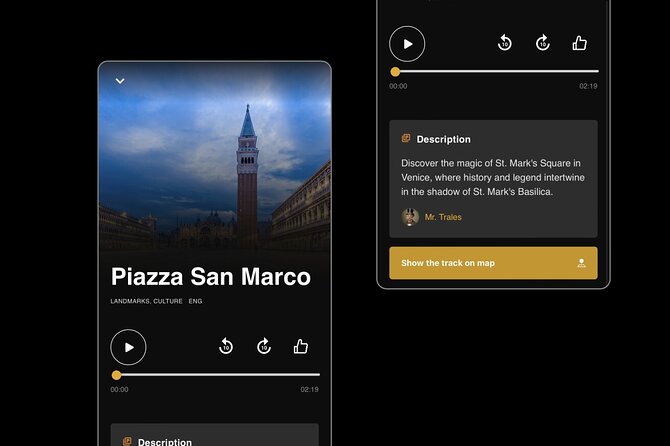
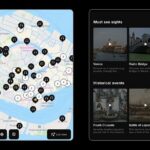
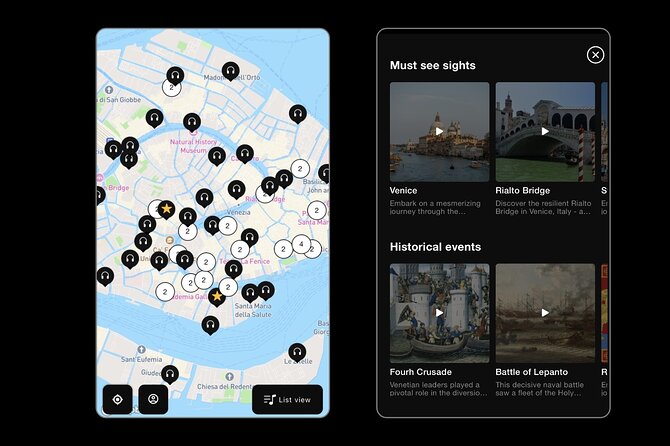
This is a self-guided experience from Trales Audio Guides. You don’t meet a person. Instead, you use a web app with a map plus audio stories triggered by your location. Your job is simple: bring a smartphone, connect to the internet, and wear your headphones.
The pitch is practical: no downloads. You activate access with a link after booking, then start the audio right in your browser. You’ll want internet access throughout, because offline listening isn’t included. In Venice, that usually means planning for Wi‑Fi where you can and carrying mobile data if possible.
There’s also a promo-code detail that matters for anyone who wants smooth start-up. After confirmation, you submit the last 5 digits of your phone number in the promo code field at Trales.io. It’s not hard, but it’s the kind of step you don’t want to do while you’re standing in a long line.
Timing-wise, the tour is listed at 1 to 2 hours (approx.). That’s a good fit for Venice, where you’ll stop often just to look, cross a bridge, or take a photo. You’re not trapped into a long route, and the short story lengths help keep the walk light.
One more note: it’s not recommended for travelers with hearing impairment, and service animals are allowed. If you rely on accessibility features for audio, you should check your setup needs before booking.
You can also read our reviews of more guided tours in Venice



Price and value: $3.46 per person is the whole point
At $3.46 per person, this sits in the “price of a coffee” category. The real question is whether it helps you experience Venice in a way that would cost more otherwise.
Here’s what you’re buying:
- audio stories for major sights and events
- a map-based guide so you don’t need a printed route
- the freedom to start and stop at any landmark
- no physical guide fees
That last part is key. Traditional guided walks often cost much more and tend to run on group schedules. This format flips that. You can spend time where the stories grab you and skip what doesn’t, which is a huge advantage when Venice crowds build fast around the big-name areas.
Also, the itinerary stops are marked with admission ticket free. That doesn’t mean Venice is free (you’ll still run into museums and churches that cost money), but it does mean the audio route is designed to work while you’re out in public spaces.
Start at Ponte di Rialto: the perfect first story stop
Your first stop is the Ponte di Rialto. This bridge is one of Venice’s strongest “you’re really here” moments. It’s also a smart place to begin because it anchors your bearings. Once you get your head around Rialto, the rest of the city starts to make more sense.
The audio focus here is on the bridge itself and its history—framed around resilience. That’s useful because Rialto can feel like just another landmark if you walk past fast. A story turns it into something you notice: where the bridge sits, why it matters, and how it survived over time.
Practical tip: keep your headphones on as you cross. You’ll get better continuity between the story and what you’re looking at, instead of turning audio on and off while you’re navigating.
Timing for this stop is listed as about 10 minutes, and admission is free. If you’re the type who likes a short introduction before branching out, this start fits your style.
Canal Grande: 10 minutes that make the city feel like a network
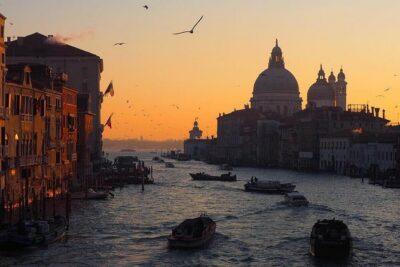
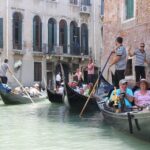
Next up is Canal Grande. This is the city’s main water corridor, and the audio guide frames it as Venice’s heart—history, commerce, and culture moving together.
If you’ve only seen Canal Grande from one angle, you might miss how much the canal connects everything. The story helps you see the waterway as a working route, not just scenery.
The stop is another ~10 minutes and also ticket free. The best move is to pick a spot where you can watch boats and bridges nearby while the audio talks. If you walk too fast, you’ll miss the rhythm the story is describing.
St. Mark’s Basilica and Piazza San Marco: legends plus spectacle

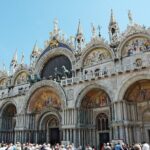
The guide includes both St. Mark’s Basilica and Piazza San Marco. These two are tightly connected, and you’ll likely want to pace them like one “area visit.”
You can also read our reviews of more tours and experiences in Venice






St. Mark’s Basilica (about 20 minutes)
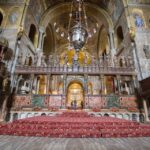
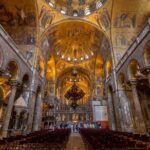
This story centers on how history, art, and spirituality connect at the basilica. Even if you don’t go inside on this self-guided plan, the audio context can make the exterior and surroundings easier to interpret.
The listed time for this stop is ~20 minutes, and it’s marked ticket free in the plan. That matters because it means you can still use the audio without needing a separate paid entry ticket.
If you do decide to go inside elsewhere in the future, the audio acts like a warm-up. You’ll have names, themes, and a sense of what to look for when you’re standing in front of the artwork.
Piazza San Marco (about 10 minutes)
Then you shift to Piazza San Marco, with the audio centered on magic, legend, and the shadow of St. Mark’s Basilica. This stop is ~10 minutes and ticket free.
Piazza San Marco can feel overwhelming on your first visit. A short story helps cut through the noise. You’re not trying to understand every detail at once. You’re letting the audio give you a “thread” so the square doesn’t blur into one big view.
Ponte dei Sospiri: the story that changes how you look at stone
The Ponte dei Sospiri—the Bridge of Sighs—comes next. This is a classic Venice stop for a reason: it looks dramatic, and the story is meant to feel a little eerie and emotional.
The audio description points toward mystery and melancholy. Even if you don’t know the background, hearing the tone is useful. It gives you permission to slow down and notice the bridge’s mood instead of rushing to the next photo.
This stop is listed as ~10 minutes and free. If you’re trying to keep your full route to 1–2 hours, this is a good “short and powerful” chapter.
Santa Maria della Salute: plague-era context with a hopeful angle

After the atmospheric bridges, the tour turns toward a heavier period with Basilica di Santa Maria della Salute.
The story is set in 1630 Venice, when the city faced plague. The audio focuses on hope and resilience behind the basilica. That’s a smart pairing with the surrounding streets and waterways, because Venice’s beauty can make the darker chapters easy to forget.
This stop is ~20 minutes and ticket free in the plan. Give yourself a little extra time here. Even without paying for an entrance, the audio can help you read the basilica as a response to crisis, not just a pretty building.
When a city like Venice presents both glamour and suffering, the context helps you understand why certain structures look the way they do and why people built them.
Murano: glassmaking as a Venice skill you can taste in the air
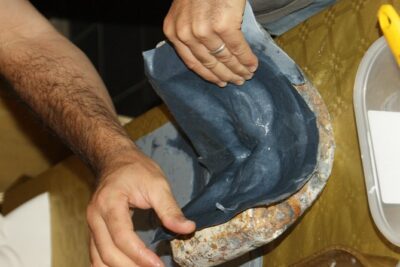
Then you head to Murano, the island known for glassmaking. The audio story describes centuries of glassmaking history, with a focus on artistry, innovation, and resilience.
This is where the audio guide becomes more than sightseeing. Glassmaking is a craft, and crafts have a logic. When the story is tied to the island, you’ll start noticing the idea of specialized work—how Venice exported talent and built reputations across the lagoon.
The stop is ~10 minutes and ticket free in the plan. Since Murano is an island, your overall route may depend on how you plan transport, but the guide itself is designed to give you a quick, meaningful “chapter” even if you’re not planning a long island day.
Burano: 10 minutes with color, tradition, and a world-heritage label
The guide includes Isola di Burano, described as a World Heritage Site. The audio focuses on the island’s colorful identity and the tradition behind it.
Burano is the kind of place where visuals can steal all your attention. That’s not a bad problem. But the audio helps connect color to culture—so you’re not only collecting snapshots. You’re also learning why people care about these traditions and how they persist.
This stop is ~10 minutes and listed as ticket free. If you’re short on time, Burano can still feel satisfying because the audio gives you a narrative frame while the buildings do the rest.
San Giorgio Maggiore: art and an island connection you might not expect
Next is Abbazia di San Giorgio Maggiore on San Giorgio Maggiore island. The audio story points to history, art, and some unexpected connections.
The practical value here is that island stops can feel like detours unless you know why they matter. The audio gives that why in a short format, so you don’t feel like you’re just catching views—you’re also collecting meaning.
This stop is ~10 minutes and ticket free in the plan.
Lido di Venezia: film-festival energy by the sea
Finally, the guide includes Lido di Venezia, tied to the Venice Film Festival. The audio frames it as a cinematic sanctuary by the Adriatic Sea.
Even if you visit when the festival isn’t happening, the story choice helps you see the island as more than just a beach. It’s part of Venice’s modern identity, not only its medieval and Renaissance chapters.
This last stop is ~10 minutes and ticket free in the plan. It’s also a nice way to end because the sea gives you a visual reset after narrower canal views and dense stone scenery.
The real benefit: you can skip crowds without skipping the main stories
A big part of the appeal here is the crowd math. In Venice, the most crowded spots are also the most tempting. But it’s hard to enjoy them when you’re stuck behind other people moving at the same speed.
This audio guide lets you set your pace. You can linger at Rialto for 10 minutes, then take a detour when the square feels too packed. When you hit St. Mark’s Basilica, you can let the story guide your attention rather than just following foot traffic.
That flexible rhythm is especially valuable if you’re traveling with someone who has different interests. One of you might want the bridges and legends; the other might focus on islands like Murano and Burano. With location-based stories, you’re still following the plan, but you aren’t boxed into a single tempo.
Logistics that matter (and what to bring)
Here’s what you should bring:
- A smartphone
- Headphones (your own)
- Internet access (no offline mode)
- A bit of patience while you locate yourself on the map
You’ll start and end back at the meeting point, and the tour is private for your group. That’s good if you like quiet focus and hate waiting around. It also helps families and couples who want a simple activity without coordinating with strangers.
Public transport is near, which is useful because this route includes islands like Murano and Burano. You’ll choose your transport separately since it’s not included.
Also keep in mind the obvious: this is an outdoors walk in Venice. Wear shoes you can handle on uneven stone. Bring water if you’re doing the full route, because 1–2 hours can stretch when you stop to look at everything.
If you’re booking close to travel dates, remember the experience is non-refundable and can’t be changed. So only buy when you’re sure the timing works.
Should you book the Venice audio tour?
Book this if you want:
- a low-cost way to learn what you’re seeing
- 100+ short stories across big landmarks and island stops
- the freedom to pause, move ahead, or cut the route short
- a plan that fits a quick Venice day without the pressure of a group schedule
Skip it if:
- you don’t plan on having reliable internet
- you need an audio experience designed for hearing accessibility needs (it’s not recommended for hearing impairment)
- you want a talking human guide and Q&A
If you like self-guided travel that still feels informed, this is a smart fit for Venice. You’ll get the top names—Rialto, St. Mark’s, Piazza San Marco, Murano, Burano, Lido—while staying in charge of your own walking pace.
FAQ
How long is the self-guided Venice audio tour?
The duration is listed as about 1 to 2 hours.
Do I need to download anything?
No downloads are required. You access the audio guide through your browser.
Does it work offline?
No. Offline access is not included, so you’ll need internet access on your phone.
What do I need to use the audio guide?
You need a smartphone with internet access and your own headphones.
Are entrance tickets included for the stops?
The listed stops are marked as ticket free in the plan, and the experience includes the audio guide—transport and paid attractions are not included.
Where does the tour start and end?
It starts in Venice, Metropolitan City of Venice, Italy and ends back at the meeting point.
Is this a group tour with a guide?
No. It’s a private self-guided activity, and you won’t have a physical in-person guide. Only your group participates.