REVIEW · VENICE
Venice Art and Architecture Private Walking Tour
Book on GetYourGuide →Operated by Venice Events srl · Bookable on GetYourGuide
Venice’s best details are often off to the side. This private, licensed 2-hour walking tour takes you through art and architecture around La Serenissima, steering you away from the St Mark’s crush while still hitting major landmarks like Santa Maria dei Miracoli and Santi Giovanni e Paolo. I like the way it’s small-group (up to 8) but still truly private-feeling, and I also like that the guide explains what you’re seeing instead of just pointing. One thing to consider: the tour is external only, so if you want to go inside churches you’ll pay extra on the spot.
You start in a very practical spot—Campo San Bartolomeo by the Goldoni statue—then walk into quieter corners where the stone carvings, plans, and art styles make more sense. And because it’s run by licensed guides and offered in several languages, you can ask questions and get straight answers in English, French, German, Spanish, or Italian. If you’re expecting a St Mark’s-style highlights loop with lots of indoor time, you’ll want to adjust your expectations upfront.
In This Review
- Key points that make this tour worth your time
- Why this route is so satisfying: Venice without the St Mark’s crush
- Meeting at Campo San Bartolomeo: the easiest launch for a 2-hour walk
- Stop 1: Goldoni at Campo San Bartolomeo as your orientation point
- Corte Seconda del Milion: reading Venice through Marco Polo’s legend
- Santa Maria dei Miracoli: Renaissance beauty that changes your view of church exteriors
- Important practical note about going inside
- Santi Giovanni e Paolo and Campo San Giovanni e Paolo: the Pantheon of Venice
- Another spot to watch for: the “Corte del Milion” story continues
- Finish near Basilica dei Santi Giovanni e Paolo: wrap-up and what to do next
- Price and value: $150.10 for a private 2-hour architecture walk
- The guide experience: how to get the best 2 hours
- Who should book this tour (and who might want another option)
- Should you book it? My practical verdict
- FAQ
- Where do we meet for the Venice Art and Architecture tour?
- Is this tour inside the churches?
- How long is the tour, and when does it start?
- What’s the group size?
- Which languages are offered?
- Is there hotel pickup?
Key points that make this tour worth your time
- Private licensed guide for 2 hours with a pace that can follow your interests
- Crowd-light route that keeps you away from St Mark’s Square
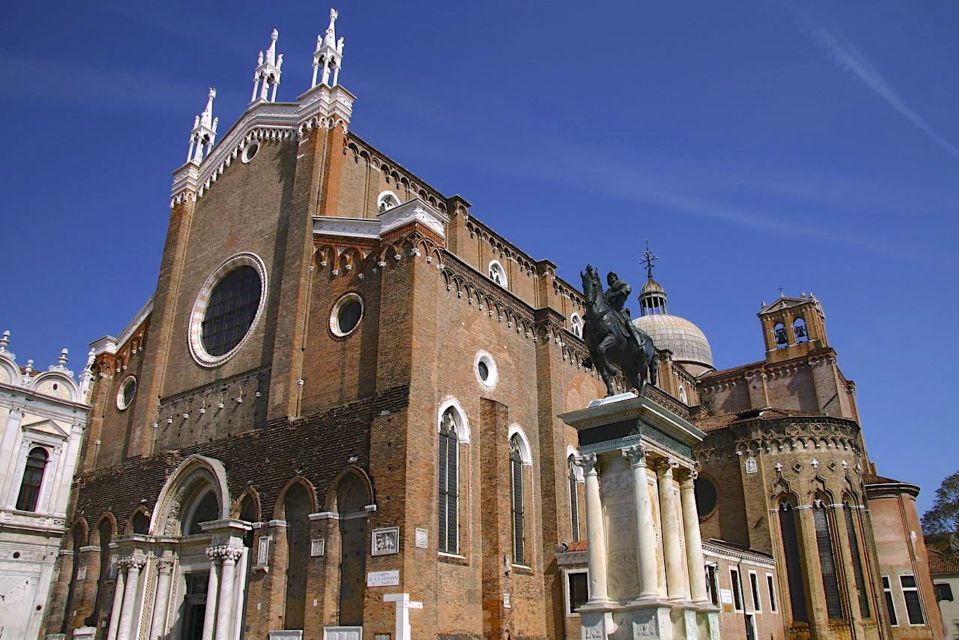
- Architectural focus on churches and squares like Santa Maria dei Miracoli and Campo San Giovanni e Paolo
- Marco Polo connection through the Corte Seconda del Milion
- Santi Giovanni e Paolo storytelling tied to its nickname Pantheon of Venice and doge burials after the 15th century
- External walking tour with optional paid church entries if you want to go inside
Why this route is so satisfying: Venice without the St Mark’s crush
Venice can feel like one big maze when you’re trying to see everything at once. This tour is built for the opposite strategy: slow down, look closely, and let the city’s architecture tell the story. You’ll still cover real anchors, but the route keeps you away from the most overrun areas, so the buildings feel more readable.
What I like is the tour’s logic. Instead of treating sights like isolated photos, the guide connects how styles evolve across La Serenissima—how different eras left their marks in plans, details, and the way spaces are arranged. That’s the kind of walking that makes you stop and actually notice.
You can also read our reviews of more walking tours in Venice
Meeting at Campo San Bartolomeo: the easiest launch for a 2-hour walk
The tour starts at Campo San Bartolomeo, in front of the statue of Goldoni (Campo San Bartolomeo, Rialto 5282, 30124). Plan to arrive 15 minutes early, then look for your guide holding a sign with your name on it.
If you’re staying in the St Mark’s area and you arrange it ahead, there’s hotel pickup available. That matters because Venice travel time is unpredictable; a pickup can save you from racing across bridges right before your start.
This is also a “you can hear the guide” type of experience. The group is limited to 8 participants, and the tour is offered in English, French, German, Spanish, and Italian—so you’re not stuck with a one-size-fits-all script.
Stop 1: Goldoni at Campo San Bartolomeo as your orientation point
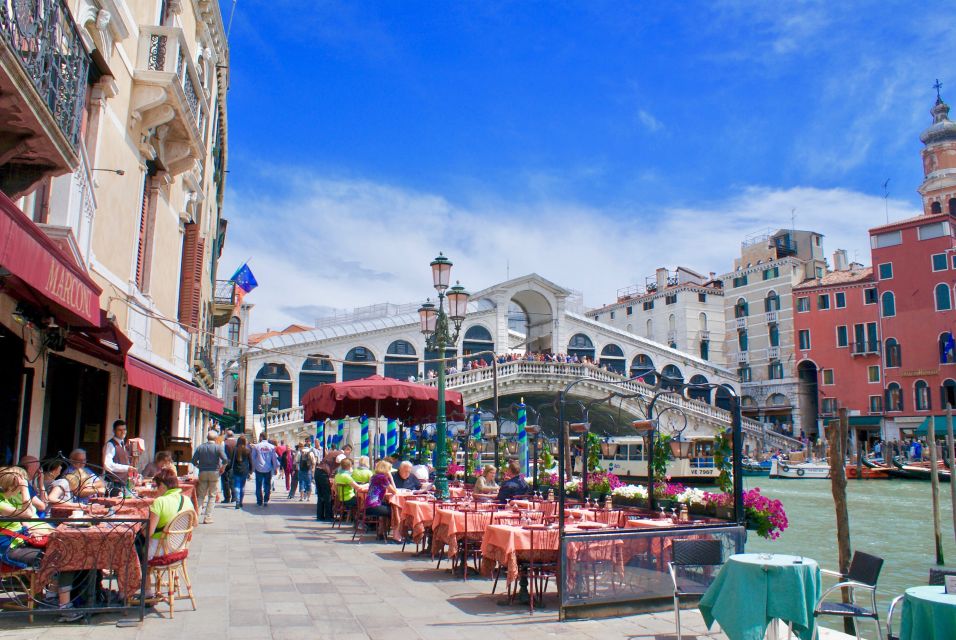
Starting at Campo San Bartolomeo isn’t random. It’s a classic Venice launching pad: you’re close enough to key areas to move efficiently, but far enough from the worst crowds to actually take in details. Standing near the Goldoni monument gives you a clear beginning point, which helps a lot in Venice’s back-and-forth streets.
From this first segment, your guide sets expectations for what you’ll be looking for—church design, square layouts, and architectural clues you can use even after the walk ends. If you like walking tours where you learn a way to see the city, this start does its job quickly.
Corte Seconda del Milion: reading Venice through Marco Polo’s legend
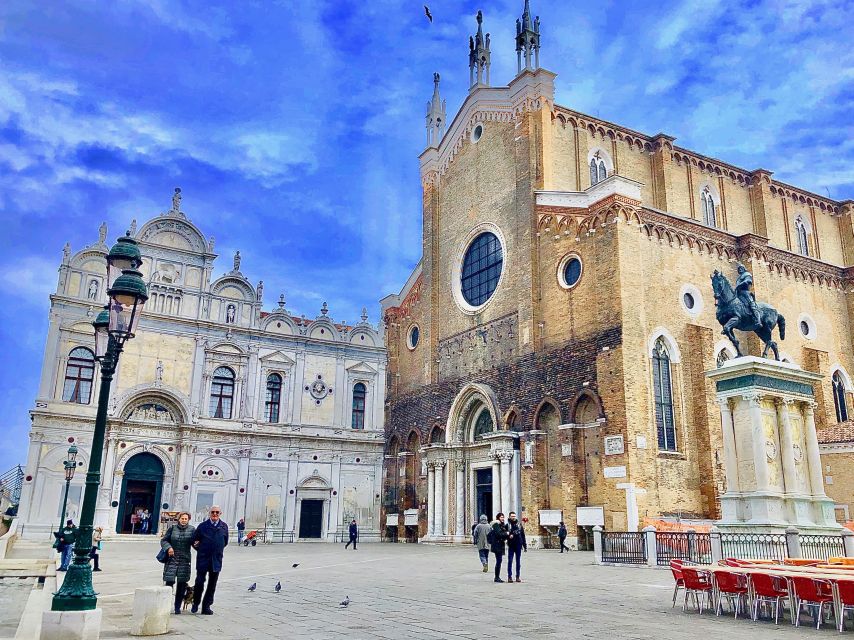
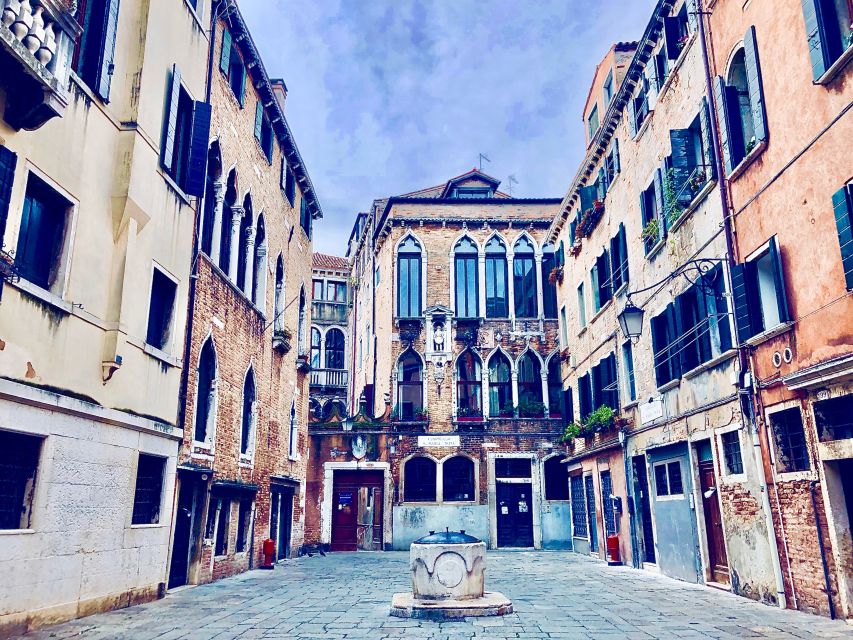
One of the tour’s most interesting moments is the stop at Corte Seconda del Milion, guided. Even if you just think of Marco Polo as a name from school, Venice treats his story like local mythology. This courtyard is tied to the “Milion” reference—named after Marco Polo’s account of travels in the Far East.
What you should do here is slow down and watch the space as a space. Courtyards in Venice often feel like quiet punctuation marks between busier streets, and this one fits that role. The guide’s job is to connect the label and the lore to what’s physically around you—how Venice borrowed, remembered, and repeated big ideas in stone and layout.
Santa Maria dei Miracoli: Renaissance beauty that changes your view of church exteriors
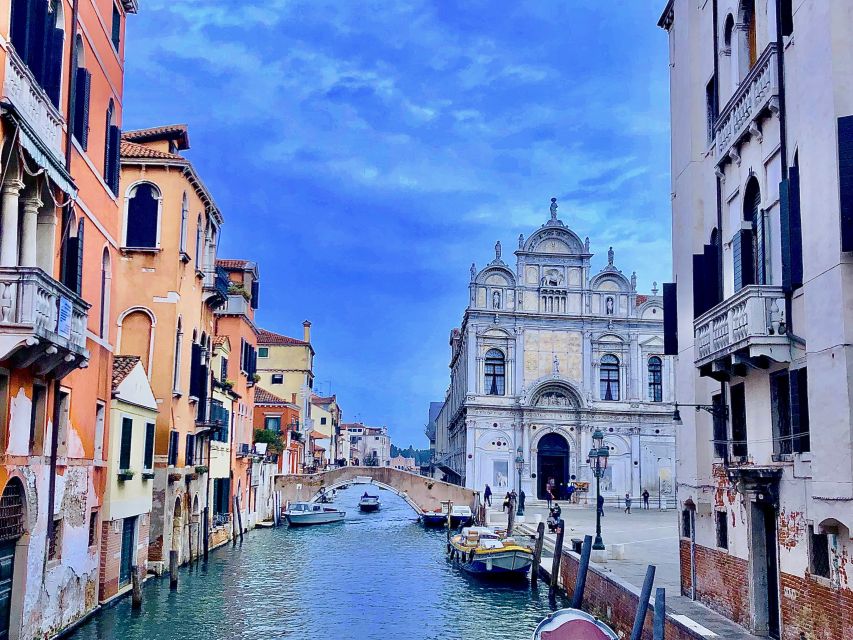
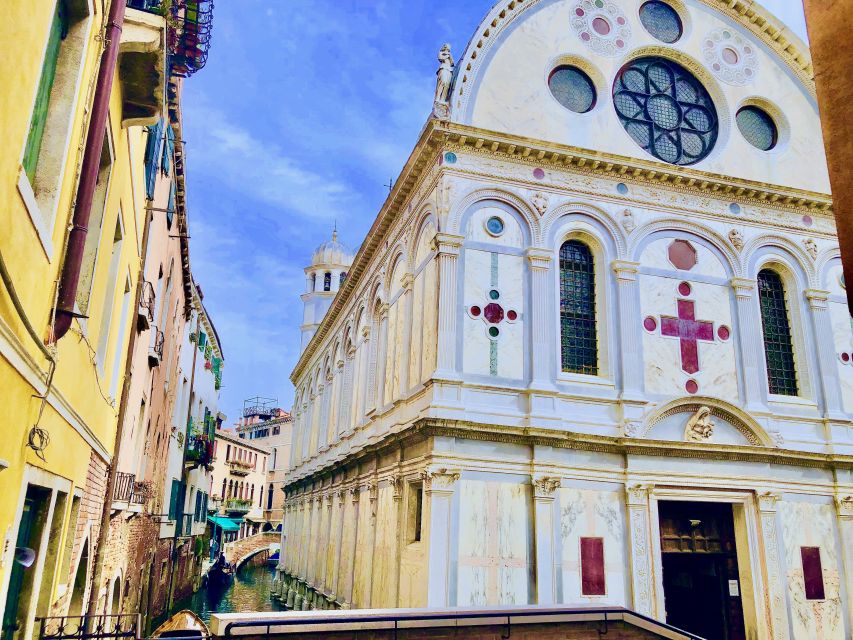
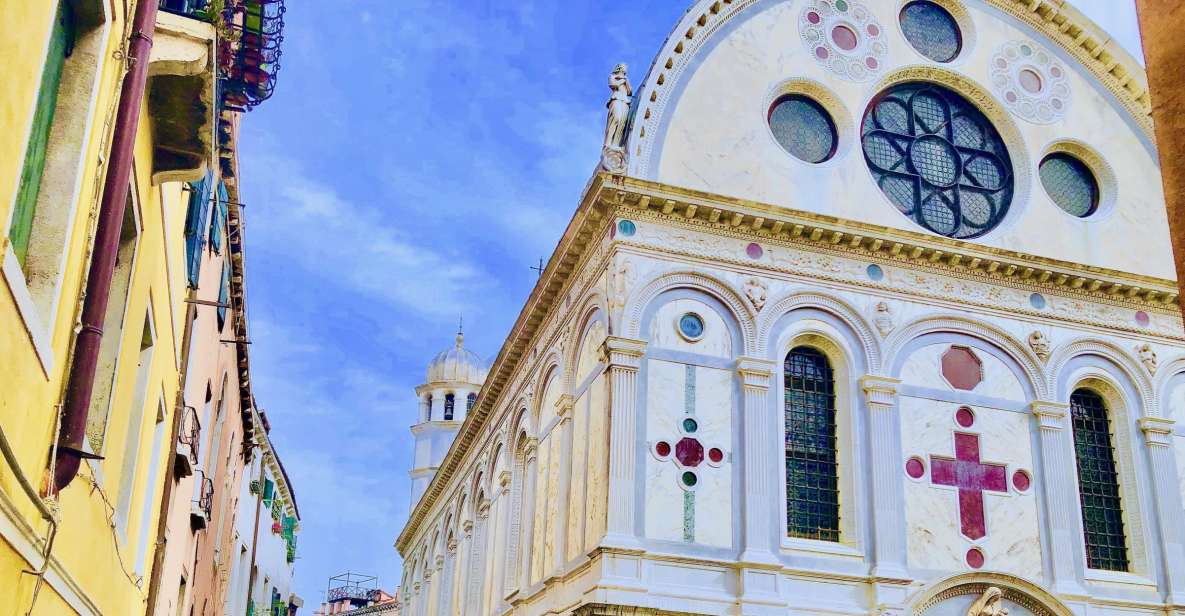
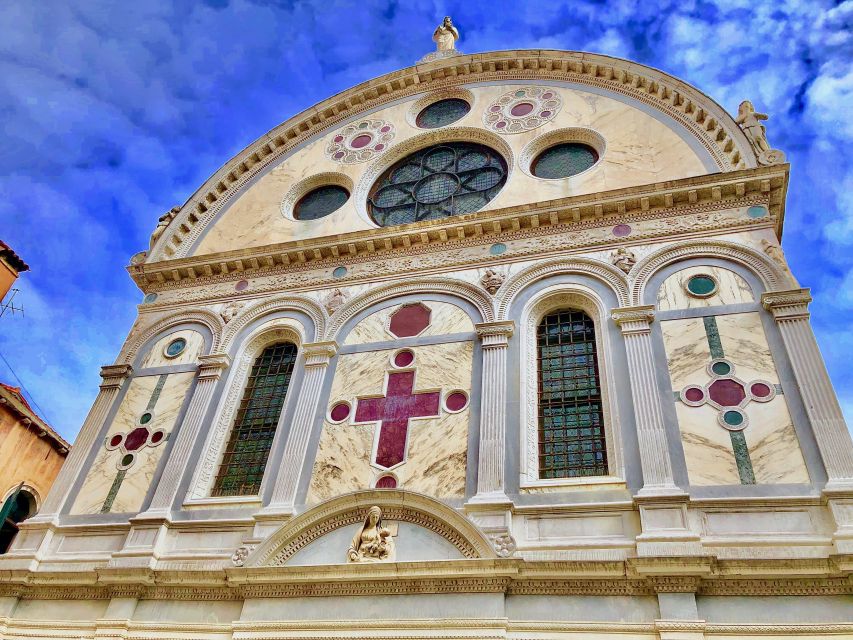
Then you get to Santa Maria dei Miracoli, one of those Venice churches that people remember because the exterior presentation is so precise. The tour includes a guided stop here, focused on the architecture itself, not just the name.
This is a good place to adjust how you look at Venetian churches. Instead of thinking only “church, then photo,” you can focus on how Renaissance-era design shows up in the proportions, surfaces, and overall composition. You’ll also get context for why this building earned its reputation for being miraculous—less about miracles in the supernatural sense and more about the visual effect.
You can also read our reviews of more private tours in Venice

Important practical note about going inside
This is an external walking tour, so you should expect to see churches from the outside. The tour can be paired with paid entry if you want to go inside, but that extra fee is paid on the spot. If you’re the type who wants to compare the façade with the interior plan, this is the stop to decide what matters more to you.
Santi Giovanni e Paolo and Campo San Giovanni e Paolo: the Pantheon of Venice
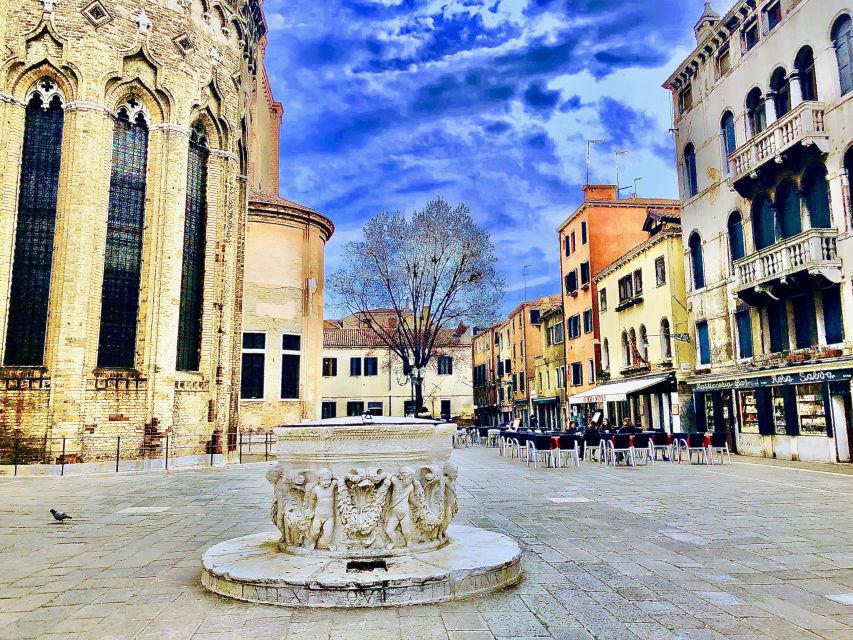
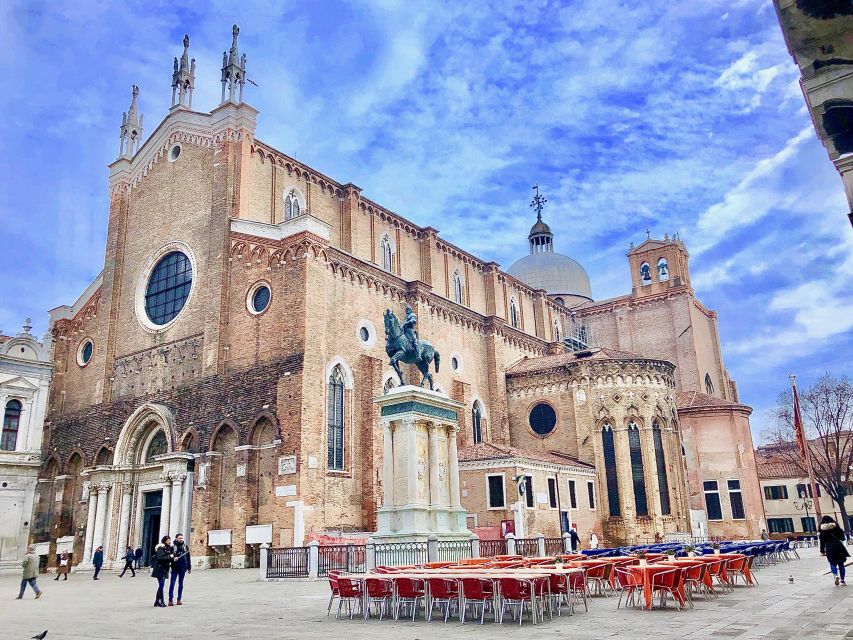
Next comes Santi Giovanni e Paolo, with a guided stop that’s tied to one of the city’s best-known architectural nicknames: it’s often called the Pantheon of Venice. The reason isn’t vague; it connects to the church being a major burial site of Venetian doges after the 15th century. That single fact changes how you interpret what you’re looking at.
Before or alongside the church focus, you also admire Campo San Giovanni e Paolo, described as one of Venice’s most beautiful squares. This matters because Venice squares aren’t just open space. They’re stages—places where buildings face each other, where movement creates the atmosphere, and where you can grasp how large civic and religious power used to feel.
When you’re there, try this: stand where the guide tells you, then look for alignment. Venice’s big religious buildings often frame space in ways you can feel even from outside. You’ll start noticing how the square supports the church visually, and how the area reads like a unified statement rather than scattered monuments.
Another spot to watch for: the “Corte del Milion” story continues
Even after the Marco Polo connection, the tour keeps emphasizing how ideas traveled and reappeared across time. Venice was never isolated—its power and wealth shaped what came in and what got remembered. The guide’s explanations help you connect the dots between “old stories” and “visible design.”
Finish near Basilica dei Santi Giovanni e Paolo: wrap-up and what to do next
The walking route finishes at Basilica dei Santi Giovanni e Paolo. Even though the endpoint is described that way, the activity also says it ends back at the meeting point, so expect your route to circle you back into familiar ground rather than dropping you somewhere random.
Once you’re done, you’ll be in a better position to explore on your own because you’ve learned a repeatable skill: look at façade and square relationships first, then let the details make sense. If you’re planning your next hours, use that. Revisit any area you found intriguing and now you’ll have questions worth asking, not just questions you’re trying to remember.
Price and value: $150.10 for a private 2-hour architecture walk
At $150.10 per person for 2 hours, this isn’t a budget tour. The value comes from the format: a private licensed guide, a small group capped at 8, and a route intentionally designed to avoid the densest crowds.
You’re also getting something that’s hard to buy with a ticket price: attention. In Venice, having someone translate what you’re seeing—church design choices, the meaning behind names, why certain buildings matter—can turn a street walk into real understanding. If you’re already spending time and money to be in Venice, this is the kind of expense that can make your days feel less chaotic.
Two cost reminders to keep the math honest:
- Entrance fees to churches are not included. If you want to go inside with your guide, you’ll pay on the spot.
- Food and drink are not included, so you’ll likely want a snack plan afterward.
On the upside, the tour also notes skip-the-ticket-line support. Since the tour is external, this matters most if you decide to add paid church entries. The key point: you’re not locked into paying for everything, but you won’t be stuck in the worst lines either.
The guide experience: how to get the best 2 hours
This tour stands or falls on communication. The good news is that the format encourages it: your guide is licensed, you get a live experience in multiple languages, and the route is flexible enough to respond to your interests and architectural focus.
In particular, I’d keep an eye out for a guide like Gentiana, since one account specifically praised how she answered questions and adjusted the tour to match personal interest in architecture and history. If you’re serious about details—carvings, stylistic shifts, why this square feels the way it does—this is exactly the kind of guide you want.
And quick common-sense advice: if you want extra time inside a church, ask for it early. The tour is only 2 hours, and external time adds up fast in Venice.
Who should book this tour (and who might want another option)
This tour is best for you if:
- You want art and architecture, not just a photo checklist.
- You prefer quiet streets and want to avoid the densest crowd patterns.
- You like context—Marco Polo references, doge burial significance, and why specific churches earned nicknames.
- You enjoy guided explanations and want your questions answered in your language.
You might choose something else if:
- You’re wheelchair-dependent, because the tour is not suitable for wheelchair users.
- You need guaranteed indoor access to multiple churches. This is mainly an external walking tour, with paid entry optional.
- You want a St Mark’s Square-heavy itinerary. This route is designed to keep you away from it.
Should you book it? My practical verdict
Yes, if you want a Venice experience that feels calmer and more meaningful. The combination of private licensed guiding, a crowd-light route, and architecture-first stops gives you a smarter way to spend two hours. You’ll leave with a better sense of how Venice’s buildings and public spaces communicate across centuries.
If you’re picky about time inside churches, decide now how many entries you truly want. Once you pair that with the external nature of the tour, you’ll get a very clean, focused experience.
FAQ
Where do we meet for the Venice Art and Architecture tour?
You meet at Campo San Bartolomeo, in front of the Goldoni statue. The address given is Campo San Bartolomeo, Rialto 5282, 30124. Arrive 15 minutes early and look for your guide holding a sign with your name.
Is this tour inside the churches?
It’s only an external walking tour, so it does not go inside the churches. If you want to enter the churches with your guide, you must pay an extra fee on the spot.
How long is the tour, and when does it start?
The duration is 2 hours. Starting times depend on availability, so you should check the schedule before booking.
What’s the group size?
It’s a small group limited to 8 participants.
Which languages are offered?
The live tour guide is available in English, French, German, Spanish, and Italian.
Is there hotel pickup?
There is hotel pick-up on arrangement for hotels within the St Mark’s area.