REVIEW · VENICE
Small Group Venice Grand Canal Panoramic Tour
Book on Viator →Operated by Bucintoro Viaggi · Bookable on Viator
Venice looks better from a moving boat. This Grand Canal panoramic ride stacks close-up palazzi views and famous bridges into a tight hour, with a small group size that helps the sightseeing actually feel personal. The one real catch is that it uses a water-taxi style boat, so if the vessel fills up, some seats end up indoors with poorer sightlines.
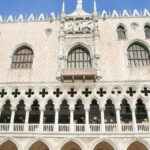
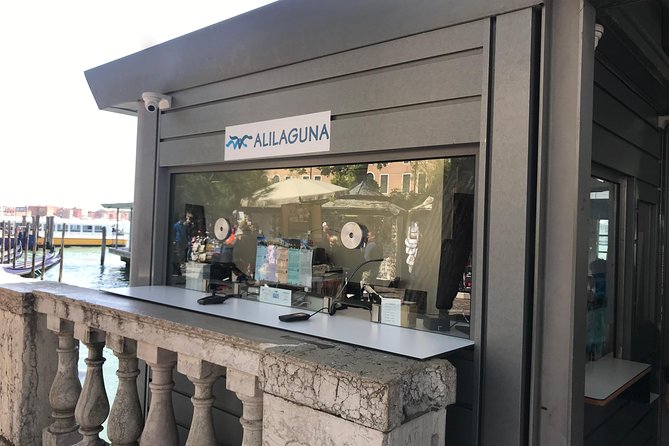
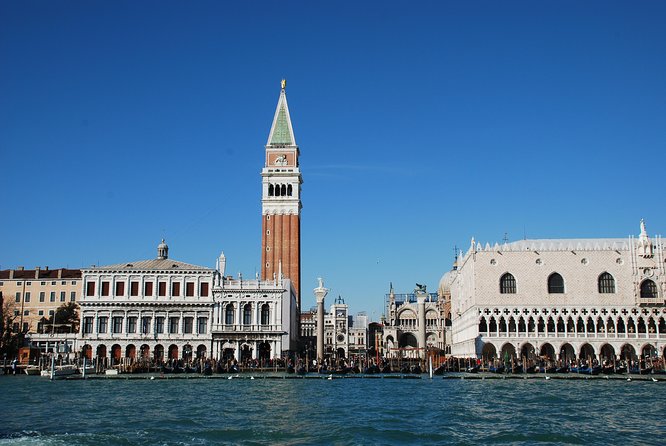
You meet at the Alilaguna and Bucintoro Viaggi ticket office at San Marco Giardinetti, then the cruise starts from San Giorgio Maggiore and returns back to the meeting point. From the water, you get a view toward St. Mark’s Basin where Doge’s Palace shows off its Venetian Gothic style.
It’s a strong first-timer move if you want orientation fast. Just don’t expect the kind of total comfort you get on a private boat: a few reviews mention hot interior seating, hard-to-hear commentary from certain spots, and even moments when glasses weren’t great for viewing.
In This Review
- Quick hits before you go
- Price and what you’re paying for
- Meeting point near San Marco Giardinetti
- From San Giorgio Maggiore to St Mark’s Basin: the core cruise
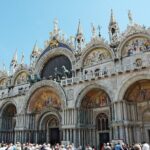
- St Mark’s Square: why it matters from the water
- The canal’s bridge lineup: Rialto and Accademia
- Palazzi you’ll recognize: Gritti, Corner, d’Oro, and more
- Art and museum power from the canal: Peggy Guggenheim
- San Giorgio, the Redeemer, and the plague-vow connection
- The train-station connection and the barefoot bridge
- How the guide experience lands on board
- Seat reality: why the boat feels roomy or cramped
- Tour or DIY taxi: the choice you actually face
- Who this tour suits best
- Should you book this Small Group Grand Canal Panoramic Tour?
- FAQ
- How long is the Venice Grand Canal panoramic tour?
- What language is the tour offered in?
- How big is the group on this tour?
- Where do I meet the guide?
- Where does the boat tour start and where does it end?
- What’s included, and what’s not?
- Does the tour accommodate service animals?
Quick hits before you go
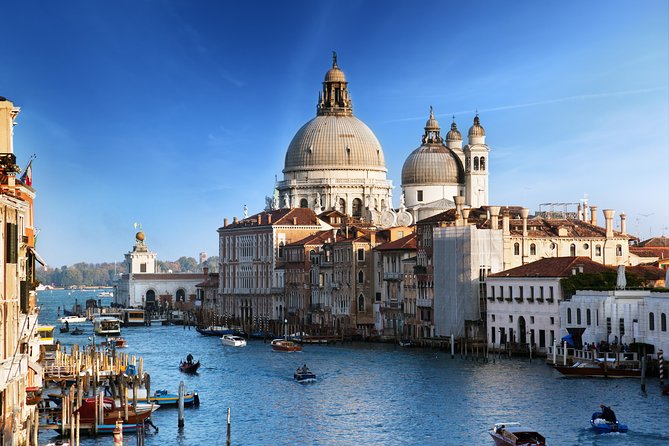
- A 1-hour Grand Canal circuit that packs bridge landmarks and palazzi into one efficient loop
- Live onboard commentary led by a professional art historian guide
- Small group cap of 12, with reports of groups being as small as 9
- Big-name bridge views including Rialto Bridge and Accademia Bridge
- Art and architecture context for buildings spanning Gothic, Romanesque, and Renaissance styles
- Comfort depends on your seat, with outdoor openings limited on the boat
Price and what you’re paying for
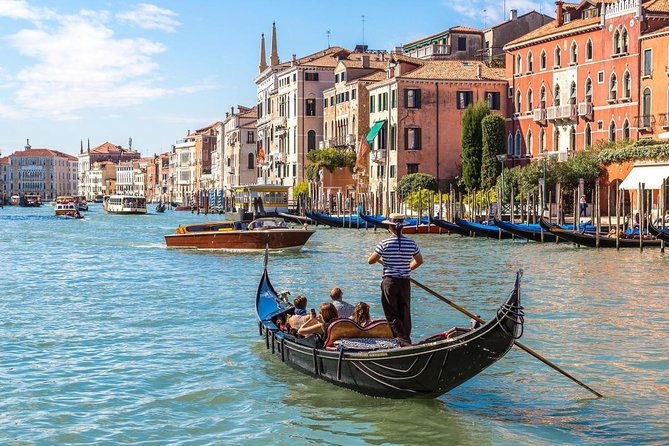
At $54.19 per person for about an hour, this tour isn’t trying to replace a gondola ride. It’s built for information plus the key angles of the Grand Canal, using a motor launch experience with live commentary.
Here’s the value math I’d use: you’re paying for (1) a guide who can point out what you’re seeing, and (2) a boat route that gets you the famous sights without you having to figure out where to sit, when to go, and how to connect everything on your own.
The downside? You are still on a boat that can only hold so many people comfortably in open air. Reviews call out that some seats may be indoors (and harder to see through windows). If you’re the kind of person who wants uninterrupted photo angles or you get cranky about imperfect viewing, you’ll feel the compromises.
You can also read our reviews of more tours and experiences in Venice.
Meeting point near San Marco Giardinetti
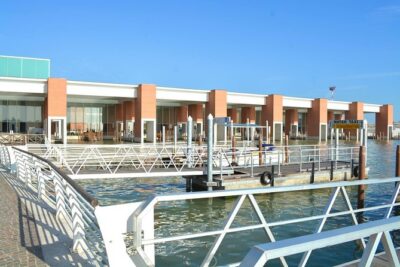
Your meeting point is the Alilaguna and Bucintoro Viaggi ticket office at San Marco Giardinetti, on Riva degli Schiavoni (San Marco area). Tours start at selected times—3:30pm, 4:30pm, 5:30pm, or 6:30pm depending on what you choose.
A practical move: arrive early enough that you’re not rushing through the gates and the ticket desk area. One review complained about confusion at the ticket office when pickup didn’t happen as expected, so I’d treat “on time” as “before on time.”
Also note: the tour language is English. One review flagged that a Spanish-language selection didn’t match the spoken commentary, so if you’re relying on a specific language, double-check what you booked.
From San Giorgio Maggiore to St Mark’s Basin: the core cruise
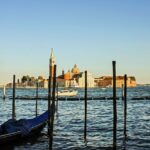
The cruise begins at San Giorgio Maggiore, a 16th-century Benedictine church. From there, you glide along the Grand Canal past major palazzi, hotels, and other buildings that reflect Venice’s mix of styles—Gothic, Romanesque, and Renaissance.
This is the part of Venice that’s hard to fake. On foot, you see facades. From the water, you get the rhythm of the canal: the spacing of windows, the way buildings step toward the water, and the feeling that the city is built as a waterfront machine.
The tour concludes back at the meeting point, and along the way you also reach a position where St. Mark’s Basin frames Doge’s Palace. Even if you don’t go inside, seeing Doge’s Palace from the canal gives you the shape and drama of the Venetian Gothic style up close.
St Mark’s Square: why it matters from the water
St. Mark’s Square is described as Venice’s most important square, and in practice it’s the anchor for so many city stories. From the canal, you see the square as a backdrop, not as a crowded stop you have to fight your way through.
If you’re planning a first visit, this matters. Many people only see St. Mark’s from the plaza itself. Seeing it from the Grand Canal gives you a different scale and a clearer sense of where the waterways connect to the political center.
You also get the island of San Giorgio Maggiore directly in front of St. Mark’s Square. That church was designed by Andrea Palladio, and it’s one of those landmark buildings that instantly tells you why people obsess over Renaissance architecture.
The canal’s bridge lineup: Rialto and Accademia
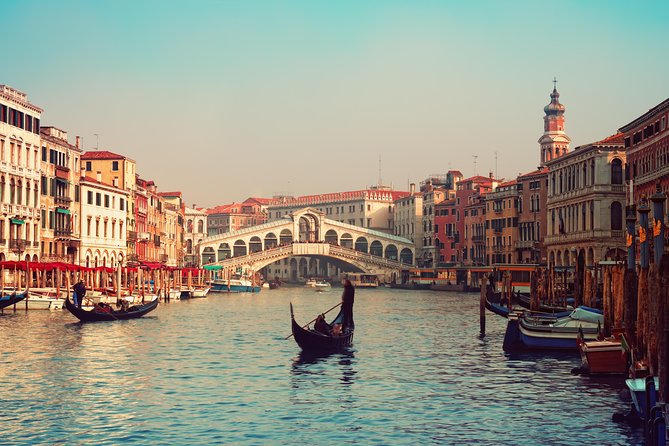
Two bridges come up as must-see symbols during this cruise.
Rialto Bridge is one of Venice’s iconic images, and passing under it from the Grand Canal gives you that classic Venice feeling—tight, postcard-close, and full of movement.
Accademia Bridge is another highlight. What makes it different is that it’s the only wooden bridge in Venice. When you see it from the water, the material difference feels real, not just like trivia.
One more practical note from reviews: your view depends on where you’re sitting. Outdoor openings can be limited, and interior seating can mean you’re looking through windows—sometimes with visibility issues. If bridges are your top photo target, position matters.

Palazzi you’ll recognize: Gritti, Corner, d’Oro, and more
One thing I love about the Grand Canal is that it’s basically a slide show of different eras of Venice wealth. This tour helps you make sense of it instead of just passing it.
Here are some of the palaces and buildings you’ll get context for while gliding past:
- Palazzo Gritti and Palazzo Corner are specifically called out, and the guide ties them into the bigger story of how Venetian power and money shaped the city’s frontage.
- Ca’ Pesaro is a Baroque marble palace facing the Grand Canal, tied to Baldassarre Longhena (also connected to the church of the Salute and Ca’ Rezzonico). If you’ve got even a mild interest in architecture, this is one of the stops that rewards paying attention.
- Ca’ d’Oro (Palazzo Santa Sofia) is described as one of the oldest palaces, with a name meaning golden house because of the gilt and polychrome exterior decorations. When a building’s decorative intent is explained, your eyes catch details you’d otherwise miss.
You’ll also pass Ca’ Vendramin Calergi, which now hosts the Venice casino. It’s a reminder that Venice’s buildings didn’t freeze in time; they kept being repurposed as the city changed.
Art and museum power from the canal: Peggy Guggenheim
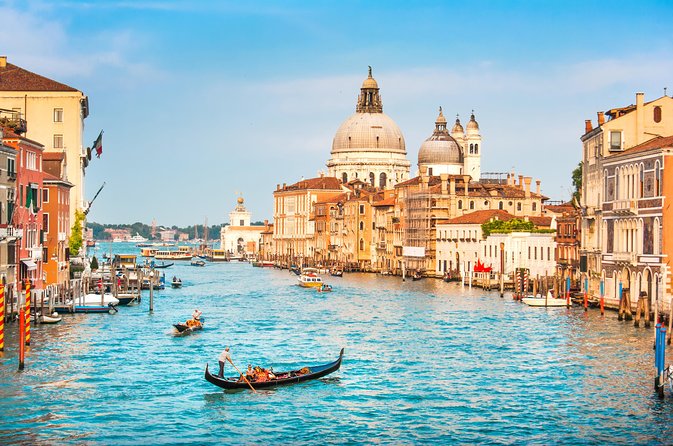
The Peggy Guggenheim collection is housed in Palazzo Venier dei Leoni, an 18th-century palace. The information that Peggy Guggenheim lived there for three decades makes this one easier to picture, because you’re not only seeing a landmark—you’re seeing a place that functioned like a creative base.
From the boat, you won’t be walking into the museum. But you’ll still get the architectural frame around it, which helps if you later decide to add an indoor stop.
If you love art history, this kind of contextual storytelling is exactly why a guided canal ride can feel better than hiring a taxi and pointing at buildings.
San Giorgio, the Redeemer, and the plague-vow connection
A standout part of the itinerary is how it ties specific churches to major Venetian events.
The tour includes:
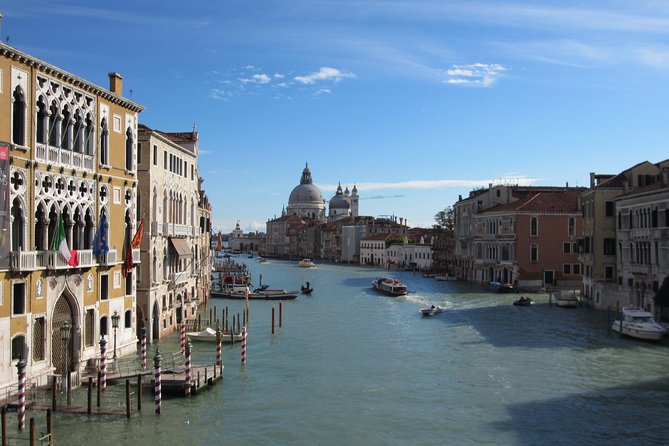
- The Church of the Redeemer, designed by Andrea Palladio and built as a votive church connected to the city’s deliverance from a major plague outbreak.
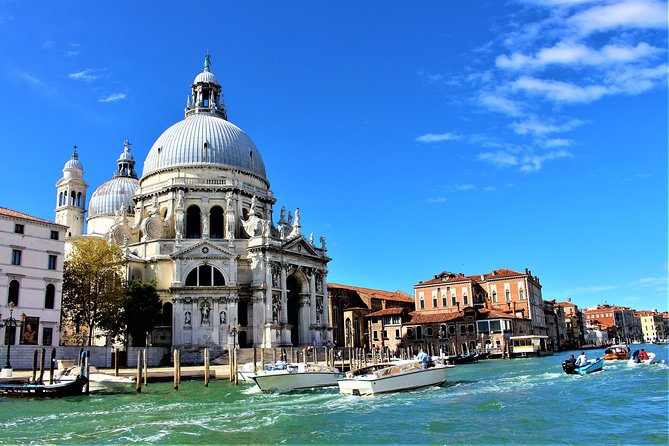
- Our Lady of Health (or of Deliverance, Salute) is referenced as the Republic of Venice’s vow response to plague years.
This isn’t just name-dropping. It helps you understand why certain religious structures are not only beautiful—they’re also political and emotional responses to survival.
And since you’re seeing these through the lens of the Grand Canal, it’s easier to connect the city’s crisis-and-recovery story to the city’s waterfront identity.
The train-station connection and the barefoot bridge
The tour also includes a pass near the start of the Grand Canal, where the “barefoot bridge” connects the Railway station to the rest of the city.
Even if you never plan to walk across it, seeing that connection helps you map Venice in your mind. A lot of visitors land, feel turned around, then spend days trying to understand how the water system funnels movement. Getting that orientation from the canal is a quiet win.
How the guide experience lands on board
This tour includes live commentary and is led by a professional art historian guide. That sounds good on paper. On the water, the reality depends on your seat and on how the guide’s voice carries.
Positive patterns show up strongly:
- Guides reported as friendly and fun, with clear commentary.
- Some guides were named in reviews, including Alberto and Gaella, both described as well prepared and happy to share details.
- A few people liked that the guide offered suggestions after the tour.
But there are also the friction points you should know:
- One review said the guide spoke only briefly, making the hour feel like too little for the price.
- Another complained that it was hard to hear from the back of the boat.
- A few reviews mention an unprofessional guide or weak knowledge, and those are big red flags.
This is why I’d treat the boat setup and seating comfort as part of the “value” question, not as a side issue. If you’re sitting where you can’t hear, even great commentary won’t land.
Seat reality: why the boat feels roomy or cramped
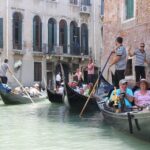
Many reviews mention the same physical truth: the boat is water-taxi style, with limited outdoor viewing space.
A detailed complaint from one review explains how outdoor space is scarce, with most seats shifting people into a stuffier interior with small windows. Another review said dirty glass made it hard to see.
So here’s how to think about it:
- If your goal is close-up sightseeing angles, prioritize whichever part of the boat has the cleanest view and the most direct openings.
- If you just want an overview and you don’t mind occasional turning or shifting seats, the tour can still feel great.
One reviewer even pointed out the perfect timing at 18:30, and that short hour felt like enough time without dragging.
Tour or DIY taxi: the choice you actually face
Some people will tell you to skip the tour and just hire your own water taxi. That argument isn’t totally wrong. You can buy flexibility with a private ride.
But you lose three things:
- A structured route with commentary on what you’re seeing
- A focused explanation of architecture and major buildings
- A guided sense of priorities, especially if it’s your first day in Venice
My practical take: if you’re comfortable navigating on your own and your priority is the views at any cost, a taxi can make sense. If you want the Grand Canal to teach you something while you’re seeing it, the guided angle is the point.
This is also why the “small group” matters. When the group is truly small, you have more breathing room and better access to the outdoor section.
Who this tour suits best
I’d aim for this tour if:
- It’s your first trip to Venice and you want orientation fast
- You like architecture and want the story behind the canal facades
- You want the Grand Canal experience without committing to hours of transit or multiple ticketed stops
- You’re traveling with a group size that won’t make you share seating struggles
I’d be cautious if:
- You’re very photo-driven and hate glass/limited sightlines
- You’re sensitive to noise or you need clean audio delivery
- You might feel the sting of a paid hour if your seat ends up indoors
Should you book this Small Group Grand Canal Panoramic Tour?
If you book, you’re buying a tight, guided Grand Canal overview with a maximum group size of 12 and an art historian on board. For most first-time visitors, that’s a smart way to get your bearings and see Venice’s waterfront power in one hour.
My decision rule is simple: if you can handle the boat setup and you’re excited to learn what you’re seeing, this is a solid pick. If you only care about uninterrupted views from the open air, I’d compare options that offer better viewing space—or plan to book with strong expectations and a flexible attitude about seating.
FAQ
How long is the Venice Grand Canal panoramic tour?
It runs for about 1 hour.
What language is the tour offered in?
The tour is offered in English.
How big is the group on this tour?
The tour is limited to a maximum of 12 travelers.
Where do I meet the guide?
You meet at the Alilaguna and Bucintoro Viaggi ticket office at San Marco Giardinetti, Riva degli Schiavoni, 30124 Venezia VE, Italy.
Where does the boat tour start and where does it end?
The motor launch ride starts at San Giorgio Maggiore and the tour ends back at the meeting point.
What’s included, and what’s not?
Included are live onboard commentary, a professional art historian guide, and a motor launch ride along the Grand Canal. Food and drinks are not included.
Does the tour accommodate service animals?
Yes, service animals are allowed.