REVIEW · VENICE
Morning Venice Walking Tour plus Doge’s Palace Guided Visit
Book on Viator →Operated by Insidecom srl · Bookable on Viator
Venice is best before the day crowds arrive. This morning walking tour pairs a guided stroll through classic landmarks with an inside look at Doge’s Palace, including admission, so you’re not just staring at buildings from the outside. I love how the pace works as an introduction to the city, and I also like that the tour gives you a clear story line as you move from Piazza San Marco into the palace world. One drawback to note: it’s still a collective walking experience through narrow streets and bridges, so the group vibe can feel busy when you’re near popular sights.
If you start at 9:00 a.m., you get a better shot at Venice before the heat and peak crush kick in. You’ll spend about 3 hours 15 minutes seeing a tight set of stops, then circle back to the meeting point. Consider that some parts (especially the palace) can be crowded, and the walking is real, not a gentle stroll with constant sit-down breaks.
In This Review
- Key things to know before you go
- A 9:00 a.m. Venice plan that actually makes sense
- Meeting point, timing, and how the tour runs on the ground
- Piazza San Marco stop: where your Venice story begins
- Palazzo Ducale: Doge power, guided storytelling, and a must-see interior
- Basilica dei Santi Giovanni e Paolo: Venice’s “pantheon” stop
- Campo Santa Maria Formosa: the Castello side of Venice
- The Marco Polo thread: Il Milione as a way to see Venice
- Crowds, pace, and why morning still matters
- Price and value: is $118 fair for this mix?
- Who this tour fits best (and who might want a different approach)
- Before you book: your best move for this morning plan
- Should you book this morning Venice walking + Doge’s Palace tour?
- FAQ
- How long is the Morning Venice Walking Tour plus Doge’s Palace Guided Visit?
- What time does the tour start, and where do I meet?
- Is Doge’s Palace admission included?
- What language is the tour offered in?
- Do I need to print a ticket?
- Is this tour suitable for most people?
- Are there any extra fees I might need to pay?
Key things to know before you go
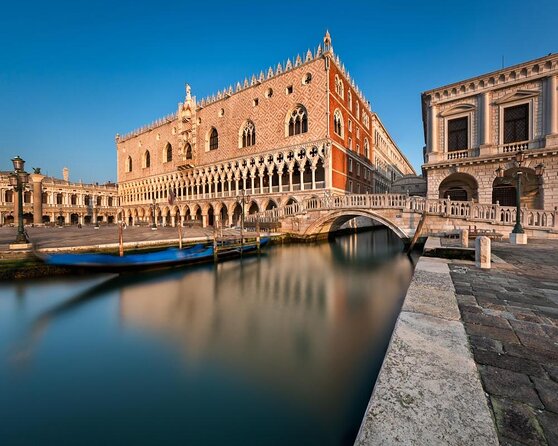
- Doge’s Palace admission included: you don’t have to buy a separate entry ticket for the guided portion.
- Bridge of Sighs built into the route: you’ll connect what you see outside with the darker story inside.
- A 9:00 a.m. start: you’re positioned for cooler temps and calmer streets than later in the day.
- Castello district touches: the tour includes Campo Santa Maria Formosa and nearby stops beyond just St. Mark’s.
- Winter language support: from Nov 1 to Mar 31, explanations run in two languages if needed.
- Large group reality: it’s capped very high, so expect a structured flow and possibly headsets during palace time.
A 9:00 a.m. Venice plan that actually makes sense
This is a morning combo tour that’s built for orientation. You start at 9:00 a.m., which matters in Venice: the city is beautiful at all hours, but the streets narrow, foot traffic swells, and your time gets eaten fast if you begin too late. When you can, a morning tour is the simplest way to get your bearings and still enjoy the day without feeling like you sprinted your way through canals.
The pacing is also practical. You’re looking at about 3 hours 15 minutes total, with the biggest time block inside Palazzo Ducale (about one hour). That means you’re not trapped in a museum marathon, but you still get real guided context where it counts.
One more value point: you end back at the meeting point. That sounds small, but it’s helpful in Venice, where getting from point A to point B can be an adventure of its own. It makes it easier to plan lunch or your next stop without guessing how far you are from where you started.
You can also read our reviews of more walking tours in Venice


Meeting point, timing, and how the tour runs on the ground
The meeting point is Calle larga de l’Ascension, 30124 Venezia VE, Italy. You’ll meet a representative there who checks your voucher and gives info to start the tour. The tour asks you to arrive at least 10 minutes early, and I’d treat that as a must, not a suggestion—meeting groups in Venice can involve a little walking and a lot of visual confusion if you’re late.
This is a collective tour, so you’re not traveling alone with a private guide. That usually works fine, but it does change what you can expect: the guide keeps you moving through a set route, and the story beats are timed so the group flows from place to place.
Also, do keep in mind that the total tour maximum is very high, which is another way of saying you should expect other groups around. In practice, operators often manage this with structured movement and sometimes audio support—one key review highlighted headsets during the palace portion, which is a smart fix for noisy crowds.
Piazza San Marco stop: where your Venice story begins
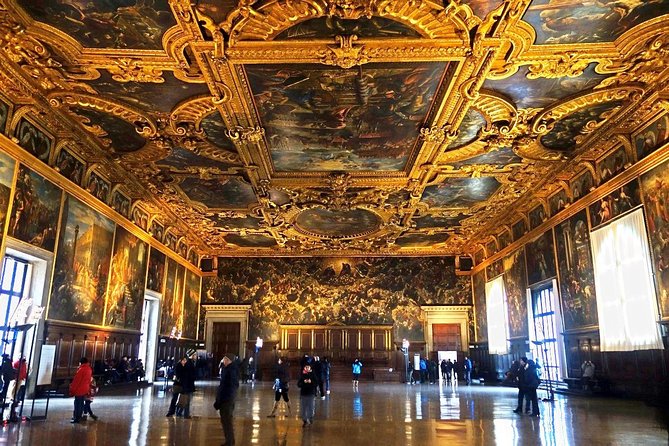
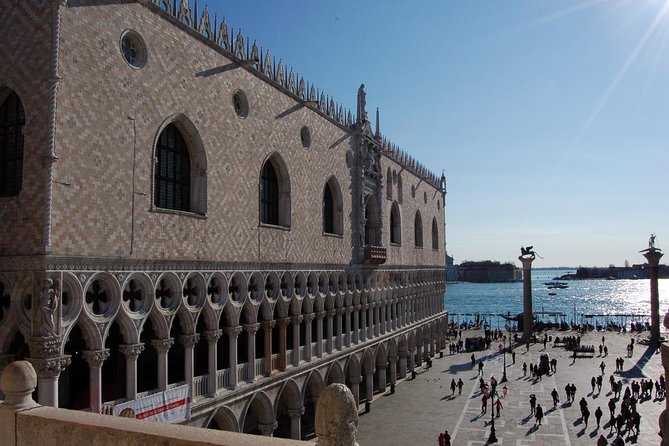
The tour starts with Piazza San Marco, described as the gem of Venice in the tour overview. This is the right first anchor because it’s a visual “map” for the city: from here, you can start mentally placing where you’ve been and where you’re going next.
Even with limited time, a guided visit to this area helps because it’s not just a square—it’s the hub that shaped Venice’s public power. The guide’s job here is to set context so the later stops inside official buildings don’t feel random.
One practical advantage of starting with St. Mark’s area is that you get to see how Venice funnels foot traffic. You’ll quickly learn where the busiest corridors are, and that helps when you later want to escape the crowds on your own.
The trade-off: Piazza San Marco is still Piazza San Marco. Expect plenty of people and plenty of camera bodies. If you’re the type who needs quiet moments, you’ll want to embrace the morning timing and trust that the tour’s route is designed to move you along rather than park you in the thickest center for too long.
Palazzo Ducale: Doge power, guided storytelling, and a must-see interior
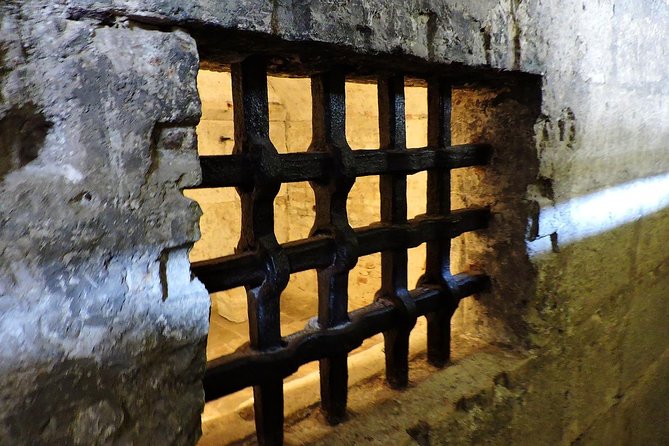
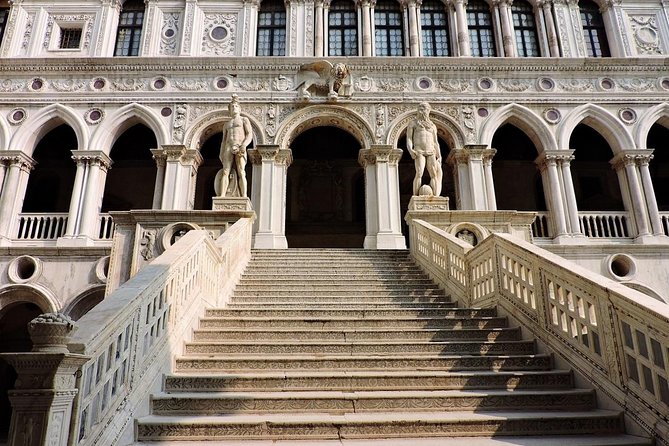
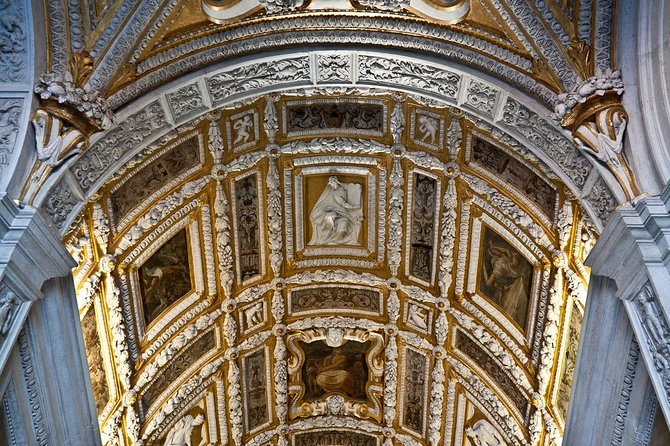
The centerpiece is Palazzo Ducale, the seat of the Venetian doges. You’ll get about one hour inside, and admission is included. This is the part where the tour pays off for most people, because Doge’s Palace is not just pretty rooms—it’s governance, intrigue, and a huge sense of scale in a city that’s famous for being compact.
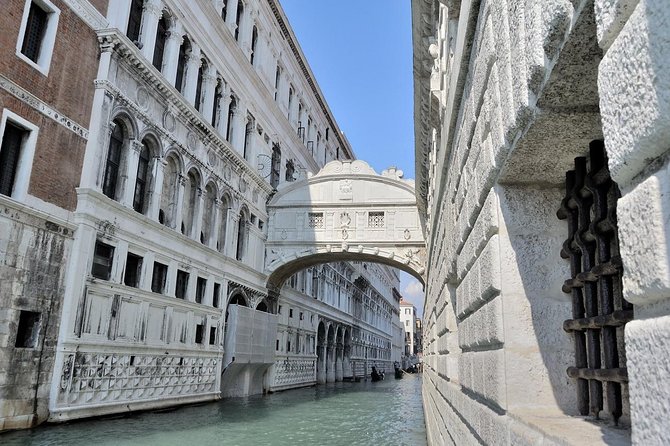
The palace also connects directly to the highlight you came for: the Bridge of Sighs. The tour frames it in a way that helps you understand what you’re looking at. Without that context, the bridge can look like another iconic photo spot. With the guided explanation, it becomes part of a story about confinement and passage between spaces of power.
What I like about the tour format here is that it gives you a timed, guided path rather than leaving you to roam. Doge’s Palace is big enough that independent visits can turn into a blur of doors and arches. With a guide, you get signposts—what matters, what to notice, and how the building functioned.
That’s also where group size can feel noticeable. One person praised how the operator used headsets so they could hear explanations even while the group was large. If you’re sensitive to sound and crowding, that kind of audio support is not fluff—it’s the difference between a memorable visit and a frustrating one.
Basilica dei Santi Giovanni e Paolo: Venice’s “pantheon” stop
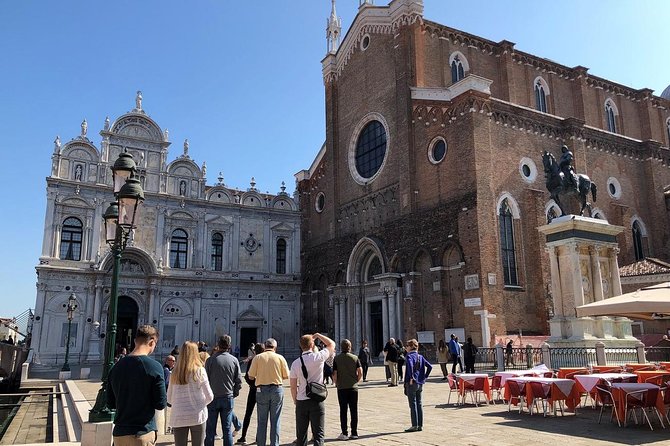
After the big palace moment, the tour shifts to a more grounded, local-feeling stop: Basilica dei Santi Giovanni e Paolo. It’s in the Castello district and is often described as the pantheon of Venice because many doges and other important figures have been buried there since the 13th century.
Here, you’re not in a long interior visit. The scheduled time is about 10 minutes, and admission is not included. So think of it as a guided look that places the basilica in Venice’s political and ceremonial world, rather than a full church crawl.
Why this works: Doge’s Palace tells you about authority in action. This church gives you a sense of authority after life—how Venice memorialized its leaders and reinforced identity through burial and architecture.
The drawback is simple: in 10 minutes, you’re not going to read every inscription or linger for perfect light. You’ll likely get the essentials and then move on. If your priority is slow church time, you might want to plan a separate return later.
You can also read our reviews of more guided tours in Venice



Campo Santa Maria Formosa: the Castello side of Venice
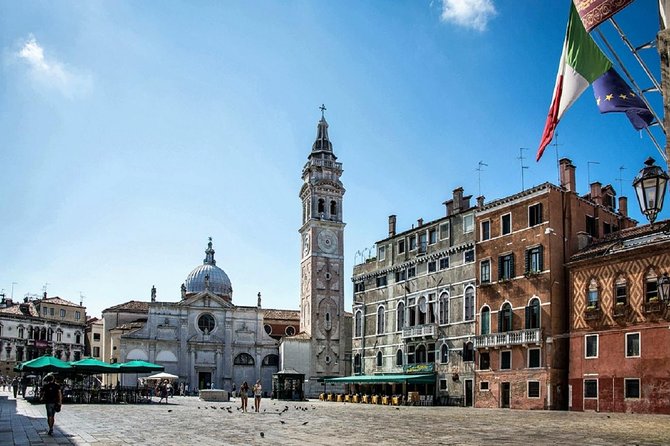
Then you step into Campo Santa Maria Formosa, described as one of Venice’s larger squares. This stop runs about 10 minutes, it’s free, and it connects you to the Castello district rather than keeping you locked in the St. Mark’s bubble.
What makes this stop interesting is the layout. The square connects to nine calli and eleven bridges, some of which simply link entrances to nearby palaces. In other words, it’s not just a scenic open space—it’s a piece of lived geography, showing how Venice parcels movement through waterways and passageways.
I like this kind of stop because it helps you understand Venice as a place people actually navigate every day. It also gives your brain a rest after the heavier political themes of the palace.
The consideration: it’s still a guided group moment. You’ll get the highlights and then move on. If you love wandering and photography, you’ll probably want to explore the surrounding calli immediately after the tour ends so you can slow down in the streets that already feel familiar.
The Marco Polo thread: Il Milione as a way to see Venice
One itinerary element ties in Marco Polo and his work Il Milione, described as a geographic encyclopedia compiling knowledge from the end of the 13th century about Asia. This isn’t necessarily a stop where you’re standing in front of a plaque for a long time; it’s more likely the guide uses the walk to connect Venice’s global curiosity to what you’re seeing around you.
Why that matters: Venice wasn’t only about local canals and local politics. It was a trading power with a reputation for far-reaching travel and information networks. When the guide brings Marco Polo into the story, you start to see the city as a bridge between worlds—not just a backdrop for art and architecture.
If you enjoy history that feels like it has momentum (trade routes, ideas, power), you’ll likely appreciate this narrative thread.
If you’re not into stories, it might feel like a short tangent. But even then, it’s a helpful way to interpret what Venice is implying through its buildings and institutions.
Crowds, pace, and why morning still matters
Venice crowds are a real variable. One person called out that even on a rainy day there were many people, and the walk still worked because the route takes you through narrow streets and bridges in a way that keeps you moving. Another praised the guide for avoiding crowded areas, which is key: a good guide doesn’t just know the facts; they manage the human traffic.
This tour is collective, and it runs with other participants. That can affect how long you pause at each spot and how much time you get for photos. The flip side is that the group structure can also keep you from getting lost, especially in a city where every turn looks promising but can cost you time.
The good news: because the itinerary is fairly tight, you get guided highlights without spending the whole morning stuck in one bottleneck. Starting at 9:00 a.m. helps, and the route’s logic helps too.
My practical advice: if you want the best photos, take them while the guide is explaining something nearby, not after the group has already started moving. Venice rewards quick composition. You’ll get your chance, but you’ll have to work with the schedule.
Price and value: is $118 fair for this mix?
At $118 per person, you’re paying for three things: guided walking time, inclusion of Doge’s Palace admission, and a structured route that hits multiple important landmarks in about 3 hours 15 minutes.
The value angle is the palace. Doge’s Palace is the big-ticket stop, and here it’s included in the package. That means you’re not juggling separate tickets, timed entries, and trying to coordinate your own pace through a high-demand site. For many people, that alone makes the price feel reasonable.
You’re also paying for expertise that turns landmarks into meaning. The palace visit is where guided explanations can really change your experience; you’ll spend time in a building that’s full of symbolic details and power dynamics, and those are easier to notice when someone points you to them.
Is it the cheapest way to see Venice? No. But for a first visit—especially if you want a strong start without planning every step—the combination tour pricing is often a smart shortcut.
One more detail that can affect your total costs: on certain dates, some day visitors who are staying outside Venice may need to pay a €5 access fee. The tour overview sends you to the official Venice access fee details. If you’re arriving as a day trip, check that list so there are no surprise add-ons.
Who this tour fits best (and who might want a different approach)
This tour makes a lot of sense if:
- You want an efficient first-day introduction to Venice’s most iconic power landmarks.
- You care about Doge’s Palace and want guided interpretation, not just audio at the entrance.
- You prefer morning plans to avoid heat and to reduce time lost in peak crowds.
- You like short stops that still give you context (like the Castello-area square and basilica).
It may feel less ideal if:
- You want a slow, unstructured day where you linger in churches and squares for long periods.
- You dislike group movement and don’t enjoy managing your photos and timing alongside other people.
- You’re expecting a fully off-the-beaten-path walk. You’ll go through major sites first, then balance with Castello stops, but it’s still a classic “highlights” route.
For most visitors, though, the combination works because it hits two needs at once: getting your bearings on the streets, then getting your money’s worth inside the palace.
Before you book: your best move for this morning plan
If you’re serious about doing Doge’s Palace early, this kind of guided format is a good way to reduce friction. You’ll need to arrive on time, and you’ll want to start the day with a clear plan, not a guessing game.
One operational tip I’d follow: keep your schedule flexible right after the tour. You’ll end back at the meeting point, which helps, but Venice can still shift your timing with unexpected crowds and street congestion.
Also, in winter the tour is listed as bilingual from Nov 1 to Mar 31 if audiences are mixed. If language comfort is important for you, this is a helpful detail to know ahead of time.
Should you book this morning Venice walking + Doge’s Palace tour?
I’d book it if you want a smart first look at Venice that includes the palace and also gives you a real sense of where things sit in the city. It’s not a slow romance of Venice streets; it’s a guided, efficient morning that gets you oriented and then delivers a guided interior highlight.
Skip it if you already feel confident navigating on your own and you’d rather spend more time in fewer places. Doge’s Palace is amazing, but if you’d rather set your own pace in churches and squares, a flexible day visit might suit you better than a timed combo.
If you do book, do two things: show up 10 minutes early, and treat this as a foundation day—then let the rest of your time in Venice be the slower, more personal wandering that comes after you’ve learned the city’s main threads.
FAQ
How long is the Morning Venice Walking Tour plus Doge’s Palace Guided Visit?
It runs for about 3 hours 15 minutes.
What time does the tour start, and where do I meet?
The start time is 9:00 a.m., and the meeting point is Calle larga de l’Ascension, 30124 Venezia VE, Italy.
Is Doge’s Palace admission included?
Yes. Doge’s Palace admission is included in the guided visit.
What language is the tour offered in?
The tour is offered in English. During the winter period (Nov 1 to Mar 31), it is bilingual with explanations provided in two languages if the audience provenance is mixed.
Do I need to print a ticket?
No. The tour uses a mobile ticket.
Is this tour suitable for most people?
The activity is listed as suitable for most travelers, and it includes walking through Venice.
Are there any extra fees I might need to pay?
On certain dates, some day visitors who are planning to visit for the day may be required to pay a €5 access fee. For details and exemptions, you’re directed to https://cda.ve.it.