REVIEW · VENICE
Small-Group Walking Tour of the Jewish Ghetto in Venice
Book on Viator →Bookable on Viator
Venice’s ghetto history hits fast, in the streets. This small-group walk in Cannaregio turns a quiet neighborhood into a real story you can follow step by step. I especially like the local, Jewish-Community trained perspective and how Lucia links the past to what you can still notice today.
My other favorite part is the pacing: you get context before you step into the area, then you move through the sights with plenty of time for questions. One possible drawback: this tour is very history-first. If you mainly want a faster sightseeing loop with fewer stops and lectures, you may find the pace a bit stationary.
In This Review
- Key highlights at a glance
- Why the Jewish Ghetto feels different the moment you enter
- Starting at Campo San Geremia: your orientation matters
- Stop 1: Cannaregio’s green area and the feel of the original neighborhood
- Stop 2: A Venetian campo and the big question of the ghetto’s origin
- Stop 3: Walking the three Ghettos of Venice (and learning to read the street)
- Synagogues and the museum: what you see, and how you’ll still visit them
- Stop 4: Fondamenta dei Ormesini for real Venetian daily life
- Stop 5: Jewish ghetto recipes, biscuits, and a small art moment
- Pace, group size, and who this tour suits best
- Value check: is $71.35 worth it?
- Should you book this Jewish Ghetto walk with Lucia?
- FAQ
- FAQ
- How long is the Jewish Ghetto walking tour in Venice?
- What does the tour cost?
- What language is the tour offered in?
- How big is the group?
- What is included in the tour?
- Are the synagogue interiors or the museum included?
- Where does the tour start and end?
- Do I need an internet connection for the ticket?
- Is there an access fee in Venice?
- What happens if the weather is bad?
Key highlights at a glance
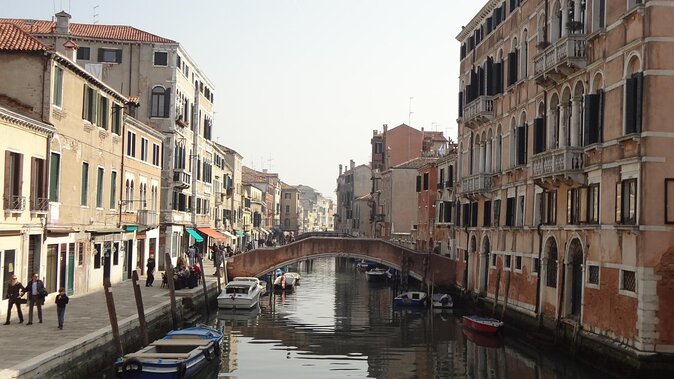
- Cannaregio intro with a green-area starting point that frames what the ghetto area looked like
- Lucia’s stop-by-stop context on why Venice created the first ghetto
- A walk through three Ghettos in one route, with daily life and symbols explained
- You see details even without synagogue interiors (and you’ll get guidance for visiting them separately)
- Fondamenta dei Ormesini waterfront + local everyday life beyond the usual routes
- Jewish ghetto recipes and biscuits, plus an art gallery moment on the way
Why the Jewish Ghetto feels different the moment you enter
Venice can look like it is made of postcards. But the Jewish Ghetto area (in Cannaregio, including the Ghetto Ebraico zone) has a different tempo. You feel it in the way buildings, alleys, and small squares hold onto layered history, not just scenery.
What makes this experience stand out is that it doesn’t treat the ghetto as a sealed museum piece. Instead, it explains how Venice shaped life there, what restrictions meant day to day, and how the community’s presence still shows up in details you might otherwise miss. That is why a guided walk works so well here: the neighborhood is easy to wander, but hard to interpret without context.
Also, the tour has a clear focus: the history and culture of the Venetian Jewish quarter, not a generic Venice checklist. If that is what you want, you’ll likely feel satisfied fast.
You can also read our reviews of more walking tours in Venice


Starting at Campo San Geremia: your orientation matters
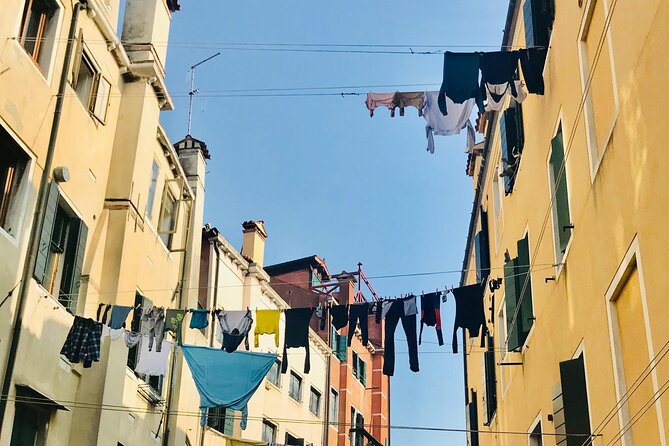
The tour begins at Campo San Geremia (30121 Venezia VE) and ends at Fondamenta dei Ormesini (30121 Venezia VE). Getting that end point right matters in Venice. Instead of finishing back where you started, you walk toward a more lived-in waterfront edge of Cannaregio.
Meet-up at Campo San Geremia also sets you up for the main theme: you are not just walking “to the ghetto.” You are walking to understand why it was placed here, and what Venice’s choices meant. I like tours that do this. You get bearings fast, and the neighborhood starts making sense as you go.
Logistics are simple. You get a mobile ticket, the tour is offered in English, and it runs in a maximum group size of 12. That small number keeps the walk calmer and makes questions realistic instead of rushed.
Stop 1: Cannaregio’s green area and the feel of the original neighborhood
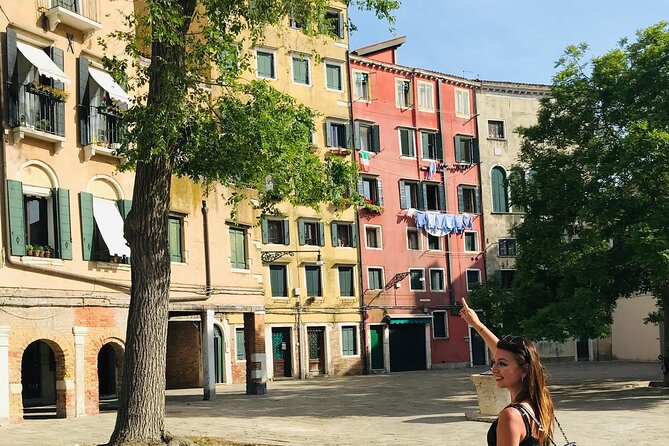
The first stretch takes you into Cannaregio with a green-area moment—a short stop, around 15 minutes, with the aim of helping you “see” the ghetto before you fully enter it.
This matters more than it sounds. Venice is all angles and stone, so it’s easy to think history happened in a vacuum. That green-area framing helps you understand the geography and why a district could be shaped, controlled, and sealed off in the first place. It also gives you a baseline for how the district around Cannaregio looked at the time of the ghetto.
If you are hoping for a purely scenic walk, this first stop can feel like setup. But if you want meaning, it is time well used.
Stop 2: A Venetian campo and the big question of the ghetto’s origin
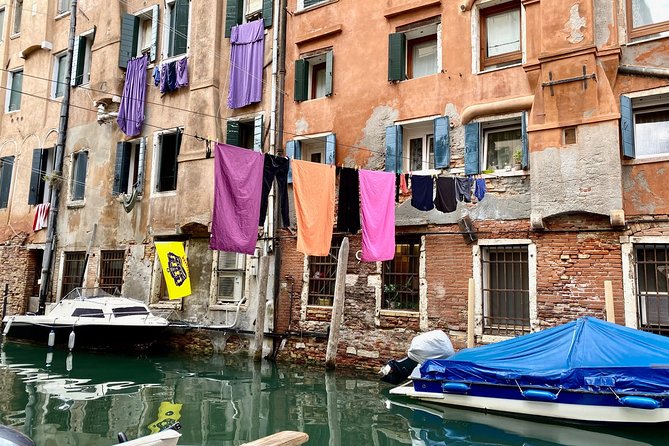
Next, you gather in an authentic Venetian campo. This is when Lucia lays out the larger context: how the Jewish community lived before the ghetto, and why Venice created the first ghetto in history.
This is the heart of the tour’s teaching approach. Rather than throwing facts at you randomly, the guide builds a logical path:
- where the community lived and how it functioned,
- what changed when Venice imposed restrictions,
- and what the ghetto system created in daily life.
You also get a preview of the kinds of details you’ll later spot in the quarter, including symbols and references that an expert will recognize quickly. You do not need to be a history student for this to work. You just need curiosity.
One small practical note: the tour is around two hours total, so you’ll want comfortable shoes. Even with stops, this is still a walking experience in Venice.
Stop 3: Walking the three Ghettos of Venice (and learning to read the street)

The longest segment is the actual strolling through the Ghetto Ebraico, focusing on the fact that Venice had three Jewish ghettos. Instead of treating it like one uniform district, the route helps you understand how each part fits into the broader story.
This is where Lucia’s style really shows. The walk includes history, curiosities, and the day-to-day feel of the area, then it brings you into the “present of this charming quarter” so it doesn’t end as a sad lesson. You’ll learn the origin of the word ghetto, why Venice did what it did, and who was in charge at the time (your guide will name the Doge during the explanation).
A detail I found especially helpful: you do not just hear dates. You get prompted to recognize markers that only an expert would call out—things like plaques, sculptures, and even tree details tied to the area’s memory. That kind of attention makes your photos more meaningful, because you start spotting what the neighborhood is trying to say.
And you get chances to ask questions. In multiple experiences with Lucia’s tours, the same pattern appears: she stays patient and answers fully, which is a big deal for a subject that raises real emotional and historical questions.






Synagogues and the museum: what you see, and how you’ll still visit them
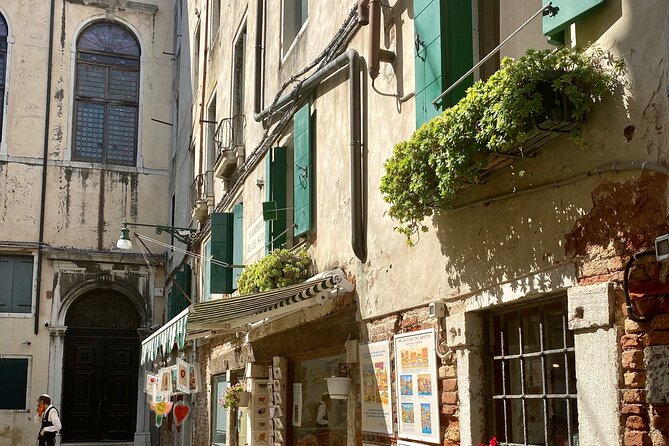
You’ll walk the quarter without interior visits to the synagogues or a museum. That might sound like a loss, but the tour structure turns it into a planning advantage.
Instead of rushing through rooms you may not connect with, your guide focuses on what you can observe from outside and how the guide explains how to visit the synagogues on your own later. You also get detail work: you can recognize features and understand their purpose, even if the interiors are not part of the two-hour walk.
So the practical takeaway is this: book this tour for context, then add synagogue visits separately if you want the full experience. You’ll feel more prepared and you’ll know what you’re looking for when you arrive.
Stop 4: Fondamenta dei Ormesini for real Venetian daily life
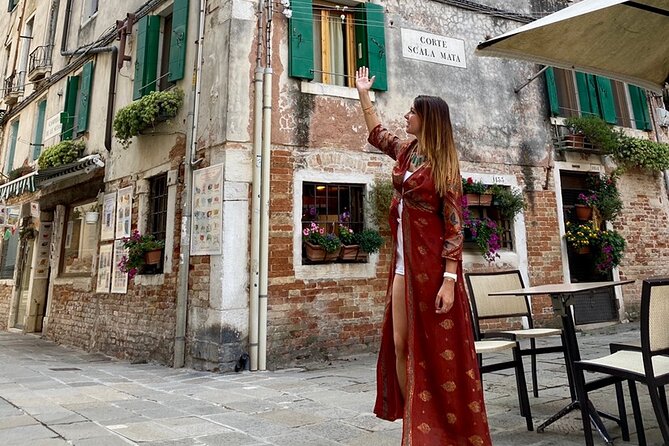
The tour finishes with a turn in viewpoint. You head to Fondamenta dei Ormesini, a waterfront stretch that gives you a different kind of Venice picture—one less focused on major monuments and more on everyday movement along the water.
This stop is short (about 15 minutes), but it’s a smart ending. It helps you absorb what you just learned while your senses are still fresh. You also get a sense of how the neighborhood continues now, which matters when a tour is about a community that was shaped by outside control and then lived on.
If you like ending a walking tour somewhere you can linger—grab a snack, watch boats, and let the history settle—this finish point works well.
Stop 5: Jewish ghetto recipes, biscuits, and a small art moment
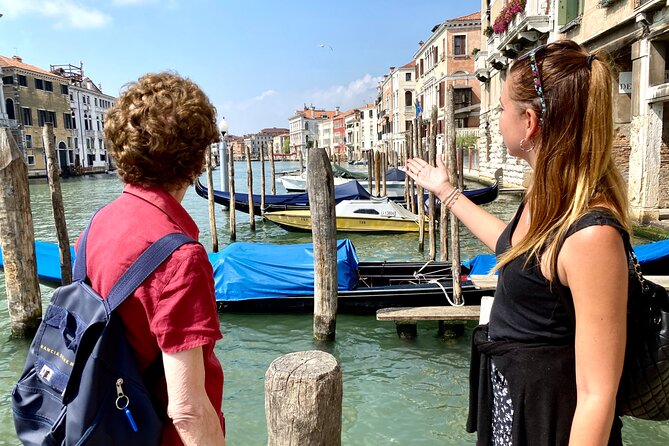
The last portion adds food and culture without turning into a full tasting tour. You’ll hear about Venetian recipes from the Jewish ghetto, including unique biscuits made in the area, plus you’ll stop for an art gallery moment.
Even if you don’t buy anything, the value here is interpretation. Food is one of the easiest ways to connect history to living culture. It also reinforces that the ghetto was not only restriction and hardship. People built traditions, adapted, and kept creativity alive inside narrow boundaries.
If you want a Venice souvenir that isn’t mass-produced, this part gives you a better target: items tied to local Jewish food traditions and nearby shops.
Pace, group size, and who this tour suits best
The tour caps at 12 travelers and runs around two hours. That is usually ideal for Venice, where big groups turn every sidewalk into a bottleneck.
Pace-wise, it is not a “walk-and-skim” style. The structure includes multiple short stops (each around 15 minutes for the earlier segments, then about an hour for the main ghetto walk). That means more listening, but also fewer chances to get lost in the meaning.
Here’s the key fit question for you: do you want to understand why the ghetto existed and what daily life looked like, or do you want a lighter sightseeing loop? If you want depth, you’ll likely feel it is the right length. If you want to cover ground quickly with minimal pauses, this may feel like a series of lectures rather than a continuous stroll.
Based on the way Lucia teaches, the best approach is to come with patience for context. Bring questions. You’ll get thoughtful answers.
Value check: is $71.35 worth it?
At $71.35 per person for about two hours, the price can look steep until you consider what’s included:
- a guide trained by the Jewish Community and Rabbi,
- focused, high-context walking through the three Ghettos area,
- detailed explanations of symbols and daily life,
- and practical guidance on synagogue visits even though interiors aren’t included.
This is not a generic history walk you could read online in 30 minutes. It’s a guided route designed to help you notice specific things in the neighborhood. In Venice, that kind of interpretation is often what separates a “nice walk” from a tour you remember.
Also, the small-group format matters. With a max group size of 12, you get personal attention instead of just receiving a headcount.
One extra cost to plan for: on certain dates, people staying outside Venice for the day may need to pay a €5 access fee. Your booking info should point you to the official details (you can check it at the site listed in your booking materials).
If you’re traveling with limited time in Venice, booking about 60 days ahead on average is wise, since this tour is often scheduled.
Should you book this Jewish Ghetto walk with Lucia?
I think you should book it if you want a serious, compassionate, street-level way to learn why Venice’s Jewish quarter was formed, how it worked, and what the neighborhood communicates today. The strong point is the guide’s ability to connect history to visible details—plaques, symbols, shop-area stories, and what you can still understand from the street.
I’d skip it (or look for a lighter option) if you mainly want movement and fewer pauses. This tour is built for understanding, not just checking sights. You’ll spend real time listening, and the payoff is better when you’re in a learning mood.
If you do book, set yourself up for success:
- wear comfortable shoes,
- arrive ready with a couple of questions,
- and plan a follow-up synagogue visit if you want interiors, since the tour focuses on outside details and guidance.
FAQ
FAQ
How long is the Jewish Ghetto walking tour in Venice?
It runs for about 2 hours.
What does the tour cost?
The price is $71.35 per person.
What language is the tour offered in?
The tour is offered in English.
How big is the group?
The tour has a maximum group size of 12 people.
What is included in the tour?
A guide local expert trained by the Jewish Community and Rabbi is included.
Are the synagogue interiors or the museum included?
No. Interior visits to synagogues are not included, but the guide provides detailed information and explains how you can visit them.
Where does the tour start and end?
It starts at Campo San Geremia, 30121 Venezia VE, Italy and ends at Fondamenta dei Ormesini, 30121 Venezia VE, Italy.
Do I need an internet connection for the ticket?
You’ll receive a mobile ticket.
Is there an access fee in Venice?
On certain dates, people staying outside Venice who are visiting for the day may be required to pay a €5 access fee. You can check which days apply using the link provided at booking.
What happens if the weather is bad?
This experience requires good weather. If it’s canceled due to poor weather, you’ll be offered a different date or a full refund.