REVIEW · VENICE
Secret Venice, an unusual walk – Private Walking Tour
Book on Viator →Bookable on Viator
Venice has layers you can feel. This private Secret Venice walk stitches together famous landmarks with the stories behind them, from Renaissance art in the churches to odd urban details you’d never guess on your own. I like how the route is short and focused, and how the guide keeps the mood lively while you ask anything.
What I really like: you get Titian and Tintoretto tied to the churches they were painted for, not just names dropped like trivia. And I love the way the guide brings Venice’s local culture to life—Carnival, the old red-light district, and even why Venice has so few wells. The one thing to think about is the weather: this walk needs good conditions, and plan B matters.
Small groups make it better. This experience is private, and the pace leaves room for real questions instead of a rapid-fire march. If you’re hoping for a long, sit-down museum day, this is not that kind of outing—but that’s exactly why it works so well for most people.
In This Review
- Key highlights you’ll care about
- Secret Venice: a 2-hour plan with real conversation time
- The value math: $453.01 per group for a private, art-led walk
- Start in Campo San Giacomo di Rialto, end at Campo San Rocco
- Stop 1: Chiesa di San Giacomo di Rialto and the Venice origin feeling
- Stop 2: Mercati di Rialto and the merchant brain behind the city
- Stop 3: Rio Terà de le Carampane and the red-light district story
- Stop 4: Campo San Polo and Venice’s wells, plus the altana angle
- Stop 5: Campo San Toma and Carnival’s mask logic
- Stop 6: Basilica di Santa Maria Gloriosa dei Frari and the art that belongs there
- Stop 7: Scuola Grande di San Rocco and a perfect ending
- Why the guides make the difference: Federico and Francisco’s style
- Practical tips before you go (so Venice feels easy)
- Who should book Secret Venice (and who might not love it)
- Should you book? My straight take
- FAQ
- How long is Secret Venice, an unusual walk?
- Is this tour private?
- How much does it cost?
- What language is the tour offered in?
- Where does the tour start and end?
- Are admission tickets included?
- Is there a city access fee in Venice?
- What happens if the weather is bad?
- What if the tour doesn’t meet the minimum number of travelers?
Key highlights you’ll care about
- Small-group pacing (capped at eight) so you can ask questions and actually hear the answers
- Church art context that connects Titian and Tintoretto to the spaces they were made for
- Street stories with a purpose, including Carnival, the former red-light district, and Venice’s wells
- Rialto-to-San-Rocco route that keeps you moving through the city’s most storied zones
- Guides with strong delivery, including Federico and Francisco (both praised for clarity and humor)
- Free entry points along the walk, so you’re not constantly budgeting for museum tickets
Secret Venice: a 2-hour plan with real conversation time
This is the kind of Venice tour I’d recommend when you want to understand the city without spending your day in lines. It’s built for a fast, intelligent route: you’re walking, learning, and getting context you can carry with you into the next church, bridge, or canal turn.
The structure matters. With numbers capped at eight (and the tour sold as private for your group), the guide can slow down when someone asks a question—and they do. That’s a big deal in Venice, where the best details are often on the sides of things: a carving here, a name on a doorway there, a story that explains why a place looks the way it does.
Also, you start in the Rialto area and end near the Scuola Grande di San Rocco. That arc gives you a sense of how Venice thinks—markets, religion, public buildings, celebration—rather than repeating the same “big sights” loop.
You can also read our reviews of more walking tours in Venice

The value math: $453.01 per group for a private, art-led walk
The price is listed as $453.01 per group (up to 15). That sounds high until you look at what you’re buying: a private guide for about 2 hours with a tight route and a small-group style of interaction.
For couples, this is often the kind of spending that feels justified because you’re not splitting the cost across strangers. For families, it can also make sense, since you’ll get a guide who can steer questions to different ages and keep everyone engaged. In the feedback, guides Federico and Francisco were repeatedly praised for organizing the information clearly and making sure people could hear them.
One practical note: if your group is large, confirm the actual on-the-ground group size for comfort. The tour is described as capped at eight for attention and Q&A, while the pricing is per group up to 15—so you’ll want to make sure your booking matches what you expect.
Start in Campo San Giacomo di Rialto, end at Campo San Rocco
The walk begins at Campo San Giacomo di Rialto (meeting at Campo S. Giacomo di Rialto, 30125 Venezia VE, in front of the church area). The start time is 11:00 am, and the end point is Campo San Rocco near Scuola Grande di San Rocco—meeting in front of the Scuola Grande di San Rocco.
Why I like this setup: the meeting points are in active parts of Venice. That means you’re not trying to start a tour in a quiet dead zone. It also helps you plan your day. You can pair this walk with an afternoon that includes church visits, a market bite, or a slower wander toward Rialto.
It’s also offered in English, uses a mobile ticket, and is described as near public transportation. Service animals are allowed, and most people can participate. So unless you have a serious mobility constraint, it should fit well into most itineraries.
Stop 1: Chiesa di San Giacomo di Rialto and the Venice origin feeling
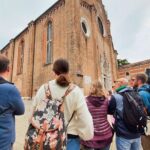
Your first stop is Chiesa di San Giacomo di Rialto. This is where the tour sets a tone: Venice is old, and the city’s story starts in places you’d otherwise pass without thinking. You’ll get an introduction to about 1600 years of Venice in that location—history anchored to the exact spot where it was originally funded.
There’s also a practical benefit here. Starting with a church early on gives you orientation fast—names, patterns, and what to pay attention to later. When you then walk to nearby Rialto areas, you’ll understand why the city’s institutions grew where they did.
Admission is listed as free for this stop, which is a nice win. You’re not starting your day with a ticket scramble. The downside? Churches can be busy at times, and you’ll likely want to dress respectfully and keep your voice low.
Stop 2: Mercati di Rialto and the merchant brain behind the city
Next up: Mercati di Rialto. This is the tour’s reality check. Venice was built on trade, and the market scene is the place where you see how everyday commerce shaped the city’s power and pride.
You’ll get an overview of the market and the Venetian merchants—what they needed, how they operated, and what kind of city Venice had to be in order for this system to work. Even if you’re not shopping, this stop helps you read Venice like a working place, not just a museum.
You’ll be here only briefly (about 15 minutes), so the aim is clarity, not overload. If you like to follow up with your own walking afterward, this stop gives you the vocabulary to do it.
Again, admission is listed as free. The only consideration is logistics: Rialto areas get crowded. Wear comfy shoes and keep expectations realistic for walking in tight streets.
You can also read our reviews of more private tours in Venice

Stop 3: Rio Terà de le Carampane and the red-light district story
Now you move into a quieter but fascinating pocket: Rio Terà de le Carampane. This is where the tour talks about the former red-light district—and it doesn’t treat it like gossip. It frames the story as part of how Venice functioned, not just as scandal.
This stop is also where you’ll hear about Venice’s more complicated side: the city’s contradictions, how it tolerated what it publicly didn’t advertise, and how those behaviors left marks in the geography. The goal is to help you understand why certain corners have reputations, and how those reputations formed over time.
The walk time here is also about 15 minutes, which is perfect. You get context without feeling like you’re being dragged through uncomfortable material without explanation.
Drawback: if you’re sensitive to adult-themed history, be aware the tour explicitly covers red-light district context. It’s handled as part of urban history, but it is still part of the story.
Stop 4: Campo San Polo and Venice’s wells, plus the altana angle
Next is Campo San Polo, and this stop explains two things that most visitors never connect: why Venice has so few wells and what you should know about altana.
Those altana details matter because they’re part of how Venetians lived with the city’s layout. Venice’s architecture isn’t just pretty—it’s practical. When you understand that, you start seeing rooftops as living space rather than random scenery.
The wells part is especially interesting because it turns a question (why don’t I see wells?) into an answer tied to the city’s environmental and construction reality. You’ll also learn how the guide reads the city: small clues you can keep spotting after the tour.
Admission is listed as free, and you’ll spend about 15 minutes here. The only caution is that campi can be windy. If you’re doing this in cooler months, you’ll want a layer you can handle.
Stop 5: Campo San Toma and Carnival’s mask logic
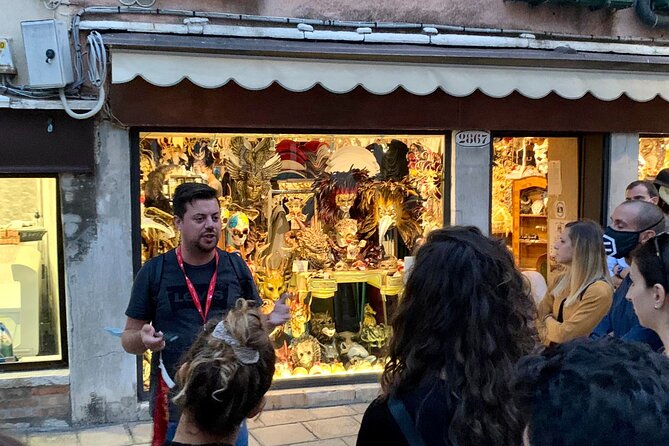
After Campo San Polo, you head to Campo San Toma. This stop focuses on Carnival and the importance of masks—not only the costumes, but what masks do in a city like Venice.
A good way to think about this stop: masks are a social tool. They change how people are seen, how roles shift, and how public behavior can be different when identity is disguised. That’s the kind of angle that makes Carnival feel more meaningful than just photo ops.
In the feedback, one person mentioned mask making to see also, which suggests you may get an extra look at the craft side of what masks represent. I can’t promise that’s part of every run, but it’s clearly connected to the experience’s theme.
Again, expect about 15 minutes. The main downside is that if you’re visiting outside Carnival season, you may need to lean on the guide’s storytelling more than on seasonal atmosphere.
Stop 6: Basilica di Santa Maria Gloriosa dei Frari and the art that belongs there
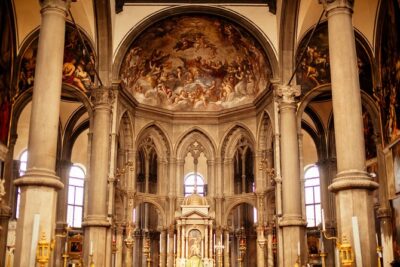
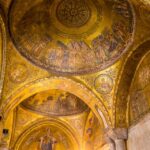
Now you reach one of the tour’s big payoffs: Basilica di Santa Maria Gloriosa dei Frari. The experience centers this church as one of Venice’s most important—then ties it to why that matters: it’s a space connected to major art, including works by Titian and Tintoretto, in the churches where they were painted for.
This is where the “art context” approach becomes real. Instead of treating famous names like a checklist, you learn how the church environment and purpose shaped what the artists made and how it was meant to be seen.
You’ll spend about 15 minutes inside, so don’t expect a full museum-style route. But for an overall understanding of Venice’s religious and artistic world, it’s a strong anchor.
Admission is listed as free for the stop. Still, churches can have rules about photo-taking or quietness, and crowds can affect your ability to see details. The advantage of this tour is that the guide keeps you oriented fast.
Stop 7: Scuola Grande di San Rocco and a perfect ending
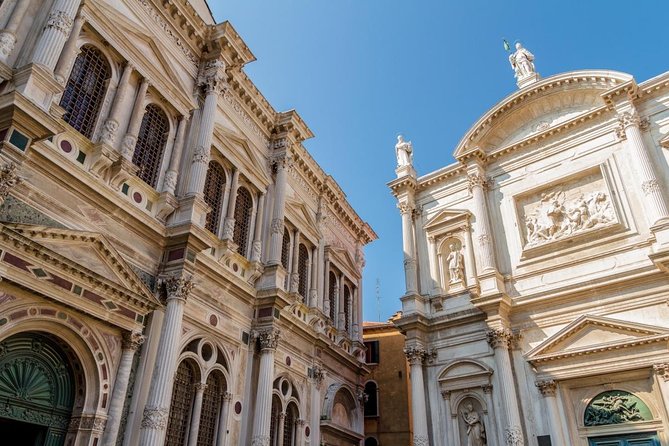
The walk ends at Campo San Rocco, in front of Scuola Grande di San Rocco, and this final stop is designed to land with impact. You’ll get an overview of one of Venice’s most beautifully decorated buildings, and the timing feels smart: finish with the visual payoff after the stories.
The Scuola Grande di San Rocco is a place where decoration isn’t just decoration—it’s how Venice communicates values and status. You’ll likely come away noticing patterns, religious themes, and craftsmanship more than you would if you simply strolled in cold.
This is also a good “reset point” to end your tour because it sits near more places to explore afterward. After two hours of structure, you’ll know what to look for next.
Admission is listed as free for this stop as well. The consideration here is that it’s an active sightseeing zone, so expect some foot traffic even at the end.
Why the guides make the difference: Federico and Francisco’s style
In the feedback, Federico and Francisco stand out for a reason: they don’t just recite history. They shape it into something you can follow. Federico was praised for great knowledge, excellent restaurant recommendations, and making the walk fun for a family group. Francisco was praised for clarity, warmth, and being prepared.
What you should look for in your own guide is exactly what those comments point to: solid organization, the ability to make sure everyone can hear, and a sense of humor that doesn’t distract from the point. You don’t want a tour that feels like a lecture. You want a conversation with a plan.
The small cap (eight) helps here. In a larger group, questions get lost. Here, the design supports back-and-forth—so you can ask things like how Carnival connects to public life or how Venice’s water setup changed daily living.
Practical tips before you go (so Venice feels easy)
Here are the things I think most travelers should do to get the best experience:
- Wear comfortable shoes. This is a walking tour through narrow Venice streets and church interiors.
- Plan for good weather. The tour notes it requires good weather, so bring a light layer or rain plan.
- Be ready to ask questions. The format is designed for them, so come with one or two curiosities.
- Start your day at 11:00 am with a relaxed mindset. Two hours passes fast when you’re learning and moving.
- Bring a phone for the mobile ticket so check-in is quick.
If you’re traveling with family or a mixed-age group, this kind of guide-led storytelling is usually a winner. Short stop times help attention stay steady.
Who should book Secret Venice (and who might not love it)
I’d book this tour if you want Venice to feel like a lived-in place, not a blur of photos. It’s also ideal if you’re specifically interested in how major art fits into actual buildings—Titian and Tintoretto tied to where their works were intended to be seen.
It’s especially good for:
- First-time visitors who want orientation with depth
- People who like history that includes real city life: markets, celebration, and even the darker corners
- Anyone who prefers a guide-led route over self-guided wandering
You might skip it if you’re only seeking long indoor time, or if you strongly dislike walking through places connected to adult-themed pasts—even when handled as history.
Should you book? My straight take
If your goal is to understand Venice in a smarter, more human way in just two hours, this is a strong choice. The big reasons are the small-group pacing, the art-focused storytelling inside major churches, and the way guides like Federico and Francisco keep things clear and fun.
The trade-off is simple: it’s a walk with a set route and a weather requirement. If the forecast looks shaky or you need guaranteed long museum time, pick a different day or a different type of tour. Otherwise, this one is built to make your next Venice steps feel more meaningful.
FAQ
How long is Secret Venice, an unusual walk?
The tour is listed as about 2 hours.
Is this tour private?
Yes. It’s described as a private tour/activity, with only your group participating.
How much does it cost?
The price is listed as $453.01 per group, up to 15 people.
What language is the tour offered in?
It’s offered in English.
Where does the tour start and end?
It starts at Campo San Giacomo di Rialto (meeting in front of the church area) and ends at Campo San Rocco, in front of the Scuola Grande di San Rocco.
Are admission tickets included?
Admission is listed as free for each stop on the route.
Is there a city access fee in Venice?
On certain dates, people staying outside Venice and visiting for the day may need to pay a €5 access fee. The tour notes you can check applicable days and exemptions at https://cda.ve.it.
What happens if the weather is bad?
The tour requires good weather. If it’s canceled due to poor weather, you’ll be offered a different date or a full refund.
What if the tour doesn’t meet the minimum number of travelers?
If it’s canceled because the minimum isn’t met, you’ll be offered a different date or experience, or a full refund.