REVIEW · VENICE
Off the Beaten Path Walk in Venice
Book on Viator →Operated by deTourist Venice Valerio Coppo · Bookable on Viator
Venice hides its best scenes in plain sight. This two-hour, small-group walk threads through quiet Dorsoduro streets and waterfront corners, with a licensed guide who keeps things practical and easy to follow.
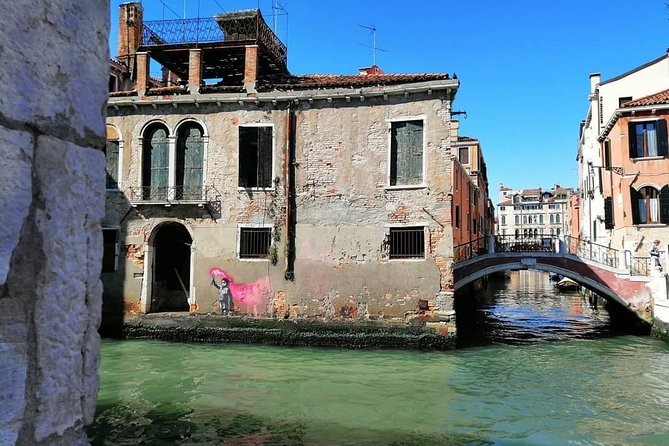
I love the relaxed pace and the way the guide shapes the route around what you’re into, not just a factory-style checklist. I also like the mix of recognizable Venice landmarks with truly odd details, like San Pantalon’s ceiling painting and the Banksy graffito view across the canal.
One possible drawback: it’s still a walking tour on old streets, so if your goal is only San Marco-level highlights, you may want to pair this with another day for the bigger icons.
In This Review
- Quick take: what’s special here
- Why this quieter Venice walk feels different
- Price and timing: is $92.92 a good use of your Venice hours?
- The start in Campiello dei Squelini: getting oriented without the usual rush
- Ca’ Foscari’s Gothic details: a university palace you can read with your eyes
- San Pantalon: the huge canvas ceiling and the Banksy moment outside
- Campo Santa Margherita and Campo San Barnaba: nightlife energy and movie-history corners
- Zattere on the Giudecca Canal: Molino Stucky and centuries of docks
- Squero di San Trovaso: gondola craftsmanship in the workshop world
- Punta della Dogana tip: customs building art, baroque church, and the Fortune Goddess
- Who this tour suits best (and who should skip it)
- Should you book this Off the Beaten Path Walk in Venice?
- FAQ
- How long is the Off the Beaten Path Walk in Venice?
- What’s the group size?
- Where does the tour start and end?
- Is the tour in English?
- Are any admissions included?
- What about extra fees or access rules in Venice?
Quick take: what’s special here
- Max 15 people keeps the mood friendly and questions welcome
- Dorsoduro and Zattere focus means quieter Venice energy
- San Pantalon ceiling artwork plus a Banksy-style canal reflection moment
- Campo San Barnaba delivers film trivia tied to the real location
- Squero di San Trovaso shows gondola craftsmanship at canal level
- Stop-by-stop admissions are listed as free, so you can spend your money on food and vaporetto rides instead
Why this quieter Venice walk feels different
Most first-time Venice plans aim straight for the famous lanes. This one goes the other way: toward the neighborhoods where daily life continues after the day-trippers drift elsewhere. The result is a Venice you can actually hear, see, and pace at walking speed.
A big reason this works is the size. With a maximum of 15 people, you’re not shouting over a crowd. That matters in Venice, where every bend in the calle can turn into a bottleneck. Here, you get time to look up at facades, ask questions, and actually connect the art and architecture to what people do on these streets every day.
I also like the tone of the experience. The guide leading this walk is Valerio Coppo, and the small-group format helps him keep things personable and funny while staying informative. In practical terms, it means you don’t just get facts; you get context you can use while wandering later on your own.
You can also read our reviews of more walking tours in Venice
Price and timing: is $92.92 a good use of your Venice hours?
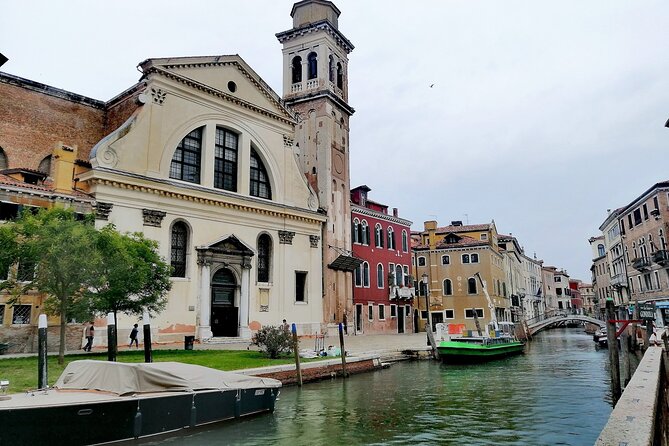
At $92.92 per person for about 2 hours, you’re paying for three things: a licensed guide, a smart route, and your time saved from hunting for hard-to-find corners. In Venice, time is the expensive part. This tour keeps that time focused.
You’ll also get value in the form of listed free admissions at each stop. That’s not universal in guided tours, and it helps keep the cost from creeping upward once you’re standing in front of churches and sights. Plus, you’ll have a mobile ticket, so you can travel light.
One more practical point: it’s commonly booked well in advance (about 122 days on average). That’s usually a sign that the small-group spots fill up. If you’re set on this specific walk, it’s worth locking it in earlier rather than later.
The start in Campiello dei Squelini: getting oriented without the usual rush
The tour begins in Campiello dei Squelini, near Ca’ Foscari in Dorsoduro. This is a nice way to start because you’re already in an area with layers: university life, art-world energy, and canal views, all close enough to walk without long transfers.
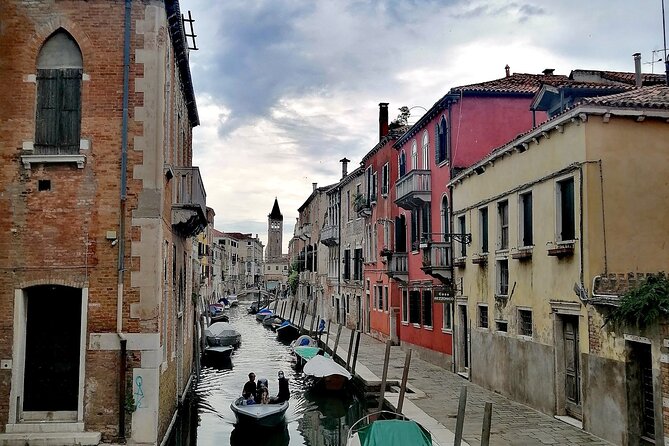
From the meeting spot, you transition into Dorsoduro, a neighborhood known for art and local life. Instead of racing through Venice’s postcard zones, you move through the “in-between” places where buildings change texture as often as the canals do. And because the group is small, you can pause without feeling like you’re holding up a line.
You also start with a setting that helps you understand what you’re about to see. Campiello spaces in Venice work like little rooms—shared courtyards—so the moment you step into the walk, you get a sense of scale. That makes the rest of the route easier to follow.
Ca’ Foscari’s Gothic details: a university palace you can read with your eyes
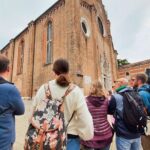
A key early stop is the area around Ca’ Cappello – Università Ca’ Foscari. The tour route passes Ca’ Foscari, the Gothic palace on the Grand Canal that houses Venice University.
What I like about this stop is that it’s not just a photo opportunity. The guide points out the Venetian Gothic stonework and the building’s intricate details, which you can miss if you only glance while walking. It helps you learn the visual language of Venice—how style, materials, and history show up in the way the city was built.
You also get a clear thread of continuity. The building belonged to the wealthy Foscari family, and today it’s a center of learning with student life happening inside those walls. That’s a powerful contrast: Venice doesn’t freeze in time. It keeps using its old spaces for new purposes.
San Pantalon: the huge canvas ceiling and the Banksy moment outside
Next comes Campo San Pantalon, and it’s one of those stops that feels like a well-timed plot twist. Inside the Church of San Pantalon, you can see the largest painting on canvas in the world, covering the ceiling. When you’re standing in the right spot looking upward, the scale makes the “how is this even possible” reaction totally reasonable.
Outside, the tour adds a modern art surprise. You’ll find Venice’s only Banksy graffito, with a clever reflection in the canal water. That kind of detail is the reason a guided route helps. Without someone pointing it out, you might walk past it while chasing the next big church in your mental map.
The practical takeaway: if you care about art and you don’t want Venice to feel like a museum on a schedule, this is a strong anchor in the middle of the walk.
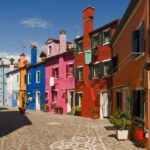
Campo Santa Margherita and Campo San Barnaba: nightlife energy and movie-history corners
The walk then shifts to Campo Santa Margherita, one of the city’s well-loved squares. This is where Venice shows a different rhythm—especially in the evenings, when cafes, local bars, and outdoor seating pull people in. Even if you’re here in daylight, you can see how the square is shaped for social life: open space, surrounded by buildings built for watching and being watched.
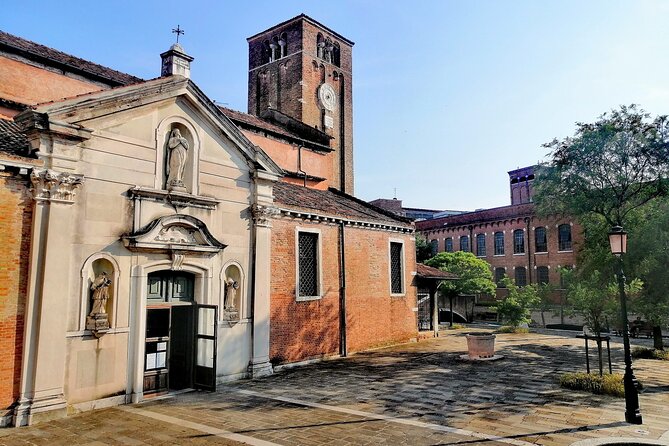
After that, you head to Campo San Barnaba, a calmer-feeling square with a church and a canal view. This stop has a light touch of pop-culture history: it’s tied to the Indiana Jones scene from The Last Crusade, and it’s also linked to Katharine Hepburn’s famous moment of falling into the water.
What’s useful here is not only the trivia. It gives you a reason to look closely at the angles and layout of the square. Venice film locations make more sense when you understand where sightlines are and how people move through the space.
Zattere on the Giudecca Canal: Molino Stucky and centuries of docks
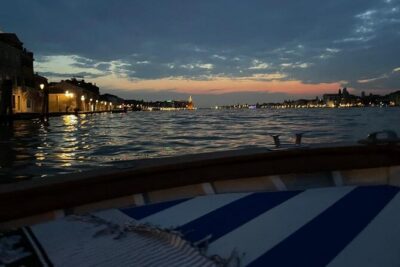
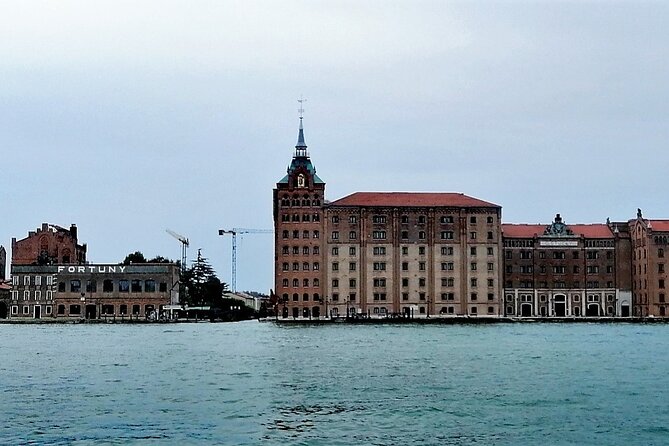
Now the tour moves along Fondamenta Zattere, where Venice becomes maritime again. The route looks toward the Canale della Giudecca, and that water view changes how the city feels. You get more air, more horizon, and a sense of Venice as an engine of shipping and industry, not just a backdrop for postcards.
A highlight here is Molino Stucky, a 19th-century flour mill on the water that’s been transformed into a luxury hotel. The key is that it didn’t get “softened” into something generic. The industrial character remains visible, so you can read the original function of the building even after it became hospitality. If you like architecture that shows change over time, this is the kind of spot that sticks in your mind.
The tour also explains the deeper history of the Zattere promenade. The wide fondamenta was known as Carbonaia for coal unloading, paved in 1519, and later named delle Zattere from rafts called Zattere that carried wood to the Arsenale from the mainland. That’s the sort of info that turns a simple walk into a timeline.
For you, this section is often the “best legs” part of the route: less stop-and-start, more time to look across the canal and understand why Venetians built so much life around these quays.
Squero di San Trovaso: gondola craftsmanship in the workshop world
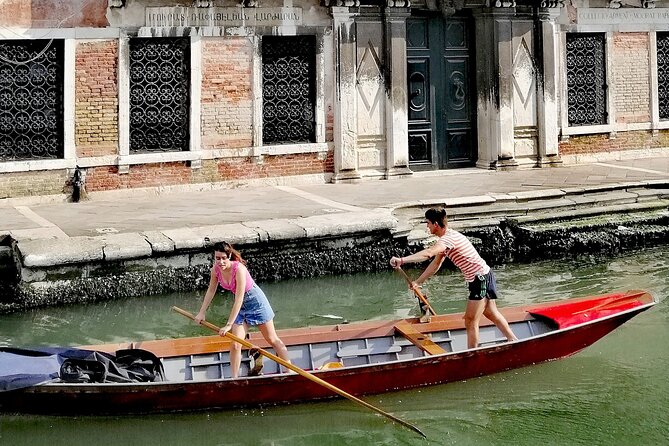
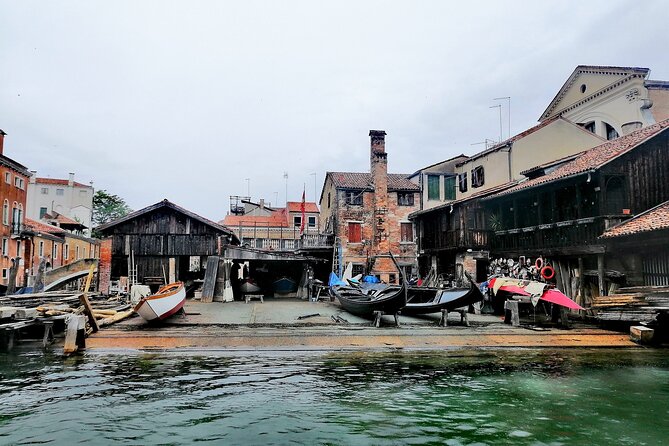
If you want Venice that feels practical rather than theatrical, Squero di San Trovaso is a major reason to book. The squero is a boatyard where the centuries-old tradition of gondola crafting continues.
Because it’s along quieter canals of Dorsoduro, the setting feels less like a stage and more like work. The tour frames it as an intimate look at boatbuilding, where the materials, sounds, and movement make the craft feel real. You’re not learning gondola history from a sign. You’re seeing where the tradition happens.
This is also a good spot for photos, but it’s more valuable than that. It gives you a lens for Venice’s identity: the city wasn’t only built for beauty. It was built to float, carry, and build boats. And a squero shows that side up close.
Punta della Dogana tip: customs building art, baroque church, and the Fortune Goddess
The tour ends at the tip of the Dorsoduro triangle near Punta della Dogana, where the Grand Canal meets the Giudecca Canal. Ending here makes sense because the views and landmark cluster give you a strong “final scene” feeling without extra travel time.
At this point, you’ll stroll past:
- an art museum housed in an old customs building
- a baroque church
- the Patriarchal Seminary of Venice
- the statue of the Fortune Goddess overseeing the scene
The Fortune Goddess detail is the kind of symbolic touch that makes the corner feel specific. Instead of ending in a generic plaza, you finish in a place that connects maritime trade, religion, learning, and art in one compact geography.
If you like tours that leave you with a clearer mental map of how Venice’s waterways, buildings, and institutions interlock, this ending does the job.
Who this tour suits best (and who should skip it)
This is a great fit if you:
- want quiet Venice in areas like Dorsoduro and Zattere
- enjoy art and architecture, including surprises like San Pantalon’s ceiling painting
- like guides who adapt and keep the tone friendly and fun (Valerio Coppo’s style is a standout in the reviews)
- prefer a small group format that makes it easy to stop and ask questions
You might skip it if you’re arriving in Venice with only one short window and you want a laser focus on the biggest, most obvious sights like San Marco. This walk is designed for the “other Venice” side, and it’s at its best when you’re open to that approach.
Should you book this Off the Beaten Path Walk in Venice?
Yes, if you want an organized route that still feels like Venice life. The best part is the combination: Dorsoduro’s art-and-streets feel, Zattere’s maritime layers, and a craft stop at Squero di San Trovaso that most standard itineraries never touch. For $92.92, you’re getting a licensed guide, a small group experience, and sights built around real local texture.
I’d book sooner than later because the tour is popular enough to get scheduled well in advance. And if you’re the kind of person who likes to learn how a city works, not just where the landmarks are, this walk will do more for your understanding than a checklist ever will.
FAQ
How long is the Off the Beaten Path Walk in Venice?
It’s listed as about 2 hours.
What’s the group size?
The tour has a maximum of 15 travelers.
Where does the tour start and end?
The start is Campiello dei Squelini, 30123 Venezia VE, Italy. The tour ends at Punta della Dogana in the Dorsoduro area.
Is the tour in English?
Yes. It’s offered in English.
Are any admissions included?
The stops shown in the itinerary are listed with admission tickets as free.
What about extra fees or access rules in Venice?
On certain dates, people staying outside Venice may need to pay a €5 access fee. The tour info directs you to check the official details here: https://cda.ve.it.