REVIEW · VENICE
Walking Tour of Venice with Mini Cruise
Book on Viator →Operated by Consorzio Vidali Group · Bookable on Viator
Venice in 90 minutes, land and water. This tour stitches together the big stops you came for, with views from both the streets and the canals, so it feels like Venice instead of just postcard scenery.
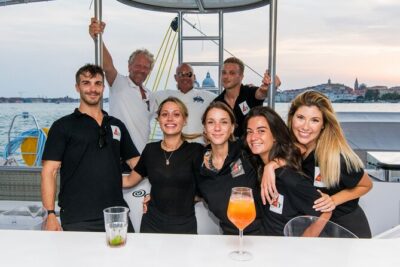
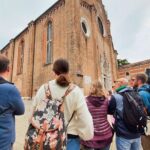
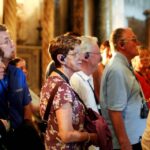
What I really like is the guide-led history and traditions piece. You get explanations tied to what you’re seeing, and guides such as Carlotta, Julia, Rebecca, and Marta have been praised for keeping people engaged and handling questions well.
One thing to consider: the language mix. Even when English is selected, some groups run bilingual or trilingual at the same time, and that can shorten how much detail you get in English or make the narration feel split.
In This Review
- Key things I’d notice before you go
- Entering Venice via Santa Lucia: the KFC start is oddly helpful
- How the timing works: about 90 minutes, but it can stretch
- Jewish Ghetto (Ghetto Ebraico): why this area changed language and law
- Strada Nova: Venice’s main road, as a wayfinding tool
- Chiesa di Santa Sofia and the Rialto-side crossing
- Canal Grande: the view everyone remembers, with a little guidance
- Ponte di Rialto and Piazza San Marco: two icons, one tight stretch
- Giudecca Canal: the motorboat moment and the Palladio connections
- Guide style and the English question: how to protect your experience
- Walking comfort and accessibility: expect a fair amount of steps
- Price and value: $30.04 is reasonable, but extras matter
- Should you book this Venice walking tour with a mini-cruise?
- FAQ
- FAQ
- How long is the Venice walking tour with mini cruise?
- How much does it cost?
- Is the tour offered in English?
- Does the tour include a gondola ride?
- Where does the tour start?
- Where does the tour end?
- Are tickets included for the stops?
- Is there an access fee for day visitors?
- What’s included in the price?
- Is it suitable for people with mobility issues?
- Is food and drinks included?
Key things I’d notice before you go
- Land-and-water route: You’re walking Venice’s key areas and adding a short canal crossing for variety.
- High-impact sights, fast: You cover the Jewish Ghetto, Grand Canal views, Rialto, and St Mark’s Square in a tight loop.
- Story-driven stops: You’re not just looking up at buildings; you’re hearing why they matter.
- Optional extras can change outcomes: The short gondola-style crossing and any return boat option depend on the group choice and conditions.
- Language is the wildcard: If you want all-English narration, you’ll want a backup plan.
Entering Venice via Santa Lucia: the KFC start is oddly helpful
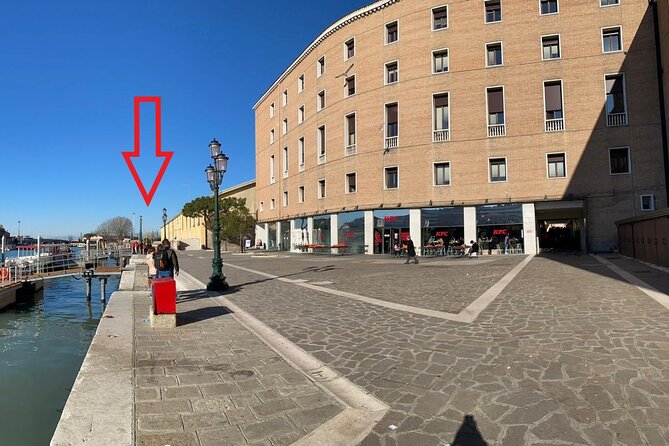
This tour starts near Venezia Santa Lucia, at a very specific meeting point: outside KFC (Stazione di Venezia Santa Lucia, 30121 Venezia). That sounds funny until you’re navigating Venice with a map that’s lying to you. A clear landmark like this makes it easier to line up on time, especially if you’re arriving from the train.
You’ll also like that the tour is designed for first-day orientation. The walking route hits several “you can’t miss this” zones without forcing you into a full-day marathon. Still, it’s not a sit-and-smile option. You’ll be on your feet, and after travel day fatigue, the pace can feel like a lot.
You can also read our reviews of more walking tours in Venice

How the timing works: about 90 minutes, but it can stretch
The published duration is around 1 hour 30 minutes, and the vibe stays “mini tour” rather than “slow city stroll.” In practice, it can run longer when the group includes multiple languages or when people take a bit more time at key photo stops.
For planning, think of it as a high-density opener. If you’re trying to fit this between museum visits or dinner reservations, leave a buffer. Venice is slow to move in when you’re navigating bridges, crowds, and those sudden turns that make you rethink your route.
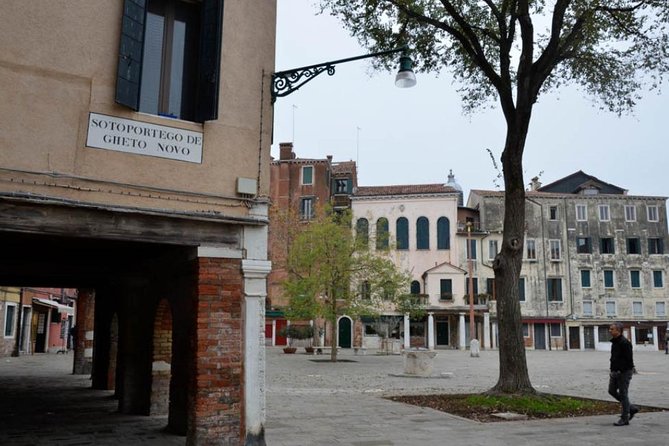
Jewish Ghetto (Ghetto Ebraico): why this area changed language and law
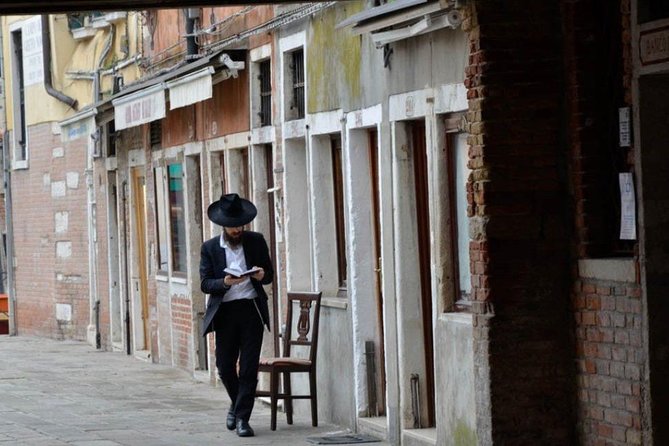
Stop one is the Ghetto Ebraico, described as the first ghetto in the world. The guide’s job here is crucial because this isn’t just a neighborhood to look at. It’s a place tied to forced segregation under the Venetian Republic, and it’s also where the English word ghetto gets its meaning.
What you’ll get from this stop is a sense of how Venice worked beyond postcards. The streets feel ordinary, but the story underneath is heavy. If you’re the kind of traveler who likes context, this is a strong start point because it frames the rest of the walk with something real, not just pretty.
Strada Nova: Venice’s main road, as a wayfinding tool
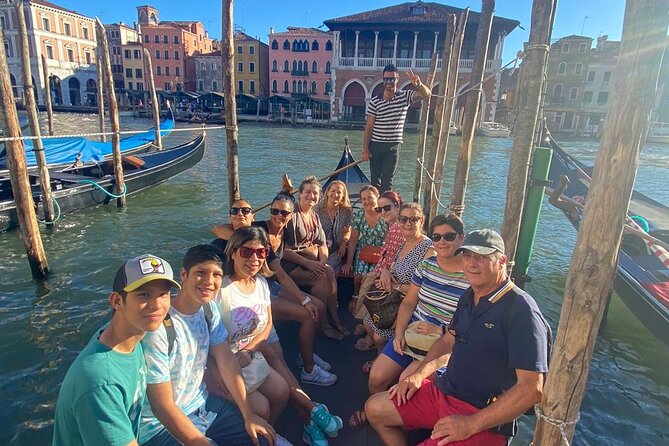
Next comes Strada Nova, Venice’s main road cutting through a large part of the city. This section is less about one famous landmark and more about movement. It helps you understand where you are and how Venice’s street grid works without needing you to study a map for hours.
One practical upside: seeing Strada Nova early makes later navigation less stressful. When you reach areas like Rialto and St Mark’s, you’re not totally lost—you’re connecting dots.
Chiesa di Santa Sofia and the Rialto-side crossing
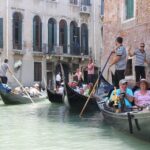
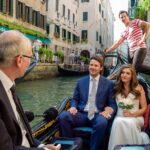
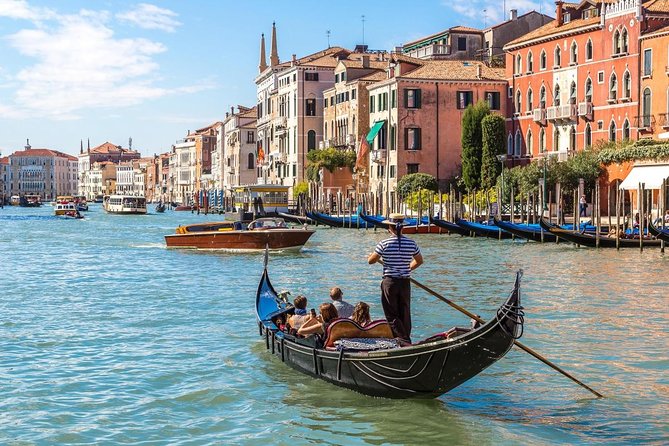
You then reach Chiesa di Santa Sofia, and from there the route is set up for a canal crossing. This is where the tour becomes more than a walking loop: you cross the Grand Canal in a short gondola-style transfer to get to the other side, near the ancient Rialto Market area.
Here’s a key detail you should know before you go: the gondola-style crossing is listed as extra, about 2€, and it’s not always automatic. The group has to choose to do it, and in some situations it may come down to timing and conditions.
Also, don’t expect this to be the same thing as a long, romantic gondola ride. It’s a brief crossing, more like public transport with a Venice twist. If you want the classic gondola experience, you’ll likely need to book separately.
You can also read our reviews of more boat tours in Venice

Canal Grande: the view everyone remembers, with a little guidance
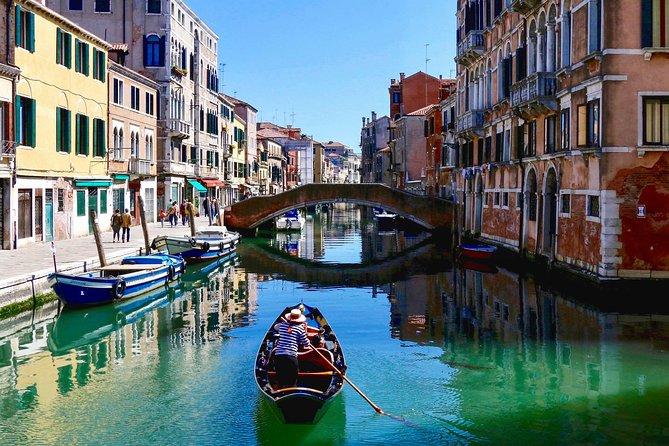
At Canal Grande, you’re in the part of Venice that’s basically a visual obsession. This canal runs through the city center, and if you’ve ever seen Venice postcards, this is the channel behind them.
With a guide, the difference is small but meaningful: you’re better at spotting what you’re looking at. Instead of only thinking, wow, that’s pretty, you’ll start recognizing how the waterfront and bridges shape the city’s movement.
Ponte di Rialto and Piazza San Marco: two icons, one tight stretch
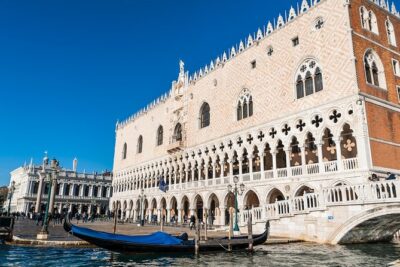
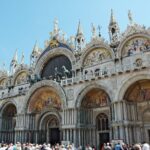
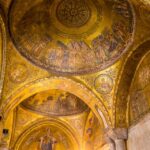
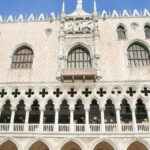
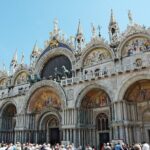
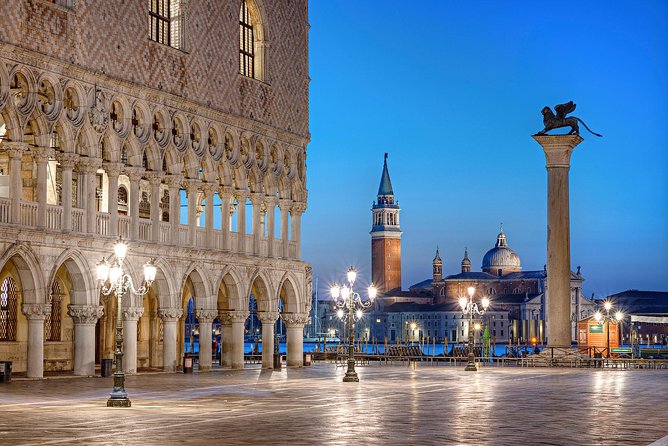
The route brings you to Piazza San Marco, the biggest, most dramatic landmark in the city. It’s the heart of Venice for a reason: it concentrates energy, architecture, and history into a space that’s hard to ignore.
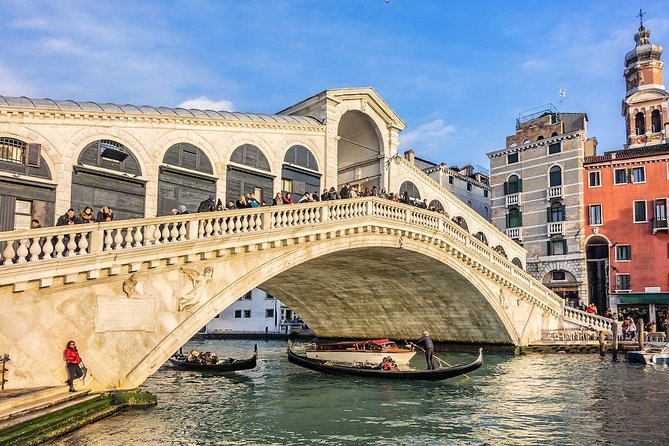
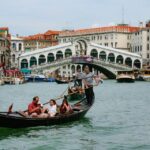
Then you hit Ponte di Rialto, one of Venice’s most ancient and beautiful bridges. This is the part of the tour where you’ll probably slow down for photos even if the group is moving. It’s also where you feel the density of Venice: crowds, echoes, and that constant sense that you’re standing inside a living city, not a theme park.
If you’re short on time, this pairing is good value. You get two of the top sights in one go, without needing to bounce between separate tours.
Giudecca Canal: the motorboat moment and the Palladio connections
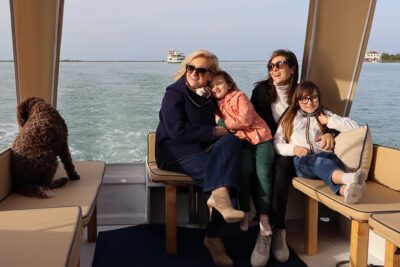
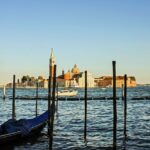
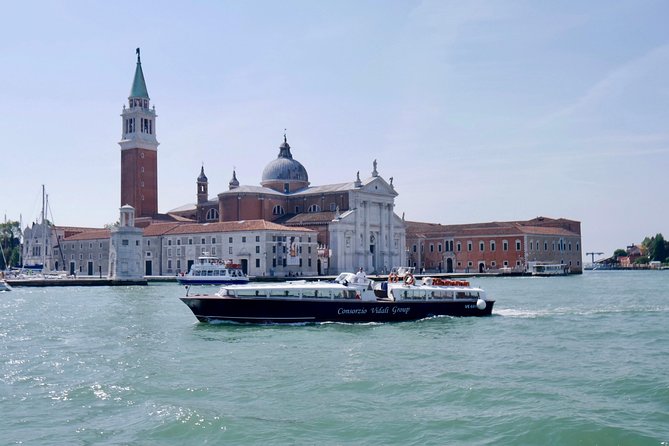
The last big highlight is the Canale della Giudecca / Giudecca Canal, described as the biggest and deepest canal in Venice. It separates the main island from Giudecca, and the crossing happens by motorboat, with a chance to see churches associated with Palladio—specifically San Giorgio and Redentore.
This stop is often where the tour feels most fun. Walking all day is tiring; a short boat segment breaks up the rhythm and gives you a different angle on the city.
Two practical notes:
- Boat transfers can depend on conditions, including tide and timing.
- What you see may vary a little based on what the group does and how the transfer is handled that day.
Guide style and the English question: how to protect your experience
The standout theme in the feedback is that the tour lives or dies by the guide. People praise guides like Carlotta, Irene, Marta, Julia, Rebecca, Georgie, Camilla, Giorgia, and Nicole for being patient, managing group needs, and switching languages when required.
But here’s the tradeoff. Some departures combine languages at the same time (English, Spanish, Italian), and when that happens, you may only get a smaller slice of the narration in English. That can make the tour feel like a brisk overview instead of a story you can follow start to finish.
My practical advice if you care about English:
- Arrive a bit early and confirm with your guide that you’ll get English narration throughout.
- Bring a translation app as a backup for key terms like ghetto, Rialto, and Giudecca.
- If the guide explains quickly in English while also covering other languages, treat this as a visual orientation tour, not a deep lecture.
Walking comfort and accessibility: expect a fair amount of steps
This is a walking tour, and while the route is short on paper, Venice can be a lot under your feet. Reviews mention it can be tiring—especially if you arrive from overseas earlier in the day or you’re not used to dense street navigation.
If you have walking disabilities, the tour is noted as not recommended but possible. The “possible” part matters, because Venice mobility issues aren’t theoretical: uneven paths, bridges, and crowd flow can become the real obstacle. If you’re on the border, go in with realistic expectations and plan a slower pace for the rest of your day.
Price and value: $30.04 is reasonable, but extras matter
At $30.04 per person, this is priced as an economical intro to Venice highlights. What you’re paying for is the combo of:
- a guide explanation of what you’re seeing,
- a land-and-water route (including a short canal crossing),
- and private transportation support.
What’s not included:
- food and drinks,
- and the gondola ride/canal crossing option (around 2€).
Is it good value? For the right traveler, yes. If you’re trying to get your bearings and see the headline sights without paying for multiple separate tickets, this price makes sense.
Where value can slip is when the tour ends up feeling shorter or more rushed due to language splitting, or when the gondola-style crossing doesn’t happen the way you expected. In other words: the base tour works best when you treat the canal crossing as a bonus, not a guaranteed centerpiece.
Should you book this Venice walking tour with a mini-cruise?
Book it if you:
- want a fast orientation to Venice’s key districts,
- like guides who add context and respond to questions,
- are okay with a short boat moment rather than a long gondola experience,
- and you’re flexible about how English narration may be delivered.
Skip it or look for a different option if you:
- need all-English narration with no sharing,
- want a long, romantic gondola ride as part of the core experience,
- have mobility limitations that make uneven walking risky,
- or you’re the kind of traveler who wants a slow, deep dive into how Venice became wealthy and governed—this is built more for highlights and stories tied to the route than for long-form political history.
If your goal is to see Venice’s biggest landmarks in a short window, this can be a solid, budget-friendly way to start. Just go in knowing the language mix and optional boat piece can affect how much you get from the narration and the water segment.
FAQ
FAQ
How long is the Venice walking tour with mini cruise?
It runs about 1 hour 30 minutes, approximately.
How much does it cost?
The price listed is $30.04 per person.
Is the tour offered in English?
It is offered in English, and your booking confirmation will specify the language.
Does the tour include a gondola ride?
A gondola ride is not included. There is an additional charge of about 2€ if you choose to do it.
Where does the tour start?
The meeting point is outside KFC at Venezia Santa Lucia (30121 Venezia VE, Italy).
Where does the tour end?
The tour ends back at the meeting point.
Are tickets included for the stops?
Admission tickets for the listed stops are shown as free.
Is there an access fee for day visitors?
On certain dates, visitors staying outside Venice may be required to pay a €5 access fee. You can check the applicable days and exemptions at https://cda.ve.it.
What’s included in the price?
You get an explanation of Venice’s history and traditions, plus private transportation.
Is it suitable for people with mobility issues?
Most travelers can participate. It is not recommended for travelers with walking disabilities, though it’s marked as possible.
Is food and drinks included?
No. Food and drinks are not included.