REVIEW · VENICE
Venice: Lords of the Night Prison’s Palace Cells & Tortures
Book on GetYourGuide →Operated by CITY TOURS CO LTD · Bookable on GetYourGuide
Cold stone, sharp stories, and a secret route. This small-group tour of Venice’s old prison complex near Piazza San Marco brings the Venetian Republic’s justice system into a very physical space, not just a history lecture. I especially liked the way you get inside the dark cells and see real prison markings up close.
I also enjoy the storytelling thread that connects the Lords of the Night, the Council of the Ten, and the famous Casanova jailbreak. You might be led by guides named Julia or Kristian, and the best moments are when they slow down for questions and point out details you’d miss on your own.
One thing to think about: this is morbid, and it includes torture-room displays, so if you’re squeamish, go prepared. Also, the site isn’t recommended for limited mobility.
In This Review
- Key things that make this prison tour worth your time
- Inside Piazza San Marco’s prisons: what you’re walking into
- The route: courtroom, cells, and the torture rooms you came to see
- Casanova in a cell: the Lords of the Night angle that makes it click
- The secret 1500s passage you can’t usually access
- Council of Ten context: the politics behind punishment
- Today’s use of the prison-palace and why the setting still hits
- Price and value: what $11 buys you in Venice
- Meeting point near San Marco: how to find it without stress
- What to choose: guided tour vs audio guide
- Timing and how to fit it into a Venice day
- Who should book, and who should skip this one
- Should you book Lords of the Night Prison Cells & Tortures?
- FAQ
- Where is the meeting point for the prison tour?
- How much does it cost, and how long is the experience?
- Is skip-the-line entry included?
- Does this tour include the Bridge of Sighs or Doge’s Palace?
- What languages are offered?
- What are the opening hours?
- What will I see inside?
- Is there a secret route included?
- Is it suitable for people with limited mobility?
Key things that make this prison tour worth your time
- Cells with inmate graffiti and period details that make the place feel lived-in, not staged
- The torture-room presentation tied to how punishments worked in old Venice
- Casanova’s arrest and jailbreak story placed directly inside the prison setting
- A secret passage from the 1500s that you can’t normally access
- The courtroom and Council of the Ten context, so the justice system makes sense
- Skip-the-line entry plus optional guided and audio formats, usually around an hour
Inside Piazza San Marco’s prisons: what you’re walking into
Venice built its power on trade and reputation, but it also ran a justice system that could be fast, secretive, and harsh. This tour takes you into one of the city’s earliest prison areas, right in the orbit of San Marco, where you’d expect beauty—and instead you get iron, stone, and locked doors.
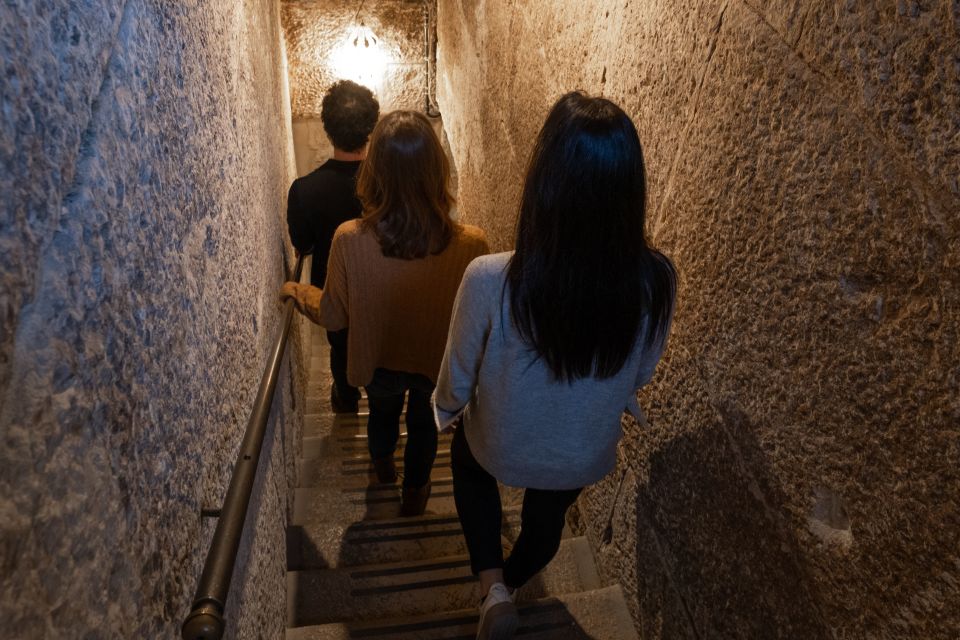
The setting matters. Even if you know the broad outlines of Venetian history, being in rooms that were designed for confinement changes your brain’s baseline. The corridors feel narrow. The cell doors and display rooms read like architecture made for control. You’ll also get context for why people feared the system: it wasn’t only about punishment, it was about maintaining order across Venice’s territories.
The tour focuses on the Venetian Republic’s prisons and the machinery behind sentences. You’ll hear about the Council of the Ten, the high-level group that oversaw justice across Venetian domains. That part is helpful, because it turns what could be a collection of scary objects into a clearer story: who had power, how decisions were made, and why the walls stayed quiet.
You can also read our reviews of more evening experiences in Venice



The route: courtroom, cells, and the torture rooms you came to see
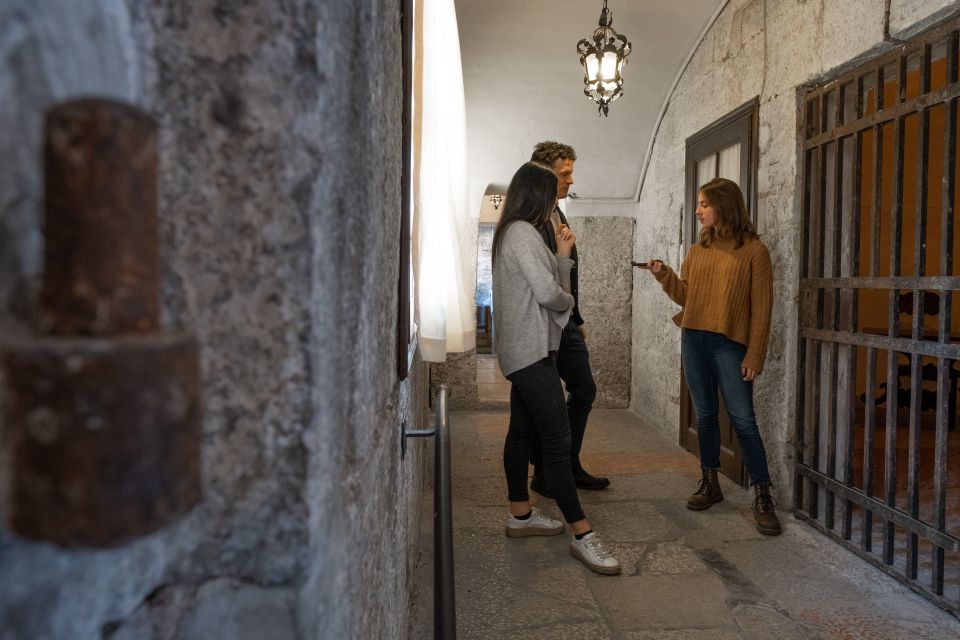
Your visit follows a route that moves from public-facing authority to hidden confinement. Expect to start with the imposing courtroom area and then shift into the more claustrophobic parts of the prison complex—cells, display rooms, and the spaces where punishments were staged or recorded.
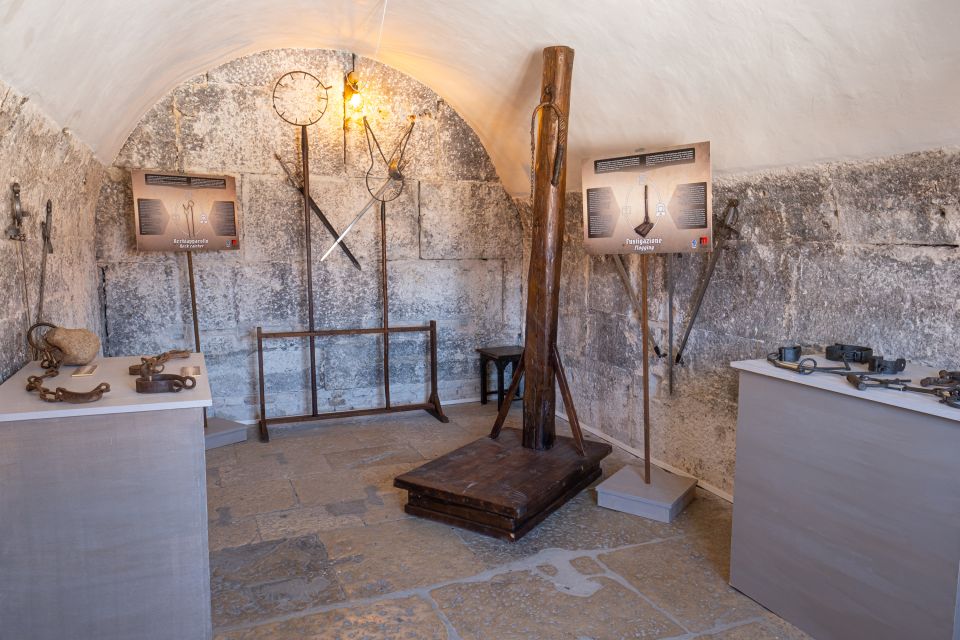
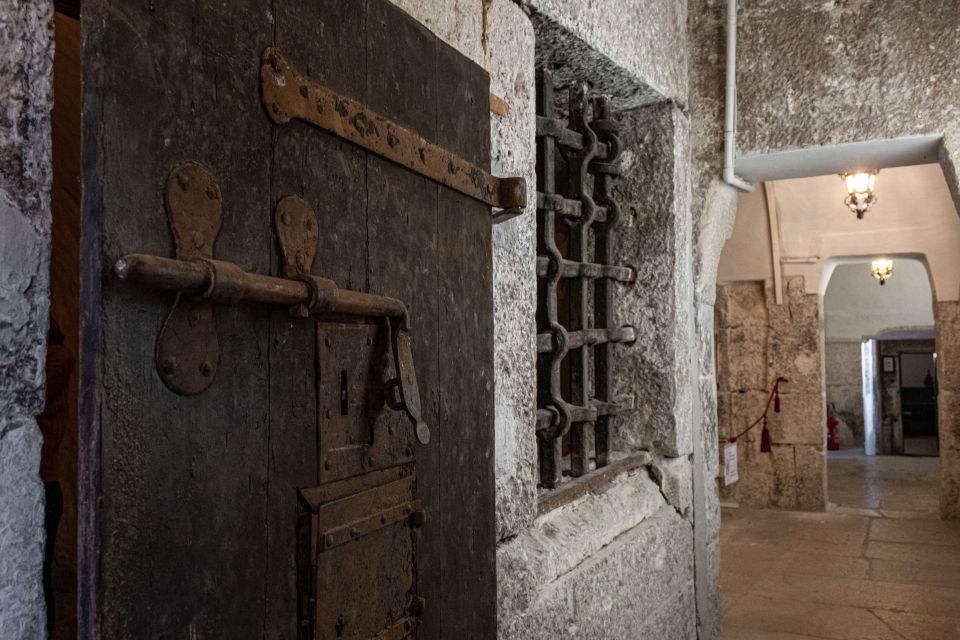
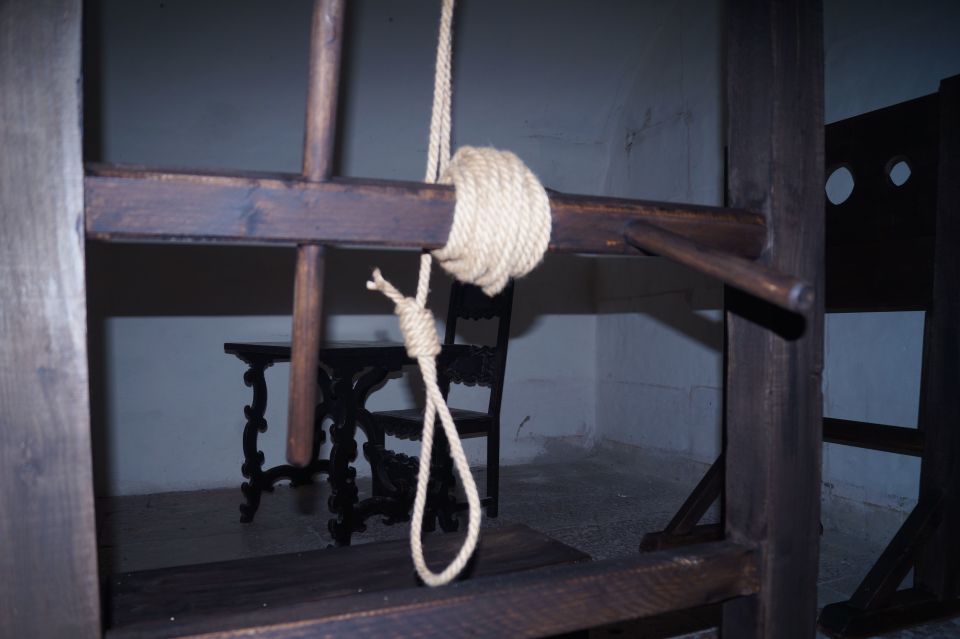
The cells are the emotional core. You’ll go inside the dark rooms and learn what it meant to be a prisoner, including basics like what prisoners ate and drank, and where they slept. The experience is often more unsettling than shocking, because it’s not only about devices—it’s about confinement as a daily reality. Some displays include actual inmate graffiti, which makes the place feel less like a museum prop and more like a record of people trying to stay human.
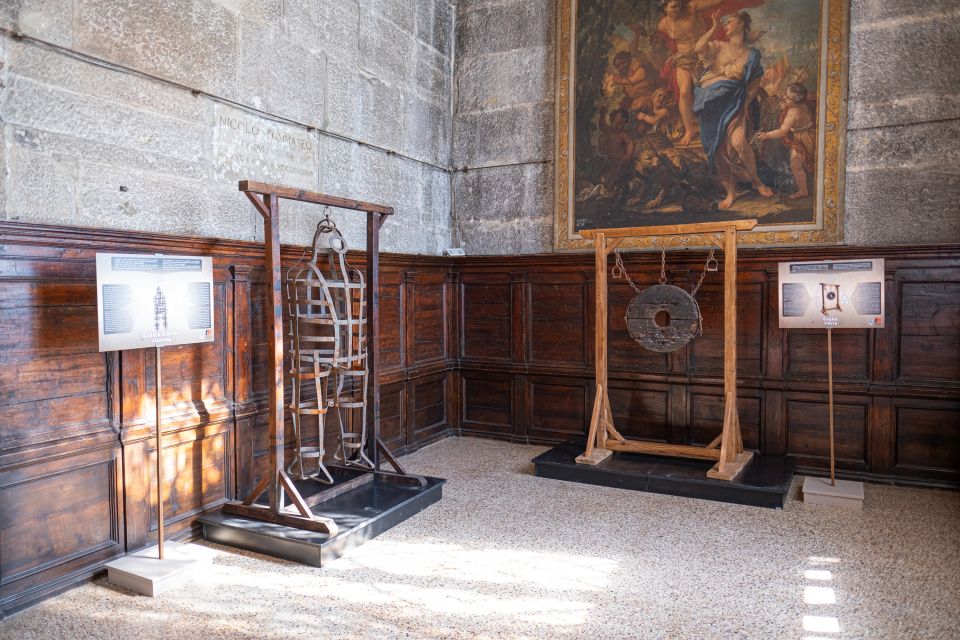
Then come the punishment and torture-room exhibits. The tour describes and explains the tools, including period examples shown across floors. If you’re looking for a “don’t miss it” component, this is it—the displays are visually direct, and the guide narration tends to connect each device to the idea of fear and control.
A fair note: the prison is not enormous. It’s possible to want more about prisoner life and less about the devices. But if you’re the type who likes a strong, coherent story plus the object details, this format tends to land.
Casanova in a cell: the Lords of the Night angle that makes it click

One reason this tour draws attention is that it ties into the most famous name connected with Venetian imprisonment: Giacomo Casanova. You’ll hear the story of how he was arrested and the jailbreak narrative connected with the Lords of the Night.
This works well because it gives you a human thread. Instead of only seeing tools, you track a plot: who made decisions, what happened after arrest, and what it meant to attempt escape. The Casanova story also helps you understand why myths formed around these places. People didn’t just fear punishment—they feared the system’s secrecy, its reach, and its ability to erase normal life.
The guide narration is where the connection gets strong. If your guide is energetic—some guides you might see include Julia or Charlotte—the story can move fast, with enough detail that you feel oriented even if your Italian is limited.
The secret 1500s passage you can’t usually access
A standout element is the route that includes a secret path from the 1500s, described as not generally open to the public. That’s not just a bonus room. It changes the feel of the tour from “viewing exhibits” to “moving through the prison as the designers intended.”
Walking that kind of restricted passage makes the whole complex feel layered. You start thinking about prisoner movement, staff routes, and how information flowed—or didn’t. Even if you only get a short stretch of it, it’s the moment you’ll remember later when you picture the site.
This also helps explain why guides stress the building layout. Venice’s power structures were tight, and prison operations were no different. When a tour includes a normally closed route, you notice the building logic, not just the horror factor.
Council of Ten context: the politics behind punishment
The prison displays are intense, but the tour tries to keep it grounded in how justice worked in Venice. You’ll hear about the Council of the Ten, described as the top political body overseeing justice across Venetian domains.
For you, that context matters for one simple reason: it turns the prison from a standalone attraction into a piece of how Venice ruled itself. You’re not only learning about what happened to inmates. You’re also learning who had the authority to make cases, how power stayed centralized, and why the city’s judicial process could feel intimidating and opaque.
This is where a good guide really helps. A narration that explains the roles and power dynamics makes the exhibits easier to connect into a single story. Without that, you’d still see torture devices and cells—but you might miss why the system looked the way it did.






Today’s use of the prison-palace and why the setting still hits
After the prison-era narrative, the tour also points out that the prison’s palace overlooking the Riva Degli Schiavoni now functions differently. The Artistic Circle is mentioned as hosting cultural experiences and concerts there.
That contrast is striking. You’re standing in a space designed for confinement, then you hear how the building now supports art and public events. It doesn’t erase the past, but it does create an interesting emotional rhythm. You walk through cold rooms, then step out into the idea that Venice repurposed the space instead of demolishing it.
If you like seeing how old Venice reuses buildings, you’ll appreciate that layer. It’s one more reason the tour feels grounded in the real city, not sealed off like a theme park.
Price and value: what $11 buys you in Venice
At about $11 per person, this tour sits in the value-friendly category for Venice. What you’re paying for isn’t only a ticket to an exhibit—it’s a guided route option, plus skip-the-line entry to the Prison’s Palace. That combination matters when you’re planning a day around crowds.
Duration is short by design. Many visits are roughly 45 to 60 minutes, which is useful in Venice. You don’t need to carve out half a day, and you can keep your schedule flexible for St. Mark’s area wandering, a vaporetto ride, or a quieter evening meal.
You also get optional audio support if you’re not choosing the live guide. The audio guide is available in English, French, Spanish, and Italian, while guided tours are listed as Italian and English. So if your group has mixed language comfort, there are ways to make it work without forcing everyone into one mode.
Meeting point near San Marco: how to find it without stress
This is one of those Venice experiences where directions matter because streets and bridges can trick your sense of location.
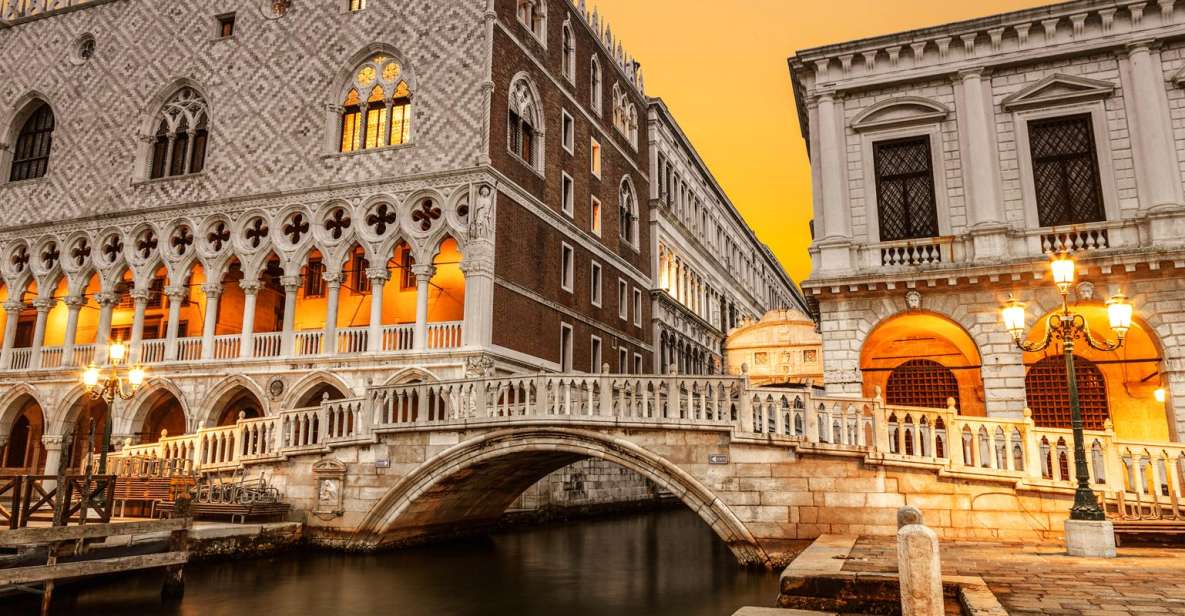
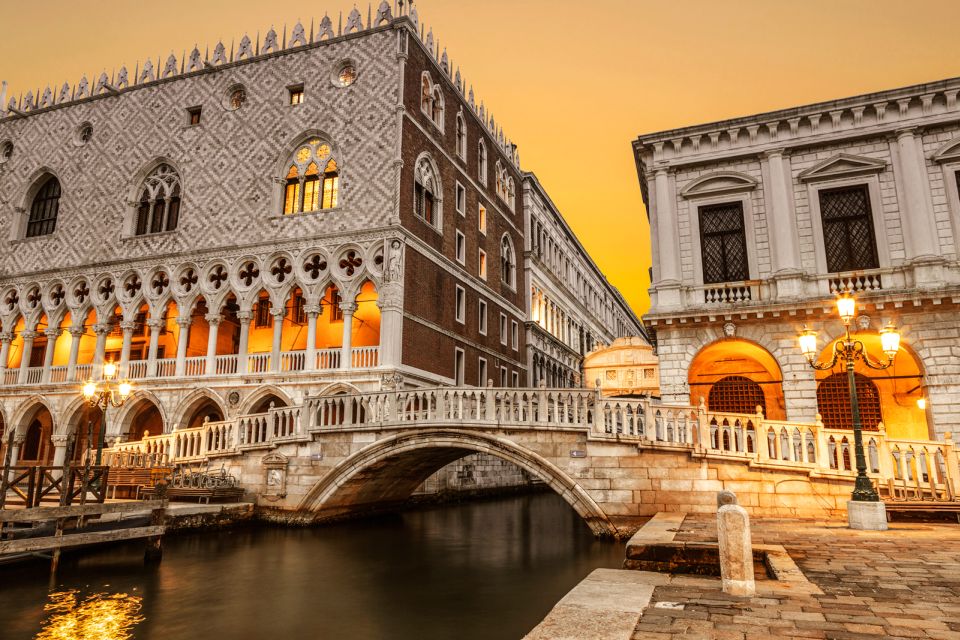
Meet at the Prison Palace close to San Marco Square. From Piazza San Marco, with the Doge’s Palace in front and the basin behind you, head right, cross the bridge on the right side of the Doge’s Palace entrance area, then look left for the entrance of the Palazzo delle Prigioni.
It helps to arrive a few minutes early so you can settle before entering. If you’re coming during busy hours, the skip-the-line benefit is most noticeable when lines are long.
What to choose: guided tour vs audio guide
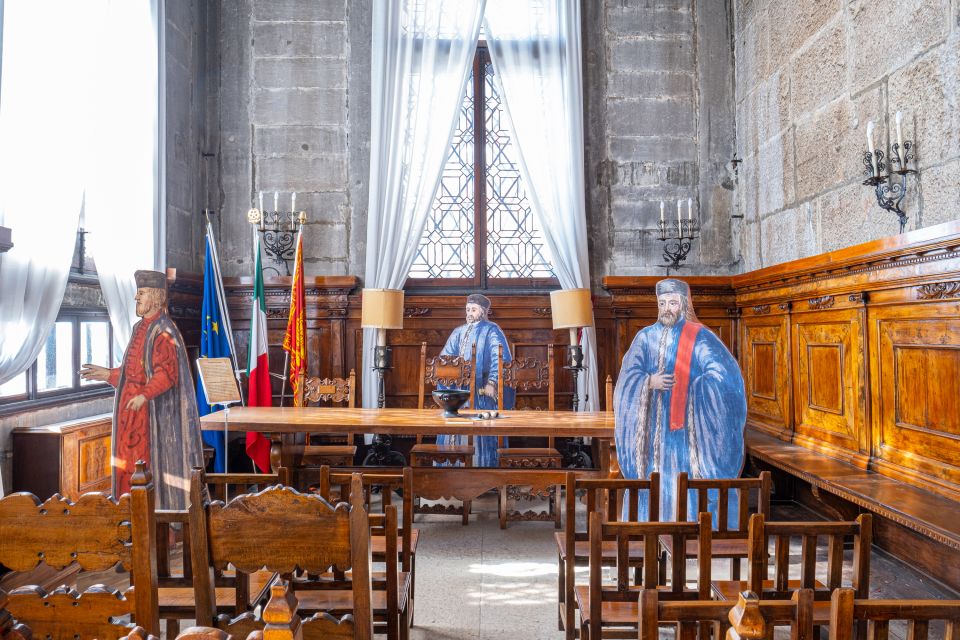
If you’re the type who likes someone connecting the dots, go for the live guided tour option. The tour description emphasizes explanations of the Council of the Ten and what prisoners ate, drank, and where they slept—plus the interpretation of torture devices. Live narration tends to make the exhibits feel less random.
If you prefer reading at your own pace, the audio guide option may fit better. Audio works well for short visits because you’re not waiting for a group to move through each room. It also supports multiple languages, including English, French, Spanish, and Italian.
Either way, you should expect a focused route, not a slow museum stroll. This isn’t the sort of experience where you’ll spend hours. Think of it as a compact, story-driven prison walkthrough.
Timing and how to fit it into a Venice day
Opening hours are listed from 10:00 AM to 5:00 PM, which gives you flexibility. I like putting it earlier in the day if you’re also visiting major landmarks around St. Mark’s, because the area can get crowded and noisy later.
Since the visit is usually under an hour, it pairs well with:
- A first pass around Piazza San Marco
- A second attraction at Doge’s Palace (note: Doge’s Palace access is not included here)
- Time to wander along the Riva Degli Schiavoni after the prison complex
One planning note: there’s no Bridge of Sighs access included. If you want that specific viewpoint inside the Doge’s Palace complex, you’ll need a separate ticket or plan.
Who should book, and who should skip this one
This tour is a strong match if you:
- Want something different from the usual Venice postcard circuit
- Like crime, justice, and the way history explains human behavior
- Enjoy guided storytelling that points out small details like graffiti and device explanations
It may not be your best choice if you:
- Have mobility limitations, because it’s not recommended for limited mobility
- Want a gentle, light attraction. This one is intentionally grim and includes torture-room displays
Also, this experience is described as sometimes bilingual, so if you’re sensitive to multitalk or language switching, plan for that.
Should you book Lords of the Night Prison Cells & Tortures?
If you’re excited by history that feels real and close—cells you can enter, rooms you can walk through, and a prison story tied to Casanova—this is a great use of time in Venice. The $11 price plus skip-the-line entry makes it easy to justify, especially since the visit is short enough to slot into a busy day.
If you’re squeamish or you prefer only “beautiful Venice” sightseeing, skip it. But if you can handle the topic and want a memorable St. Mark’s-area detour that isn’t another church interior, book it.
FAQ
Where is the meeting point for the prison tour?
Meet at Prison Palace close to San Marco Square. The instructions say to cross the bridge on the right side of the entrance of the Doge’s Palace and then find the Palazzo delle Prigioni entrance on your left.
How much does it cost, and how long is the experience?
The price is listed as $11 per person, and it’s a 1-day activity. The visit itself is typically around an hour, based on how long the tour is described and how long it runs for many participants.
Is skip-the-line entry included?
Yes. Skip-the-line entry to the Prison’s Palace is included.
Does this tour include the Bridge of Sighs or Doge’s Palace?
No. Access to the Bridge of Sighs and access to the Doge’s Palace are not included.
What languages are offered?
The live guided tour is listed as Italian and English. The optional audio guide is available in English, French, Spanish, and Italian.
What are the opening hours?
Opening hours are listed from 10:00 AM to 5:00 PM.
What will I see inside?
You’ll go through a route that includes a courtroom, dark cells, and the torture-room exhibits. You’ll also hear about prisoner life basics, inmate graffiti, and the Casanova story.
Is there a secret route included?
Yes. The tour highlights a secret passage from the 1500s that has not been open to the public until now.
Is it suitable for people with limited mobility?
No. The tour is not recommended for people with limited mobility, and it is listed as not suitable for people with mobility impairments.