REVIEW · VENICE
Explore Vivacious Venice: Self-Guided Audio Tour
Book on Viator →Operated by Citywalksz Ltd · Bookable on Viator
Venice comes alive through headphones. I like the self-paced format, so I can linger where the stories hit and move on when I want photos. I also like that it pairs major sights with an audio track you can follow step by step. One caution: the GPS map won’t feel perfect for everyone, and you may spend extra time figuring out where to go next.
For $17.03, you’re buying the walking show, not museum entry. You’ll download the audio files and a GPS map, pop in your headphones, and use a mobile ticket in your phone. Expect 2 to 3 hours on foot, with stop times that are tight if you plan to go inside big-ticket places like Doge’s Palace or the Basilica di San Marco. Also, it’s available in English, Dutch, and Mandarin/Chinese.
In This Review
- Key points to know before you start
- Venice Audio Tour Value: What You Pay $17.03 For
- Before You Go: Download Setup and a Plan for Venice’s Streets
- Price and Logistics: Admission Fees and No Physical Guide
- The Route in Real Terms: Six Stops, One Walking Story
- Stop 1: Doge’s Palace (Palazzo Ducale) and Museum Atmosphere
- Stop 2: Piazza San Marco (San Marco Square) by the Grand Canal
- Stop 3: Chiesa di Santa Maria Formosa and the Stories Behind the Walls
- Stop 4: Teatro Malibran on the Ruins of Casa Polo
- Stop 5: Ponte di Rialto for the Most Famous Views
- Stop 6: Basilica di San Marco for Details That Command Attention
- Timing Reality Check: Hitting It in 2–3 Hours Without Stress
- Where the Tour Shines (and Where It Can Fray)
- The €5 Access Fee on Certain Days: Don’t Get Caught
- Who This Self-Guided Walk Is For
- Should You Book Vivacious Venice: Self-Guided Audio Tour?
- FAQ
- How long is the Vivacious Venice self-guided audio tour?
- What does the $17.03 price include?
- Where does the tour start and end?
- What languages are available?
- Do I need to bring an audio device?
- Are there any extra fees I should know about?
- What’s the cancellation policy?
Key points to know before you start
- Self-paced walking route through six famous stops across central Venice
- Audio files + GPS map in your download, so you’re not stuck waiting for anyone
- Multiple languages including English, Dutch, and Mandarin/Chinese
- Admission not included for key stops like Doge’s Palace and some churches
- 2 to 3 hours is the target, but time can run long if you stop inside
Venice Audio Tour Value: What You Pay $17.03 For
This is one of those deals where the price is low because the product is simple: audio files and a GPS map. The $17.03 per person cost is for your soundtrack and directions, not for guided narration by a person, not for entry tickets, and not for an audio device.
That’s good value if you already travel with a phone, headphones, and a willingness to walk. You also get flexibility that guided tours don’t: you can pause for a view, step into a church if you’re in the mood, or speed up when you’re just trying to hit the next landmark.
The trade-off is that you’re responsible for navigation. Venice is a maze, and the route is designed for people who want to keep moving. If you prefer hand-holding (or you know you get easily turned around), you’ll want a backup plan—more on that below.
You can also read our reviews of more guided tours in Venice


Before You Go: Download Setup and a Plan for Venice’s Streets
This tour asks you to do one key thing before you arrive: download the audio file and make it ready. You’re also told the instructions are in the ticket’s Before You Go area. Practically, that means you should aim to download on Wi-Fi, before your day turns into a battery-draining scavenger hunt.
Here’s how I’d set you up for success:
- Use your own headphones and keep them ready immediately after download.
- Charge your phone fully. If you’re relying on GPS, low battery can turn a nice walk into a frustrating detour.
- If the GPS directions feel off, don’t panic-walk. Slow down, find a stable landmark (like a plaza, a bridge, or a major church dome), then re-check where the audio map says you are.
One more smart move: since some stops are inside major sites with separate admission, I’d decide in advance which places you truly want to enter. If you plan to do everything you can, the standard 2 to 3 hours can stretch.
Price and Logistics: Admission Fees and No Physical Guide
It’s worth stating clearly: admission fees are not included. That matters because some of the stops you’ll hit are the kind of places that have timed entry or ticket lines, especially around the most famous hours of the day.
You’re also told an audio device is not included, so you’re using your phone. That sounds obvious, but it changes the whole experience: you’ll want a comfortable way to hold your phone, and you’ll want the download ready in a low-friction way so you’re not fiddling in front of a landmark.
Finally, there is no physical guide. The upside is freedom. The downside is you won’t get a quick correction from a person if something feels unclear.
The Route in Real Terms: Six Stops, One Walking Story
The walk is laid out as a sequence of highlights, each allotted about 15 minutes, from Doge’s Palace down to Rialto Bridge and then the Basilica di San Marco. That stop timing is useful as a baseline, but Venice rewards people who slow down. If you want photos, sketches, or a longer look at details, build extra time.
Stop 1: Doge’s Palace (Palazzo Ducale) and Museum Atmosphere
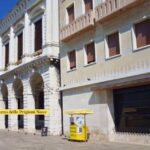
You start at the Doge’s Palace, one of Venice’s headline sights. Even if you only walk around and take in the atmosphere, the building sets the tone: political power, grand rooms, and the feel of a city that ran on trade and government.
The key practical note: you’ll see this as a museum visit only if you add the admission yourself. The tour includes the route and audio, but tickets are not included here. If you want the inside experience, I’d plan for extra time beyond the basic stop length.
If you’re the type who likes context, this is a strong opening. Starting with the palace means the audio can frame Venice’s power structure before you move into plazas and religious sites.
You can also read our reviews of more tours and experiences in Venice






Stop 2: Piazza San Marco (San Marco Square) by the Grand Canal
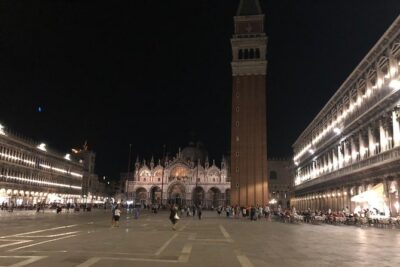
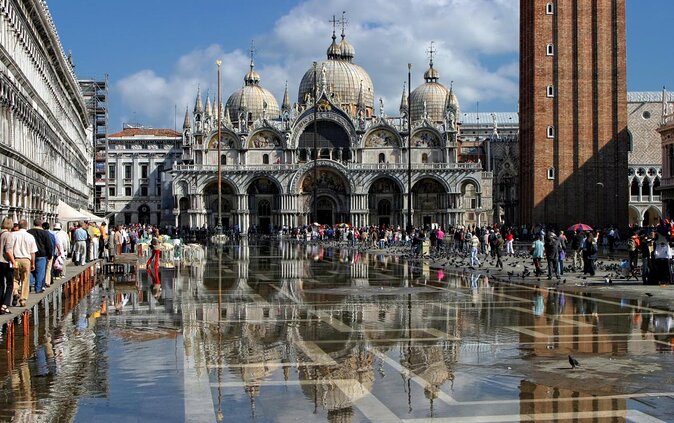
Next up is Piazza San Marco, right by the Grand Canal. This is where Venice feels theatrical: big space, major architecture, and constant visual energy even when you’re moving slowly.
Access here is listed as free, which is great. This stop is also a good place to reset. If you’ve been walking and your phone GPS is a little awkward, San Marco Square is large enough that it’s easier to orient yourself.
You’ll also get a chance to look toward iconic features around the square without paying anything extra. If you want a quick photo circuit, this is the stop.
Stop 3: Chiesa di Santa Maria Formosa and the Stories Behind the Walls
Then comes Chiesa di Santa Maria Formosa. Churches like this are where Venice’s past starts to feel personal, because you’re standing in a place that has endured war, repairs, and changing eras.
The tour highlights include references to 10th-century piracy, great artists, and the effects of the Second World War. That blend is useful because it keeps the church from feeling like just another pretty façade. Instead, it becomes a timeline: Venice at sea, Venice making art, and Venice recovering.
Admission here is not included, so if you plan to enter, account for time and any ticketing rules on the day.
Stop 4: Teatro Malibran on the Ruins of Casa Polo
Next you’ll reach Teatro Malibran, built over older foundations tied to Casa Polo. The big idea is that this is a city where layers of life overlap: homes become theaters, and old locations become part of new culture.
The audio points toward Venice’s identity as a place once known as the Republic of Music. Even if you only appreciate this from outside, it adds meaning to what you’re seeing. You stop treating architecture like a backdrop and start reading it like history written in stone and wood.
If you’re a theater fan, you may want to spend longer here than the standard stop time. If you just want the highlight and move on, it still works because the story helps you notice the significance fast.
Stop 5: Ponte di Rialto for the Most Famous Views
Now for the payoff: Ponte di Rialto. This is listed as free, and it’s one of the best places in Venice to pause for that jaw-dropping “how is this real?” moment.
This stop is short by design, but it’s also the kind of place where you can easily lose 30 minutes just taking in angles. The bridge offers classic sightlines down the canals, and you can see how water and commerce shaped the city’s growth.
If your route feels confusing around this area, treat Rialto Bridge like your anchor point. It’s a major landmark, so even if the GPS has you second-guessing yourself, Rialto is hard to mistake.
Stop 6: Basilica di San Marco for Details That Command Attention
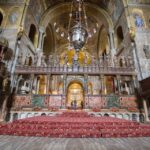
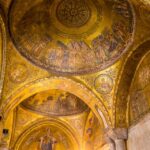
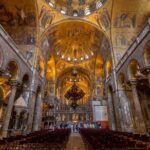
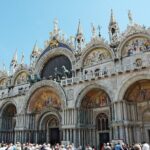
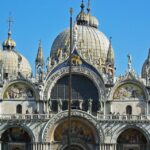
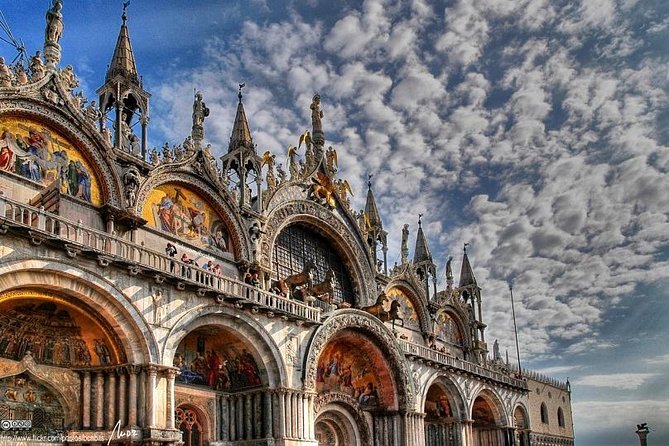
The last named stop is the Basilica di San Marco. The tour frames it as unforgettable for its magnificent details, which is exactly what you’ll notice once you’re close. This is a place where surface decorations, materials, and shapes do a lot of the storytelling for you.
But again: admission is not included. If you want to go inside (and you should if you have the time), you need to plan for the visit as part of your schedule, not as a quick stop you can stack at the last second.
If the day runs behind, keep your priorities straight. San Marco is famous for a reason, but you don’t want to force yourself through it if you’re rushing.
Timing Reality Check: Hitting It in 2–3 Hours Without Stress
The advertised duration is 2 to 3 hours, with around 15 minutes per stop. On paper, six stops at 15 minutes each is about 90 minutes, plus walking time between them. That’s why it can work well for a half-morning plan.
But there’s a practical catch: you’re also dealing with navigation. If you spend time re-locating stops, your timeline shifts. I’d treat 2 hours as the minimum version of this day, and 3 hours as the comfortable version.
A smart pacing trick:
- Do your first two stops at full speed.
- Then, slow down at one or two places that you care about most (churches and palaces usually win for most people).
- Leave yourself buffer time before Rialto and San Marco Basilica, since those are the most likely places for congestion and extra delays.
Where the Tour Shines (and Where It Can Fray)
This is at its best when you want control. You’re not locked into a group pace. The audio can fill in context while you walk, which is exactly how Venice is easiest to understand: one sight at a time, not all at once.
It’s also a good fit for history-minded travelers who like political and cultural themes. Starting with Doge’s Palace and then moving through churches and performance spaces helps explain why Venice was both a government and a stage.
The main downside is route clarity. If you rely heavily on the GPS map and it feels awkward, you’ll lose time. If you’re the type who hates figuring things out, you may end up frustrated more than inspired.
The €5 Access Fee on Certain Days: Don’t Get Caught
One more important Venice detail: on certain dates, day visitors staying outside Venice may need to pay a €5 access fee. You’re directed to check exemptions and applicable days at https://cda.ve.it.
This doesn’t sound like it belongs in a self-guided tour review, but it matters for planning. If your trip includes a day that triggers the fee, it can affect your timing and how smoothly you arrive.
Who This Self-Guided Walk Is For
This works best for:
- People who like independent travel and prefer setting their own pace
- Travelers comfortable navigating on foot in a dense historic center
- History and architecture fans who enjoy audio-led context
- Anyone who wants a structured route without paying for a full guided tour
It may not be the best fit if:
- You strongly dislike navigation apps or you know your phone battery is fragile
- You want admission included in the price
- You need a person to manage timing and logistics for you
The physical requirement is listed as moderate fitness, which makes sense. Venice walking adds up: cobblestones, bridges, and constant turning.
Should You Book Vivacious Venice: Self-Guided Audio Tour?
I’d book it if you want a low-cost, flexible way to connect Venice’s big landmarks into one walk with story context. The price makes sense because you’re paying for audio guidance and a GPS map, and you can use it on your schedule.
I wouldn’t book it as your only plan if you hate map troubleshooting. Build in extra time for navigation, and consider having a second reference handy. If you do that, this can be a fun way to turn a simple walk into something with a narrative arc—from political power to church stories to Rialto views.
FAQ
How long is the Vivacious Venice self-guided audio tour?
It takes about 2 to 3 hours.
What does the $17.03 price include?
It includes the self-paced audio files and a GPS map, with a mobile ticket. Admission fees, food, transportation, and an audio device are not included.
Where does the tour start and end?
It starts at Doge’s Palace and ends at Rialto Bridge. You can decide your own starting point and ending point based on your schedule.
What languages are available?
The tour is available in English, Dutch, and Mandarin/Chinese.
Do I need to bring an audio device?
Yes. The audio device is not included, so you’ll need your own phone or device and headphones.
Are there any extra fees I should know about?
On certain dates, some day visitors staying outside Venice may need to pay a €5 access fee. Check https://cda.ve.it for applicable days and exemptions.
What’s the cancellation policy?
Free cancellation is available. You can cancel up to 24 hours in advance for a full refund. If you cancel less than 24 hours before the start time, the amount paid is not refunded.