REVIEW · VENICE
Venice: Doges Palace, Prison, and Secret Passageways Tour
Book on GetYourGuide →Operated by Walks of Italy · Bookable on GetYourGuide
Venice’s secrets live behind palace walls. The secret passageways tour turns Doge’s Palace from a must-see monument into a lived-in machine of power, with skip-the-line entry built in. It’s paced well for a small crowd, and the group stays tight enough that your guide can actually answer questions.
My favorite part is the prison storyline. You’ll reach Casanova’s cell and even see areas tied to punishment and fear, not just the shiny public rooms. The way the guide threads art, politics, and scandal into one narrative is what makes it stick.
One consideration: this is not a comfy stroll. You’ll spend time standing and moving through enclosed or tight spaces, so it’s a tough fit if you’re claustrophobic or have mobility limits.
In This Review
- Key Things to Know Before You Go
- Entering Doge’s Palace the Right Way: Museo Correr to Backstage Doors
- The Palace Isn’t Just Pretty: How the Tour Explains Power
- Secret Archives and Offices: Where Venice Stored Its Secrets
- Casanova’s Cell and the Torture-Chamber Stop
- The Prison-to-Bridge Ending: Bridge of Sighs to the New Prisons
- Ca’Rezzonico After Your Tour: A Smart Finish (and Included Ticket)
- The Most Important Ingredient: Your Guide’s Storytelling
- Price and Value: What $106.49 Actually Buys You
- Who Should Book This (and Who Should Think Twice)
- Practical Tips to Make Your Day Work
- Should You Book This Secret Passageways Tour?
- FAQ
- How long is the Venice Doge’s Palace, Prison, and Secret Passageways Tour?
- Where does the tour start, and when should I arrive?
- Does this tour include skip-the-line access?
- Is Ca’Rezzonico included, and do I need another ticket?
- Is this tour suitable for young children?
- Is the tour wheelchair or stroller accessible?
Key Things to Know Before You Go
- Small-group access (max 20) keeps the palace feel human-sized, not cattle-chute-sized
- Skip-the-line entry uses a separate entrance so you start seeing the goods faster
- Casanova’s prison stop adds a story-driven punch to the darker parts of Doge’s Palace
- Secret archives and council rooms explain how Venice kept checks on power
- Bridge of Sighs to the New Prisons gives you a complete end-to-end prison arc
- Ca’Rezzonico included lets you keep the 18th-century mood going after the tour
Entering Doge’s Palace the Right Way: Museo Correr to Backstage Doors
You start near St. Mark’s, at Museo Correr in Piazza San Marco. Plan to arrive about 15 minutes early because this tour depends on timing, and your guide needs to bring you through the palace access point smoothly.
Once you’re in, the standout practical benefit is the separate entrance with skip-the-line. Doge’s Palace can feel like a constant queue. Here, you get pulled into the process without losing an hour to crowd management. You’ll also want comfortable shoes and the dress code in mind: long pants and long sleeves are required, and sleeveless tops, shorts, and oversized bags are a no-go.
If you’re the type who likes to get your bearings fast, this works. You’re walking into the palace with context instead of staring at ceilings and hoping the guide explains the rest.
You can also read our reviews of more tours and experiences in Venice.



The Palace Isn’t Just Pretty: How the Tour Explains Power
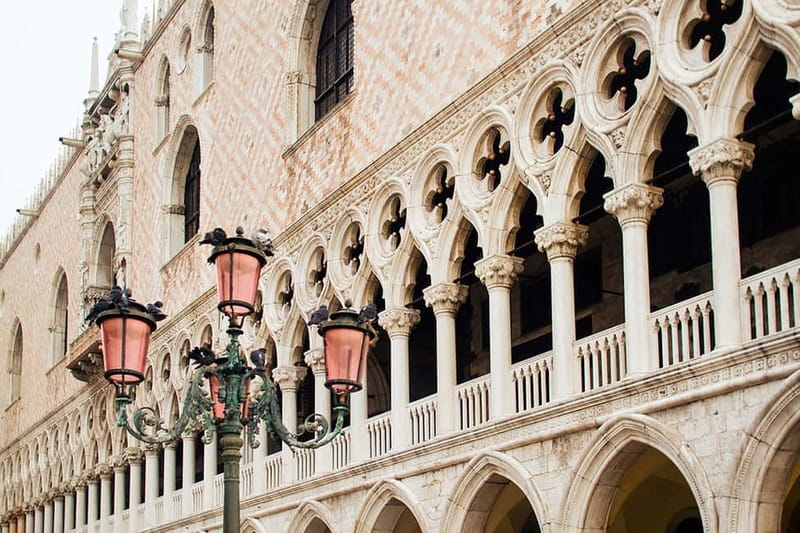
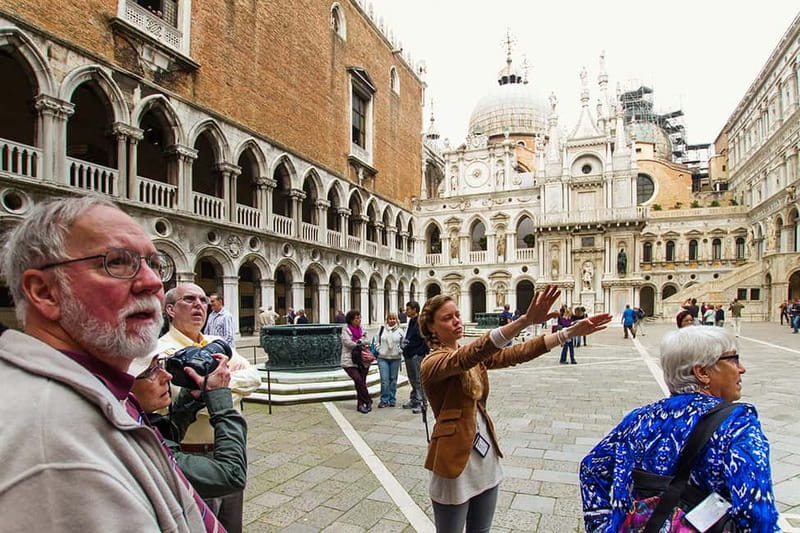
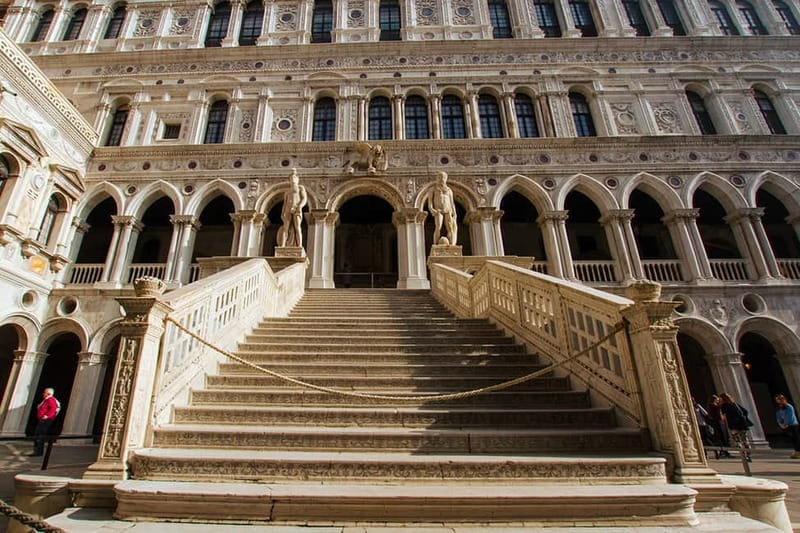
Doge’s Palace can look like pure visual theater until you learn what it was for. This tour does a smart job of connecting the artwork and ornate rooms to the political system behind them.
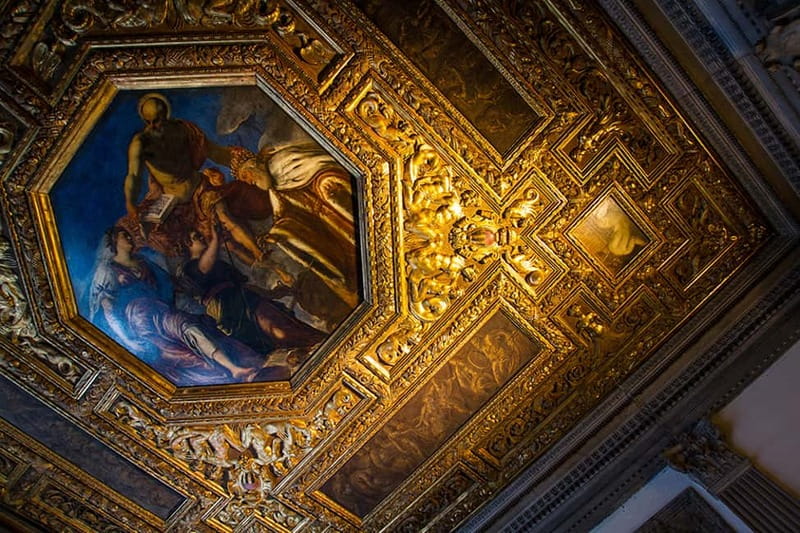
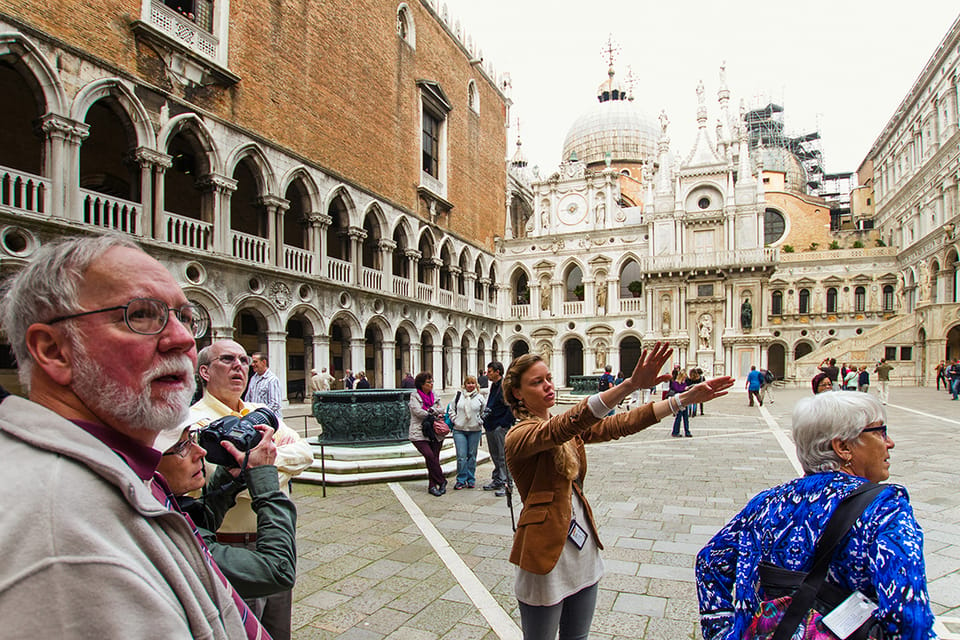
You’ll move through some of the more public-and-famous spaces, including large audience rooms and ballrooms with paintings by Veronese and Tintoretto. But the tour keeps you from getting stuck in “wow” mode only. Instead, you’re told what decisions happened there and how power was organized. That’s where Venice turns from a pretty postcard into a functioning (if sometimes ruthless) republic.
One of the guide’s key themes is how Venice handled governance. You’ll see hidden council rooms and hear how checks and balances were built into the system. The result: the palace starts to read like a manual, not a museum.
Secret Archives and Offices: Where Venice Stored Its Secrets
After you’ve gotten the political map in your head, you go deeper into areas many visitors never see. The tour includes stops tied to secret archives and offices, which matters because it changes what you think “history” is.
Instead of history as a set of dates, you get history as paperwork, procedure, and control. Venice was a republic that ran on information and authority. Seeing the back areas helps you understand why secrets mattered—because those secrets could protect officials, shape outcomes, and punish rivals.
This section also tends to move at a steady pace. You’re not wandering. You’re following a story, in a logical order that keeps the bigger picture from getting lost.
Casanova’s Cell and the Torture-Chamber Stop
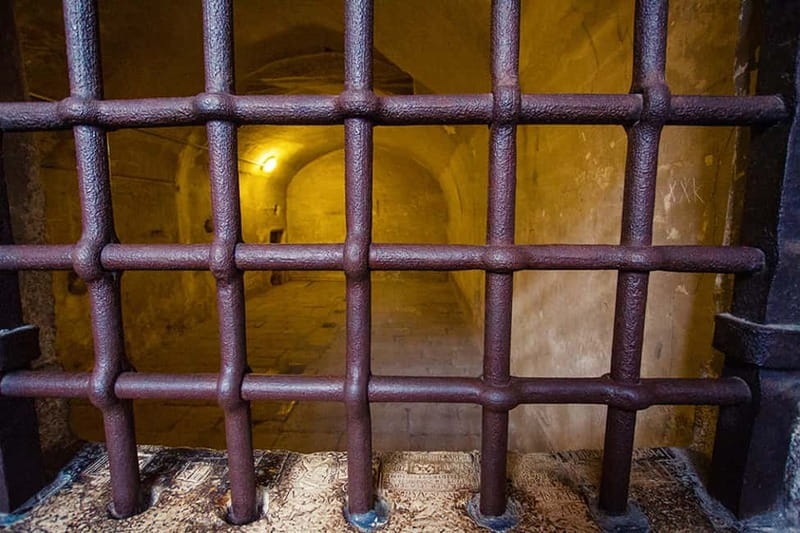
Here’s the part most people come for: the visit to Casanova’s prison cell. Your guide brings the story into focus, including what made Casanova’s escape such a famous tale.
The tour doesn’t stop at one character. You’ll also encounter areas connected to punishment, including a torture chamber visit. This isn’t presented like horror-movie drama. It’s explained as part of the justice and control system of the time. That tone is important. It keeps the experience educational instead of just grim.
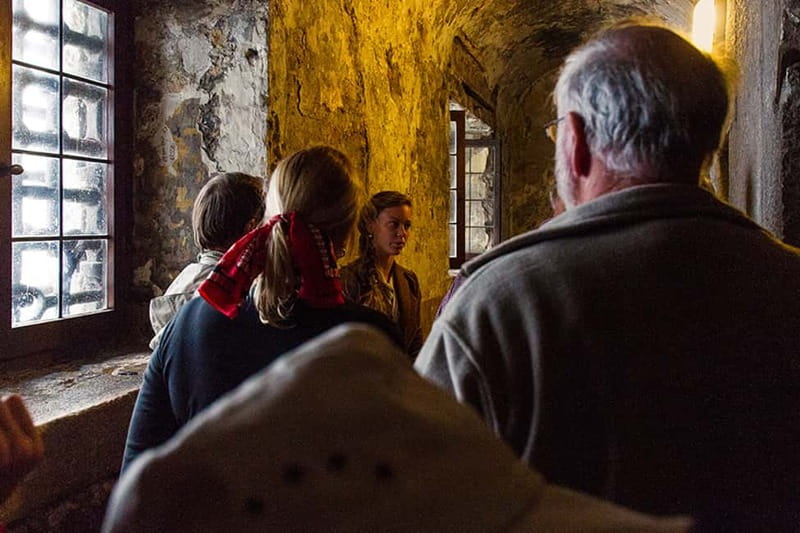
Also, keep in mind that this is one of those “dark rooms in historic buildings” moments. Light levels can be dim, and the layout can feel tighter than you expect inside a palace complex. If you’re sensitive to confined spaces or you hate feeling pressed in, this is where you’ll feel it most.
The Prison-to-Bridge Ending: Bridge of Sighs to the New Prisons
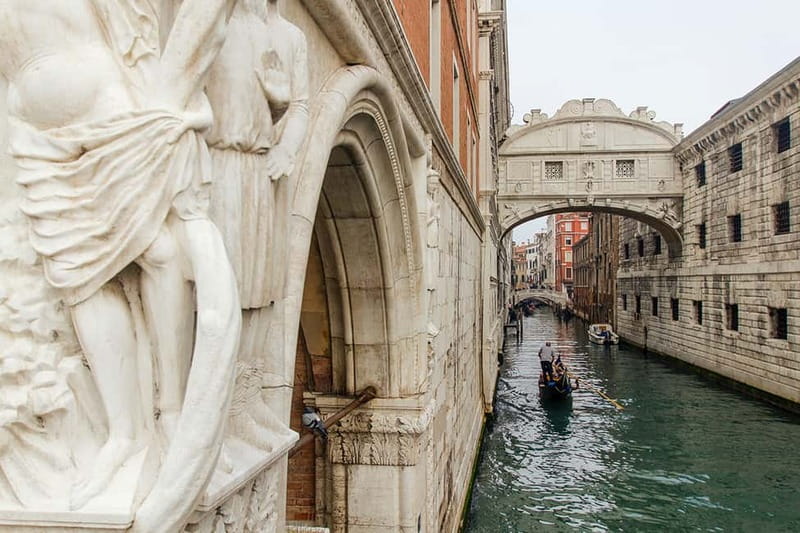
The tour concludes with a signature Venice moment: crossing the Bridge of Sighs to see the New Prisons. Even if you’ve seen photos of the bridge, experiencing it in context lands differently.
Why it works: earlier in the tour, you learned how the palace ran like an engine. Now you see the physical endpoint of that engine. The bridge becomes the emotional connector between authority and imprisonment.
You’ll also understand something most general palace tours miss: prison life wasn’t an afterthought. It was integrated into how power operated. Crossing that bridge helps you “close the loop” of the story you’ve been hearing for the last couple hours.


Ca’Rezzonico After Your Tour: A Smart Finish (and Included Ticket)
After you’re done with the palace portion, you wrap up back in the St. Mark’s area and then move on to Ca’Rezzonico on your own. The ticket is included, so you don’t have to figure out timed-entry chaos right after your palace time slot.
Ca’Rezzonico is a Baroque palace turned museum, and it’s tied directly to Casanova’s Venice. The palace offers a window into the 18th-century world Casanova navigated, including the fact that he lived there in 1756. Since your Doge’s Palace tour already put Casanova and prison life in your head, the museum provides a contrast that feels natural, not random.
Practical tip: Ca’Rezzonico is self-guided, so you get to slow down for what catches your eye. If you like paintings, rooms, and costume-era details, you’ll probably linger longer than you plan.
One timing note that can matter: on Tuesday, the museum is closed, and you’ll receive the ticket for the next day. If your trip includes a Tuesday, plan around that early so you don’t end up with a “cool story, wrong day” problem.
The Most Important Ingredient: Your Guide’s Storytelling
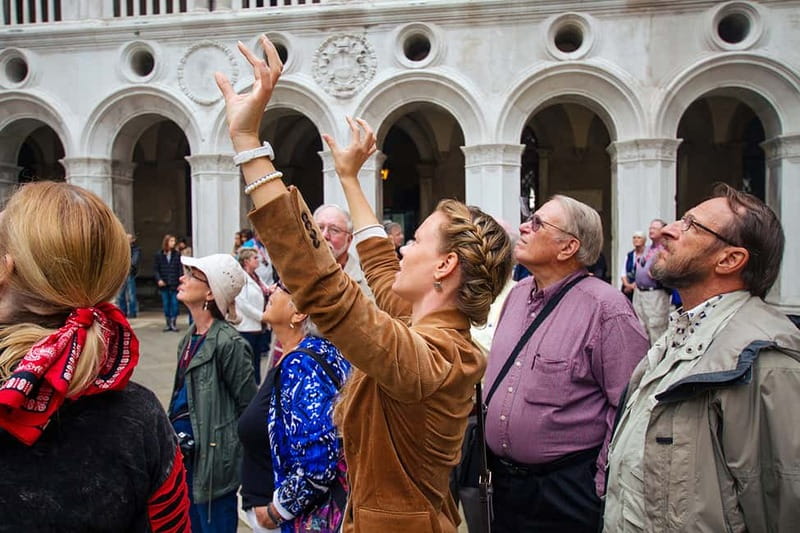
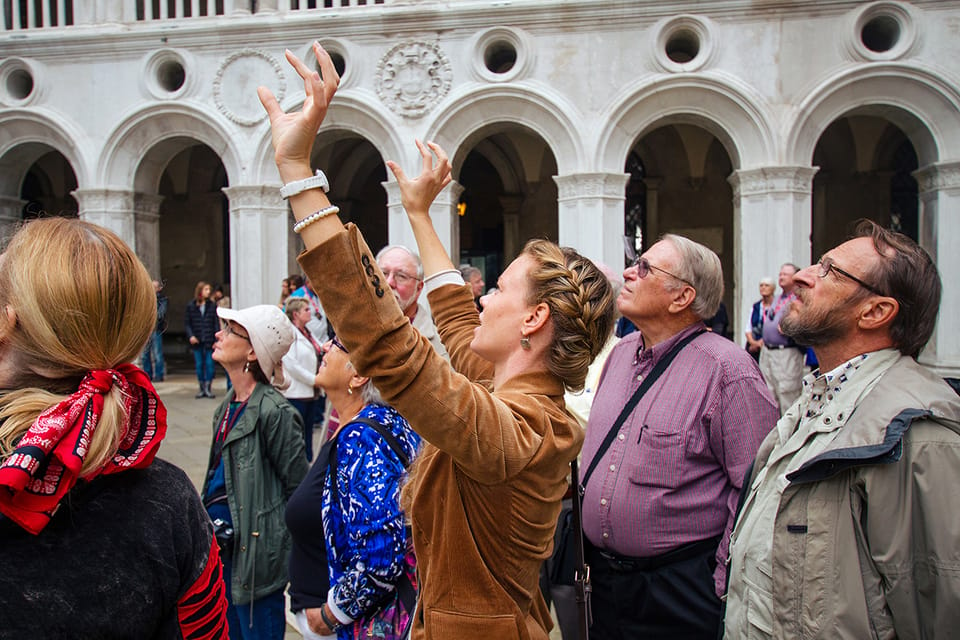
This tour is unusually guide-dependent. The building is fascinating, yes, but it’s the narration that turns rooms into meaning.
You’ll often see the tour led by an art-and-history type of specialist. In the same spirit, standout guides like Mose, Susan, Nico/Niko, Sarah, Matteo, Giovanni, and Marina come up for their storytelling and their ability to answer questions without hand-waving. The common theme: they don’t just list facts; they connect the palace’s design to how Venice functioned.
One small detail worth knowing: some tours include a way to hear your guide clearly even if you’re near other groups. That matters in Venice, because sound can get swallowed by crowds and echoes in stone corridors.
If you’re the kind of person who likes to ask why something was built a certain way, this is a good format. You’ll be given enough context to ask better questions while you’re still inside.
Price and Value: What $106.49 Actually Buys You
At $106.49 per person, this is a serious splurge by Venice standards. But the value isn’t only about “skipping the line.”
Here’s what you’re paying for, in practical terms:
- Skip-the-line access via a separate entrance (time saved in a place that eats time)
- Special access to the secret-prison and secret-archive areas (not the standard public route)
- Small-group size (up to 20 people), which makes it easier to keep pace with a story-heavy tour
- Casanova’s cell and a prison/torture-related stop that only makes sense with a guide
- Ca’Rezzonico ticket included, so the ticket cost doesn’t hit you twice
Two and a half hours can sound short until you realize this is time spent in high-signal rooms. You’re not wandering randomly. You’re moving through a curated path that would be hard to replicate on your own, especially inside the areas that are not part of the normal visitor flow.
Is it worth it? If you care about how Venice worked—politics, justice, and power—yes. If you mostly want scenery and photos, you may find it dense.
Who Should Book This (and Who Should Think Twice)
This tour fits best if you like:
- art and architecture with political meaning
- real stories tied to famous figures like Casanova
- understanding how Venice’s republic kept order (and how it punished dissent)
It’s not a good fit if:
- you’re claustrophobic (tight spaces show up in the prison-focused route)
- you need wheelchair access or stroller-friendly movement (it’s not suitable for mobility impairments)
- you’re bringing very young kids (children under 6 can’t enter the secret itineraries)
- you’re pregnant (it’s listed as not suitable)
Also, prepare for moderate physical activity. There’s limited resting, and you may stand more than you expect, especially if the pace runs steady. One useful idea from prior experience: bring a chargeable hand fan and water if you’re sensitive to heat. Some areas don’t have much air circulation.
Practical Tips to Make Your Day Work
A few things will make the biggest difference:
- Wear long pants and a long-sleeved shirt to avoid problems at entry
- Bring a small bag only. Large bags, backpacks, and oversize luggage aren’t allowed
- Use comfortable walking shoes. You’ll cover more ground than you think inside the palace complex
- If you can choose a time, a morning slot helps with crowds and heat (and your photos will thank you)
- Carry water and consider a hand fan for rooms without much airflow
Finally: bring patience. Even with skip-the-line access, Doge’s Palace is a tightly managed historic site. Your best move is to treat the tour like a guided sprint, not a casual museum hop.
Should You Book This Secret Passageways Tour?
If you want Doge’s Palace as a story you can feel—rather than a building you “checked off”—I think this is one of the better ways to go. The combination of secret prisons, Casanova’s cell, and the Bridge of Sighs to the New Prisons gives you a complete arc, and the Ca’Rezzonico follow-up extends it into Casanova’s wider world.
Book it if you like learning how systems worked. Skip it if you need lots of seating, dislike enclosed spaces, or you’re traveling with a child under 6.
If you’re on the fence, ask yourself one question: do you want Venice’s famous art and architecture, or Venice’s hidden machinery of power? This tour leans hard toward the machinery.
FAQ
How long is the Venice Doge’s Palace, Prison, and Secret Passageways Tour?
The tour runs for about 2.5 hours.
Where does the tour start, and when should I arrive?
It meets at Museo Correr in Piazza San Marco, and you should arrive 15 minutes early. Your guide will be holding a green Walks sign outside the museum entrance.
Does this tour include skip-the-line access?
Yes. You get skip-the-line tickets to the Doge’s Palace, using a separate entrance.
Is Ca’Rezzonico included, and do I need another ticket?
Ca’Rezzonico tickets are included in the price, and you visit it at your own pace after the tour.
Is this tour suitable for young children?
No. Children under age 6 are not permitted inside the secret itineraries, so they cannot take this tour.
Is the tour wheelchair or stroller accessible?
No. The tour is not suitable for guests with mobility impairments, wheelchair users, or strollers. It also isn’t suitable for people with claustrophobia.