REVIEW · VENICE
All-Inclusive Tour: Doge Palace, St Mark’s Basilica & Square
Book on GetYourGuide →Operated by Venetoinside - Insidecom · Bookable on GetYourGuide
Venice power is hiding in everyday streets. I love how this 4-hour walking tour strings together Marco Polo’s early-life sights with the grandeur of St Mark’s Square, so the city’s big stories start to make sense fast. I also love that you don’t stop at the outside of famous buildings: you get guided interiors at Doge’s Palace and St Mark’s Basilica. The main catch is that the basilica can get very crowded, and in a large group it can be harder to see what the guide is pointing out.
You start near San Marco and move through narrow lanes and canal-side corners before the big-ticket buildings. You’ll hear commentary in English, Spanish, French, or German, and you’ll use live guidance throughout the visit. If you’re coming in the heat, expect a steady walking pace and some wait time as groups get organized.
The practical things that matter: the meeting point is Calle larga de l’ Ascension (near the post office behind the Correr museum), and the tour ends back there. Also, you’ll want to travel light—keep bag sizes simple, since big backpacks aren’t the vibe for this kind of crowded sight-hopping route.
In This Review
- Key things to know before you go
- Start in San Marco: meeting point, timing, and how the day flows
- Marco Polo’s House: seeing the boy behind the legend
- Santa Maria Formosa: a strange legend you’ll actually remember
- Campo SS. Giovanni e Paolo and the Mercerie route back
- Palazzo Ducale: where Doges ruled, and what to watch for inside
- Bridge of Sighs: the moment the palace’s power gets uncomfortable
- St Mark’s Basilica: gold mosaics, marble inlays, and the Treasury
- Headsets, group size, and the stuff that affects your comfort
- Price and value: is $151.80 per person worth it?
- Who should book this Venice combo tour?
- Should you book? My practical take
- FAQ
- What is the duration of the tour?
- Where does the tour start and end?
- Which sights are included in the tour?
- Are entrance fees included?
- Is there a skip-the-line option?
- What languages is the live guide available in?
- Is there a luggage or backpack restriction?
Key things to know before you go
- Skip-the-line entry at both Doge’s Palace and St Mark’s Basilica saves time when crowds spike
- Two major interiors in one outing: Palazzo Ducale rooms plus Byzantine-style mosaics inside the basilica
- Bridge of Sighs explained in context so the palace’s political power lands with real meaning
- Marco Polo + Santa Maria Formosa on the same route adds Venice lore beyond the usual postcard hits
- Guides run in multiple languages: English, Spanish, French, and German
- Crowds inside St Mark’s Basilica are real and can limit sightlines for pointers
Start in San Marco: meeting point, timing, and how the day flows
This tour is built for people who want Venice’s headline sights, but don’t want to spend their whole day figuring out where everything is. You meet at Calle larga de l’ Ascension, near the post office behind the Correr museum. A staff member checks your voucher, and then you’re off on foot.
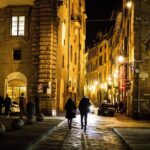
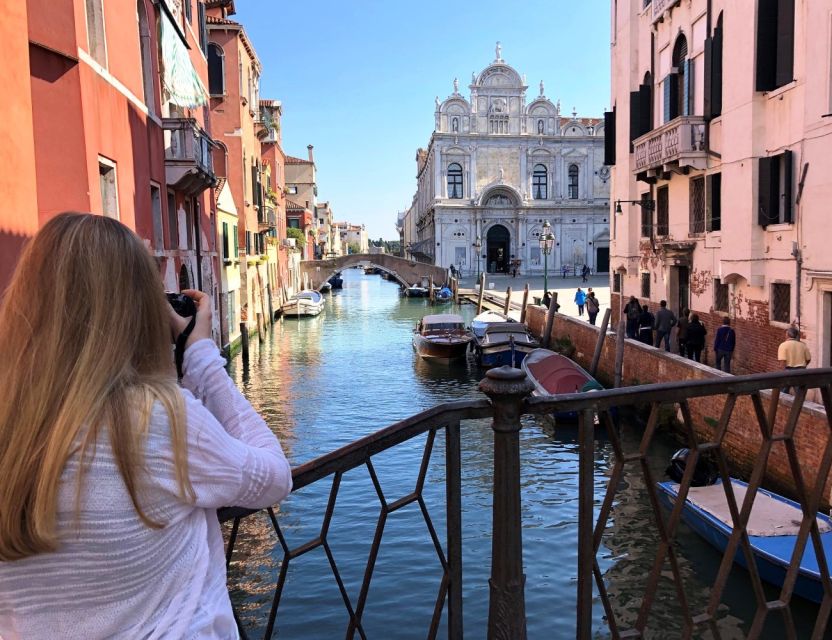
The tour duration is 4 hours, and starting times vary, so you’ll want to pick a slot that fits your day (especially if you’re also planning a gondola or a timed museum visit later). The walk begins with views around San Marco and the Grand Canal area, then shifts into the city’s narrower streets, where canals and crumbling historic facades feel close enough to touch.
One more logistics note you’ll appreciate: the tour ends back at the meeting point. That means you don’t have to puzzle over transportation afterward—you’re dropped right where you started.
You can also read our reviews of more tours and experiences in Venice.

Marco Polo’s House: seeing the boy behind the legend
One stop you’ll look forward to is the former home linked to one of Venice’s most famous sons: Marco Polo’s House. This is the kind of place that’s easy to overlook if you only chase famous churches and squares. Here, you get the story placed in a walking-tour flow, so Marco Polo isn’t just a name on a map.
Why it works: Marco Polo’s connection to Venice helps you understand why this city built such a strong identity around trade, navigation, and far-reaching curiosity. Even if you’ve read a bit of his life before, walking past the kind of neighborhood lanes where a figure like him would be part of daily life makes the legend feel less abstract.
You’ll also get a guide’s narration while you’re still in the street scene, not after you’ve already lost the thread. That timing matters. It keeps your brain engaged rather than switching into purely museum-mode.
Santa Maria Formosa: a strange legend you’ll actually remember
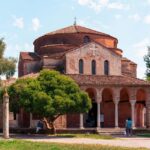
Next up is Santa Maria Formosa, where you’ll stop and learn a local legend. The church is tied to a story that the Holy Virgin appeared disguised as a woman described as voluptuous. It’s the kind of detail that sounds dramatic, but it’s also exactly the sort of cultural breadcrumb that makes Venice feel like Venice.
This stop helps for two reasons. First, it shows how Venice’s religious life and local storytelling blend together in everyday places, not just grand cathedrals. Second, it breaks the rhythm. After the Marco Polo connection, this church stop adds a different flavor—street-level mystique.
If you’re the sort of person who likes architecture, you’ll also get the chance to look at the building from the outside and through the pause the tour builds around it. You’re not just passing by.
Campo SS. Giovanni e Paolo and the Mercerie route back
As you continue, the tour walks you through Campo SS. Giovanni e Paolo, described here as the second largest square in Venice. That square moment is useful because it shifts you out of the tight alley geometry into open space. You get a sense of scale, and you also get a breather before the more intense interior visits.
Then you return to San Marco through the Mercerie. That matters because it’s the kind of route that lets you feel how Venice connects its power centers with the everyday flow of people. You’re not just moving from sight to sight—you’re moving along the city’s bones.
For first-timers, this route is a win. It helps you build a mental map of how the major zones relate to each other, and you’ll likely find it easier to navigate on your own later.
Palazzo Ducale: where Doges ruled, and what to watch for inside
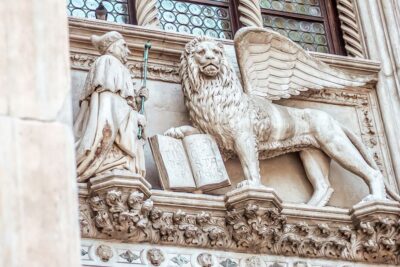
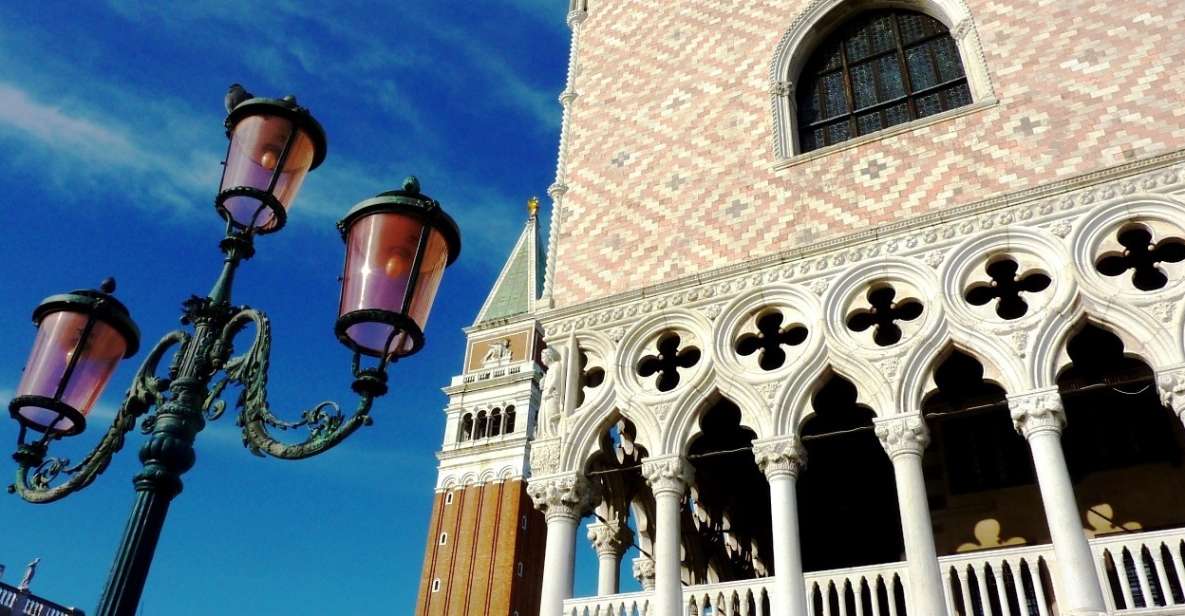
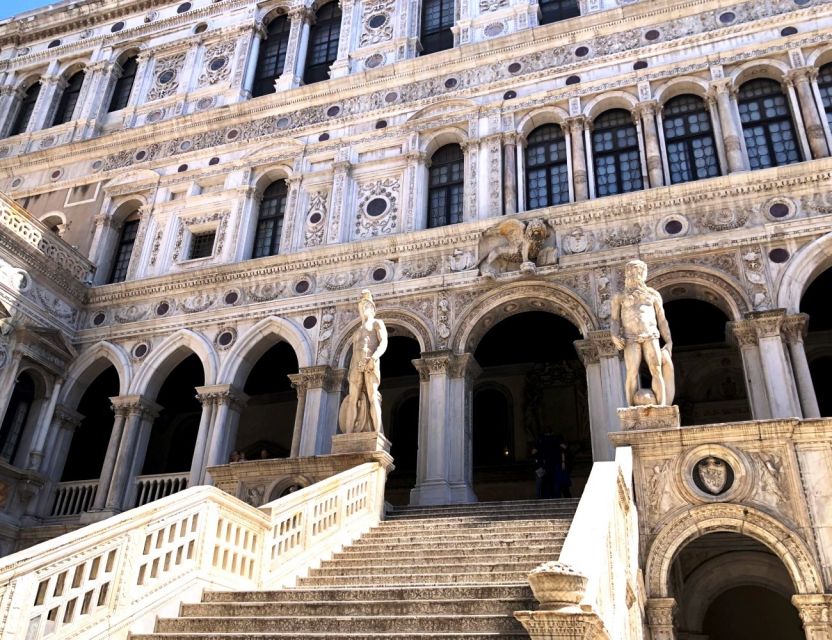
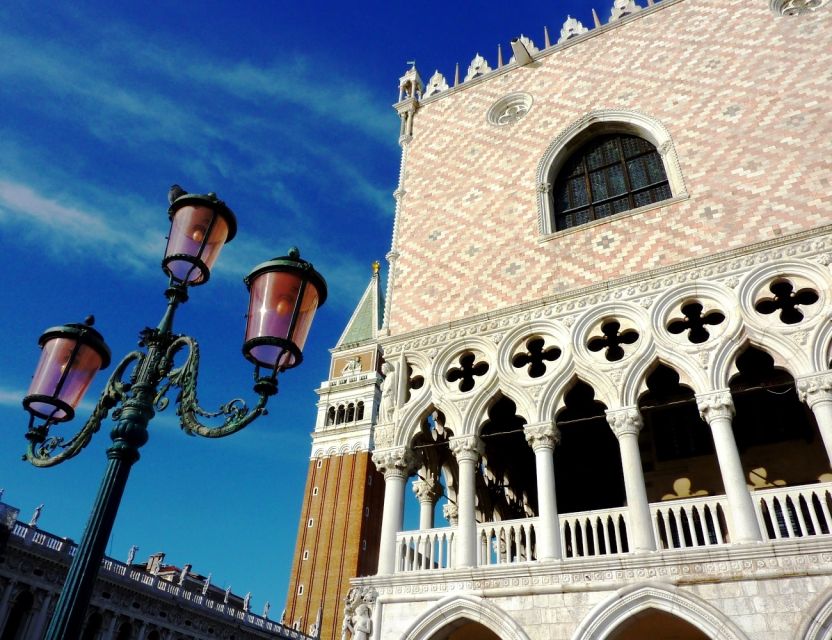
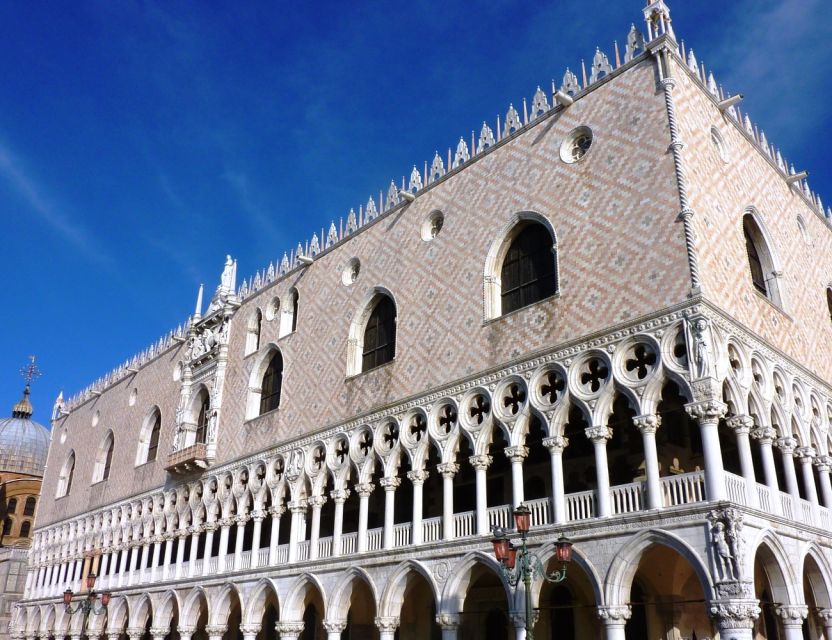
Now comes the big one: the Doge’s Palace, officially the Palazzo Ducale (Venice’s seat of political power for centuries). You enter with the benefit of guidance and included entrance fees, and the tour is designed to make the palace feel more than just ornate rooms.
Inside, you’ll see art masterpieces and splendid rooms lined with artwork. The guide points you to the halls of power—the places where decisions were made and authority was displayed. If you like history but don’t want to read a textbook during a vacation, this is a good compromise: you get the story beats in plain language, tied to what you’re looking at right then.
A smart feature is the way the tour narrates the connection between power and consequences. The palace visit sets you up for the next stop so Bridge of Sighs doesn’t feel like a separate attraction—it feels like the logical next scene.
If you’re shorter on time, this interior visit is also the practical move. Seeing inside Doge’s Palace is one of those experiences that can eat up your day if you do it randomly. A guided schedule keeps it moving.


Bridge of Sighs: the moment the palace’s power gets uncomfortable
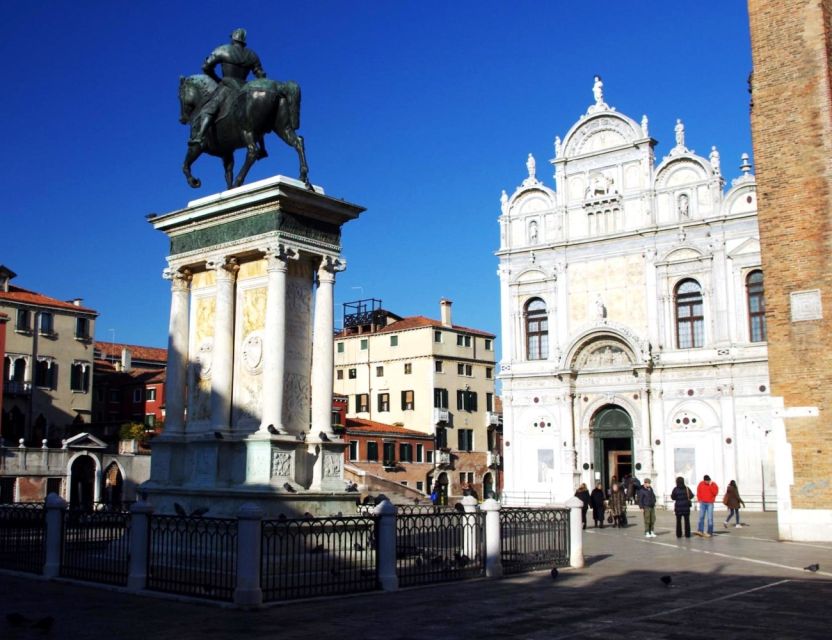
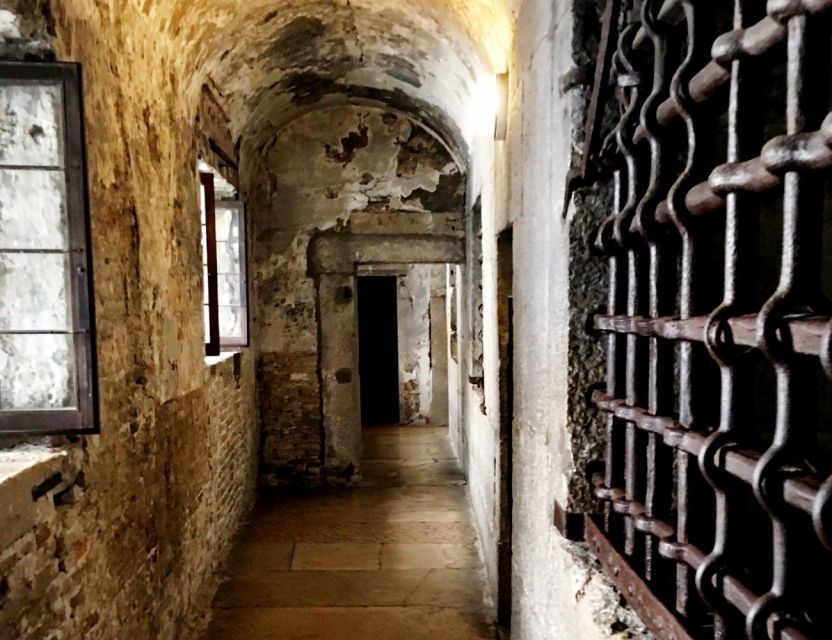
The Bridge of Sighs is where the tour’s theme tightens. You’ll learn about the harsh reality of ducal power, with the bridge framed as the place where politics had consequences for individuals.
Here’s what I think makes this stop especially effective: the bridge is compact, and it can be easy to treat as a photo spot. But on this tour, it’s explained as part of a system. You aren’t just seeing a famous structure; you’re understanding what kind of world it came from.
It’s also a good “mental pause” before the basilica, because it shifts tone. You go from political authority and decorated halls to a more human, uneasy perspective.
St Mark’s Basilica: gold mosaics, marble inlays, and the Treasury
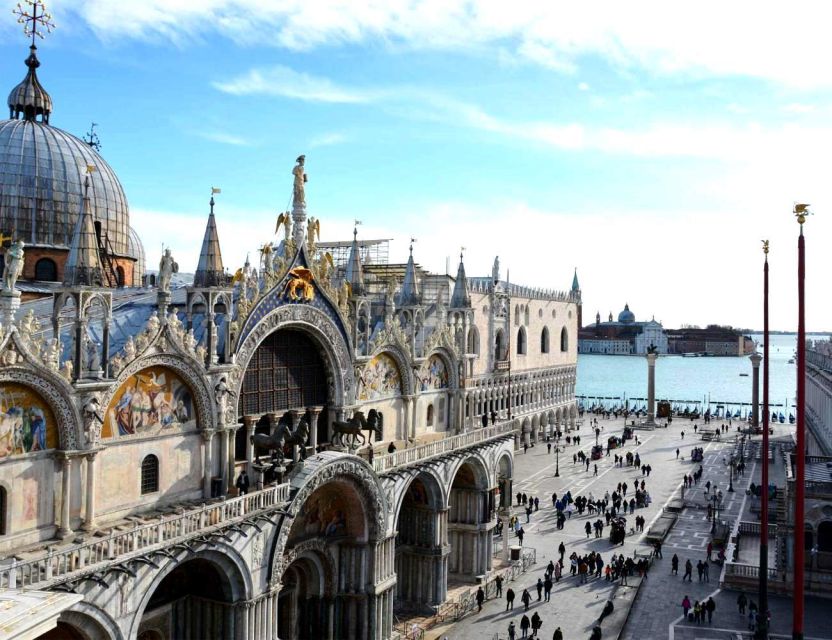
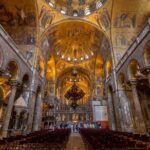
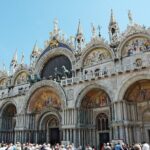
The tour ends at St Mark’s Basilica, one of the most majestic cathedrals in the world—at least according to the impact you’ll feel standing in it. You’ll see Byzantine art, and you’ll get your first real up-close look at the famous gold mosaics and marble inlays. The guide also points out examples of religious art in the Treasury.
This is one of those places where details reward attention, but attention is hard when crowds swell. The experience can feel intense because you’re in a high-demand building with many visitors. At times, groups can be large—so in a crowd, some people may have trouble seeing the guide’s exact pointers.
Still, if you go in knowing that and keeping your expectations realistic, it’s a great payoff. You’re not trying to get perfect sightlines for every comment; you’re collecting impressions, context, and the main visual hits.
One practical tip: plan to keep your view flexible. If your angle is blocked, don’t fight it—look up and around when you can, then listen through the headset (when provided) and catch the story even if your eyes can’t land on every detail.
Headsets, group size, and the stuff that affects your comfort
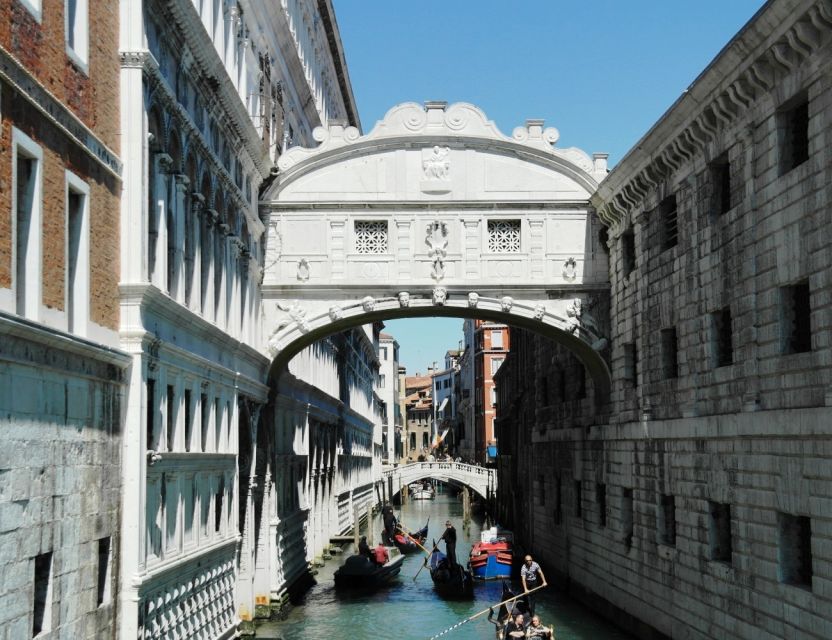
The tour is guided, and you may be given headsets so you don’t miss key moments while walking or standing. That’s a big deal in Venice, where sound bounces around and guides often have to manage people moving in tight spaces.
At the same time, audio can depend on how the group is arranged and how the guide is positioned. If a guide turns away from the microphone, you might catch less. In a multilingual setup, it can also feel a bit layered, so stay patient and let the guide reset.
Group size is another factor. Inside St Mark’s Basilica you may end up in a situation where the group is more than comfortable. When that happens, the tour still works, but your experience will be more about enjoying the setting and listening for key facts than spotting every highlighted object.
Finally, travel light helps. One important note from the experience details: it’s best to avoid carrying a backpack. A smaller carry bag is the sort of option that fits better with crowd control in tight interiors.
Price and value: is $151.80 per person worth it?
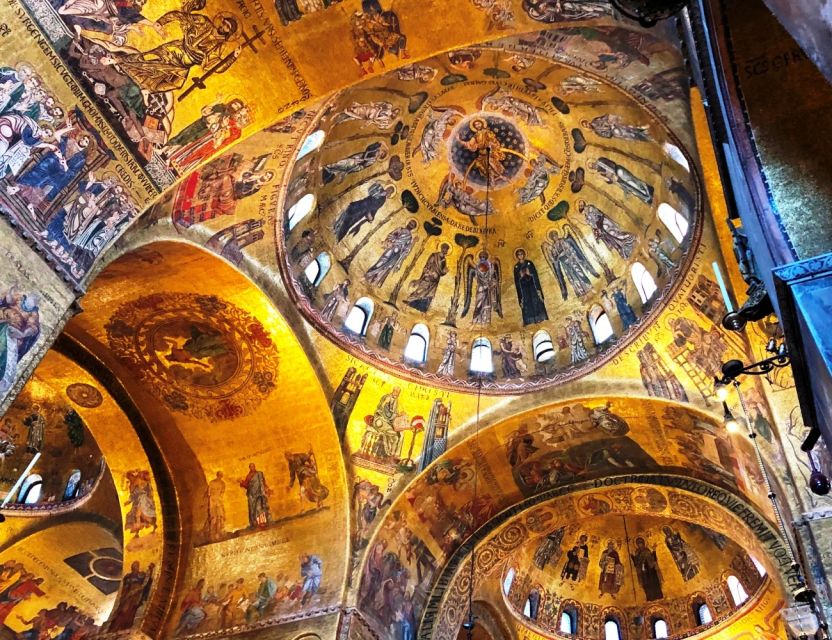
At $151.80 per person, you’re paying for more than sightseeing. You’re buying three things that are hard to replicate cheaply on your own:
- Guided storytelling that connects Marco Polo, Venetian politics, and the basilica’s art
- Included entrance fees for both Doge’s Palace and St Mark’s Basilica
- Skip-the-ticket-line entry, which matters when timing is tight
If your Venice day is limited, this is usually where value comes from: you compress multiple must-sees into one coherent route. If you already plan to visit Doge’s Palace and St Mark’s Basilica and you don’t want to spend hours coordinating entry times, the package price can feel fair fast.
On the other hand, if you’re the kind of traveler who wants lots of free roaming time and you prefer reading signs at your own pace, you may find the guided structure a little intense. In that case, you could consider splitting attractions into separate visits.
Who should book this Venice combo tour?
This tour is a great match if you want:
- A first-time Venice orientation that still hits major interiors
- A guided explanation that links politics (Doge’s Palace) to consequences (Bridge of Sighs)
- A plan that includes both St Mark’s Basilica and the palace visit without juggling tickets all day
It’s also a smart pick if your schedule is tight and you want to get your bearings while walking through canals and historic lanes. The itinerary is designed to give you a sense of how Venice’s big moments connect to smaller, local stories—Marco Polo, Santa Maria Formosa, and Campo SS. Giovanni e Paolo.
If you hate crowds or you need quiet time to really absorb religious art, this might be stressful during peak hours. Then again, you can partly manage that by choosing a timing slot that feels calmer for you.
Should you book? My practical take
I’d book this tour if you want a high-impact Venice day that mixes street-level storytelling with two of the city’s most famous interiors. The structure is what makes it work: it starts with context, moves into power and consequence, then finishes with the basilica’s gold-and-marble spectacle.
I’d skip it if you strongly prefer independent pacing or if you know you struggle in crowds—because St Mark’s Basilica can get full, and that affects how much you can see and react to in real time.
If you’re flexible, booking is usually smart because this kind of tour often sells out around popular times. And with the reserve now, pay later option and free cancellation up to 24 hours in advance, you can protect your plans while still grabbing a slot that fits your Venice schedule.
FAQ
What is the duration of the tour?
The tour lasts 4 hours. Starting times vary, so you’ll need to check availability for the slot you want.
Where does the tour start and end?
It starts at Calle larga de l’ Ascension, near the post office behind the Correr museum. The tour ends back at the same meeting point.
Which sights are included in the tour?
You’ll see Marco Polo’s House, St Mark’s Square area, Santa Maria Formosa, Campo SS. Giovanni e Paolo, Doge’s Palace, the Bridge of Sighs, and you’ll end inside St Mark’s Basilica (including the Treasury).
Are entrance fees included?
Yes. The experience includes entrance fees to Doge’s Palace and St Mark’s Basilica, plus a guided tour.
Is there a skip-the-line option?
Yes. The tour includes skip the ticket line for the palace and basilica visits.
What languages is the live guide available in?
The tour is offered with live guides in English, Spanish, French, and German.
Is there a luggage or backpack restriction?
You should plan to avoid bringing a backpack. A small carry bag is more workable for the kind of crowd-and-corridor flow during the stops.