REVIEW · VENICE
The Heart of Venice: A Self-Guided Audio Tour
Book on Viator →Operated by VoiceMap Audio Tours · Bookable on Viator
Venice can feel like a puzzle. This audio tour helps you solve it street by street, with auto-playing stories as you reach each stop. I like that it mixes big landmarks with specific local history, from Piazza San Marco to the Rialto Bridge. I also really like the offline access option, so you can wander without worrying about data.
The route stays in a very practical slice of the city center, so you spend more time looking up at buildings and less time checking maps. You get a lifetime pass to the tour, plus the VoiceMap app and directions to the starting point. The one clear consideration: you’ll need your own smartphone, since it’s not included.
If you want Venice with freedom (not a clock-chasing group), this is a smart way to do it. Just be ready for the audio to play when you’re at the exact spots, so slow down and actually reach each stop.
In This Review
- Key things to know before you go
- How a VoiceMap self-guided tour keeps Venice feeling easy
- Piazza San Marco: the drawing-room stories that explain the square
- Campo San Salvador and the marble column tied to 1848–1849
- Teatro Comunale Carlo Goldoni: why Venetian comedy matters
- La Fenice opera stories that start with Rigoletto and La Traviata
- Palazzo Cavalli and the Centro Maree: the science behind acqua alta
- Rialto Bridge: from raised bascules to today’s landmark
- Price and value: is $11.99 a good deal for a Venice audio walk?
- Who this tour fits best (and who should skip it)
- Quick practical tips to make the audio land
- Should you book this self-guided Heart of Venice audio tour?
- FAQ
- How long is the Heart of Venice self-guided audio tour?
- Do I need a data connection to use the audio and maps?
- Is the tour offered in English?
- What is included with the $11.99 price?
- Do I need to bring my own smartphone?
- Where do I start and where does the tour end?
- Is there any access fee for day-trippers staying outside Venice?
Key things to know before you go
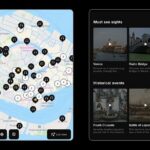
- GPS-triggered audio so the stories start when you arrive at each location
- Offline audio, maps, and geodata, meaning less phone anxiety
- Lifetime access to the tour, so you can replay it later
- A private experience for just your group
- English-only narration (so plan accordingly if you need another language)
- A mix of landmark Venice and behind-the-scenes detail, like tide monitoring at Palazzo Cavalli
How a VoiceMap self-guided tour keeps Venice feeling easy
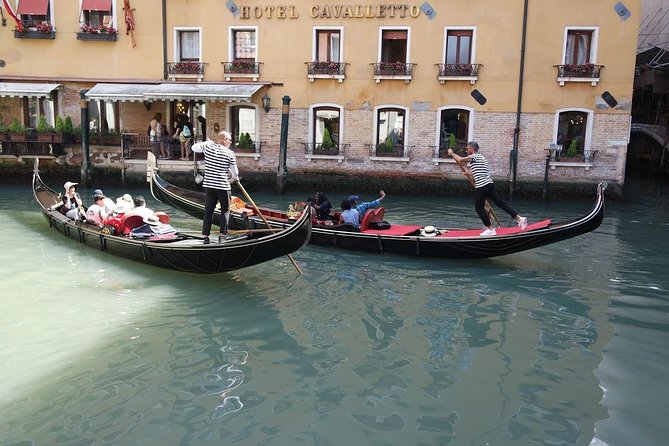
This isn’t a live guide standing in front of you. It’s an audio walk built for your pace. You open the VoiceMap application, follow the directions to P.za San Marco (328, 30124 Venezia), and then the tour is designed to begin once you’re in the right place. From there, you get turn-by-turn navigation plus audio that plays automatically as you reach each stop.
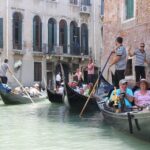
That matters in Venice because the fun is often in the walking itself. Small alleys, sudden views, and sudden crowd pockets can change your timing fast. With this format, you don’t have to keep up with a group. If you want to pause for photos or step aside to let pedestrians flow, you can.
The offline setup is another major win. The tour includes offline access to audio, maps, and geodata, which means you don’t have to rely on a working connection to keep moving. Venice dead zones happen. This design helps you keep your route and your stories running anyway.
The private-group angle is also worth noting. Since it’s only your group, you’re not doing that awkward thing where you try to hear over strangers or get separated and then play catch-up.
You can also read our reviews of more guided tours in Venice



Piazza San Marco: the drawing-room stories that explain the square
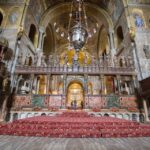
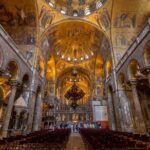
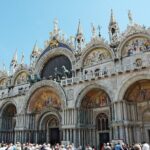
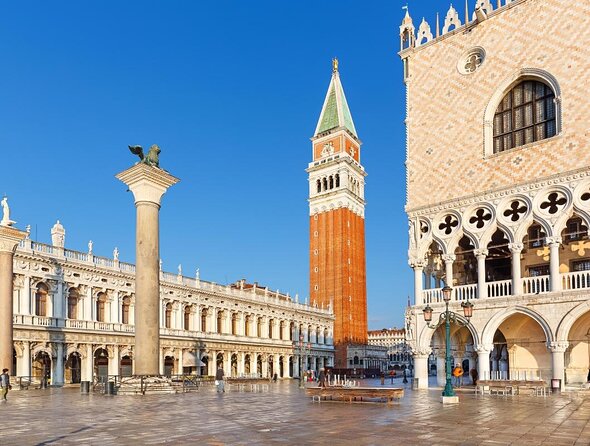
You start at Piazza San Marco, the center of Venice and the one place you almost can’t avoid. The tour frames it in a big-picture way: this is where grand events happened for centuries. You’ll hear that it was once called the drawing room of Europe, while Venetians keep it simple with the nickname la Piazza.
This is a smart first stop. Piazza San Marco can overwhelm first-time visitors. There are so many eyes on the same view that it’s easy to miss the deeper logic of the place. The audio helps you see the square as a stage—elegance, drama, history, and public moments all tied to one location.
In practical terms, this is also where you can calibrate. Before you leave the area, you’ll understand why Venice’s “center” feels like a world of its own. If you’re arriving later in the day, this is also a place where the light can change fast, so plan to linger a bit before you move on.
Possible drawback: Piazza San Marco is busy. Even with an audio tour, crowd noise can make it harder to hear clearly. Bring headphones that fit well and keep the volume sensible.
Campo San Salvador and the marble column tied to 1848–1849
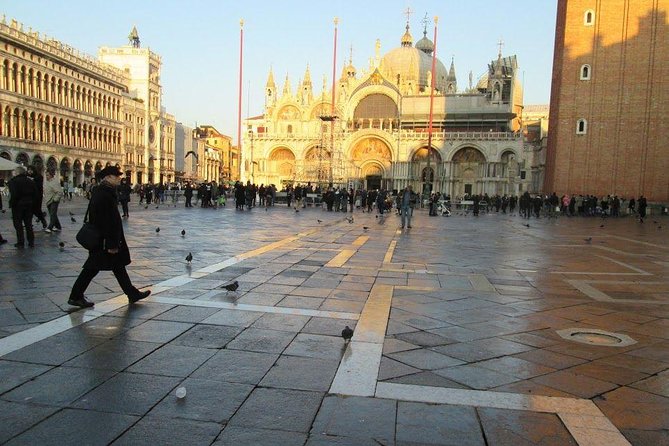
Next up is Campo San Salvador, centered on a tall marble column placed there in 1898. The story behind it is the 17-month Venetian revolt against Austrian occupation, which took place in 1848 and 1849.
This stop is great value because it gives you context for a part of Venice that many visitors pass through without slowing down. You get a reason to look up at the column and a reason to care about the dates. That makes your walk feel less like sightseeing-by-checklist and more like reading the city.
Campo San Salvador also helps break the Piazza-to-Rialto “big landmark” rhythm. After San Marco’s grandeur, the square feels more grounded. It’s the kind of place where you can stop, listen, and then keep moving with a better sense of how Venice’s political history shaped everyday streets.
Practical tip: don’t treat this as a quick photo stop. Stand where the audio expects you to be, then give yourself time to read the space around you. You’ll get more out of it.
Teatro Comunale Carlo Goldoni: why Venetian comedy matters
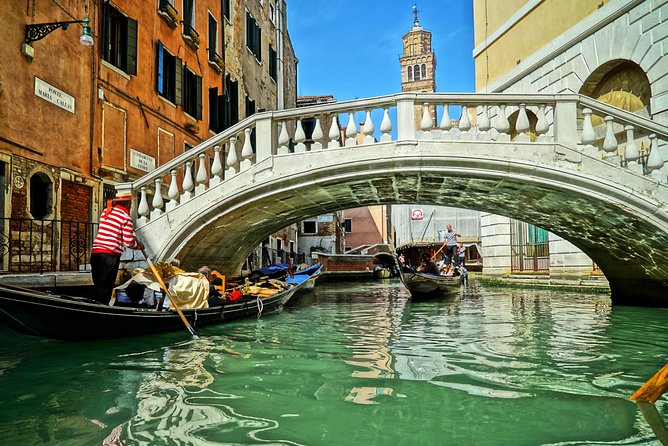
The tour then moves to Teatro Comunale Carlo Goldoni, named for Carlo Goldoni, a Venetian playwright from the 1700s. The audio points out that he wrote comedies in the Venetian dialect and that his approach was revolutionary for the time—he made characters feel like real people, with affectionate attention to the quirks of everyday Venetians.
This is one of the best “mental shifts” the tour offers. Venice isn’t only about palaces and bridges. It’s also about language, theater, and identity. Goldoni’s focus on ordinary people helps you connect to Venice beyond tourism clichés.
If you like culture that feels specific to a place, this section rewards you. A lot of visitors see a theater and move on. Here, you get the why. It turns the building into a clue about how Venetians saw themselves.
One consideration: the audio is informative, but the exterior may not tell the whole story if you’re expecting a museum-style experience. If you want staged performances, you’ll need separate plans.
La Fenice opera stories that start with Rigoletto and La Traviata
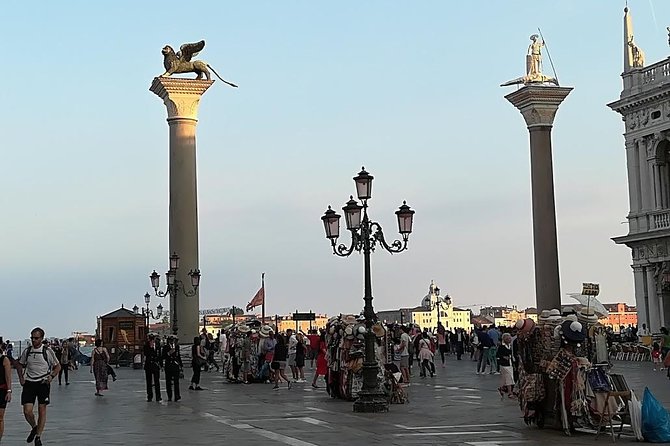
From Goldoni’s theater, the audio shifts to La Fenice, one of Italy’s most important opera houses. The tour notes that many famous operas had their first performance here, including Rigoletto and La Traviata.
That’s a helpful highlight because those titles are widely known, even if you aren’t an opera expert. Once you know La Fenice mattered for premieres, the building becomes more than just an impressive façade. It becomes a landmark in the history of music and performance.
Why this works on a walking audio tour: it gives you a thread. Goldoni deals in dialect comedy, and then the tour moves to grand opera premieres. Together, they show two sides of Venetian performance culture: local language and big international works.
Practical tip: if it’s a busy time of day, you may need to stand a little to the side to keep from blocking foot traffic. Let the crowd flow happen, then settle into your listening spot.
You can also read our reviews of more tours and experiences in Venice






Palazzo Cavalli and the Centro Maree: the science behind acqua alta

This is the stop that surprised me most conceptually, because it brings Venice’s most famous weather problem into the story. You’ll hear about Palazzo Cavalli, which conducts civil marriage services and also houses the Centro Maree, the Tide Center.
The tour explains that this center monitors data related to tides and weather. It also makes daily tide predictions, especially for high tide—acqua alta.
This is a valuable piece of context if you’re visiting Venice in any season where flooding could matter to your plans. Instead of treating acqua alta as a random catastrophe, the tour frames it as something Venice actively tracks. You’re seeing the city run, not just the city posed for postcards.
Also, the marriage-services note is useful. Venice has ceremonies, and it has institutions that operate all day, not only during festivals. That adds realism to what you’re seeing.
Possible drawback: if you’re not interested in weather science or tide timing, you might find this segment more “information heavy” than “visual heavy.” Still, it’s practical knowledge in a city that can change quickly.
Rialto Bridge: from raised bascules to today’s landmark
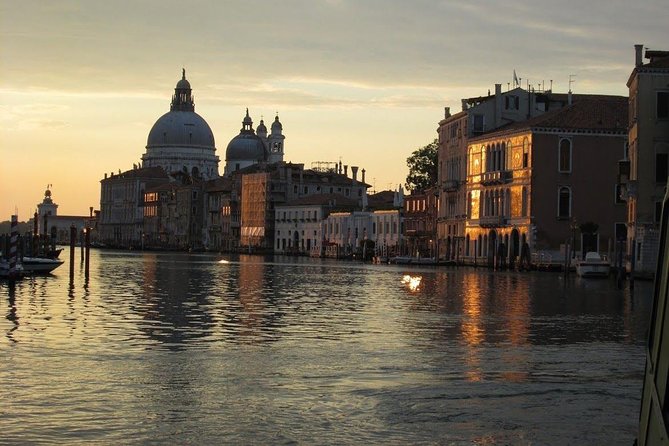
The route ends at Rialto Bridge, described as the third of its kind. The audio notes that earlier Rialto bridges were made of wood and that they were bascule bridges, meaning the center section could be raised to let ships with masts pass through.
This is a great ending because it ties Venice’s waterways to its architecture. A bridge isn’t just a crossing here; it’s part of a working system. When the center can rise, it’s a reminder that Venice’s past relied on ships as much as streets, and that design responded to real traffic needs.
If you’re standing at Rialto with the right context, you’ll notice how the bridge sits in the city’s movement. You’re not only looking at a landmark—you’re understanding why it had to work.
Practical note: Rialto is one of the busiest places you’ll find in Venice. Even if the audio ends, you’ll likely want to spend a little time watching the flow and finding a spot where you can see the canal without getting stuck in the thickest crowd.
Price and value: is $11.99 a good deal for a Venice audio walk?
At $11.99 per person for about an hour of self-guided wandering, this is priced like a bite-sized experience. That sounds small, but in Venice, even a short, well-structured walk can save you time and decision fatigue.
Here’s the real value math: you’re paying for lifetime access, the VoiceMap application, and offline audio plus maps and geodata. Most “cheap” audio options don’t include the offline component clearly, and most paid walking tours don’t give you the ability to replay later.
The other value point is flexibility. You’re not buying a strict timetable. You’re buying a way to experience Venice in your own order inside this compact area—from Piazza San Marco to Rialto Bridge—using GPS triggers rather than constant manual map-checking.
For people who struggle with guided groups, this format can feel like a bargain. You’re basically getting a guide’s commentary without the “move, move, move” pressure.
One caveat: you still need your own smartphone, and you’ll be responsible for keeping it charged. The tour’s offline design helps, but battery life is always your issue.
Who this tour fits best (and who should skip it)
This self-guided audio walk is ideal if you want:
- Structure without a guide chasing you
- Offline navigation support
- A route that connects major sights with clear, story-based context
- A quick, practical way to get through central Venice in roughly an hour
It’s also a good match for first-time visitors who feel lost. Starting at Piazza San Marco is easy, and finishing at Rialto makes a natural endpoint.
You might consider another option if you’re looking for long stops, hands-on experiences, or a deeper “inside the building” itinerary. This tour is built for walking and listening, not for ticketed museum time.
If you’re traveling with family, the pace is manageable because it’s self-guided. You can slow down for interest or speed up if everyone’s tired. Just keep in mind that the story audio is timed to your arrival at each stop.
Quick practical tips to make the audio land
- Use good headphones. Venice has wind, crowd chatter, and street noise. Clear audio helps.
- Stand in the audio zones. The best experience comes when you reach each stop location so the narration triggers as intended.
- Plan for crowds at Piazza San Marco and Rialto. If it feels packed, step to the side and keep your volume comfortable.
- Save your battery. Offline mode helps with data, but it doesn’t magically fix low phone battery.
- If you’re a day visitor from outside Venice, double-check whether a €5 access fee applies for your date. The tour info says some day-trippers staying outside Venice may need to pay it on certain dates, with details and exemptions at cda.ve.it.
Should you book this self-guided Heart of Venice audio tour?
If you want a simple, story-driven walk that connects Venice’s biggest names and places, I think this is worth booking. The strongest reasons are practical: offline audio/maps/geodata, auto-playing narration when you reach each stop, and lifetime access for the price.
Book it if you like exploring at your own speed and you want context you can actually use while you’re standing in the square. Skip it if you’re hoping for a full-day plan, lots of interior visits, or a live guide interaction.
If you’re doing only one short “guided-feeling” experience in Venice, this is a solid pick. It keeps the city moving in a way that feels guided, without the leash.
FAQ
How long is the Heart of Venice self-guided audio tour?
It’s listed as about 1 hour.
Do I need a data connection to use the audio and maps?
No. The tour includes offline access to audio, maps, and geodata, so you do not need to use data.
Is the tour offered in English?
Yes. English is the offered language.
What is included with the $11.99 price?
Included are lifetime access to the tour, the VoiceMap application, offline access to audio/maps/geodata, self-guided GPS exploration, and directions to the starting point so the tour starts when you’re in the right place.
Do I need to bring my own smartphone?
Yes. A smartphone is not included.
Where do I start and where does the tour end?
Start at P.za San Marco, 328, 30124 Venezia VE, Italy and end at Rialto Bridge (Ponte de Rialto, 30100 Venezia VE, Italy).
Is there any access fee for day-trippers staying outside Venice?
On certain dates, day visitors staying outside Venice who are visiting for the day may need to pay a €5 access fee. The info says to check details and exemptions at https://cda.ve.it.