REVIEW · VENICE
Murano: In Depth Glass Factory Guided Tour
Book on GetYourGuide →Operated by Wave Murano Glass - Factory, Tours and Experiences · Bookable on GetYourGuide
Molten glass meets real factory rules. This is a guided walk through a working Murano workshop, built for people who want the real process, not the shopfront show.
I really like the chance to see Murano glass masters shaping hot glass close up, with the work happening in front of you. I also appreciate the professional step-by-step guide that explains what each room does and why it matters.
One drawback to consider: the tour is not suitable for everyone, including wheelchair users and people with epilepsy, so check that before you book.
In This Review
- Key highlights you’ll care about
- A real Murano workshop, minus the souvenir pressure
- Price and timing: $34 for 50 minutes that actually teach
- Where you meet: check in in the gallery, not inside the factory
- Inside the batch room: where sand turns into real glass
- The hotshop: watch molten glass work happen live
- The coldshop: where finished surfaces get made
- Small group rules that keep the tour safe (and better)
- A quick reality check on who this fits (and who should skip)
- The best way to plan your day around this
- Should you book Murano: In Depth Glass Factory Guided Tour?
- FAQ
- How long is the Murano glass factory guided tour?
- What is the price per person?
- Is the tour led in English only?
- Where do I meet for the tour?
- What should I wear?
- Is it suitable for wheelchair users or people with epilepsy?
Key highlights you’ll care about
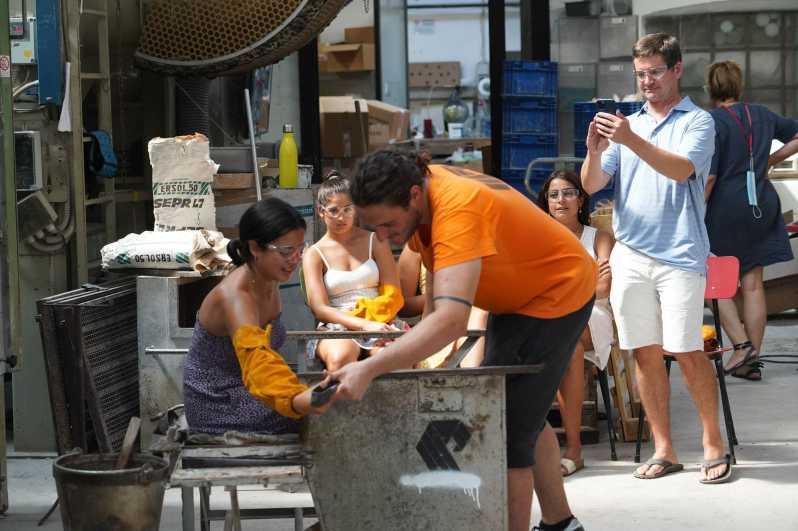
- You watch real glass shaping as masters work with the materials and tools
- Three-room factory flow you can actually follow: batch room, hotshop, coldshop
- Hands-on context without pressure to buy (no obligation sales pitch)
- Small groups capped at 8 so questions don’t get lost
- Safety glasses included and part of the expectations inside the workshop
A real Murano workshop, minus the souvenir pressure
If you feel like Venice and nearby islands can turn into a theme park, this kind of experience is a relief. Here, the focus is the work: glassmaking, room by room, with a live English guide explaining what you’re seeing as it happens.
What I like most is that it doesn’t come packaged as a shopping stop. The tour is designed to show you how a true Murano factory operates and why the process is so exacting—starting at the beginning, then moving to where the heat and shaping take over.
This tour is also short enough to fit a busy day: 50 minutes, live, with a live guide and a small group pace. That matters in Murano, where getting around and timing your day can feel like a juggling act.
You can also read our reviews of more guided tours in Venice
Price and timing: $34 for 50 minutes that actually teach
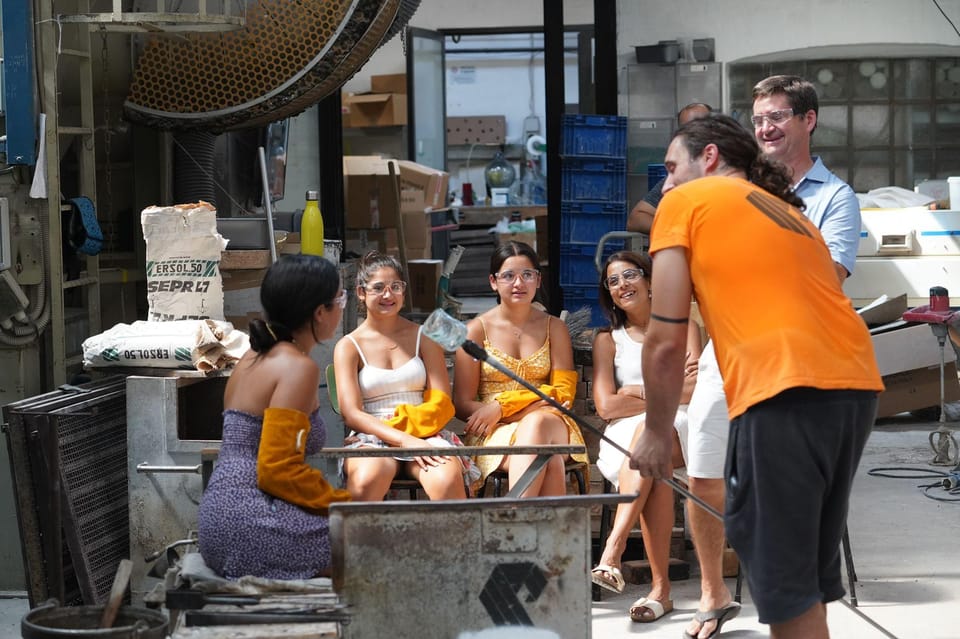
At $34 per person for 50 minutes, you’re paying for access and explanation inside an operating glass facility, not just a quick photo stop. The value is in the structure: you’re guided through the main production areas, and you can see the glass work happening right next to you.
A key timing tip: you should plan for travel from Venice that can take up to about 50 minutes depending on where you start. On top of that, you’re asked to arrive 5 minutes early for check-in. That doesn’t leave much buffer, so I’d rather you be early than sprinting across Murano with the wrong shoes on.
Also note the scheduling limits: the workshop does not run tours on Saturdays and Sundays, and it’s closed on Sunday. If your trip includes a weekend day, check alternatives on the other days of the week.
Where you meet: check in in the gallery, not inside the factory
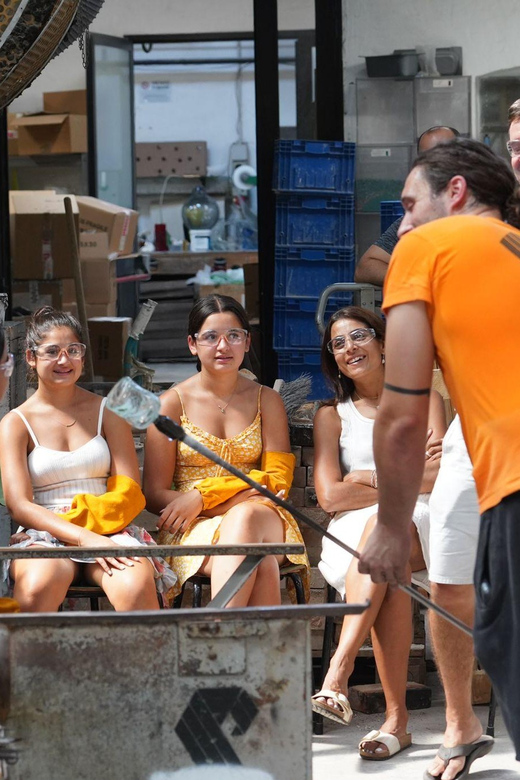
Here’s the one logistics detail that can trip people up. The meeting point is in their gallery, where you must check in before the experience starts. It is not the factory entrance.
Once you’re checked in, you’ll be led on to the workshop areas. That’s normal for businesses that coordinate groups, but it’s worth building into your plan so you don’t arrive expecting to walk right into the hotshop.
If you’re staying on the Murano side already, great. If you’re commuting from Venice, I’d treat the check-in point as your first milestone of the day, not a formality.
Inside the batch room: where sand turns into real glass
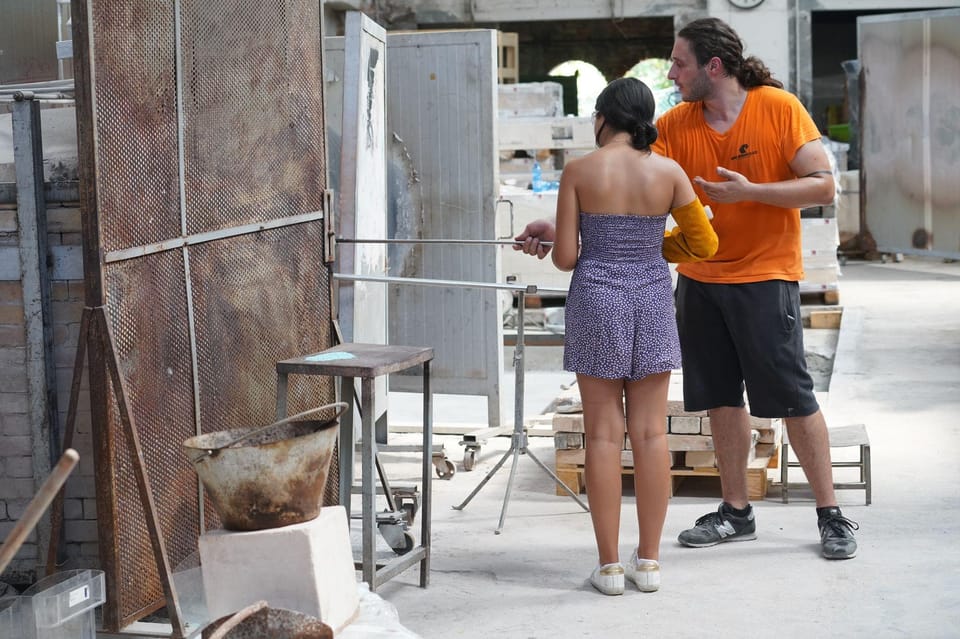
The tour follows the production line in a way you can understand. First up is the batch room, where the story starts with ingredients.
You’ll see the place where sand and other chemicals are mixed to perfection, creating the material that will later melt into glass when it’s charged into a 1400°C furnace. That number is the kind of detail that sticks, because it instantly tells you the scale of heat and the seriousness of the process.
Why this part is valuable: without the batch room, glass can feel like magic. With the batch room, it starts to feel like engineering. You learn that glass isn’t just a color or a finished object—it’s the result of a precise recipe and controlled heating.
The hotshop: watch molten glass work happen live
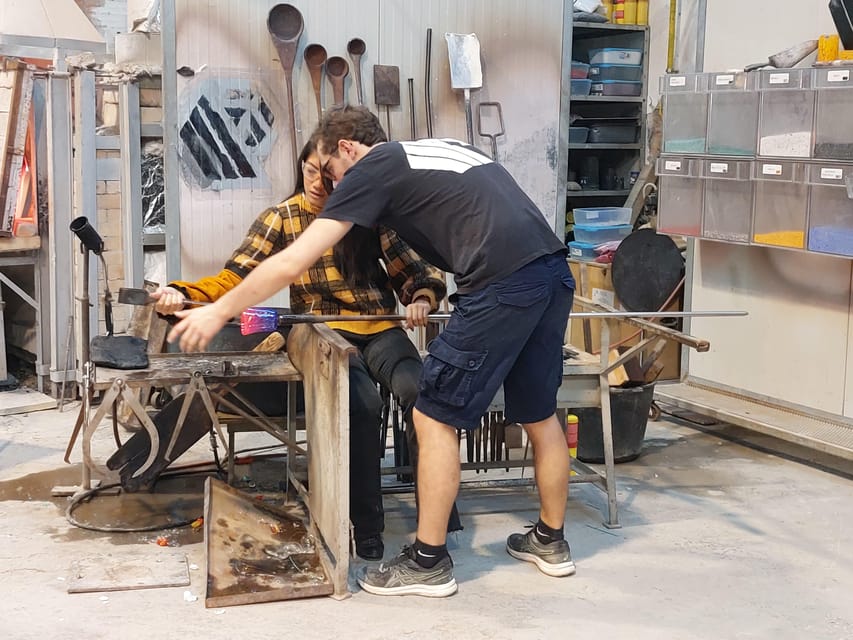
Next comes the hotshop, the room where the magic happens—meaning not tricks, but actual work with molten glass. This is where the guide ties together the chemistry and the practical realities of the furnaces and tools.
In the hotshop, you’ll learn about:
- how the glass melting process works, from the chemical mix to molten glass
- how the furnaces function
- an overview of the tools used in shaping
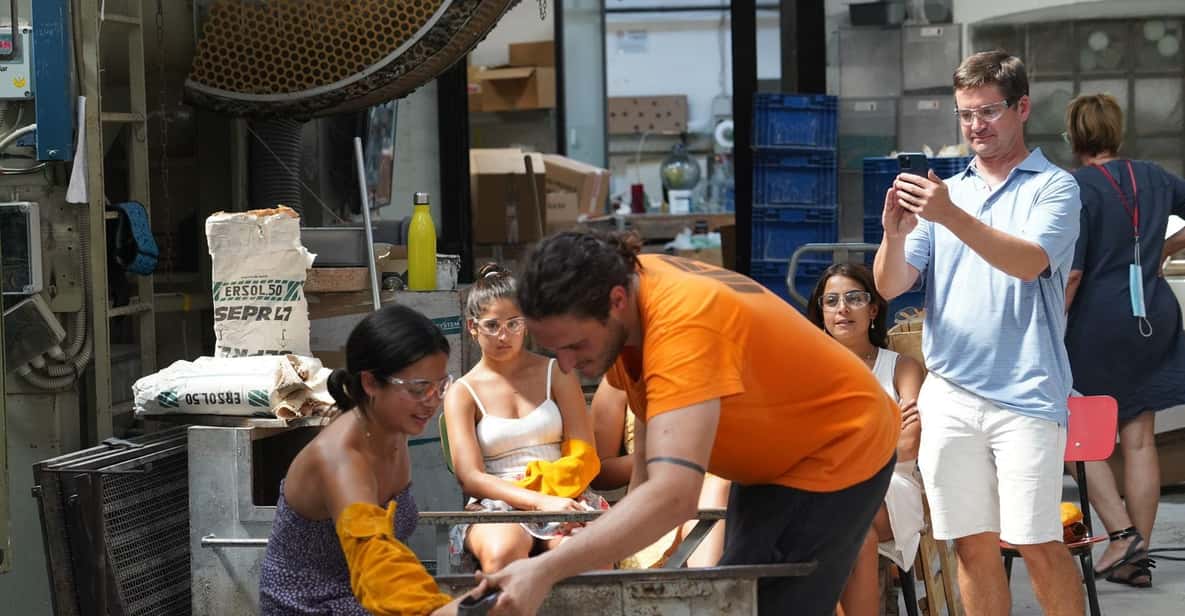
This is also where the value of a small group really shows. Standing near the action lets you see what changes when the glass is ready, and how quickly decisions have to be made in a heat-driven environment. One tour experience review highlighted that the process can be a little hard to grasp at the start, then becomes much clearer once you watch the steps live, including different cooling stages in the workflow.
Practical reality: because the hotshop focuses on live work, the guide’s pace matters. The English guide format is step-by-step, designed to keep the science understandable without turning the tour into a lecture.



The coldshop: where finished surfaces get made
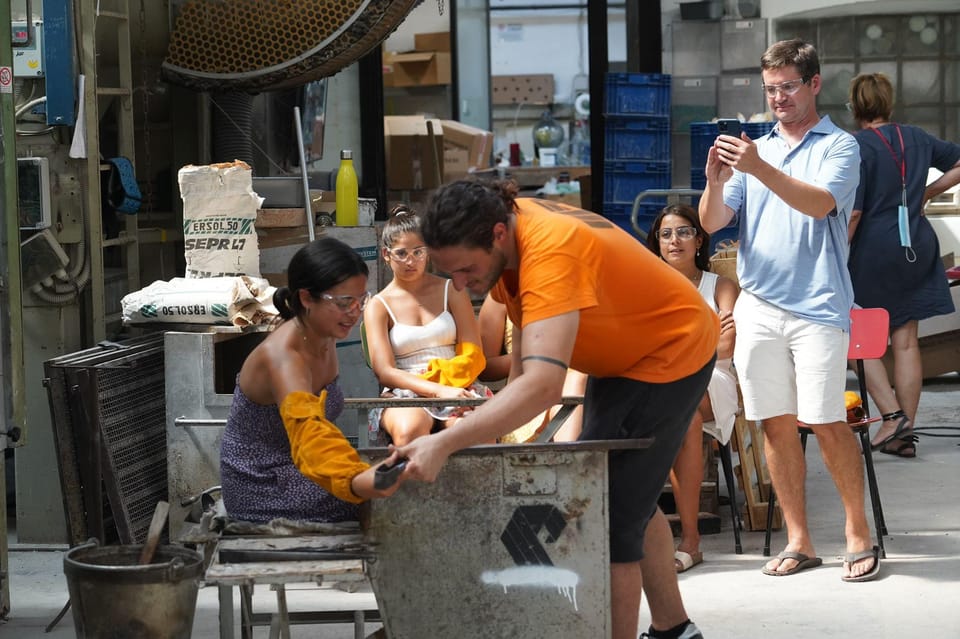
After the heat comes the precision of the coldshop, where the glass starts to “shine” in a more finished, tangible way.
In this part of the tour, you’ll see machines and tools used to carve, drill, cut, flatten, and polish glass. Even if you’ve seen Murano glass in shops, it’s different when you watch it move from shaped material toward the surface finish that makes the pieces look clean, crisp, and well-made.
Why the coldshop is a big deal: most people only remember the craft of blowing. But glassmaking is also about shaping after the fact—working the form and refining the edges and surfaces so the piece looks deliberate, not just colorful.
Small group rules that keep the tour safe (and better)
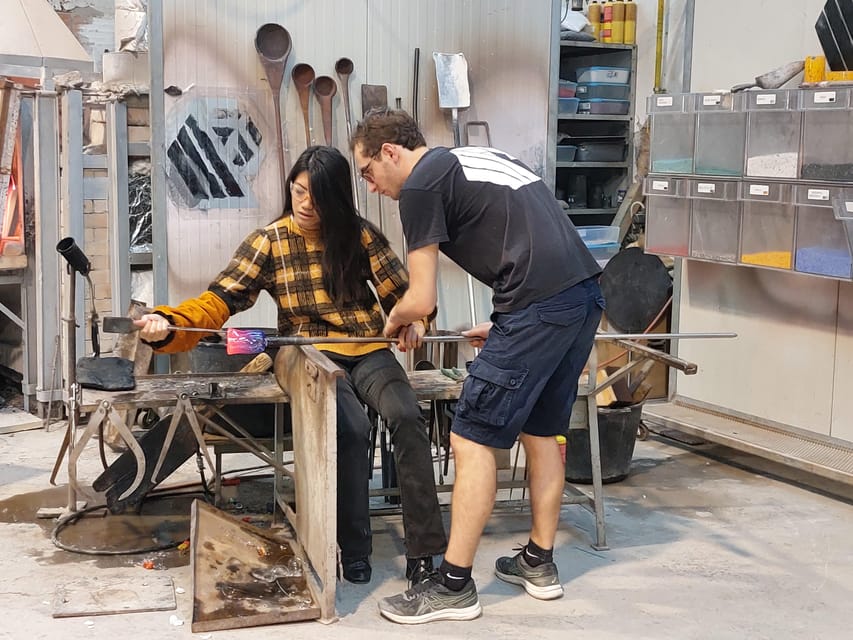
This is limited to 8 participants, which keeps it from feeling like an assembly line. The guide can pause for questions, and you can usually get a better view than you’d get in a larger crowd.
You’ll also be given safety glasses for all participants, and you should follow the on-site rules. The tour asks you to wear comfortable shoes with closed-toe footwear. Sandals or flip-flops are not allowed, and that’s not about being picky. It’s about keeping people safe around workshop areas.
Alcohol and drugs are also not allowed. That’s the kind of house rule that keeps a workplace setting functioning properly.
A quick reality check on who this fits (and who should skip)
This tour is a strong pick if you want:
- a real production process, not just a showroom stroll
- a clear English explanation that walks through each key area
- the chance to stand close to masters while glass is being formed
It can also work well for families who have kids old enough to pay attention for 50 minutes—some people noted that kids loved seeing the making process and watching it turn into something real.
But it’s not suitable for everyone:
- not for people with mobility impairments
- not for wheelchair users
- not suitable for people with epilepsy
- not suitable for people with a cold
The last point is worth taking seriously. Workshops can be strict about illness policies for good reasons, and this one is explicit.
Also, the tour is ONLY in English, so if English is a struggle for your group, plan accordingly.
The best way to plan your day around this
If you’re pairing this with other Murano stops, think like this:
1) treat the tour as your anchor appointment
2) build in time for check-in at the gallery
3) don’t schedule a tight sprint immediately afterward, because you’ll want breathing room before your next Venice/Murano move
From Venice, give yourself flexibility for transit and walking. Depending on your starting point, that up to 50 minutes travel time can be the difference between relaxed and rushed.
Also, wear shoes you can stand in. The tour lasts 50 minutes, and you’ll want a stable stance for looking closely at what the masters are doing.
Should you book Murano: In Depth Glass Factory Guided Tour?
I’d book this if you’re tired of the postcard version of Murano and you want the actual workflow. For the price—$34—you get a real, guided run through the core rooms: batch room, hotshop, and coldshop, in a small group with English step-by-step explanations and safety glasses included. The lack of sales pressure is also a real plus if you want the experience without the push.
I would skip it if accessibility is an issue, if anyone in your group has epilepsy, or if you’re dealing with an illness that the tour specifically flags. And if you’re expecting a hands-on class for everyone, remember: this is a guided factory tour focused on what’s happening in the rooms.
If you’re deciding between a quick walk-through and something more structured, this one leans practical. You’ll leave knowing how glassmaking starts, how the furnace stage drives the process, and how the finishing work in the coldshop turns shaped glass into polished pieces you actually recognize as professional craft.
FAQ
How long is the Murano glass factory guided tour?
The tour runs for 50 minutes.
What is the price per person?
The price is listed as $34 per person.
Is the tour led in English only?
Yes. The tour is ONLY led in English language.
Where do I meet for the tour?
You meet in the provider’s gallery for check-in. It is not in the factory itself, and you will be led there afterwards.
What should I wear?
Wear comfortable shoes and closed-toe shoes. Sandals or flip-flops are not allowed.
Is it suitable for wheelchair users or people with epilepsy?
No. The tour is not suitable for wheelchair users, people with mobility impairments, or people with epilepsy.