REVIEW · VENICE
Da Vinci Interactive Museum Venice Scuola di San Rocco
Book on Viator →Operated by Leonardo da Vinci Museum · Bookable on Viator
Leonardo’s ideas are easier to grasp when you can see them in motion. At the Da Vinci Interactive Museum Venice (in the Scuola di San Rocco area), you’ll explore working replica machines plus backlit displays that make his art and science feel connected.
I especially like the way the museum breaks da Vinci’s world into Earth, Water, Air, and Fire, so the exhibits don’t feel random. Another big plus is the mix of hands-on models and high-resolution, backlit painting copies, which makes it great for both adults and kids. One drawback: the museum is small, and if you’re expecting a huge, immersive blockbuster, you may finish quicker than you imagined.
In This Review
- Key highlights to know before you go
- Leonardo da Vinci Museum Venice: what you’re stepping into
- The four sections: Earth, Water, Air, Fire (and why it helps)
- Working replicas: what you can do with da Vinci’s machines
- Backlit paintings and anatomy studies: the art side of the science
- Multimedia and the short film: use it as a map, not a substitute
- Audio guides and languages: how to make it feel tailored
- What the visit feels like in real time (and how long to plan)
- Location timing in Venice: opening hours and last entrance
- Price and value: is $10.21 worth it?
- Who should book (and who might want a reality check)
- Should you add the Da Vinci Interactive Museum to your Venice day?
- FAQ
- What’s the approximate visit length?
- What language is available?
- Is a professional guide included?
- Are audio guides available?
- What time can I enter?
- Do I need to pay any extra Venice access fee?
- Should You Book the Da Vinci Interactive Museum Venice Scuola di San Rocco?
Key highlights to know before you go
- Working replicas on Leonardo’s designs: machines are built to his proportions when possible
- Four themed rooms: Earth, Water, Air, Fire: a simple structure that helps you follow the ideas
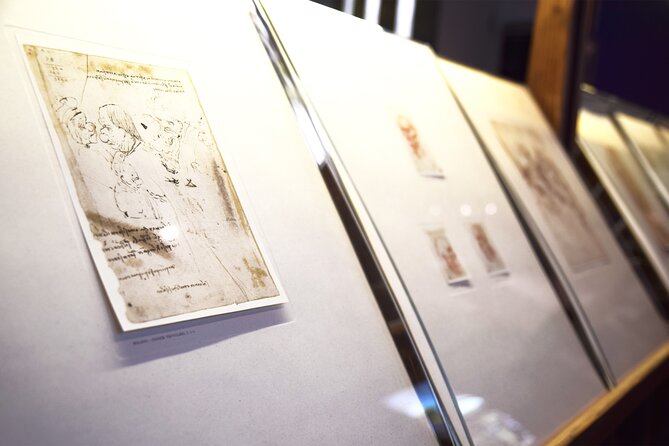
- Backlit high-resolution art and anatomy studies: science and painting sit side by side
- Interactive models with real “try it” moments: more play than lecture
- Short film + multimedia in several languages: useful even if you want to scan and move on
- Audio guides available free at the entrance: ask before you start
Leonardo da Vinci Museum Venice: what you’re stepping into
This is a compact, no-nonsense museum focused on Leonardo da Vinci as inventor, scientist, and artist. You’ll visit at any time during opening hours, and the experience is typically around 45 minutes—though if you stop to test the interactive parts, you’ll stretch it.
The vibe is family-friendly and curious. There’s an actual sense that the museum wants you to work out how things might work, not just read a wall label. And because so much is presented visually, it’s an easier sell for kids than many art-only or tech-only exhibits.
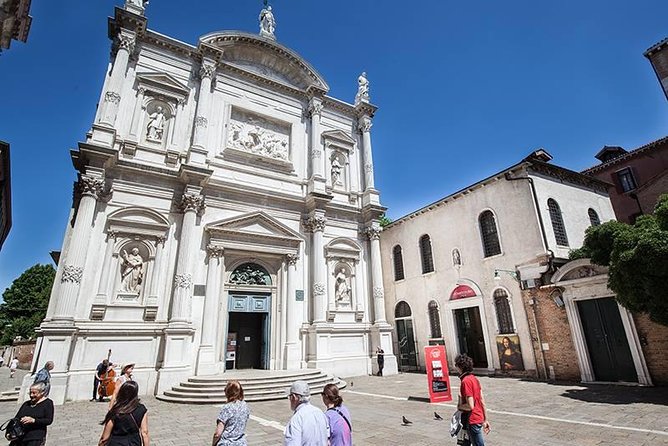
Location-wise, it’s near the Scuola di San Rocco area, so your day can connect with other sights. That matters in Venice, where you want short walks and good payoff.
You can also read our reviews of more museum experiences in Venice


The four sections: Earth, Water, Air, Fire (and why it helps)
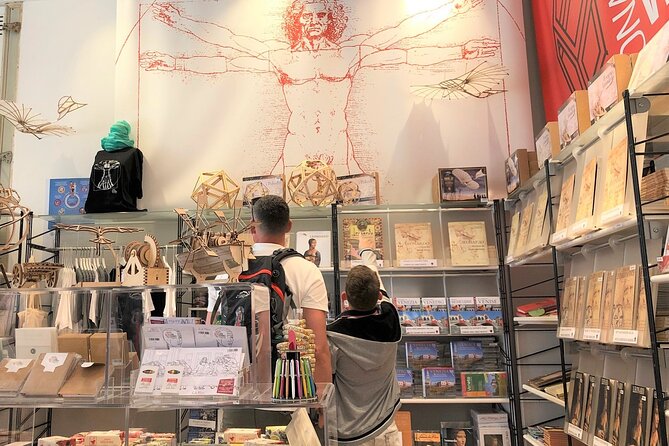
One of the smartest choices here is the museum’s layout. The exhibits are organized into Earth, Water, Air, and Fire, which gives your brain a set of boxes to sort da Vinci’s ideas into.
As you move room to room, you’re not just looking at machines—you’re learning the theme behind them. That makes the inventions feel less like random gadgets and more like a way of thinking about the physical world.
Here’s the practical side: this structure also makes the visit flexible. If you’re tired, you can focus on one section and still feel like you got something coherent.
Working replicas: what you can do with da Vinci’s machines
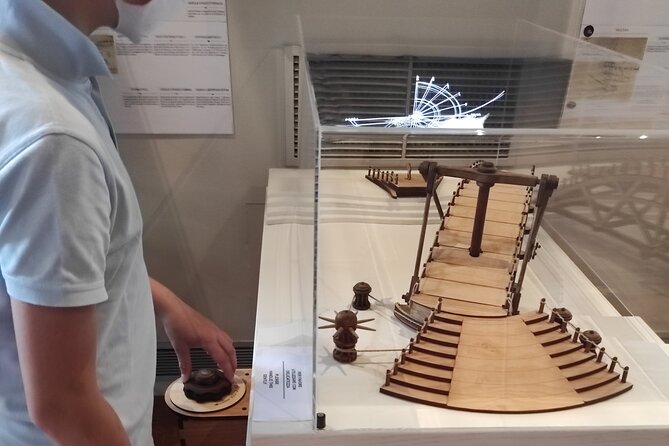
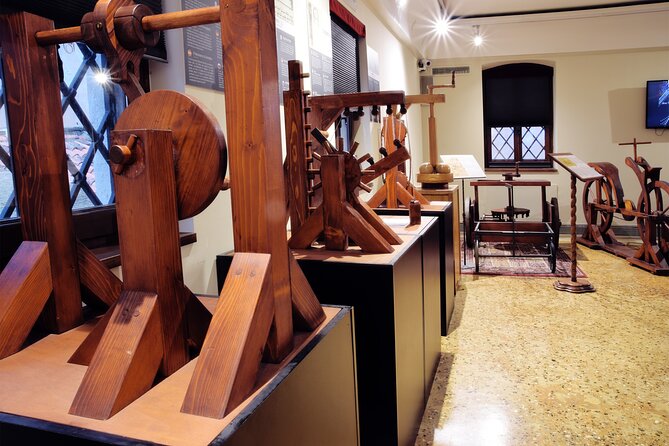
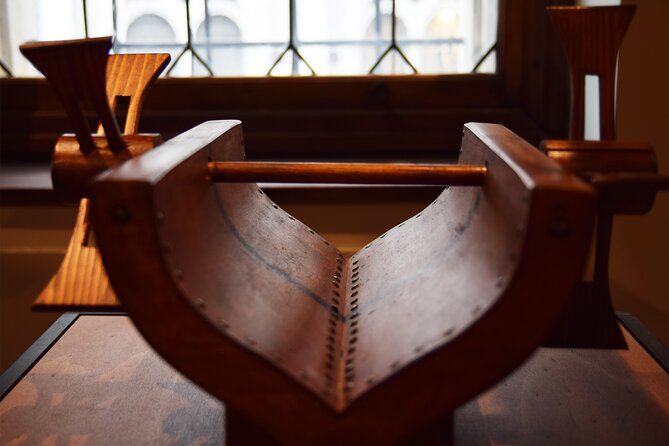
The museum’s headline is the replicas. These are not just pictures—many are working models built according to Leonardo’s designs. The goal is to show how his concepts might operate, and the museum builds them based on his original proportions unless adjustments are needed.
This is where the museum shines for real-world learning. Seeing a mechanism move helps you understand Leonardo’s thinking much faster than a diagram alone. It’s also the part kids tend to remember, because you can test and interact rather than just watch.
Plan on some gentle patience. Interactive stations can take a moment to figure out, and you may want to try again after you realize what the exhibit is asking you to do.
Backlit paintings and anatomy studies: the art side of the science
Many da Vinci exhibitions focus on the famous paintings. This one gives you a broader view by pairing invention with study.
You’ll see high-resolution backlit replicas of major paintings, designed for prime viewing. Because they’re backlit and high-detail, you can spend time on specifics without squinting or struggling with lighting.
Alongside the art, there are displays connected to Leonardo’s major studies of anatomy. If you’ve ever wondered why da Vinci’s work feels so observational—this is your answer. The museum treats human anatomy as part of the same curiosity that fuels his inventions.
Even if you’re not a full-time art history person, this pairing makes the experience make sense. Leonardo didn’t separate disciplines; he treated them like one big investigation.
Multimedia and the short film: use it as a map, not a substitute
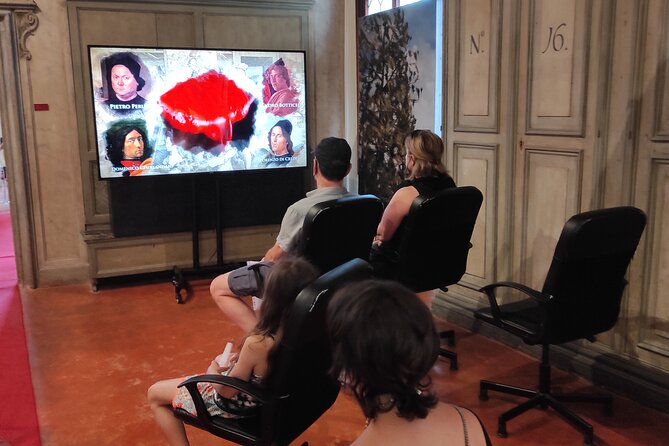
The museum uses multimedia to support his story and ideas. You’ll see descriptions in multiple languages and supporting displays that cover Leonardo’s life and works.
There’s also a short film included as part of the experience. This can be helpful if you want a quick timeline, but it shouldn’t replace the main event—the machines and the backlit art.
If you’re trying to maximize value, treat the film as orientation. Then go straight to the interactive stations and the paintings so the concepts land while you’re still in the zone.





Audio guides and languages: how to make it feel tailored
The museum provides descriptions in Italian, English, French, German, Spanish, and Russian, supported by multimedia displays. That’s great if you’re with mixed-language group members, or if you just want to switch languages for faster understanding.
One useful tip: audio guides are available free of charge upon request at the entrance. A few visitors also mentioned they didn’t see audio options during online booking, so if you care about narration, stop by the desk before you start.
This matters because a museum like this rewards curiosity. If you add audio, you’re more likely to connect the “what” on the label to the “why” behind the design.
What the visit feels like in real time (and how long to plan)
Given the size and focus, it’s not the kind of museum you need to schedule for half a day. In many cases, one visit window is enough to cover the highlights—especially if you like to move at a steady pace.
Still, don’t rush the interactive parts. People who like puzzles often take longer, because it’s not always instant on the first try.
If you’re visiting with kids, it’s worth planning a little extra time for replays. The museum’s “try it yourself” style tends to pull attention longer than you expect.
Location timing in Venice: opening hours and last entrance

The museum is open daily from 10:30 AM to 4:30 PM, and the last entrance is at 4:00 PM. That last-entrance detail matters in Venice because you’ll likely lose time to walking, snack stops, and getting turned around.
For a smooth plan, aim to arrive earlier in the afternoon. Then you’ll still have energy for nearby sights—especially if you’re pairing the visit with the Scuola Grande di San Rocco area.
Also note the basic rules: food, chewing gum, and beverages are prohibited in exhibit areas. If you’re traveling with kids, plan a quick snack outside before you enter so you’re not managing requests mid-visit.
Price and value: is $10.21 worth it?
At about $10.21 per person, this museum sits in the sweet spot for Venice. It’s not trying to compete with big-ticket, blockbuster museums. Instead, it delivers a concentrated burst of da Vinci ideas you can understand quickly.
Here’s the value logic:
- You get interactive models, not just displays.
- You get backlit, high-resolution art replicas plus anatomy studies.
- You get multiple languages and multimedia support, so the experience isn’t locked to one type of visitor.
So if you’re paying attention and you enjoy hands-on learning, it feels like a bargain. If your expectation is to see a museum full of original masterpieces or a huge, multi-room art spectacle, you may feel it’s too compact—and several visitors have pointed out that the museum is small.
Who should book (and who might want a reality check)
This is a strong fit for:
- Families with kids who learn by doing and pushing buttons
- Adults who want a quick, organized introduction to da Vinci’s range
- Anyone who likes engineering concepts and seeing how ideas can become mechanisms
- Travelers who want a compact stop that still feels meaningful
It may disappoint you if:
- You expected a giant exhibition with lots of immersive staging
- You’re only interested in original works and big-name masterpieces
- You prefer guided tours with a professional lecturer included (this ticket doesn’t include one)
Should you add the Da Vinci Interactive Museum to your Venice day?
If you want a smart, playable way to understand Leonardo da Vinci, I think this is an easy “yes.” The interactive replicas, the backlit painting copies, and the four-room organization make it feel efficient without feeling thin.
Book it if you’re flexible on time and you’re curious about invention plus art. Consider skipping or pairing it thoughtfully if you’re expecting a massive, immersive production or a long museum crawl—this one is designed to be short, focused, and hands-on.
FAQ
What’s the approximate visit length?
Expect about 45 minutes on average. If you spend extra time testing interactive stations or reading details, you may run a bit longer.
What language is available?
The experience is offered in English, and the museum also includes descriptions in Italian, English, French, German, Spanish, and Russian.
Is a professional guide included?
No. A professional guide is not included with this ticket.
Are audio guides available?
Yes. Audio guides are available free of charge upon request at the entrance.
What time can I enter?
The museum runs daily 10:30 AM–4:30 PM, with the last entrance at 4:00 PM.
Do I need to pay any extra Venice access fee?
On certain dates, visitors staying outside Venice may need to pay a €5 access fee. Check the official guidance at https://cda.ve.it for which days apply and whether you qualify for an exemption.
Should You Book the Da Vinci Interactive Museum Venice Scuola di San Rocco?
Book it if you want a low-cost, hands-on da Vinci stop that connects his machines with his art and science in a clear way. Bring realistic expectations about size, aim to arrive before the last entrance, and ask for the free audio guide if you like a bit more narration.