REVIEW · VENICE
Venice Tour by High-Speed train from Florence
Book on Viator →Operated by EUROLINKWORLDWIDE · Bookable on Viator
A Venice day trip beats the wait. This one links Florence-to-Venice by high-speed train with a private guide who keeps the day moving through St. Mark’s area and away from only the postcard stops.
I especially like how the route mixes big, famous names with smaller churches that still pack serious art and stories. You also get an upgrade option that turns Venice from a sightseeing day into a true experience with a gondola ride.
One possible drawback: this is a walking-and-stairs day, and rain can make everything feel louder and harder to hear as you go.
In This Review
- Key things that make this tour worth your time
- Why This Florence-to-Venice Day Plan Actually Fits a Tight Schedule
- Train Timing From Firenze S.M.N to Venezia Santa Lucia (and Back)
- What You’ll Do With Your Private Guide (Group Style, Not a Free-For-All)
- Stop 1: Chiesa di San Rocco Sets the Tone With Art and Plague History
- Stop 2: Basilica di Santa Maria Gloriosa dei Frari and Titian’s Assumption
- Stop 3: Chiesa Rettoriale di San Polo (St. Paul) for Big Paintings in a Small Room
- Stop 4 and 5: Rialto Market and Ponte di Rialto (Venice’s Everyday Pulse)
- Stop 6: Scala Contarini del Bovolo for a Staircase You’d Miss on Your Own
- Stop 7: Piazza San Marco (St. Mark’s Square) With the Best Evening Atmosphere
- Stop 8: Strada Nova to Venice Station (Shopping Streets, but With a Purpose)
- The Gondola Upgrade: The Moment That Changes How You Remember Venice
- Price and Value: What $565.36 Buys You in a Venice Day Trip
- Comfort Tips for a Walking-and-Stairs Day (Including Rain Reality)
- Venice Access Fee: When You Might Need the €5 Day Ticket
- Who This Tour Fits Best (and Who Should Think Twice)
- Should You Book This Venice Day Trip From Florence?
- FAQ
- How long is the Florence-to-Venice day trip?
- Where do we meet in Venice?
- Is the tour in English?
- Is there an optional gondola ride?
- Do we pay admission fees at the stops?
- Is there an extra Venice access fee?
Key things that make this tour worth your time
- Train-first timing so you spend more hours in Venice and less on transit
- Private guide attention for pacing and quick course-corrections
- Church-to-church storytelling, not just square-to-square photos
- Rialto Bridge and market in the same stretch for real “Venice business” energy
- Hidden architectural stop like the Scala Contarini del Bovolo
- Optional gondola upgrade for your Venetian signature moment
Why This Florence-to-Venice Day Plan Actually Fits a Tight Schedule
Venice works best when you can slow down a bit. But most people arrive for the day and feel like they’re sprinting between “must-sees.” This tour’s core idea is simple: use the high-speed train to steal back time, then spend that time on a structured walk with a guide.
You’re not stuck on a bus doing one big stop after another. Instead, you get a sightseeing walking tour with a private guide, which matters in Venice. The city is confusing on purpose. With someone who knows where the interesting turns are, you’ll waste less time “finding Venice” and more time actually seeing it.
Also, I like that the route doesn’t only chase the obvious. You hit St. Mark’s Square, yes. But you also start with churches that set the tone for Venice’s identity: art, faith, and the city’s survival instincts through plagues and politics.
You can also read our reviews of more tours and experiences in Venice.
Train Timing From Firenze S.M.N to Venezia Santa Lucia (and Back)
The practical win here is the transit setup. Your departure train leaves Firenze S.M.N at 8:20AM, and the tour notes a total train time of about 4 hours round-trip. That’s the difference between “I visited Venice for lunch” and “I got a real feel for Venice.”
You meet at Venezia Santa Lucia (30121 Venice), and the activity ends back at the meeting point. That matters because Venice day trips can get messy fast when you’re dropped far from transit.
A simple way to plan: aim to be at the station early so you’re not rushing to make the train. If you’re sensitive to crowds, the morning train timing helps. Venice tourism builds all day, but the first wave is usually calmer around departures and meeting points.
What You’ll Do With Your Private Guide (Group Style, Not a Free-For-All)
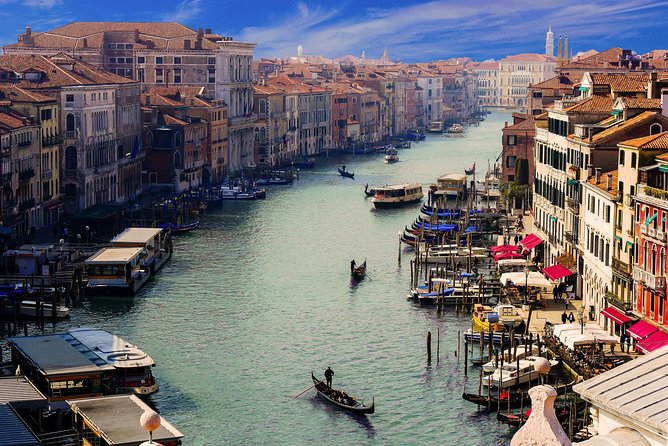
This is listed as a private tour/activity limited to your group. That’s a big deal. In Venice, a “group tour” can still feel chaotic. Here, it’s designed so your guide can steer the walk, adjust pacing, and keep you from falling behind at stairs and narrow lanes.
There’s a clue in the tour feedback: at least one guide, Barbara, was noted for taking people to places off the normal path. Another guide, Kristina, was praised for making the group feel like they were exploring with a friend who actually knows the city. Catherine also comes up in feedback, including how she adapted for older travelers by adjusting how they moved through Venice.
So what should you expect? A day that stays organized, with the flexibility to shift based on your group’s pace. Just remember, Venice can’t be fully controlled. Narrow streets, stair steps, and crowds happen even with the best planning.
Stop 1: Chiesa di San Rocco Sets the Tone With Art and Plague History
You start at Chiesa di San Rocco, originally built in 1508. That date isn’t just trivia. It anchors you in Venice’s long timeline—how the city builds, suffers, and rebuilds.
What makes this church a strong start is the theme: it’s dedicated to St. Roch, a patron saint associated with multiple places around Venice who’s linked to plague history. When you walk into the quiet, art-lined interior, you get a sense for why Venice wasn’t only about trade and beauty. It was also about survival, healing, and hope.
Practical note: the stop is about 30 minutes, with admission listed as free. So don’t plan to “read every plaque.” Use the time to get your bearings: art style, church layout, and how you’ll see similar decorative choices elsewhere on the route.
Stop 2: Basilica di Santa Maria Gloriosa dei Frari and Titian’s Assumption
Next up is Basilica di Santa Maria Gloriosa dei Frari. It dates to 1231, and the exterior gives you a classic gothic brick look before you even step inside.
This stop earns its keep because it houses Titian’s famous Assumption of the Virgin. If you want a Venice experience that feels more than sightseeing, this is it. Titian is the kind of name you can’t ignore once you see the work in person.
The tour lists this as another 30-minute stop, with free admission. That’s enough time to locate the major artwork, note the scale of the church, and understand why the Frari has been a magnet for art lovers for centuries.
Possible drawback: churches ask for patience. If your group prefers outdoor photos and quick stops, this might feel slower than you want. But if you like art and atmosphere, you’ll probably end up happy you started inside.
Stop 3: Chiesa Rettoriale di San Polo (St. Paul) for Big Paintings in a Small Room
Then you go to Chiesa Rettoriale di San Polo, dedicated to St. Paul. The church is described as small but packed with notable works, including:
- Last Supper
- St. Silvester baptizes Emperor Constantine
- St Paul Preaching
- Marriage of the Virgin
- St Peter and the Keys
What I like about this kind of stop is the contrast. You just saw a major basilica. Now you’re in a smaller space with significant works. It helps you understand Venice’s art culture isn’t only “the famous places.” The city spreads its artistic output across many buildings.
Again: 30 minutes and free admission as listed. The trick is to choose one or two paintings to focus on. Otherwise, you can spend the whole time trying to see everything and end up remembering nothing.
Stop 4 and 5: Rialto Market and Ponte di Rialto (Venice’s Everyday Pulse)
The route brings you to Mercati di Rialto, near the arched Ponte di Rialto. This is one of those areas where Venice stops feeling like a museum and starts feeling like a working city.
The market is described as one of the busiest commercial spots, with locals and international visitors sharing space. That’s useful for your day. You’re not only photographing stone and domes. You’re seeing the rhythm of daily commerce.
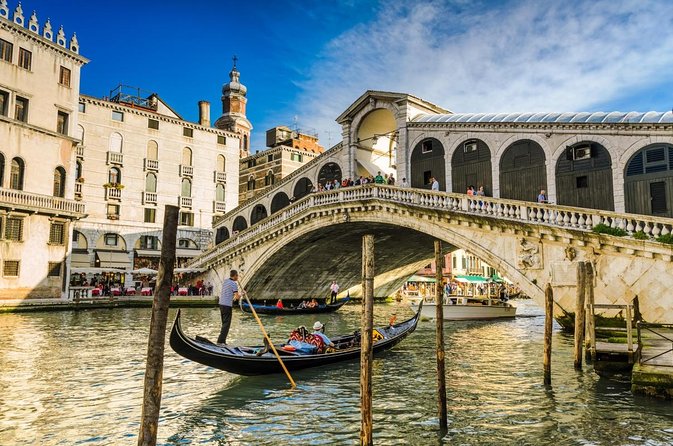
Then you cross to Ponte di Rialto itself. The tour notes the bridge was built between 1588 and 1591, and it stayed the only foot crossing of the Grand Canal until late 1854. It’s also built on about 12,000 wooden pilings, still supporting the bridge more than 400 years later. That detail alone helps you see the bridge as engineering, not just scenery.
This pairing works because it gives you both context and icon. The market tells you what’s happening around the bridge; the bridge gives you the “you’re really in Venice” moment.
Practical reality: this area can be crowded. If your day trip includes anyone who doesn’t like tight spaces, keep your expectations flexible. You’ll likely pause, look, and move on rather than linger in the densest pockets.
Stop 6: Scala Contarini del Bovolo for a Staircase You’d Miss on Your Own
Here’s the kind of stop that turns a good day trip into a memorable one: Scala Contarini del Bovolo. The tour describes it as a spiraling “snail” staircase to heaven, built to display the wealth of the Contarini family.
Why it’s special: it’s hidden in San Marco and not known to many tourists. That means you’re more likely to get quiet moments, better angles, and a “how did we not hear about this earlier” feeling.
This is another 30-minute stop with free admission. Expect stairs, obviously. It’s a staircase. Wear shoes you trust. If your group needs frequent breaks, this is a good place to use them.
Stop 7: Piazza San Marco (St. Mark’s Square) With the Best Evening Atmosphere
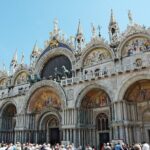
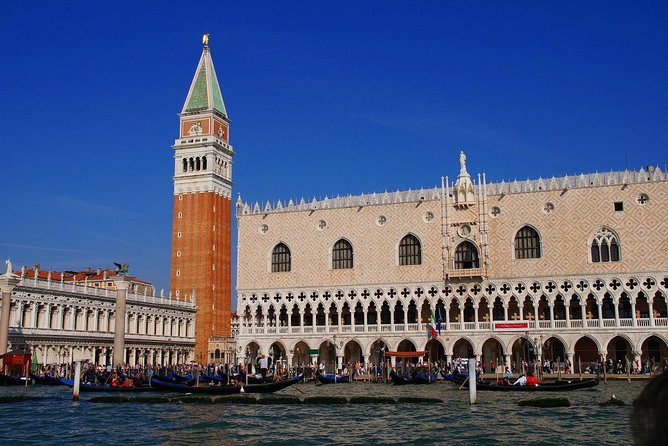
You reach Piazza San Marco, often called the drawing room of Europe. Napoleon’s nickname is the kind of line that sounds dramatic until you stand there and understand why it stuck.
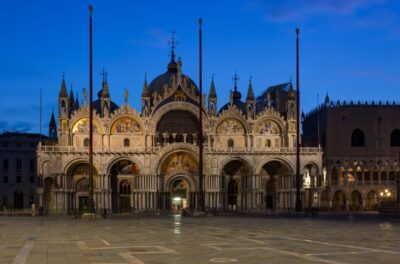
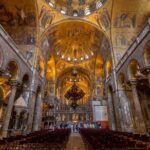
This is where the tour becomes iconic. St. Mark’s Square is bordered by the St. Mark’s Basilica and opens out toward the sea on one side. The tour also points out that the square feels almost different at high tide, and it gets especially atmospheric as the sun goes down at night.
There’s also an optional experience offered: an all-inclusive Gondola tour of San Marco square. Note the wording: this can be a separate add-on. If you’re planning your day tightly, decide in advance whether you want the included gondola upgrade or to focus only on the walking route and save money.
Stop 8: Strada Nova to Venice Station (Shopping Streets, but With a Purpose)
The day ends with Strada Nova, described as a name for a long chain of shopping streets running through Venice. You pass by it before reaching Venice Station.
You might think shopping streets are a throwaway. In Venice, that stretch can actually help you understand the city’s layout. It shows you how commercial corridors connect to major squares and canals, and it gives your feet one last set of sidewalks before you transition back to transit.
This is listed as about 1 hour, still with free admission. Think of it as a decompression stretch. You’ll be tired by then. Let your guide point out a few key lanes and landmarks, but don’t feel forced to shop.
The Gondola Upgrade: The Moment That Changes How You Remember Venice
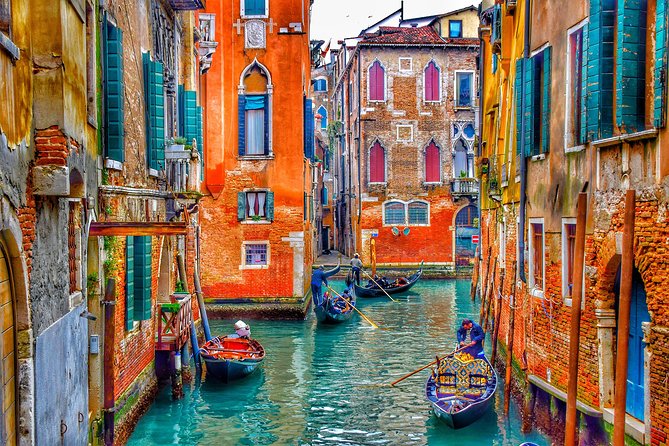
Venice gondolas can be polarizing. Some people feel they’re touristy. Others say it’s the one thing that makes a short trip feel real.
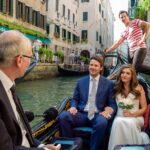
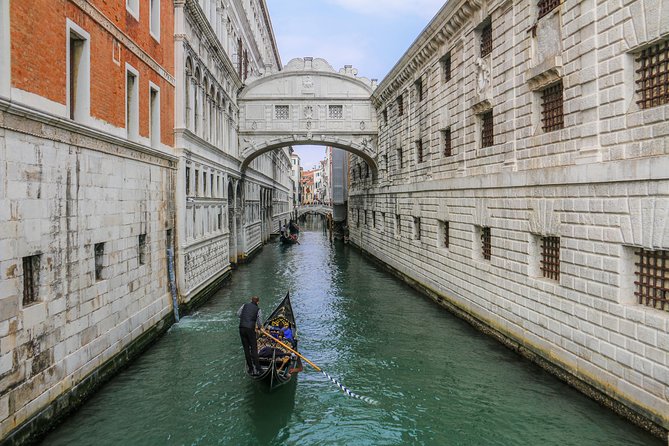
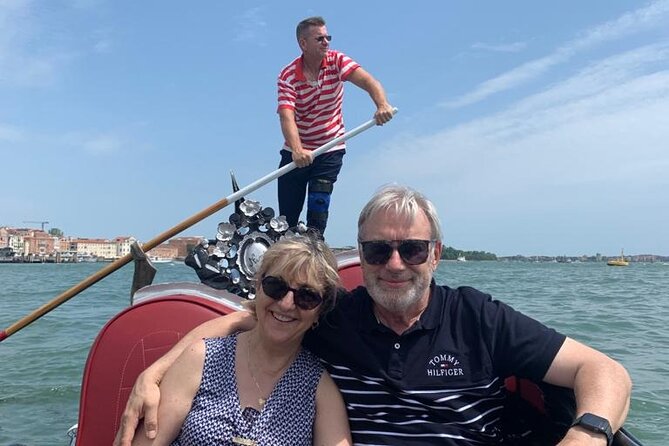
This tour gives you that signature option: a Venetian canal ride on a gondola. And the gondola angle shows up in the tour’s highlights because it’s easy to understand why it matters. A walking tour gives you the architecture, the art, the layout. A canal ride gives you the sensation of how Venice actually works.
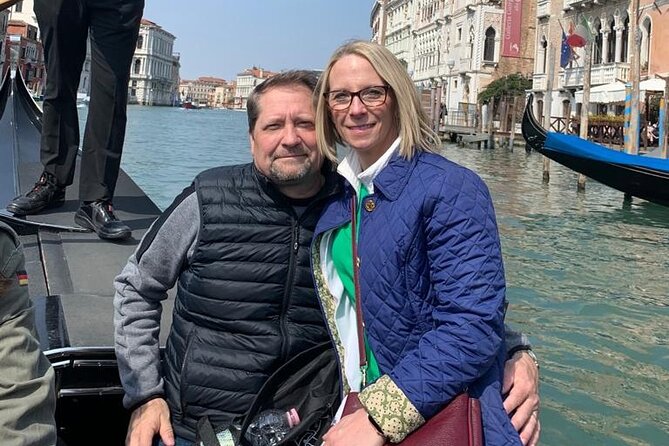
In the feedback you provided, gondola time shows up as a clear highlight. One person simply said they loved the gondola ride and that it was on their bucket list. Another described a more relaxed end to the day: gondola ride followed by wine and time in a small cafe near the Grand Canal area.
My practical take: do the upgrade if you’re on a one-day visit or if Venice isn’t your main destination. If you’re returning later, you could skip it and save money for a second trip. But if this is your only shot this trip, I think the gondola ride is the best “yes” you can make.
Price and Value: What $565.36 Buys You in a Venice Day Trip
At $565.36 per person, this isn’t a budget tour. So don’t just ask if it’s expensive—ask what you’re paying for.
You’re paying for:
- High-speed train transport between Florence and Venice (time and comfort value)
- A private guide for a structured route rather than self-navigation stress
- An itinerary built around major icons plus lesser-known stops
- A chance to add the gondola upgrade
Also, the tour notes group discounts and a mobile ticket, which can lower friction on the day.
Then there’s the value argument in plain terms: Venice is hard to do well without time. If you try to cobble this together on your own, you might save money, but you’ll spend more time sorting out routes, entry timing, and “where should we go next” decisions. Here, the guide handles the sequencing.
One more factor: admission is listed as free at each stop in the itinerary. That helps you keep the spend predictable. You’re mostly paying for guided time and the train portion, not stacking attraction fees.
If your group’s top priority is buying as many sights as possible, you might compare this to other day-trip options. But if your priority is getting your bearings fast and still seeing a mix of famous and quiet places, the structure is what you’re paying for.
Comfort Tips for a Walking-and-Stairs Day (Including Rain Reality)
Venice days don’t always cooperate. One account you shared described a rainy day where it was harder to fully enjoy the beauty because of the weather. The key practical advice from that situation: bring headsets (or any small option that helps you hear your guide).
Here’s why: in a group, guides use their voice to keep everyone together. In narrow streets and rain, sound gets swallowed. Headsets make the explanation easier to follow even if you’re moving constantly.
Also plan for stairs. The tour feedback explicitly noted lots of stairs, which matters because your legs will be your limiting factor, not your schedule.
My checklist for you:
- Wear shoes with grip
- Carry a light rain layer
- Keep water and a small snack available (you’ll be on the move)
- Pace yourself at the staircase stops like Scala Contarini del Bovolo
And if you’re traveling with older family members: choose your expectations. This tour can adapt in some situations, based on feedback about one guide booking a boat when needed. But you should still know the route is designed primarily as walking.
Venice Access Fee: When You Might Need the €5 Day Ticket
One detail you should check before you go: on certain dates, people staying outside Venice who plan to visit for the day may need to pay a €5 access fee. The tour points you to the official site for details and exemptions: https://cda.ve.it
This matters because Venice has been tightening access rules. You don’t want to show up and be hit with a fee you didn’t plan for.
If you’re staying in the mainland or nearby areas, look up your travel date ahead of time. If you qualify for an exemption, great. If not, factor the cost into your day-trip budget.
Who This Tour Fits Best (and Who Should Think Twice)
This fits best if:
- You want a guided Venice day without getting lost
- You like art and churches, not only squares and canals
- You’re going for one day and want the most value per hour
- Your group includes people who benefit from a guide managing pacing
It may be less ideal if:
- Your group struggles with stairs or long walking distances
- You want a “museum-only” day with less street time
- You dislike crowded areas, since Rialto and St. Mark’s can get busy
For families: it can work very well. One feedback example praised how a guide handled a family of six with ease and kept kids excited about the day.
Should You Book This Venice Day Trip From Florence?
I think you should book it if you want a structured, guided Venice experience that doesn’t waste your train day on pointless wandering. The mix of St. Mark’s Square with stops like San Rocco, Frari, San Polo, and Scala Contarini del Bovolo gives you variety, not just repetition.
Skip it only if your group can’t handle stairs and lots of walking, or if Venice “big icons only” is your style and you’d rather plan your own route.
One last decision aid: if you’re on the fence about the gondola, base it on your trip length. A gondola is usually the one memory that feels uniquely Venice. If this is your only day, it’s easier to justify.
FAQ
How long is the Florence-to-Venice day trip?
The tour duration is listed as 8 to 10 hours. Train travel time is noted as about 4 hours round-trip.
Where do we meet in Venice?
The meeting point is Venezia Santa Lucia (30121 Venice). The tour ends back at the same meeting point.
Is the tour in English?
Yes, it is offered in English.
Is there an optional gondola ride?
Yes. The tour includes an optional gondola tour related to San Marco Square, and the highlights also mention upgrading to enjoy a gondola ride along the canal.
Do we pay admission fees at the stops?
The itinerary lists admission ticket free for each listed stop.
Is there an extra Venice access fee?
On certain dates, visitors staying outside Venice who come for the day may need to pay a €5 access fee. Check details and exemptions here: https://cda.ve.it