REVIEW · VENICE
Venice Film Tour: Explore Iconic Movie Locations
Book on Viator →Operated by deTourist Venice Valerio Coppo · Bookable on Viator
Venice looks different when scenes feel real. This Venice Film Tour strings together movie locations across the city with Valerio Coppo bringing the stories into focus.
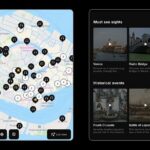
I especially liked two things. First, you get pointed, film-smart walking directions that help you notice details you’d miss on your own. Second, the commentary connects each location to what made the scene work on screen, with short clips shown on a tablet so you can match real stone to movie moments.
One thing to weigh: with a 2-hour format and many quick stops, you’re mostly looking from the street or a nearby viewpoint. Also, the experience requires good weather, so if Venice decides to rain, your plans may shift.
In This Review
- Key highlights you’ll care about
- Why a Venice Film Tour is a smart way to see more in less time
- Price of $185.43: what you’re really paying for
- Venice Station: where many stories start
- Campo del Ghetto and San Stae: drama and funeral boats by the Grand Canal
- Grand Canal and Rialto markets: cinema’s first rides and Bond-style jumps
- San Marco landmarks and theatrical ghosts: San Marco, Ca’ Rezzonico, La Fenice
- Scala Contarini to Campo Santa Maria Formosa: Othello and Spiderman in the same walk
- San Barnaba to the luxury hotels: Indiana Jones and Moonraker vibes
- Santa Maria della Salute, Piscina Sant’Agnese, and Doge’s Palace
- What to expect on the day: pace, viewpoints, and smart packing
- Who this Venice Film Tour fits best
- Should you book this tour or do it on your own?
- FAQ
- What is the duration of the Venice Film Tour?
- How much does the tour cost?
- Is the tour offered in English?
- Are there tickets to pay for the stops?
- Is pickup available?
- Will I be able to see movie clips during the tour?
- What should I know about Venice access fees?
- What if the weather is bad?
- Is there free cancellation?
- Is this tour private?
Key highlights you’ll care about
- Valerio Coppo’s movie-first storytelling connects film scenes to specific corners of Venice
- Short stop times (often 10–15 minutes) help you see a lot without getting stuck
- Tablet movie clips during the tour let you place the scene while you’re standing there
- A route that favors quieter streets over a pure highlight-only checklist
- Many stops are free to view from outside, so you’re not paying entry fees constantly
Why a Venice Film Tour is a smart way to see more in less time
Venice can be tricky. You can plan a day around famous places and still feel like you spent most of it walking the same loops. This tour tackles that problem by using cinema as a map. Each stop is a “scene you can find,” and that gives you a reason to turn down the next calle even when it looks like any other.
What makes this work in practice is the pacing. In about 2 hours you move between several neighborhoods and major landmarks, with brief explanations that tell you what to look for. That matters because Venice is easy to romanticize, but hard to navigate mentally. When you tie a building to Senso, Othello, Moonraker, or The Talented Mr. Ripley, you start building your own visual memory instead of relying on a single crowded viewpoint.
The best part for me is the payoff loop: you look at a real place, hear why a film crew chose it, and then you see a clip so your brain locks the match. It turns passive sightseeing into active noticing, without turning your day into homework.
You can also read our reviews of more tours and experiences in Venice.
Price of $185.43: what you’re really paying for
At $185.43 per person for a roughly 2-hour tour, you’re not just paying for standing around in pretty spots. You’re paying for three value drivers:
- A licensed guide who can point out what to see and what it means
- A route planned to hit recognizable locations efficiently
- English commentary plus on-the-spot movie clip references (handy when titles mean more to you than architecture trivia)
You’re also not stacking costs for each stop. Most stops are listed as free, meaning you’re generally viewing from outside rather than paying a ticket at every location.
If you’re traveling in a small group, the private tour format can make the price feel even more reasonable. And with confirmation handled at booking time and a mobile ticket, there’s less friction on the day itself.
Venice Station: where many stories start
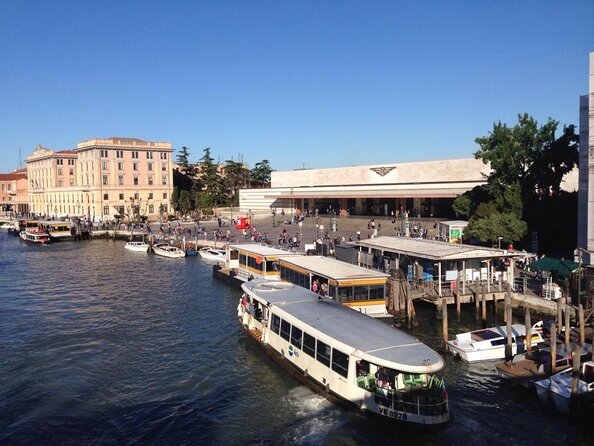
The tour’s starting point is Venice’s railway station area, and it’s a smart way to begin. Stations in films often carry a specific feeling: arrival, disorientation, or chance meetings. Here, that vibe gets tied to multiple movie moments, including the 1958 Italian film Venice, the Moon and You, where the unforgettable Alberto Sordi “hooks” foreign tourists.
Why this opening works: it sets the theme quickly. You’re not only collecting landmarks; you’re learning how Venice becomes a character in different eras of cinema. Even if you’re not a hardcore film buff, this is a good first stop because the station area gives you orientation for the walking rhythm and the direction you’ll take next.
Practical tip: wear shoes that can handle uneven stone and quick turns. You’ll be moving often.
Campo del Ghetto and San Stae: drama and funeral boats by the Grand Canal
From the station you head to the Jewish Ghetto area, specifically Campo del Ghetto. This is where Luchino Visconti sets the beginning of the passion in Senso (1954), with Alida Valli and Farley Granger. The important thing here isn’t just recognizing the title. It’s how the scene’s emotional tone is grounded in a real, defined public space like a campo.
Expect about 15 minutes here, and you’ll be in a part of Venice that still reads as Venice, not a movie set. That’s a big reason this tour feels different from a standard “walk and point” itinerary.
Next up is Chiesa di San Stae (Eustachio). The big film tie-in is the funeral boats in Don’t Look Back Now (1973), moored near this church and overlooking the Grand Canal. This stop is shorter—around 10 minutes—but it’s visually rewarding. The church facade and the Canal view give you the kind of dramatic framing directors love.
If you like films for their mood, this is one of the most satisfying pairs of stops: first intimate drama in a campo, then a more cinematic spectacle by the water.
Grand Canal and Rialto markets: cinema’s first rides and Bond-style jumps
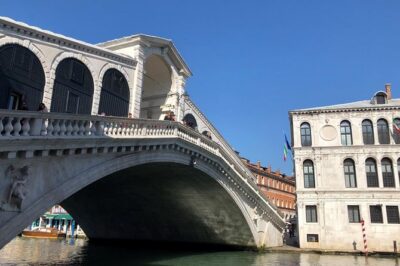
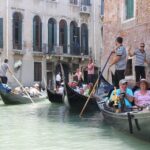
Then comes the Grand Canal, and yes, it’s treated as cinema history as much as sightseeing. The tour points out that in 1896 Alexandre Promio made what’s described as the first cinema rundown aboard a gondola, filming boats and working men. That’s the fun angle: Venice isn’t only a filming backdrop; it helped shape how moving images got started.
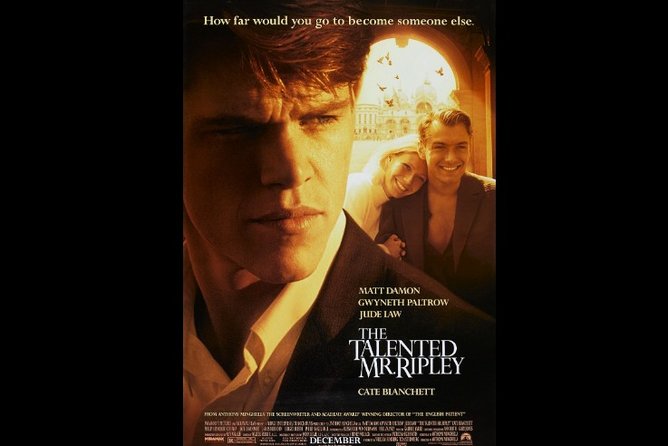
You’ll also hear how the Grand Canal and its buildings show up across decades of movies—from The Talented Mr. Ripley (1999), where the Venetian apartment is a blend of two real buildings overlooking the water, to The Merchant of Venice (2004) starring Al Pacino.
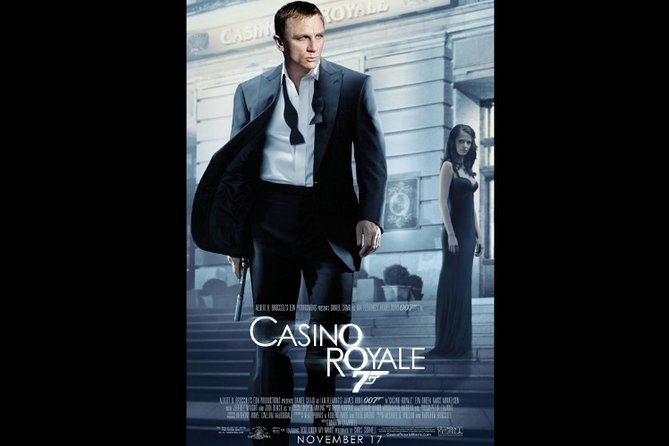
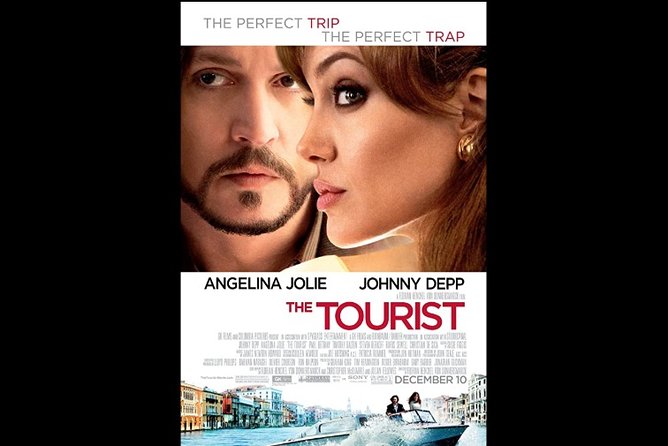
Next is Mercati di Rialto. This is where The Tourist (2010) ties into Johnny Depp’s terrace-to-stall moment. Across the canal, the tour also mentions the palace collapse used in Casino Royale (2006), with a reminder that the movie version is fiction.
What you’ll like here is the contrast. Rialto market space is active, local, and real-time Venice. The film reference gives it a storyline, but you’re still standing in the middle of the city’s everyday rhythm.
Note: spend your camera time fast. This is one of those stops where people move through—enjoy the location, but don’t block foot traffic while you line up every shot.
San Marco landmarks and theatrical ghosts: San Marco, Ca’ Rezzonico, La Fenice
From Rialto, you step into the San Marco orbit, where the tour stacks recognizably Venetian architecture with specific movie placements.
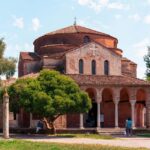
First comes Chiesa di Santa Maria dei Miracoli. The church is known for polychrome marble, and it’s linked here to Orson Welles choosing the location for the wedding of Otello and Desdemona in Othello (1952). This stop is short (about 15 minutes), but it’s a great example of why a film-focused tour beats a checklist: you’re told what kind of scene the space was meant to support.
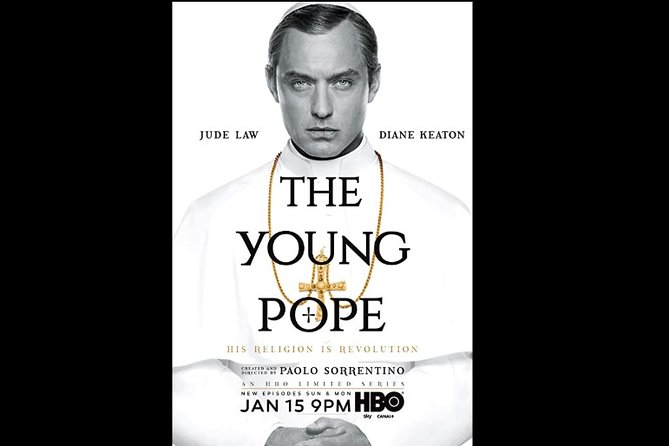
A few steps away is Scuola Grande di San Marco, connected in the tour to The New Pope (2019), directed by Paolo Sorrentino, starring Jude Law. The key value isn’t only the title. It’s that you see how religious and civic Venice can switch roles in stories, depending on the director’s needs.
Then the tour visits Ca’ Rezzonico, currently a civic museum. For cinema fans, it’s described as Drax’s office in James Bond’s Moonraker (1979). Even if you don’t go inside, the exterior and setting help you “see” the scene layout. It’s easier to understand film geography when you’re physically nearby.
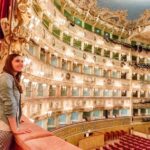
Finally, you reach Teatro La Fenice. In Senso (1954), the story begins during a performance of Il Trovatore, giving you a view of the theater in full splendor before the fire that devastated it in 1996. The tour also explains the phoenix irony: the theater’s name comes from earlier destruction and rebuilding. That detail helps you appreciate why Venice keeps returning to the same symbols—because the city has been through repeated cycles of loss and revival.
If you’re a fan of theatre or architecture, this block is a highlight.
Scala Contarini to Campo Santa Maria Formosa: Othello and Spiderman in the same walk
Next is Scala Contarini del Bovolo, a staircase and palace area tied by legend to Desdemona’s home in Othello (1952). The tour notes that Orson Welles chose this location for Brabanzio’s residence (Brabanzio is not in Venice in the story, but Welles still used Venice geography for the setup). Either way, you get a real-world example of how directors bend logic to find a better visual.
Then comes Campo Santa Maria Formosa. Here the connection is pop culture: it was used during the shooting of Spider-Man: Far From Home (2019), where the “destruction” you see in the movie is fictional. Even though the scene is made for film effects, the payoff for you is simpler: you get to stand in a beautiful corner and remember that movies can make Venice look bigger and wilder than it really is—without needing to change the street itself.
This section is also a reminder that Venice is full of small squares that feel separate from the grand monuments. The tour uses film references to justify stopping in those smaller spaces, which is exactly where the city feels most lived-in.
San Barnaba to the luxury hotels: Indiana Jones and Moonraker vibes
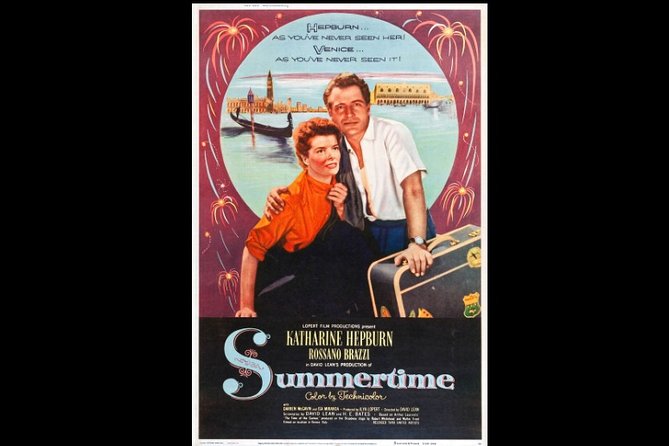
The tour moves to Campo San Barnaba, tied to Indiana Jones and the Last Crusade (1989). The film’s dig location is linked to the basement area of the San Barnaba church. It’s also connected to Summer Time (1955), where Katharine Hepburn’s character wanders and accidentally falls into the San Barnaba canal. The tour also mentions a connection to The Italian Job (2003) for a remake scene.
This is one of those stops where the movie connection might help you spot the setting logic—why a director would want a specific canal edge or entry point.
After that, you head into luxury Venice with two major hotel settings.
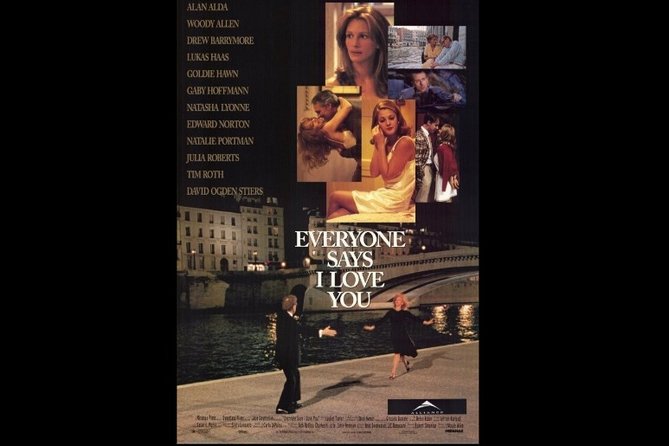
First is Gritti Palace, a Luxury Collection Hotel, Venice. It was once a Doge’s family palace and residence of Vatican ambassadors. Today it’s a luxury hotel, with famous guests like John Ruskin, Ernest Hemingway, and Somerset Maugham. In cinema, Woody Allen used it for scenes in Everyone Says I Love You (1996), starring Julia Roberts.
Then comes Hotel Danieli, another high-end landmark. It’s tied to major literary and historical guest references, and it also appears in de Sica’s last movie The Journey (1974) starring Sophia Loren and Richard Burton. It’s also referenced in Moonraker (1979) as the hotel of Holly Goodhead, plus it’s the wedding-night setting in Viaggi di Nozze (1995).
Why I think these hotel stops matter: they show how Venice turns into cinema across social classes. You get the same city streets, but the film lens changes what the viewer is meant to feel—romance, power, comedy, or intrigue.
Santa Maria della Salute, Piscina Sant’Agnese, and Doge’s Palace
The itinerary also includes Basilica di Santa Maria della Salute. In the tour’s film notes, an Illuminati gathering from Lara Croft: Tomb Raider (2001) is mentioned, but the tour clarifies that the room shown in the movie is actually the Painted Hall of the Old Royal Naval College in London. In The Talented Mr. Ripley (1999), the church is visible behind Ripley during dialogue with Dickie’s father, with the conversation set on the terrace of the Hotel Westin Europa & Regina across the canal.
This is a good reminder that film locations can be a mix of real and composited. In other words: the basilica still matters, even when the movie reality blends multiple places.
Next is Piscina Sant’Agnese. The tour connects it to Julia Roberts jogging in Woody Allen’s Everyone Says I Love You (1996) and to Katherine Hepburn freshening up during Summer Time (1955). Piscina areas are quiet water structures, so the reference gives you a specific image to look for without needing museum entry.
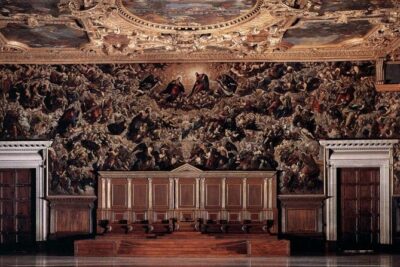
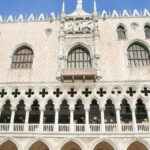
Finally, you end at Doge’s Palace and the surrounding San Marco space. The tour calls out James Bond’s gondola-hovercraft from Moonraker (1979) as a unique transport moment crossing San Marco square. It also mentions Casino Royale (2006), where Bond’s hotel view includes San Marco square. Orson Welles is referenced again for a dramatic dialogue tied to Othello (1952). And The Talented Mr. Ripley (1999) is linked to scenes at café tables in the piazza area. The tour also connects the Young Pope series in San Marco with Jude Law and Diane Keaton.
This ending is strong because San Marco can swallow a day if you let it. Here, the square becomes a wrap-up “greatest hits” space tied to films you already know.
What to expect on the day: pace, viewpoints, and smart packing
This is a 2-hour walk with many short stops, so you should plan for a brisk rhythm. You’re usually spending about 10–15 minutes per location, which is perfect for absorbing the story but not ideal for long sits, long photo sessions, or museum-style browsing at every stop.
A big plus is that the stops are mostly free to view from outside, so your day isn’t hijacked by ticket lines at each turn. The tour is also offered in English, which matters in Venice where details can get lost if your guide switches languages mid-flow.
Because Venice weather can change fast, you’ll want to dress for quick temperature shifts. The experience requires good weather, so rain can affect your schedule.
For packing: bring comfortable shoes, a light layer, and water. If you’re carrying a camera, plan quick shots. This tour is about matching scenes to place, not treating it like a studio photoshoot.
Who this Venice Film Tour fits best
This tour is a great fit if:
- You love classic-to-modern films and like seeing how directors pick real spaces
- You want an easy way to “find” Venice without planning an entire day of logistics
- You enjoy short explanations that connect your walking route to a story
It may not be the best fit if:
- You want long museum time or deep interior tours at each stop
- You dislike weather-based schedule changes and prefer guaranteed indoor programming
- You want a mostly quiet, slow-paced stroll with no urgency
Should you book this tour or do it on your own?
I’d book it if you’re the kind of person who remembers movie scenes more clearly than street names. The tour gives you the matching process: real Venetian corners paired with specific films, plus clips you can watch right there.
I’d skip or adjust expectations if you’re after extensive ticketed entries or long stays at each monument. This is a walk-and-match experience. It’s best as a high-impact part of your Venice trip, not a replacement for dedicated museum afternoons.
If you do book, I’d also be proactive about timing. The tour is commonly booked well ahead, and it’s a popular way to see “Venice in film” when your time is limited.
FAQ
What is the duration of the Venice Film Tour?
The tour lasts about 2 hours.
How much does the tour cost?
The price is $185.43 per person.
Is the tour offered in English?
Yes, it’s offered in English.
Are there tickets to pay for the stops?
Most of the listed stops are free to access, and the tour includes a licensed guide. Tips are not included.
Is pickup available?
Pickup is offered.
Will I be able to see movie clips during the tour?
Yes. One review notes that film clips were shown on a tablet so you could get immediate feedback while you stood at the location.
What should I know about Venice access fees?
For certain dates, if you’re staying outside Venice and visiting for the day, you may need to pay a €5 access fee. Exemptions may apply, and the tour provides a link for details.
What if the weather is bad?
The experience requires good weather. If it’s canceled due to poor weather, you’ll be offered a different date or a full refund.
Is there free cancellation?
Yes, you can cancel up to 24 hours in advance for a full refund.
Is this tour private?
It’s listed as a private tour/activity, meaning only your group participates.