REVIEW · VENICE
Venice: Doge’s Palace & St. Mark’s Basilica Tour
Book on GetYourGuide →Operated by Venetoinside - Insidecom · Bookable on GetYourGuide
Venice can feel like a maze of stone and secrets. This tour brings order fast, with skip-the-line access and a guide who connects what you’re seeing to how Venice actually worked. You’ll spend your time where it matters: Doge’s Palace first, then St. Mark’s Basilica with the museum and terrace.
I especially like how the palace stops aren’t random photo spots. You get the Giants’ and Golden Staircases and Jacopo Tintoretto’s The Paradise canvas explained in a way that makes the building feel like a living government, not just fancy decoration.
One drawback to plan for: the basilica museum and terrace involve several stairs, and the tour is not a match for people with walking difficulties or mobility impairments. Dress rules are also strict, and backpacks are not allowed for safety.
In This Review
- Key highlights worth planning around
- Price and what you’re really paying for ($120.08 per person)
- Finding the group: Calle Larga de L’ascension (and no, you can’t be late)
- Doge’s Palace: where Venetian politics became architecture
- Crossing the Bridge of Sighs and heading into the New Prisons
- St. Mark’s Basilica: what to wear, what to see, and how to not feel lost
- The basilica museum and terrace: your view of Venice from above
- The four original bronze horses: not just a photo prop
- Timing and group pace: efficient, not leisurely
- Who should book this tour (and who should skip it)
- Should you book the Doge’s Palace and St. Mark’s Basilica tour?
- FAQ
- How long is the tour?
- Where do I meet the group?
- What’s included in the price?
- What is not included?
- Is the tour shared with other people?
- What dress code should I follow?
- Is the terrace and museum accessible if I have walking difficulties?
- What languages are offered?
- Can I cancel for a refund?
Key highlights worth planning around
- Skip-the-line entry that gets you into Doge’s Palace and St. Mark’s Basilica faster
- Bridge of Sighs + New Prisons for the darker side of Venetian power
- Tintoretto’s The Paradise and the story behind the palace’s showpiece interiors
- St. Mark’s Basilica museum and terrace views from above St. Mark’s Square
- Original bronze horses and what makes them historically important
- A shared-group format that keeps the pace efficient, not slow and wandering
Price and what you’re really paying for ($120.08 per person)
At about $120.08 per person, this isn’t a budget add-on. But it’s priced like a time-saver and a learning tool—the two things you need most at these sites. Venice’s top attractions are famously crowded, and both Doge’s Palace and St. Mark’s Basilica are big, complex places. Walking in without guidance can turn into a lot of waiting and guesswork.
Here, you’re paying for three practical upgrades: skip-the-line tickets, a live guide, and access to the basilica museum and terrace (not just the church interior). That combination matters. You’re not only getting in. You’re also getting oriented, so you know what to look for: which staircases are key, what the Bridge of Sighs connects to, and how the basilica is organized.
One more value point: the tour is built to cover both major landmarks in a single go. If you’ve only got a day or two in Venice, that saves energy you can put toward a calmer neighborhood walk later.
You can also read our reviews of more tours and experiences in Venice.


Finding the group: Calle Larga de L’ascension (and no, you can’t be late)
Your meeting point is Calle Larga de L’ascension, behind the Museo Correr, next to the post office. A TURIVE staff member checks your voucher before you go in.
This matters because the tour ends back at the same meeting point, and you’re expected to arrive on time. If you miss the start time on your voucher, you can’t be refunded, and if you leave early, refunds aren’t available either. In plain terms: show up ready, with the right clothes on.
Also note the rules that can trip people up before the doors open. Shorts and sleeveless shirts aren’t allowed, and backpacks are not permitted for safety reasons in the basilica. If you’re traveling with a small day bag, plan to wear it in a way that fits the rules—or go hands-free.
Doge’s Palace: where Venetian politics became architecture
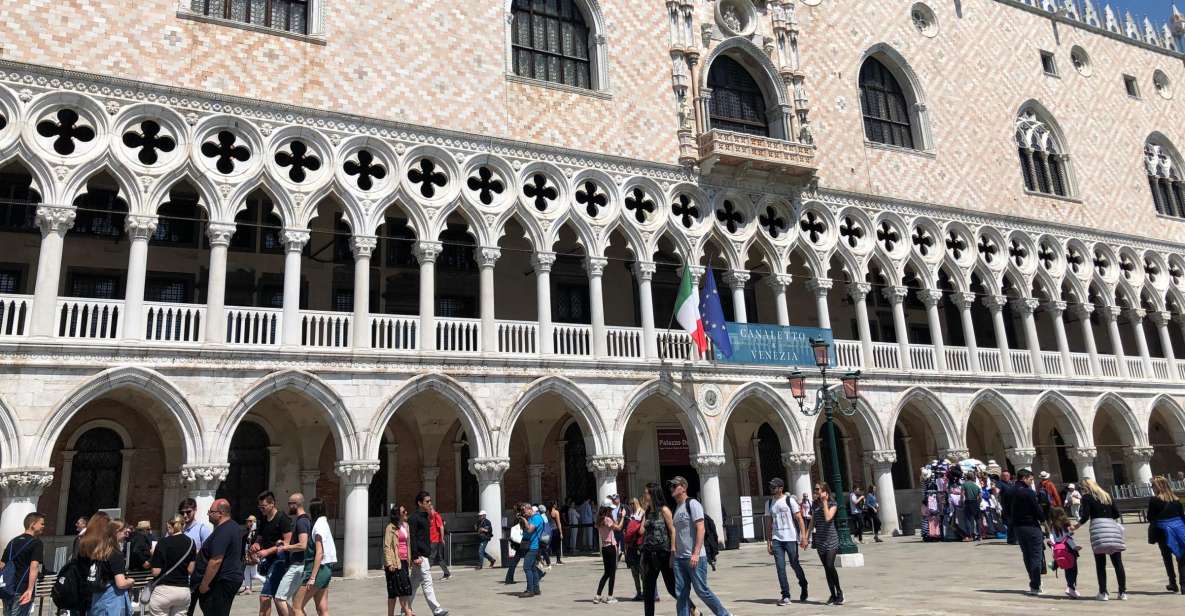
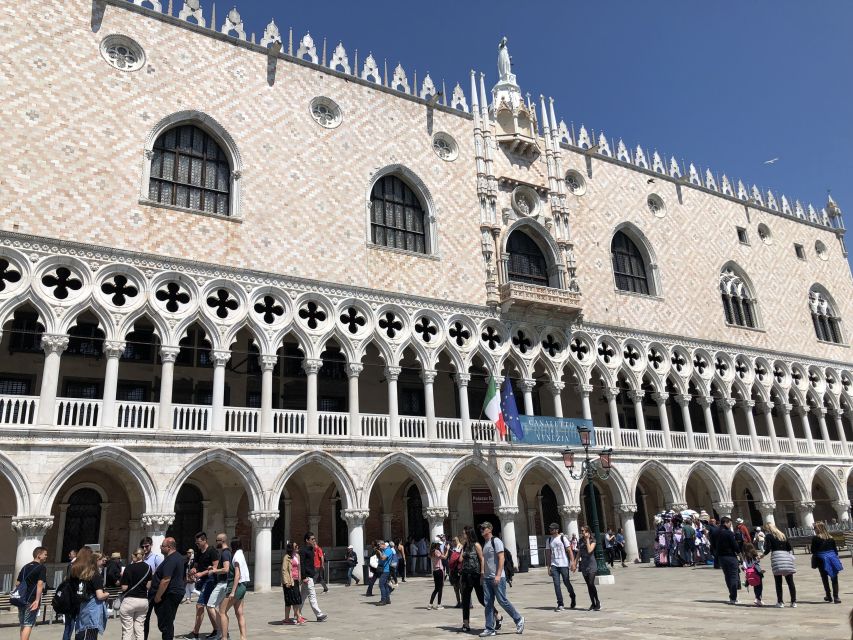
Doge’s Palace is the kind of building that looks dramatic from the outside and becomes even better once you’re inside. Here, you start with priority access, then follow the guide through the palace as the seat of power—residence of the Doge and center of magistrates until the fall of the Venetian Republic.
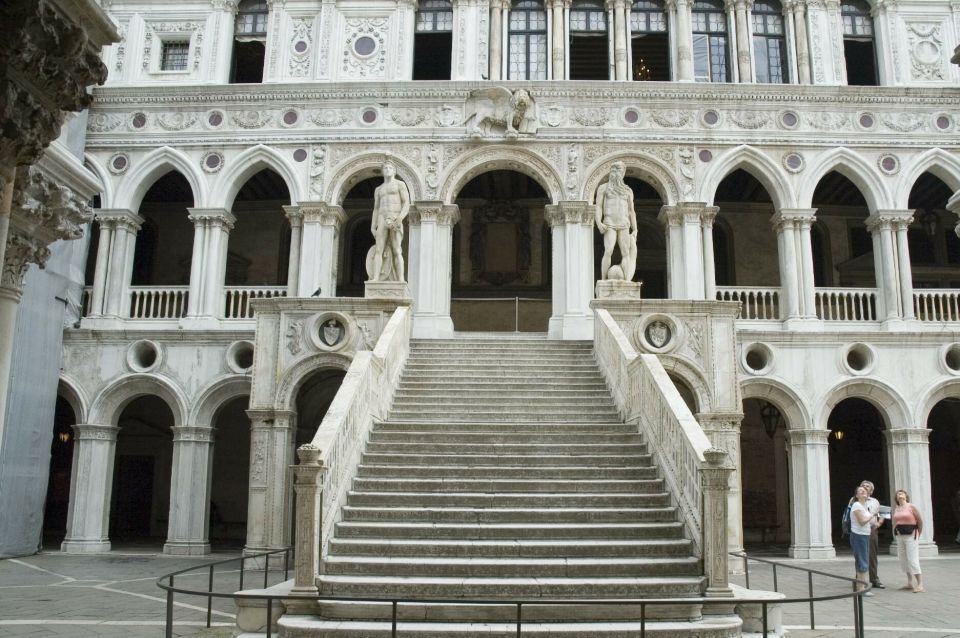
You’ll hit the interiors that people remember. The Giants’ Staircase is one of them—an over-the-top statement of authority, scaled to impress anyone who needed to face the government. The Golden Staircase is another key interior stop, and the guide’s job is to explain why the palace is designed to control how people move, look, and feel.
Then there’s the art, including Tintoretto’s The Paradise canvas. Even if you’re not a museum person, this is worth seeing because it helps you understand the palace as propaganda as much as palace. The guide’s perspective can make you notice details you’d otherwise miss—symbols, placement, and how the space communicates status.
And yes, you’ll also see how the palace connects to the day-to-day side of justice and punishment. That sets up what comes next: the Bridge of Sighs and the prisons.
Crossing the Bridge of Sighs and heading into the New Prisons
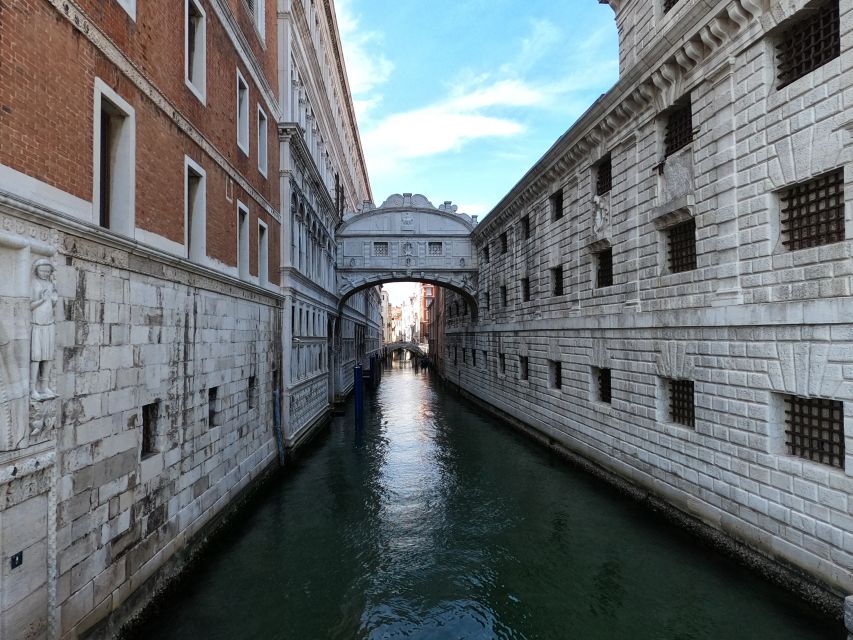
The tour includes the Bridge of Sighs, one of Venice’s most famous links between power and confinement. The name alone is enough to make you slow down, but the better part is what the guide helps you understand: this wasn’t just a scenic bridge. It was part of a system.
On the other side of that crossing, you’ll tour the New Prisons. This is where the palace’s polished image meets the reality of detention during the Serenissima. Expect a change in atmosphere—less showpiece, more function. The guide helps you connect what you see to the legal and political machinery of Venice: who was held, why they were held, and how the palace handled justice behind thick walls.
This prison segment is also a smart pacing decision. You get a full artistic tour in the palace first, then the tone shifts. If you’re the type who likes your travel with contrast—beauty plus consequence—this is one of the best parts of the day.
St. Mark’s Basilica: what to wear, what to see, and how to not feel lost
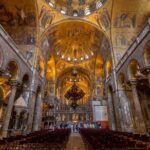
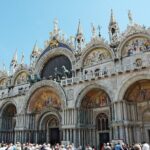
After the palace, you head to St. Mark’s Basilica, where you’ll visit the ground-floor naves, the Museum, and the Terrace.
First, the dress and safety rules. You’ll need clothing that’s not overly revealing—think shoulders and upper legs covered. The tour also disallows backpacks. If you forget something, a scarf or even a rain poncho can be used to cover up in a pinch. (If you want the simple approach: bring a light scarf anyway. It folds small and saves stress.)
Inside the basilica, the guide helps you make sense of what you’re looking at. The naves on the ground floor are where you can get your bearings without rushing to higher areas right away. From there, you move into the museum and then up again for the terrace.
Here’s the key practical consideration: to reach the museum and terrace you’ll climb several stairs. If stairs make you slow down or if you’re dealing with knee or mobility issues, this tour may feel too demanding.


The basilica museum and terrace: your view of Venice from above
The St. Mark’s Museum gives you a different angle on the basilica story—less about the immediate wow-factor in the church space and more about understanding what’s behind the scenes. It’s a good follow-up after you’ve seen the naves, because the basilica starts to feel like a larger complex, not a single room.
Then comes the part that many people plan their whole day around: the terrace. You’ll get panoramic views back toward St. Mark’s Square from above. This is where your camera earns its keep—especially if you like seeing how Venice’s geometry works from height.
Even if you think you’ve already seen enough skyline photos, the terrace view can still surprise you because it shows the square in context: the spread of buildings, the way space opens and narrows, and how the basilica fits into the larger plan of the area.
The four original bronze horses: not just a photo prop
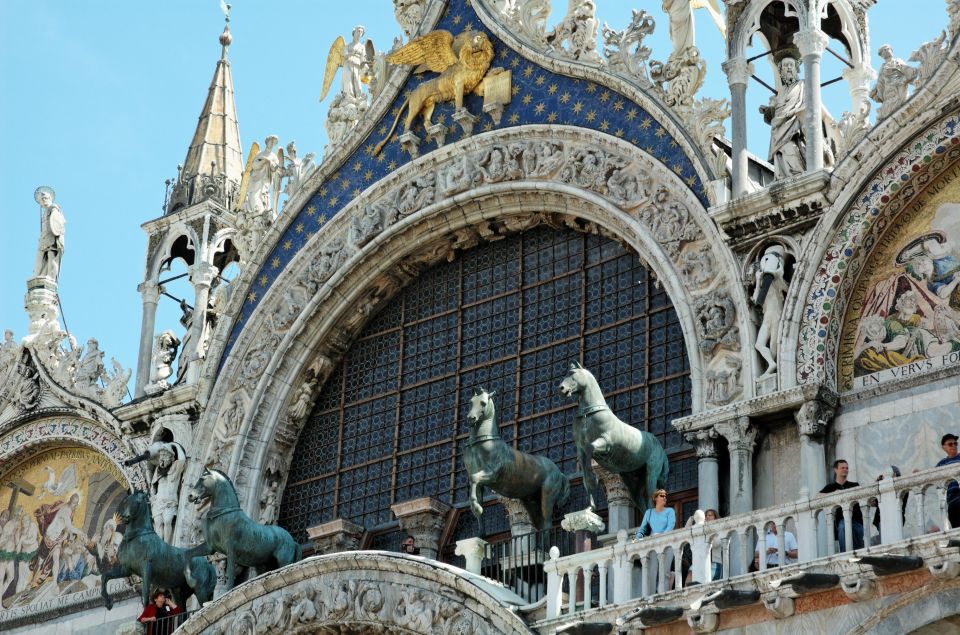
One standout detail on this tour is the mention of the four majestic original bronze horses. These horses are famous enough that you’ll likely spot references to them everywhere in the area. What’s different here is that your guide frames them as part of the basilica story and the long tradition of Venice collecting art and symbols of power.
If you care about the “how did Venice get this?” side of travel, this is one of those moments where a guide can turn a famous object into a meaningful stop. You’ll also be more ready for the visual contrast once you know what you’re looking at.
If your schedule is tight, still make time to stop and look slowly. The horses are small compared to what you’ll see in the basilica, but the symbolism is big.
Timing and group pace: efficient, not leisurely
This is a shared tour, and it runs about 3 hours total. The guided portion is described as about two hours, which hints at the structure: it’s built to move you through major spaces without burning time standing in lines or waiting around.
A fair expectation: it can feel a bit fast at the palace and then again at the basilica because you’re doing a lot in one session. That doesn’t mean the quality drops—it just means the tour is designed for people who want to see the key highlights while crowds are highest, not people who want every room at a walking pace.
My advice is simple: use your first minute at each stop to orient yourself. Don’t try to memorize everything your guide says. Instead, pick one or two themes you care about—Venetian justice, staircases and art, or the terrace view—and let the rest support those.
Who should book this tour (and who should skip it)
This tour is a good fit if you want two big-ticket sights handled in one efficient plan, with skip-the-line entry and a guide to keep you from wandering. I’d also recommend it for first-timers who want the stories behind the visuals: why the palace looks the way it does, what the Bridge of Sighs connects to, and how the basilica’s museum and terrace reshape what you thought you knew.
It’s less ideal if you have trouble with stairs or mobility limitations. The terrace and museum involve multiple flights. And if your wardrobe is not currently basilica-friendly—no shorts, no sleeveless tops, no backpacks—the tour rules will force quick adjustments.
If you’re the type who enjoys practical travel value—fast access, clear stops, and a guide that helps you see more than just postcards—this one hits the target.
Should you book the Doge’s Palace and St. Mark’s Basilica tour?
Yes, if you want the best combo of time saved + guided context at Venice’s most demanding attractions. The price makes sense when you weigh skip-the-line access, museum/terrace entries, and a live guide covering both palace and basilica in one tight window.
If you prefer slow travel, lots of free wandering, or you need step-free access, then you may be happier with a more flexible plan. The palace and basilica are huge, and this tour is designed for momentum.
If you do book, bring a scarf for coverage just in case, and arrive at Calle Larga de L’ascension a few minutes early so you can start relaxed instead of rushing.
FAQ
How long is the tour?
The activity duration is listed as 3 hours. It includes a guided visit time of about 2 hours covering Doge’s Palace and St. Mark’s Basilica-related areas.
Where do I meet the group?
You meet at Calle Larga de L’ascension, behind the Correr Museum, next to the post office. A TURIVE staff member checks your voucher.
What’s included in the price?
Included are a guided tour, skip-the-line tickets for Doge’s Palace and St. Mark’s Basilica, access to St. Mark’s Museum, and access to St. Mark’s Terrace.
What is not included?
Entrance to the Treasure and the Pala d’Oro is not included.
Is the tour shared with other people?
Yes. This is a shared tour, meaning you’ll likely be with other participants.
What dress code should I follow?
Shorts and sleeveless shirts are not allowed. For St. Mark’s Basilica, you’ll need appropriate clothing that is not overly revealing, and backpacks are not allowed.
Is the terrace and museum accessible if I have walking difficulties?
The tour says it is not recommended for people with walking difficulties because accessing St. Mark’s museum and terrace requires climbing several stairs. It’s also noted as not suitable for people with mobility impairments.
What languages are offered?
The live tour guide is available in English, French, German, and Spanish.
Can I cancel for a refund?
Yes. Free cancellation is available up to 24 hours in advance for a full refund.