REVIEW · VENICE
Tour of Venice between Art, History, Legend and Secrets
Book on Viator →Bookable on Viator
Rialto’s legend meets real art history. This private tour threads together six Venice stops tied to famous names and stories, from the Devil’s bridge at Ponte di Rialto to carefully chosen churches with paintings you’ll be able to place. What I like most is the art focus with named works by Giovanni Bellini and Tullio Lombardo, so the city doesn’t just look pretty, it makes sense.
You also get a dramatic ending: the tour finishes in San Marco territory with the Bridge of Sighs and the Prison Palace in the mix. It’s a smart route for people who want a clear arc—legend, then art, then power—without spending your day hunting for the right entrances.
One heads-up: this is mostly on foot and Venice doesn’t offer many places to sit, so plan for limited seating and keep your shoes comfy from the start.
In This Review
- Key highlights to look for
- A 2-hour Venice story that moves from myths to museums
- Ponte di Rialto: the Devil’s bridge and your first good photo angle
- Chiesa di San Giovanni Crisostomo: Marco Polo family money and Bellini context
- Casa di Marco Polo: mapping Marco Polo’s life by address
- Campo Santa Maria Formosa: a big square with a war story attached
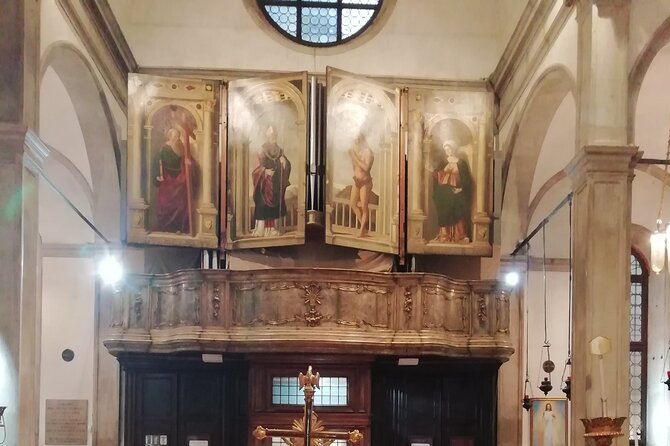
- Chiesa di San Zulian (Giuliano): gold works and three painting masters
- Piazza San Marco to the Prison Palace: the power complex, ending with real consequence
- Price and value: $83 with included admissions and named art stops
- Reliability, group pace, and the no-room-to-sit reality
- Getting the most out of each stop (without turning it into homework)
- Who should book this tour, and who might want to skip
- Should you book this Venice tour?
- FAQ
- What is the duration of the tour?
- Is the tour private?
- What language is the tour offered in?
- Is a mobile ticket provided?
- Are admission tickets included?
- Where does the tour start and end?
- Are there any extra fees I should know about?
- Can I cancel for a refund?
- Is service available for travelers with service animals?
- How far in advance is the tour typically booked?
Key highlights to look for
- Admission included at every stop you visit, so you can focus on the sights instead of tickets
- Rialto’s Devil-built bridge legend, plus a real sense of where the story fits in Venice
- Marco Polo’s life mapped in two homes, from childhood at Casa di Marco Polo to his later years at Corte del Milione
- Church art with specific masters, including Bellini, Veronese, and Palma il Giovane
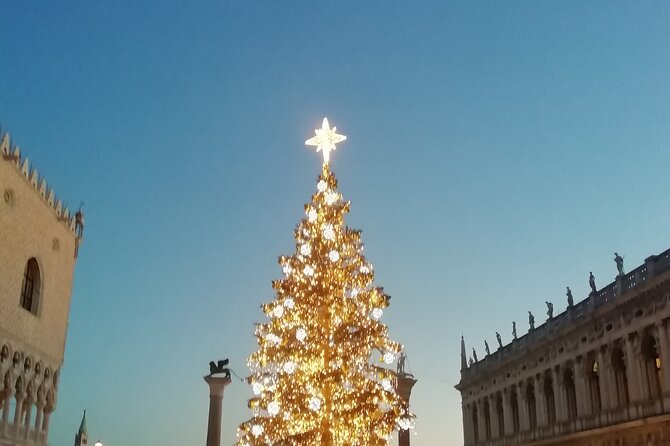
- A finish at the Prison Palace area, with San Marco, the bell tower, and the Doge’s Palace complex nearby
A 2-hour Venice story that moves from myths to museums
Venice can feel like a swirl of canals and postcards. This tour gives you a route with a storyline, so you’re not just collecting views—you’re collecting context. The format is a walking tour that targets six stops, each with a clear theme: legend, churches, Marco Polo, a major campo tied to conflict, and then the weight of power around San Marco.
The pacing is short on paper (about 2 hours), but it’s still a tour that actually gets you inside key spaces. One thing to watch: some experiences run longer than expected, so I’d plan your day with a little buffer and avoid scheduling your next big thing immediately afterward.
If you like Venice in layers—street-level storytelling plus named artists and specific places—this route is built for you. And if you hate lines and ticket hassles, the fact that admission tickets are included helps a lot.
You can also read our reviews of more historical tours in Venice

Ponte di Rialto: the Devil’s bridge and your first good photo angle
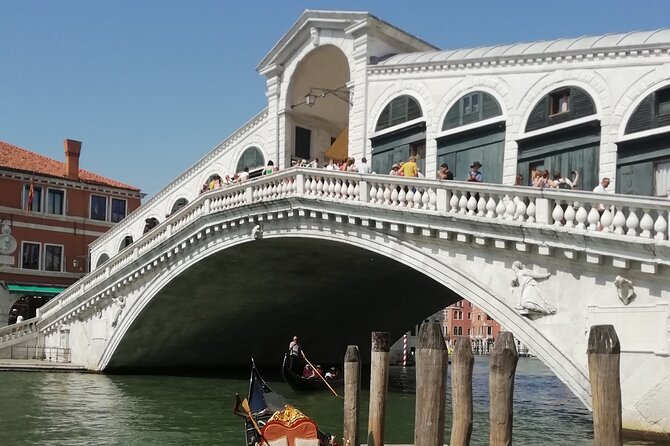
You start at Ponte di Rialto, one of the most famous bridges in Venice. The tour frames it with a legend: it was built with the help of the Devil himself. Even if you don’t care about legends, this is a useful way to begin because it tells you how Venetians have long explained their own landmarks—through drama, not spreadsheets.
Practically, Rialto is also where you’ll naturally orient yourself. It’s a strong starting point because it’s central enough to feel like Venice is already starting to “click.” You get a short stop time here (about 20 minutes) that’s just long enough to see the bridge, absorb the story, and move on before the crowds fully swallow your morning.
The potential drawback is simple: Rialto gets busy. So arrive calm and ready to accept that you may be pausing for people around you. Good walking shoes matter here more than good posture.
Chiesa di San Giovanni Crisostomo: Marco Polo family money and Bellini context
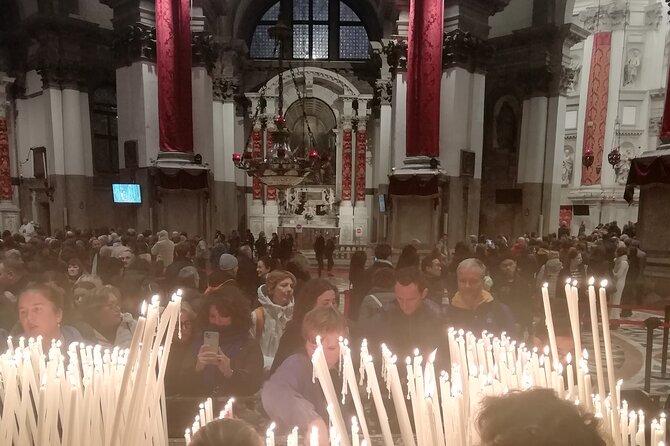
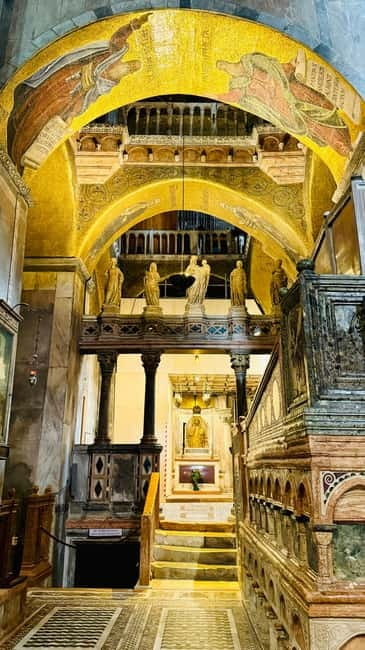
Next comes Chiesa di San Giovanni Crisostomo, an ancient church connected to Marco Polo through both architecture and patronage. The tour highlights that it was built by the architect Codiussi with financial contribution from Marco Polo’s family. That detail matters because it links a world-famous name to local stone-and-brick reality.
Inside, the focus shifts to art. You’ll see works by Giovanni Bellini and, importantly, Tullio Lombardo. This is a big part of why I think this stop works for most visitors: the tour doesn’t ask you to guess what you’re looking at. It tells you who to look for and why those names matter in the church setting.
One consideration: church interiors can vary in lighting and space. If you’re the type who likes to linger, you’ll need to do it in small bursts, since the stop time is around 30 minutes. I’d treat this as a “see it, learn the names, then come back later if you want.”
Casa di Marco Polo: mapping Marco Polo’s life by address
Then you head to Casa di Marco Polo, which is presented as the place where Marco Polo was born and lived until around age 12. The tour keeps the story moving by linking his early life to his departure with his father Niccolò and his uncle Matteo on the journey to Katai.
The tour also covers his later years. On his final return, he’s described as choosing to end his life in Corte del Milione, where the tour then takes you to visit his second home. Even if you already know Marco Polo’s broad biography, the real value here is how the tour uses physical addresses to tell the timeline in order.
This stop lasts about 30 minutes. That’s enough time to take it in without feeling rushed, but not enough time to turn it into a full-on museum afternoon. If you’re deeply obsessed with Marco Polo, you may want to spend extra time afterward on your own, but as part of a 2-hour arc, this timing works.
Campo Santa Maria Formosa: a big square with a war story attached
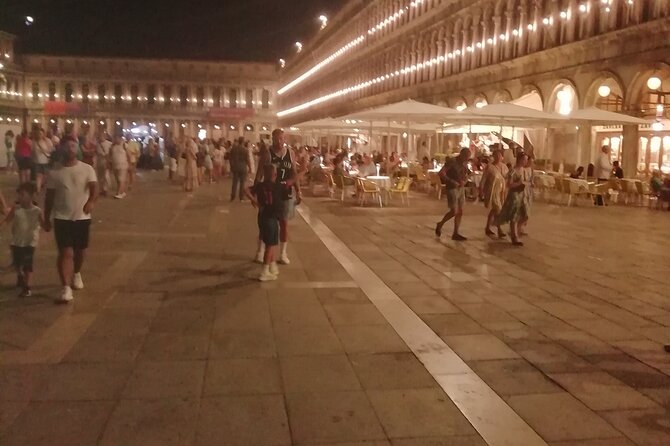
After churches and home sites, the tour brings you to Campo Santa Maria Formosa, one of the larger fields in Venice. It’s also described as a culturally important center, and the tour adds a specific hook: an important episode here caused a war against Padua.
A lot of Venice tours give you “pretty square, next stop.” This one tries to anchor the campo to a consequence. Even if you don’t know the details of Venice-Padua history, the message is clear: public spaces were political spaces too.
This is a short stop (around 5 minutes). Treat it as a breath and a repositioning point. Use that brief window to look around at the scale of the campo, then step back into movement before the next church doors close.


Chiesa di San Zulian (Giuliano): gold works and three painting masters
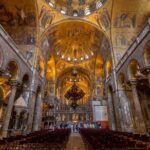
Next is Chiesa di San Zulian (Giuliano), described as unique for the richness of its gold works and the lineup of painters connected to the space. The tour points you toward several major names: Veronese and Giovanni Bellini, plus Palma il Giovane.
This is the kind of stop that can either feel random or feel targeted, and here it’s targeted. You’re not wandering through a church trying to spot famous signatures alone. The tour gives you a set of names to watch for, which makes the experience more “guided” even when you’re standing still.
Stop time is about 15 minutes, which means you’ll be making quick choices. If you love paintings, I’d focus on learning the names the guide points out, then take in the gold details as you’re walking through. If you try to do everything slowly, you’ll end up with the worst kind of rush—rushed looking.
Piazza San Marco to the Prison Palace: the power complex, ending with real consequence
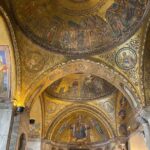
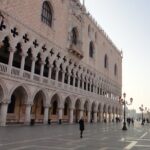
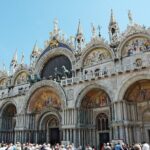
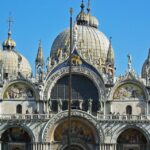
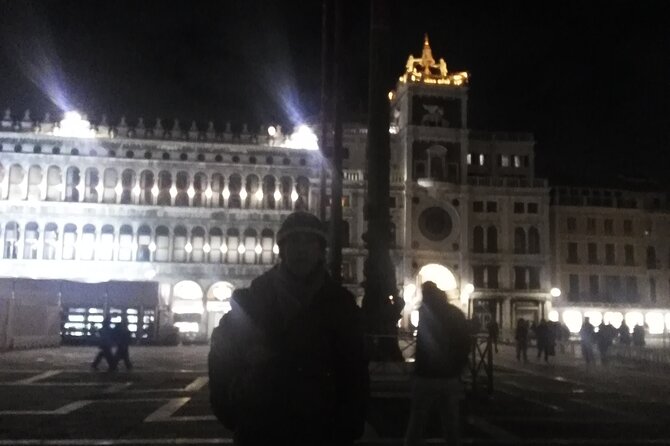
The tour closes in Piazza San Marco, where you’ll admire the Basilica and the bell tower. But the stop isn’t just a photo-corner. You’ll also see the Doge’s Palace area and the Bridge of Sighs, then conclude at the Prison Palace.
This ending is one of the best parts of the route because it gives your day a final “gravity.” Venice around San Marco isn’t only about art and aesthetics; it’s about authority and control. Ending at a prison-related site changes how you look at all the earlier storytelling. Legends and patronage start to feel linked to the larger machine of power.
Stop time here is short (about 10 minutes), so your best move is to arrive mentally ready to absorb quickly. If you want to linger, you’ll probably have to do it after the tour ends, using San Marco as your launchpad.
One last practical note: this ending area can be extremely busy. If you’re coming in peak season, keep your expectations flexible and focus on the guided highlights rather than trying to get empty-space photos.
Price and value: $83 with included admissions and named art stops
At $83 per person, this tour sits in the “easy yes” range for a Venice day—mainly because it’s built as an all-in experience. The big value piece is that admission is included for the stops you visit, including the churches and the Marco Polo locations.
If you’ve ever planned a Venice day around buying tickets one by one, you know how much time and mental energy that can steal. Here, you trade some independence for simplicity. You also get a guided explanation tied to specific artists and historical anchors, which is the difference between seeing a church and understanding what you’re seeing.
Is it worth it? For me, it’s worth it if you want a structured arc—legend to art to Marco Polo to the San Marco power complex. If you prefer wandering freely and reading your own way through Venice, you might get more value just building your own route.
Also watch timing: the tour is listed as about 2 hours, but at least one experience ran closer to 3 hours. So don’t plan a tight connection right after.
Reliability, group pace, and the no-room-to-sit reality
A walking tour in Venice lives and dies by timing. The format is a private tour, meaning only your group participates, and it uses a mobile ticket. That’s convenient. Still, there have been real cases where the guide didn’t show up or was late, which left people scrambling for support.
My practical advice: before you set off, confirm your meeting point time and give yourself extra margin at the start. Venice can slow you down. Even if you’ve done your homework, you’ll still lose minutes finding the right corner, especially at busy areas like the Rialto-to-San Marco corridor.
Also, plan for the body reality: there is limited seating, and many spots are stand-and-look. Bring shoes that handle cobblestones and small walking pauses without turning your day into a sore-feet contest. If you need frequent breaks, this might be a tough match.
Getting the most out of each stop (without turning it into homework)
This tour works best when you do two things:
1) listen for the names, and
2) let those names guide your looking.
For example, when you hear Giovanni Bellini or Tullio Lombardo, you’ll get more from the church interiors because you’re not guessing what’s important. The same goes for the San Zulian stop, where you’re given a set of painting masters to connect to the space.
Another helpful move: treat the campo and the San Marco finish as mood changes. The campo gives you an open-air “scale check,” and the San Marco end shifts you into the power-and-consequence mode with the Doge’s Palace, Bridge of Sighs, and the Prison Palace.
Finally, because some experiences run longer than the listed duration, I’d keep your next plans flexible. Venice loves to expand your schedule with minor delays—people, lines, and narrow streets.
Who should book this tour, and who might want to skip
This tour is a strong fit if you want:
- a story-driven route instead of random stops
- named art references tied to actual buildings
- Marco Polo places you can connect to a timeline
- an ending that isn’t only sightseeing, but also about Venice’s institutions
You might want to skip (or pair it with downtime) if:
- you’re looking for lots of sitting time
- you hate structured routes and prefer to roam
- you’re extremely sensitive to start-time problems and can’t absorb delays
If you’re traveling as a couple, a small group, or with art-history curiosity, this is the kind of tour that can make Venice feel less like a blur and more like a coherent story.
Should you book this Venice tour?
I’d book it if you want a compact day with admissions handled, clear stops, and an art-and-legend storyline that leads you into the San Marco power complex. The named artists and the Marco Polo timeline add real value, especially when you’re short on time and don’t want to build a custom route from scratch.
If you book, go in with two smart expectations: seating is limited, and you’ll want a little extra breathing room for timing. That way, you get the best version of what this tour promises—Venice with explanations, not just images.
FAQ
What is the duration of the tour?
The tour is listed as approximately 2 hours.
Is the tour private?
Yes. It’s described as a private tour/activity where only your group participates.
What language is the tour offered in?
The tour is offered in English.
Is a mobile ticket provided?
Yes, the tour includes a mobile ticket.
Are admission tickets included?
Yes. Admission ticket(s) are included for the stops listed in the itinerary.
Where does the tour start and end?
It starts at Campo San Bartolomio, 30124 Venezia VE, Italy and ends in Piazza San Marco (near the Clock Tower).
Are there any extra fees I should know about?
On certain dates, people staying outside Venice who plan to visit for the day may need to pay a €5 access fee. You can check applicable dates and exemptions at https://cda.ve.it.
Can I cancel for a refund?
Yes. Free cancellation is offered up to 24 hours before the experience start time for a full refund.
Is service available for travelers with service animals?
Yes. Service animals are allowed.
How far in advance is the tour typically booked?
On average, this experience is booked about 72 days in advance.