REVIEW · VENICE
Teatro La Fenice Tour in Venice
Book on Viator →Operated by Bucintoro Viaggi · Bookable on Viator
A theater with a phoenix story is hard to ignore. On this Teatro La Fenice tour in Venice, you get a focused look at the opera house’s Baroque interiors, the auditorium, and the Royal Box, with a local guide tying it all to major performances and the venue’s dramatic rebirth.
I really like two things: the guide-led storytelling that makes the building feel human, and the chance to see the opulent décor up close without needing to understand opera first. The one thing to keep in mind is that timing and access can be day-dependent, so double-check the day you plan to go.
You’ll also want to plan for a slightly “hands-off” visit: this isn’t a backstage style tour. You’ll enjoy what’s included, but if you’re hunting for orchestra-pit secrets, set your expectations accordingly.
In This Review
- Key highlights you’ll actually notice
- Why Teatro La Fenice feels more than a pretty stop
- Finding Bucintoro Viaggi in Campo San Luca (and not wasting your start time)
- Entering La Fenice: Baroque décor you can read like a story
- The auditorium and how the guide changes your viewpoint
- The Royal Box: where power sat in style
- The phoenix story: two fires, then restoration
- Famous performances and what they mean for first-time visitors
- Pace and group size: good for short attention spans
- What you get (and what you should not expect)
- Price and value: $30.04 for a compact, high-impact interior tour
- Who should book this tour
- If something feels off: how to protect your time
- Should you book the Teatro La Fenice tour?
Key highlights you’ll actually notice
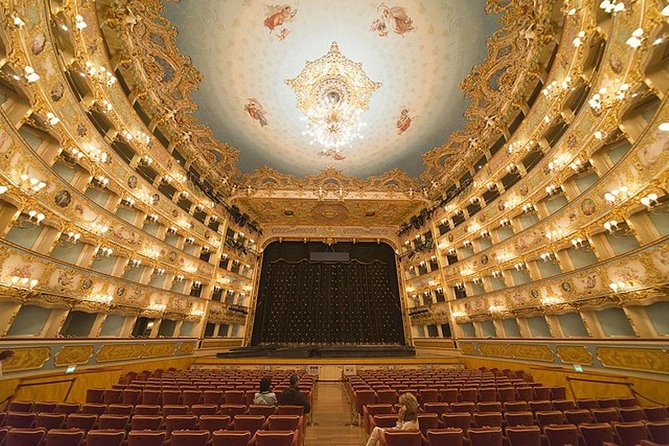
- Baroque interiors and the auditorium viewpoint that makes La Fenice feel both grand and intimate
- Royal Box access plus the stories tied to prestigious patrons
- The phoenix effect: the theater’s repeated burn-and-rebuild history, explained clearly
- Famous repertoire context that helps you connect names like Verdi’s La Traviata to the building
- A small-group feel (up to 20) that usually makes questions possible
- English-guided experience (with a guide who can be clear even at a brisk pace)
Why Teatro La Fenice feels more than a pretty stop
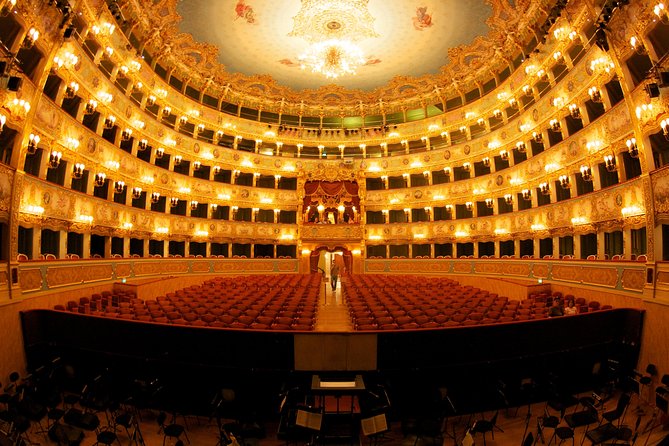
Venice has a way of turning art into atmosphere. Even before you hear a single fact, La Fenice signals you’re walking into a world of gilding, velvet, and serious drama. This tour is short, but it has a strong payoff because it connects what you’re seeing to why the theater mattered to Venice’s cultural elite.
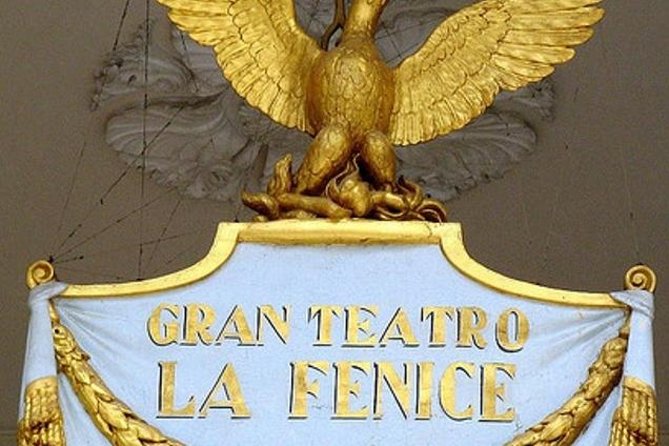
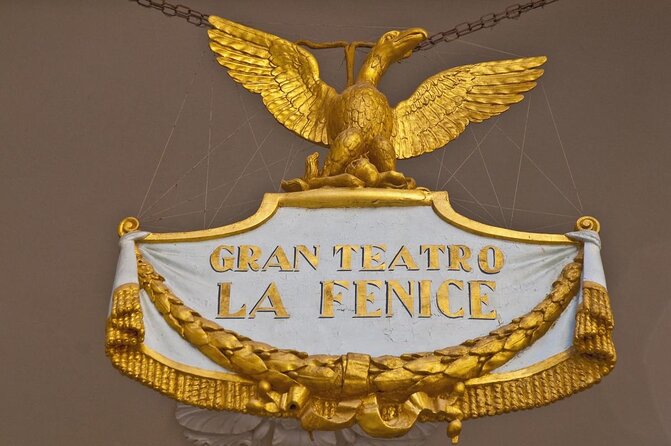
The other big reason this works is the theater’s identity. The name La Fenice means phoenix, and the guide explains how the house has risen from destruction more than once. That idea changes the tone of the visit. You’re not just admiring a room. You’re watching a city rebuild its dreams after losing them.
And yes, even if opera isn’t your thing, the building still hits. You’ll come away thinking about craft, patron power, and what it takes to make a place like this survive.
You can also read our reviews of more tours and experiences in Venice.


Finding Bucintoro Viaggi in Campo San Luca (and not wasting your start time)
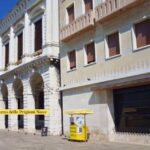
Your tour starts at the centrally located Campo San Luca area, at the Bucintoro Viaggi travel agency. From there, you’ll walk to the theater. This matters because Venice is a maze of tiny lanes, and you don’t want to arrive already flustered.
The tour begins at 12:30 pm, and it typically runs about 45 minutes to around an hour. Since the timing is tight, I suggest you give yourself buffer time to locate the meeting agency and check in smoothly.
One practical tip: there have been reports of ticket or voucher changes being confusing for some people. I’d handle that by arriving a little early and keeping your booking confirmation handy. If you’re the type who likes things orderly, this is where you’ll feel relieved rather than rushed.
Entering La Fenice: Baroque décor you can read like a story
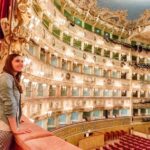
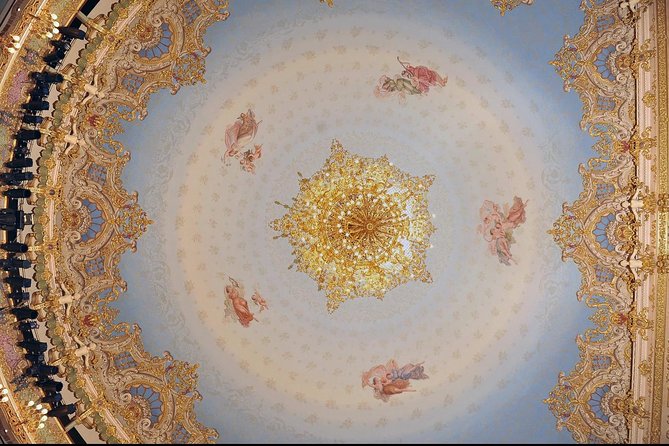
Once you reach Teatro La Fenice, the first impression is pure theater-house drama. The visit focuses on public interior spaces where you can really see the Baroque design language: ornament, gilding, rich surfaces, and details meant to impress from every angle.
You’ll get a guide-led walkthrough that helps you imagine the crowd in its prime: well-dressed patrons, private boxes lit up, and velvet seats ready for performances. That mental picture is exactly what makes this tour click. Instead of staring at décor like it’s just decoration, you start noticing the logic of the design—how the room directs attention and status toward the stage and toward one another.
The guide also connects the building to major works associated with the theater, including Verdi’s La Traviata. Even if you only know the title, the point is that La Fenice wasn’t a decorative set. It was a working artistic engine for Venice.
The auditorium and how the guide changes your viewpoint
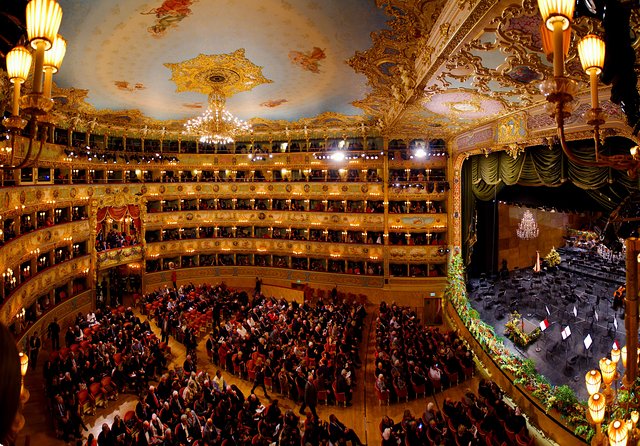
The tour includes time in the auditorium area, where you can understand how the venue functions. This is where you’ll feel why La Fenice is considered one of Italy’s important theaters.
Your guide explains how the space shaped performances and audience experience over time. They’ll point out architectural features and help you connect the physical details to the theater’s past. It’s less about a floor-by-floor lecture and more about giving you a clear sense of how the audience and stage relationship evolved.
What I like here is the pacing. It’s not a long march through a museum. It’s a compact visit with a lot of “useful seeing.” You’ll get just enough context to recognize what matters, then you can keep looking at the room on your own.
The Royal Box: where power sat in style
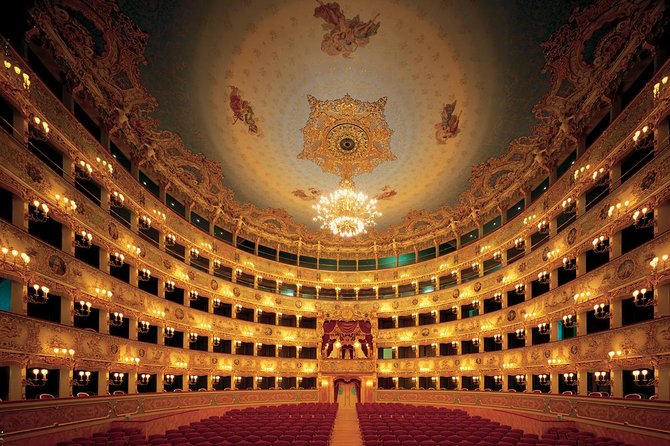
One of the best parts of this tour is the access to the royal box. Even people who aren’t into opera still tend to react to this with a simple thought: wow, people really put authority on display.
The guide talks about the architecture and the role of prestigious patrons and performances tied to the venue. One fun detail that shows up in guides’ stories is that Napoleon sat in the Royal Box, which adds a very human layer to all that ornamentation. Whether you’re into political history or not, it helps the box feel real, not just decorative.
If you care about photography, this is often where you’ll linger. The box area gives you a sense of scale and design that’s hard to see from the main viewing points.


The phoenix story: two fires, then restoration
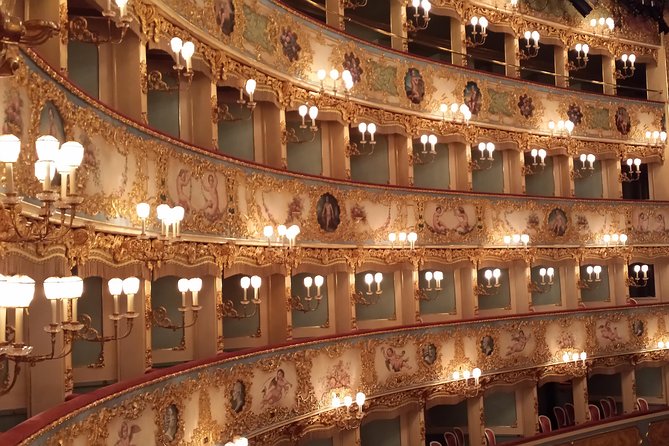
La Fenice isn’t just an old building. It’s a comeback story. Your guide will explain that the theater burned down on two separate occasions and that it was later restored to its former splendor through painstaking work.
This part of the tour is valuable because it turns the building into evidence. You’re not only seeing what survived. You’re seeing what Venice chose to rebuild, and how deeply important theater culture was to the city’s identity.
There’s also mention of a multimillion-dollar renovation, and that detail helps you understand why restoration is more than “repair.” It’s preservation of a shared cultural symbol.
Famous performances and what they mean for first-time visitors
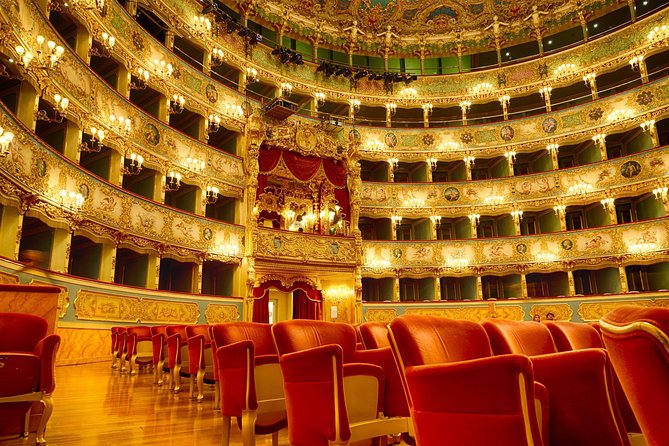
Even if you’ve never watched an opera, the guide’s performance context helps you read the place with fresh eyes. The tour highlights that La Fenice stages large volumes of performances throughout the year and has hosted big symphonic seasons and major cycles by major composers.
You’ll also hear how repertoire has included contemporary work tied especially to Venetian artists. In other words, this isn’t only a “past greatness” stop. The theater is presented as a living institution.
For you, this is the difference between a pretty building photo and a meaningful visit. When you understand that La Fenice has been active across centuries and styles, the décor starts to feel like it’s supporting a tradition, not just showing off.
Pace and group size: good for short attention spans
This is a small-group tour with a maximum of 20 travelers. That usually helps with flow and keeps the visit from feeling like a cattle line.
Most tours run at a brisk pace, though. Some guides manage questions well; others keep moving. If you’re the type who loves asking questions, I’d keep your questions short and focused so you don’t get caught in the middle of someone else’s timing.
There’s also one detail to consider if you care about language clarity. Some people reported mixed language groups where an English-speaking visit had to repeat points in Italian. If you want a strictly English experience, confirm the language setup when you book and don’t be shy about asking at check-in.
What you get (and what you should not expect)
Based on what’s described, you’ll get a guided look at key public areas: the auditorium and the royal box, plus the interior décor that makes La Fenice feel unforgettable.
What you likely won’t get is a backstage-heavy experience. One review-style theme is that you should not count on backstage access. So if you’re imagining an orchestra-pit walk or behind-the-scenes machinery, treat this as a beautiful inside visit with storytelling, not a production tour.
Also, the tour includes an admission ticket as part of the visit. That’s a value point because you’re not paying separately to get into the key interior viewing areas while you’re listening to the guide.
Price and value: $30.04 for a compact, high-impact interior tour
At $30.04 per person for an approximately 45-minute to 1-hour guided visit, the value comes from two things:
- you’re paying for local guide time that explains what you’re seeing (fires, restoration, and how the room works), and
- you’re paying for access that focuses on the auditorium and Royal Box, not just a quick exterior glance.
For Venice, where many attractions charge for entry and then charge again for guided context, this is a fair structure. It’s also priced low enough that you can realistically fit it between other Venice priorities without feeling like you’re sacrificing half a day.
Who should book this tour
This is a great match if you want:
- an interior look at a famous Venetian opera house,
- a fast explanation of why the building matters (including the phoenix story),
- and a short, guided experience that doesn’t require a full day commitment.
If you’re traveling with someone who doesn’t care about opera, this is still often a win because the real star is the architecture and the human stories behind it. If you’re the kind of visitor who only enjoys places while seated for a big performance, you might prefer to pair this with an actual show later in your trip.
If something feels off: how to protect your time
Because this tour is time-based and the theater can have schedule issues, I’d treat it like this: plan it on a day when you’re not also relying on it as your only shot at seeing the interior.
Also, check your day-of situation before you walk over. If anything appears inconsistent, confirm right away with the tour’s meeting point partner so you’re not stuck trying to fix it after the start time.
And if you’re worried about missing details due to pace or language mixing, consider bringing patience, and be ready to take notes or ask one good question at the right moment.
Should you book the Teatro La Fenice tour?
Yes, if you want a short, high-impact interior visit with context. The best moments are the Baroque décor, the auditorium viewpoint, and the Royal Box story, all tied together by the phoenix history.
I’d think twice if your schedule is ultra-tight or you’re going on a day where openings can be uncertain. Also, if you’re chasing backstage access, this likely won’t satisfy that craving.
If your goal is to see why La Fenice is famous and to understand the drama built into the walls, this is a smart use of your time in Venice.