REVIEW · VENICE
Gay Life in Venice from the Middle Ages to Present Days
Book on Viator →Operated by deTourist Venice Valerio Coppo · Bookable on Viator
Venice is full of queer clues. This small-group walk threads LGBTQ life through centuries, from cat-mask street calls to public punishments and later pop-culture Venice. I really like how the tour mixes serious legal history with real place-based storytelling, and how you pass through tiny corners that most people never notice. A fair heads-up: the subject matter includes harsh punishments and executions, so it’s not a purely feel-good history.
You’ll follow a route that runs from Campo San Giacomo dell’Orio to the area of Rialto on foot, with stops at churches, canalside walks, and palazzi. The tour is led in English by Valerio Coppo (deTourist Venice), and the pacing is designed for an intimate conversation rather than a sprint from landmark to landmark. The content is bold in its honesty, but the style stays readable and grounded.
If you want Venice filtered through LGBTQ history, art, and even music-video lore, this is a strong pick. If you’re hoping for only light anecdotes or modern club vibes, you may find the darker themes heavy—and the full story still fits into about two hours, so it moves fast.
In This Review
- Key highlights you’ll care about
- A walk built for meaning, not just photos
- Campo San Giacomo dell’Orio: where queer poetry met real risk
- Fondamenta del Megio: the historian, kindness, and the politics of writing
- Chiesa Santa Maria Mater Domini: churches that watched cruising spots
- Ponte delle Tette and the porticoes: cat masks and forced invisibility
- Chiesa di San Cassiano: Rolandina Roncaglia, named as a first we know of
- Campo San Cassiano: opera, theater, and Casanova’s spywork
- Calle dell Ogio: a canalside meeting tied to the British gay movement
- Campo San Giacomo di Rialto: proclamations, lists, and the execution block
- Ruga dei Oresi: “suspicious” pharmacy meetings and the death penalty fear
- Palazzo Ca’ Zenobio: late-Baroque rooms and Madonna’s Like a Virgin
- Chiesa di San Sebastiano: art, Veronese, and a patron link to the LGBT community
- Campanile di San Marco: the cheba iron cage and public cruelty
- Piazzetta San Marco: executions in a high-visibility square
- Harry’s Bar: when the rumor mill becomes part of history
- Riva degli Schiavoni: a love story staged in a palace
- Calle del Dose da Ponte: a lesbian US painter and love affairs of men and women
- Palazzo Ca’ Dario: ownership tales and a pattern of queer owners
- Palazzo Mocenigo: a British poet with a bisexual component
- San Martino di Castello: the porch of 1450 and night cruising places
- Is €5 access-fee day-trips a factor? And is the tour price fair
- Should you book this LGBTQ Venice walk?
- FAQ
- How long is Gay Life in Venice from the Middle Ages to Present Days?
- Where does the tour start and end?
- How many people are in the group?
- Is the tour offered in English?
- What is included in the price?
- Do I need a physical ticket?
- What’s the cancellation window?
- Is there a €5 access fee for day trips?
Key highlights you’ll care about
- Small group feel: capped at eight in the concept, with a stated maximum of 10 people
- Places you can actually see: churches under surveillance, execution platforms, and cruising-adjacent streets
- Straight-to-the-point English narration from Valerio Coppo
- A long time span: Middle Ages to present days, with pop culture stops mixed in
- Free admission stops listed for each stop, so your money stays focused on the guide and time
A walk built for meaning, not just photos
Gay Life in Venice isn’t the usual “look, look, photo” tour. The format is a guided walking route through areas that once shaped LGBTQ life—sometimes through community, sometimes through fear. You get a timeline you can literally trace with your feet, connecting street geography to laws, church spaces, and everyday meeting spots.
The group size matters. With only up to 10 people, you’re not fighting for attention. That makes it easier to follow the sometimes-grim context (surveillance, punishments, public announcements) while still getting the connective tissue that makes the details stick. Valerio Coppo’s strength is putting people and events into place, so you’re not just memorizing names—you’re learning why that corner of Venice mattered.
It’s also practical: the tour is about two hours, ends near Rialto (Ponte di Rialto), and starts at Campo San Giacomo dell’Orio. If you’re planning the rest of your day, you can build it around an easy route through central Venice instead of crossing the city.
You can also read our reviews of more tours and experiences in Venice.
Campo San Giacomo dell’Orio: where queer poetry met real risk
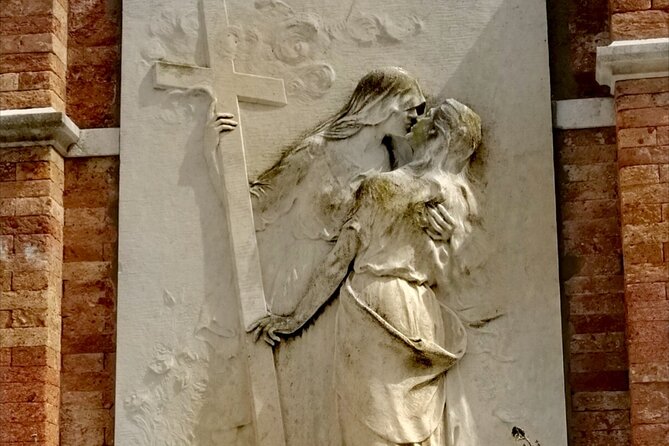
The tour begins at Campo San Giacomo dell’Orio, and one of the first threads you’ll hear is about an Italian poet who came out in the early 1970s and later died by suicide. The point isn’t just the biography; it’s what the guide uses it to explain about how LGBTQ expression shows up in art, and how public identity can change someone’s life.
You’ll also connect the poet to early Italian poetry that explored homosexuality. Venice may feel like a city of masks and romance, but this start forces you to see the cultural side of queerness as something lived and written—not only something whispered in side streets. It’s a strong emotional landing point because you’re not starting with a law; you start with a human story.
Even though the stop itself is short, the tour keeps you oriented: you learn what to notice as you move—street shapes, canal sightlines, and where a church or portico would have controlled access.
Fondamenta del Megio: the historian, kindness, and the politics of writing
Next comes Fondamenta del Megio. Here the focus shifts to a Venetian historian active between the 15th and 16th centuries, author of Diarii (chronicles), a work meant to cover Venice’s history extensively. The tour’s angle is sharp: writing about Venice wasn’t neutral. It was power, and it could be political even when the person seemed kind.
You’ll hear that the historian was extremely kind, described almost as a compliment—then you learn why it wasn’t really one. That’s a recurring tour technique. You’re not just collecting facts; you’re learning how Venice rewarded certain kinds of behavior and punished others, sometimes indirectly.
This stop also sets up what follows. As you move through the city, you’ll notice how public record, official roles, and cultural memory were used to shape what counted as acceptable life.
Chiesa Santa Maria Mater Domini: churches that watched cruising spots
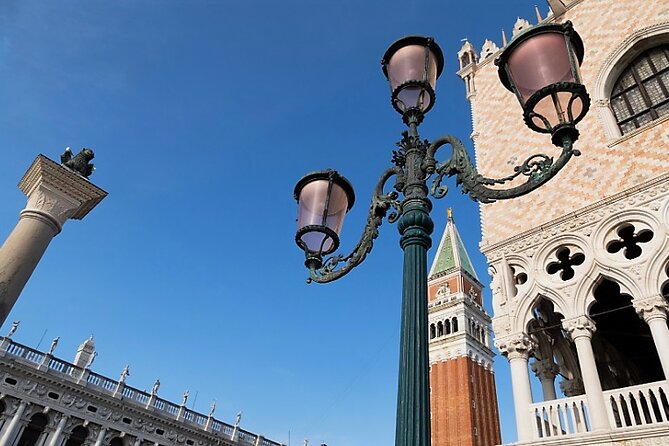
At Chiesa Santa Maria Mater Domini, the tour turns to surveillance. In 1488, the arcades around the church were placed under public authority oversight to prevent sodomites from using the space to cruise and meet. In other words: even religious architecture wasn’t off-limits from regulation.
This is where the tone becomes harder. You’re learning how public authorities tried to restrict intimate contact by controlling the built environment—covering movement with rules and turning space itself into enforcement. It’s also one of the clearest “place and policy” connections on the route, because arcades are still physically there (or their traces are), and you can picture how someone might have used them.
If you like history that explains the why behind the walls, this stop delivers.
Ponte delle Tette and the porticoes: cat masks and forced invisibility
Ponte delle Tette is one of the most vivid stops on the walk. You’ll learn that in the 15th century the bridge neighborhood functioned like a red-light district in practice, with authorities pushing prostitutes to display their wares as part of how they managed public order. The logic was tangled: encourage one form of sexual commerce to reduce another.
Then the story widens to the gnaghe—queers or men dressed as women—often with faces covered by cat masks, emitting calls like cats in heat. The tour frames this as both performance and risk: explicit proposals could be made to passers-by, but visibility carried danger.
This is a stop where you should expect details that are graphic in theme. It’s also a stop where you’ll appreciate the tour’s respectfulness. You’re not being sensationalized; you’re being shown how performance, stigma, and enforcement collided in public space.

Chiesa di San Cassiano: Rolandina Roncaglia, named as a first we know of
Next is Chiesa di San Cassiano, where the guide shares the story of Rolandina Roncaglia, described as the first trans person we know of in Italy. Born Rolandino, she lived as a woman for seven years in a house nearby, earning money through selling eggs and working with the local market, and eventually became a prostitute.
The tour doesn’t treat this as a single-page tragedy. It uses her story to explain how gender nonconformity was policed, and how survival could mean stepping into work that the city itself then judged harshly. Once she was discovered in 1355, the narrative turns to a terrible death—another reminder that LGBTQ visibility often came with deadly consequences.
For many people, this is the emotional center of the walk. If you care about identity as lived experience rather than only coded symbolism, you’ll feel that weight here.
Campo San Cassiano: opera, theater, and Casanova’s spywork
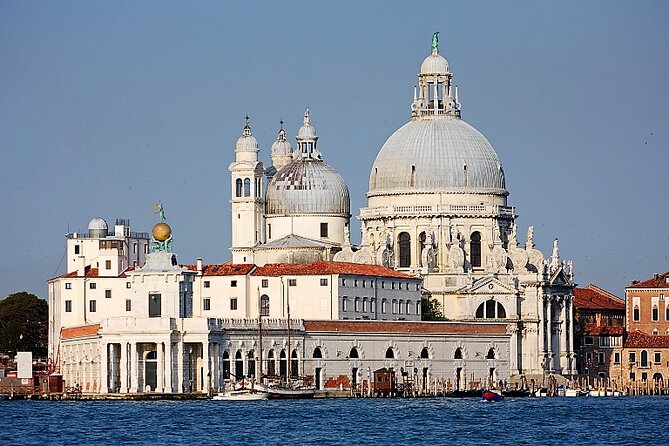
From there you move to Campo San Cassiano. The tour ties the area to a theater that claimed the title of the first public opera house in the world. It’s a neat cultural anchor: Venice as a place where art took public form.
But the story doesn’t stay in the spotlight. The guide connects this space to homosexual encounters, citing Giacomo Casanova’s comments when he worked as a spy for the state inquisitors in the 18th century. That’s the tour’s blend at its best: art and entertainment sit beside enforcement and accusation.
If you’ve visited Venice’s grand sights, this area adds a different layer: the city’s public culture had a darker side that authorities could target when they needed to.
Calle dell Ogio: a canalside meeting tied to the British gay movement
At Calle dell Ogio, the tour reaches a canalside stretch along Canal Grande where a famous writer and pioneer of the British gay movement met a beautiful 19-year-old porter. The stop is short, but it points to how Venice attracted LGBTQ visitors and shaped personal stories across borders.
What I like here is the shift from local regulation to the international pull of Venice. The city has long been a magnet for people looking for anonymity, culture, or reinvention, and the guide uses this spot to show that history wasn’t just something happening to locals. It was also something experienced by visitors and writers—people who carried ideas across countries.
You’ll likely pause and look at the canal view differently after this, because now it’s not only scenery. It’s a stage where stories happened.
Campo San Giacomo di Rialto: proclamations, lists, and the execution block
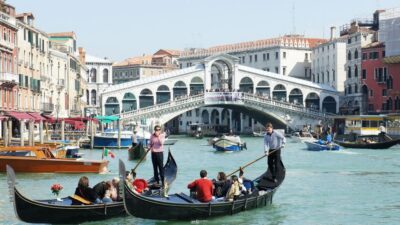
In Campo San Giacomo di Rialto, the tour explains how a statue used as a podium served for proclamations and announcements, including bans relating to sodomy. You’ll hear that an officer read out the names of people sentenced to death standing on the block at the end of the staircase.
And location matters here. Being next to the Rialto market—one of the most frequented areas—made these announcements hard to ignore. The city used mass attention as a weapon. The message wasn’t only legal; it was social. It told everyone what could happen.
This stop is sobering, but it’s also useful: it shows how censorship and punishment worked through everyday crowds, not hidden back rooms.
Ruga dei Oresi: “suspicious” pharmacy meetings and the death penalty fear
At Ruga dei Oresi, the guide points out a pharmacy said to have been used by sodomites for meetings, and even the act of getting close could lead to condemnation to death. That’s a brutal detail, and it helps explain why so much queer life historically shifted into code, concealment, and controlled spaces.
If you’re the type who likes to understand why some communities form where they do, this stop gives you a clear answer: safety depended on proximity—close enough to meet, careful enough not to be singled out.
The tour doesn’t linger in shock. It uses the point to show how enforcement changed behavior, and how city life created both opportunity and trap.
Palazzo Ca’ Zenobio: late-Baroque rooms and Madonna’s Like a Virgin
Next comes Palazzo Ca’ Zenobio, a late-Baroque masterpiece known for its architecture and interiors. In the 18th century it became a venue for intense intellectual life, and since a restoration starting in 1993, it now serves as a research center for Armenian studies.
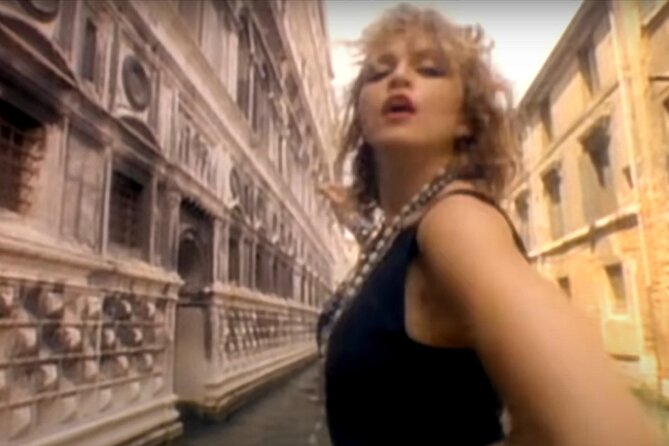
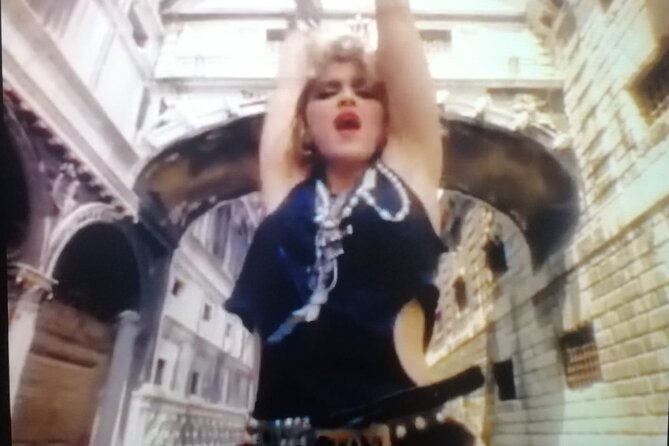
But the tour also lands in pop culture. The palace is described as the main indoor location of Madonna’s Like a Virgin music video in the 1980s. That may sound like a modern detour, yet it fits the theme: LGBTQ life isn’t only court records and punishments. It also lives in performance, media, and global celebrity culture that uses Venice’s drama as backdrop.
This stop helps you connect Venice across eras, showing continuity in how the city gets used—whether by institutions, artists, or mainstream pop.
Chiesa di San Sebastiano: art, Veronese, and a patron link to the LGBT community
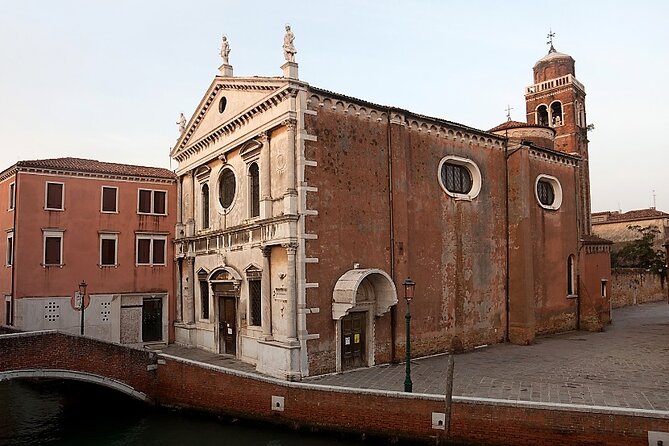
At Chiesa di San Sebastiano, the tour focuses on one of Venice’s major art venues, especially the cycle of paintings by Paolo Veronese, and the fact that Veronese is buried here. The guide then connects San Sebastiano to the LGBT community worldwide.
You might not expect a church in an LGBTQ history walk to land on art first, but that’s exactly why it works. You see how queer meaning often gets layered onto spiritual symbols. The tour doesn’t ask you to accept a single story as absolute. It shows how communities and culture can attach significance to places.
If art drives your travel, this stop is a welcome change of pace without skipping the topic.
Campanile di San Marco: the cheba iron cage and public cruelty
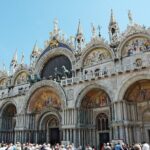
Outside the tallest bell tower in Venice, the tour introduces an iron cage called cheba, dating back to the 15th century and referenced again in the 16th. The cage was used to expose sodomite priests to bad weather and crowd taunts.
That detail makes it clear how “public morality” operated: humiliation was part of punishment, and spectacle was part of governance. Venice didn’t just punish behind doors. It put people on display.
This stop also helps you interpret how crowds behaved around major civic landmarks. San Marco isn’t only beautiful. It’s also a place where the city staged authority.
Piazzetta San Marco: executions in a high-visibility square
Just nearby, Piazzetta San Marco is where the tour explains executions took place up to the middle of the 17th century. Again, the guide links this to public announcements, including confirmations attributed to Casanova.
This is another “architecture as enforcement” moment. When the city uses a central square for punishment, it turns public space into a warning sign for everyone walking through that same light and same stone.
You may find yourself looking up at the architecture differently, seeing how visibility was built into the system.
Harry’s Bar: when the rumor mill becomes part of history
At Harry’s Bar, the tour takes on a modern-but-not-new thread. The founder reportedly insisted it was just a rumor, yet the guide checks out the famous bar where gay visitors gathered up to the 1970s.
This stop is a reminder that LGBTQ history isn’t only “ancient.” It’s also mid-century social geography—who met where, what conversations happened, and how certain places became safe enough to become traditions.
If you’re planning a drink afterward, this stop gives the context to order with a little more meaning. And even if you skip the drink, the point is that Venice’s queer story includes the places where community could breathe.
Riva degli Schiavoni: a love story staged in a palace
On Riva degli Schiavoni, the tour visits a palace where a love story was staged between a Venetian rower and a famous German writer. Names aren’t given in the tour data you provided, but the takeaway is clear: relationships and performances—sometimes romantic, sometimes literary—found homes in Venice’s grand facades.
This stop works best if you’re the type who likes cross-cultural links. Venice has always mixed people: merchants, travelers, writers, artists, and the occasional scandal. The guide uses this story to underline that LGBTQ life intersected with literature and celebrity narratives long before social media.
Calle del Dose da Ponte: a lesbian US painter and love affairs of men and women
At Calle del Dose da Ponte, the tour points to a hotel where a famous lesbian US painter lived, described as collecting love affairs with men and women. The tour doesn’t give the name here, but it uses the example to show a different angle of LGBTQ life: the artist’s world, intimacy, and mixed relationships in private life.
I like this part because it broadens the lens beyond gender identity or punishment. Here, you see queerness as something expressed through art and personal relationships—even when the public world doesn’t fully understand it.
Palazzo Ca’ Dario: ownership tales and a pattern of queer owners
Palazzo Ca’ Dario is described as famous for a series of unfortunate events involving some owners, many of them gay. It’s a strange kind of evidence—more story than court record, more rumor than legal text—but the guide uses it as a prompt to ask why certain buildings became linked to scandal.
Even when the details are murky, the tour’s method is the value: it teaches you how to read Venice. You look at the palace and ask what kinds of lives it housed and what kinds of reputations those lives might have carried.
Palazzo Mocenigo: a British poet with a bisexual component
Palazzo Mocenigo rounds out this palace stretch. The tour notes that a British poet lived here, acknowledged not only for poetry but also for a more or less important bisexual component in a complex sentimental and sexual life.
This stop keeps the tone human. You’re not only walking through punishment sites. You’re walking through the domestic spaces where creative people negotiated identity and relationships.
If you want your LGBTQ Venice tour to feel balanced—less all doom, more all life—this is where the balance starts to land.
San Martino di Castello: the porch of 1450 and night cruising places
The final stop is Chiesa Parrocchiale di San Martino di Castello. The tour explains that in ancient times the church had a no longer existing porch, and a law from 1450 listed it among places of night sodomites cruising.
So the ending is another “built-environment” enforcement detail. A missing porch still matters because it’s recorded in law, and the guide uses that record to underline how authorities mapped behavior onto specific places and times.
This final stop is also a good closing question for you: when something disappears from the landscape, what survives? In this case, legislation and memory did. The city keeps telling the story, even when the structure is gone.
Is €5 access-fee day-trips a factor? And is the tour price fair
The price is $92.63 per person for about two hours, and the structure is clearly built around value you can feel. You’re paying for a trained guide (tour leader and nature and interpretive guide), and the stops are listed with free admission tickets—so your money isn’t eaten by entry costs at every stop.
You also get something that’s hard to put a price on: careful interpretation of places. Anyone can walk through Venice’s lanes. Few tours explain why churches had surveillance, why bridges became coded zones, why marketplaces hosted official announcements, and why modern pop culture filmed inside palaces with centuries of intellectual life.
One practical thing to consider: parts of Venice can have a €5 access fee on certain dates for people staying outside Venice on day trips. The tour data points to the city’s rules page for exact dates and exemptions. If you’re unsure, check before you plan your day around the tour.
Should you book this LGBTQ Venice walk?
Book it if you want Venice in English that connects LGBTQ life to real streets and real institutions, from medieval laws to later cultural scenes like Harry’s Bar and Madonna’s Like a Virgin filming location. It’s also a great match if you like story-led walking tours and don’t mind that the subject includes executions, surveillance, and punishment.
Skip it only if dark themes would sour your mood more than you can handle, or if you want a longer itinerary. The route covers a lot of ground in two hours, so some topics get packed in tightly. Still, for a concise, place-based introduction to Gay Life in Venice from the Middle Ages to present days, this tour is one of the most direct options you’ll find.
FAQ
How long is Gay Life in Venice from the Middle Ages to Present Days?
The tour lasts about 2 hours.
Where does the tour start and end?
It starts at Campo San Giacomo dell’Orio and ends at Ponte di Rialto.
How many people are in the group?
The tour is kept small, with a cap of eight travelers mentioned in the tour features, and a stated maximum of 10 travelers.
Is the tour offered in English?
Yes, it’s offered in English.
What is included in the price?
You get a tour leader and a nature and interpretive guide.
Do I need a physical ticket?
A mobile ticket is provided.
What’s the cancellation window?
You can cancel for a full refund up to 24 hours before the experience starts.
Is there a €5 access fee for day trips?
On certain dates, most people staying outside Venice who are visiting for the day may need to pay a €5 access fee. The tour data advises checking the official Venice rules page for applicable dates and exemptions.