REVIEW · VENICE
Ellegi Murano Glass: The Art of Tradition
Book on GetYourGuide →Operated by Ellegi Murano Glass Srl · Bookable on GetYourGuide
Murano glass works fast, and it looks magical. In a single stop at Ellegi Murano Glass, you can watch the furnace work in real time and see how artisans shape hot glass into display pieces. The best part for me is the hands-on feel of the demo and the fact that the craft is still passed down through generations. One possible drawback: the experience is short, and a few guests have noted issues with sound, language match, or interruptions during the demonstration.
Location also makes this easy to fit into your day. You’re a few steps from the Faro boat stop, close to major sights like the Glass Museum and the Basilica of Santa Maria e San Donato, and the factory has smooth access with no architectural barriers. Kids under 15 are free, and pets are welcome, which is a nice bonus on an island day when you want something straightforward.
Expect a guided glass processing session (about 15 minutes, with the demo vibe sometimes running closer to 20) plus a visit to the showroom. You’ll see glass extracted at high temperature and shaped using hot-blown or molded techniques, with explanations offered in Italian, English, Spanish, or French.
In This Review
- Key things that make Ellegi Murano Glass worth your time
- A 600-year Murano furnace lesson (not a museum lecture)
- Getting there: Faro boat stop to a glass factory courtyard
- Your 15-minute guided demo: hot glass, two techniques, real timing
- After the demo: the showroom and the real reason you came
- Price and time value: is $5 for Murano craft fair?
- What can go wrong: language fit, sound, and workshop interruptions
- Who should book Ellegi Murano Glass, and who might skip it
- Should you book Ellegi Murano Glass?
- FAQ
- How long is the Ellegi Murano Glass tour?
- What’s included in the ticket?
- Where do I meet for the tour?
- What languages are available for the live guide?
- Is it wheelchair accessible?
- Are kids free and are pets allowed?
Key things that make Ellegi Murano Glass worth your time
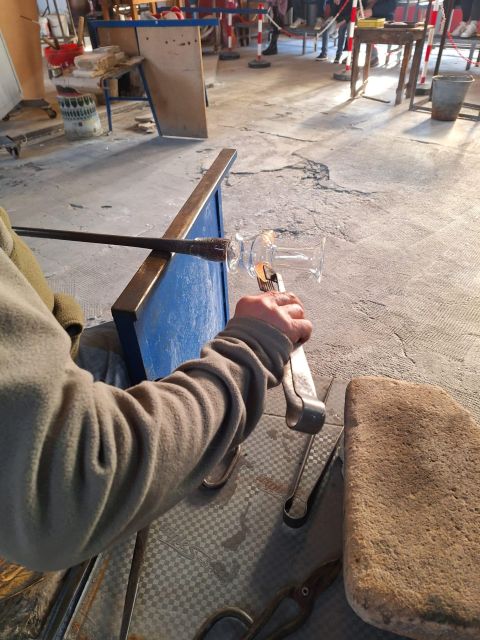
- A family-run shop with 600-year know-how: the skill is carried through generations, not learned in a school.
- You watch glass get shaped at the furnace: hot glass forms right in front of you.
- Two technique styles explained: the demo covers both hot-blown and molded glass, with step-by-step explanation.
- You get a showroom right after the demo: see and buy handmade pieces where they’re made.
- Good value for a Venice-day stop: short duration means low time cost, around $5 per person.
- Plan for possible hiccups: some people have reported language mismatches, crowding, and occasional organization problems.
A 600-year Murano furnace lesson (not a museum lecture)
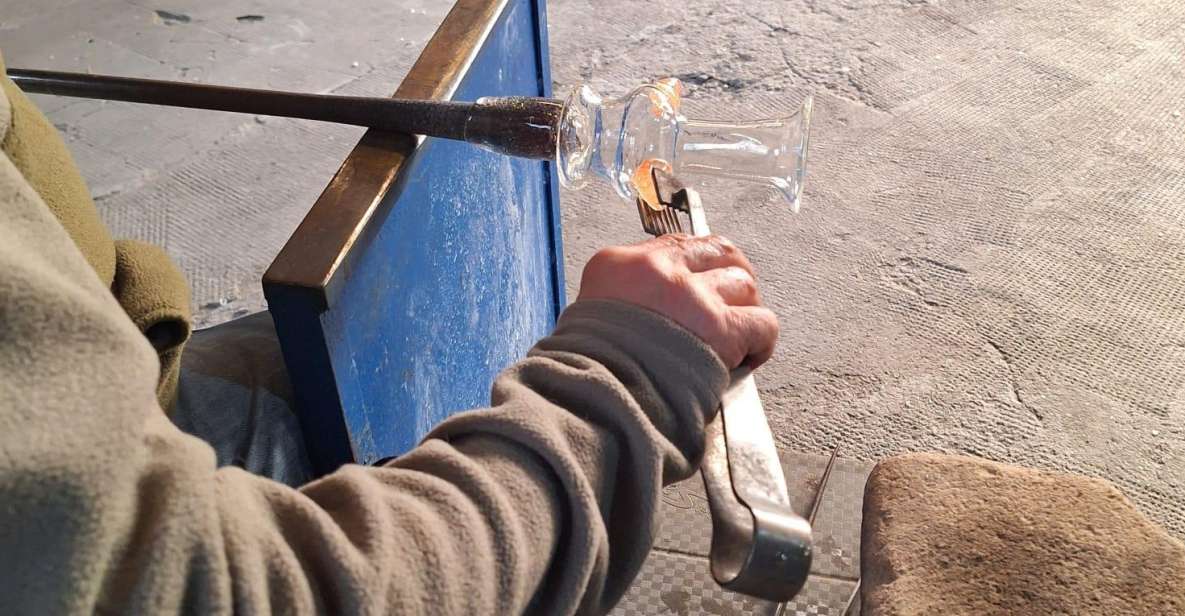
Murano is famous for glass, but what matters here is the how, not just the final product. Ellegi Murano Glass is family-run and described as about 600 years old, with techniques passed from generation to generation. The interesting part is the claim that there are no schools teaching this craft in the way you might expect—so the knowledge lives inside the workshop itself.
That’s why this visit feels different from a museum. Museums tend to freeze the craft in time. A live demonstration does the opposite: it shows the timing, the heat, and the skill needed to shape glass before it cools or loses form. Even if you know nothing about glasswork, the furnace alone makes it easy to follow. The workshop staff explain what’s happening in your chosen language, so you’re not stuck translating what you see.
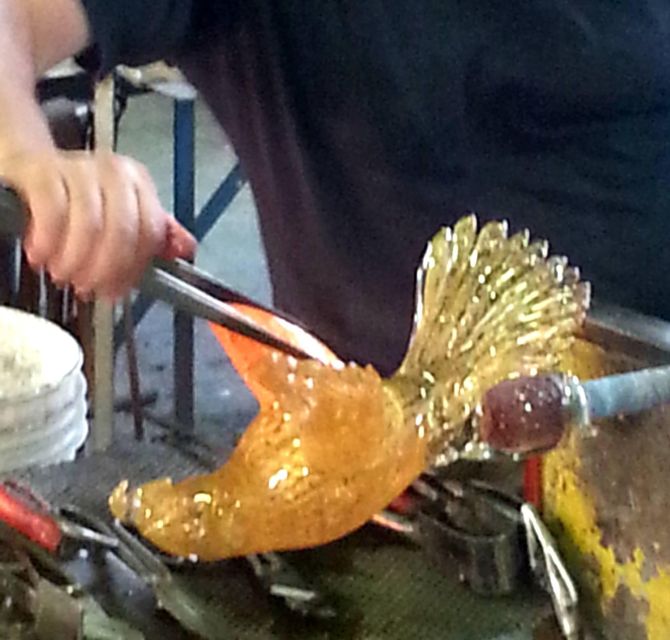
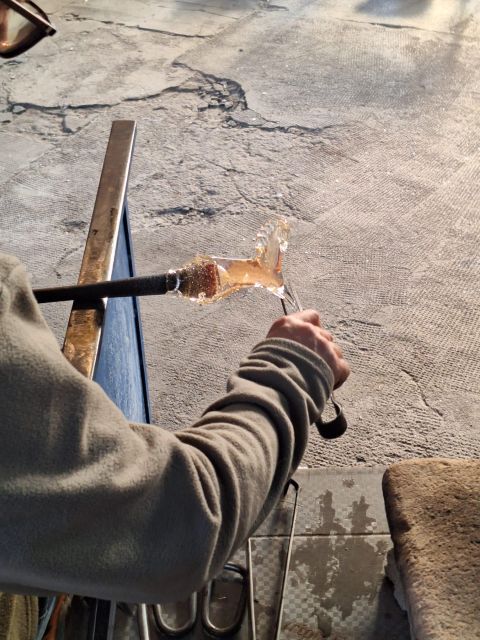
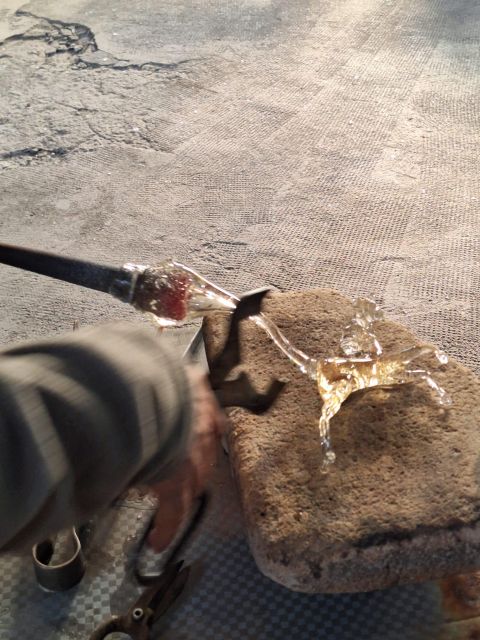
The demo also isn’t just one trick. The session focuses on glass processing techniques, specifically artistic glassware. Based on guest experiences, you might see examples like a decorated dish or even more playful pieces such as a horse. Don’t count on the exact subject every time, but the point is the same: you’re watching real craftsmanship, not a staged slideshow.
You can also read our reviews of more tours and experiences in Venice.
Getting there: Faro boat stop to a glass factory courtyard
The location is one of the biggest reasons this works as a Venice add-on. Murano’s vaporetto stop Faro is nearby, and the factory is described as only a few steps away from that main boat stop. That means you can go from waterfront to workshop quickly, without the Murano walking marathon.
It also connects well to other Murano must-dos. If you’re already planning to hit the Glass Museum and the Basilica of Santa Maria e San Donato, this fits naturally into the same island route. You can treat it like a “quick factory stop” rather than a full afternoon plan.
Arrival is also described as easy for everyone. The factory notes no architectural barriers, and the tour is listed as wheelchair accessible. So if you’re traveling with strollers, mobility needs, or just want low-friction walking, this is the type of stop that keeps your day stress-free.
One practical detail that helps: your meeting point is in the internal courtyard of Ellegi Murano Glass, and there’s a sign above the entrance with the factory name. If you arrive early, use the courtyard sign as your anchor and take a minute to orient before the group begins.
Your 15-minute guided demo: hot glass, two techniques, real timing
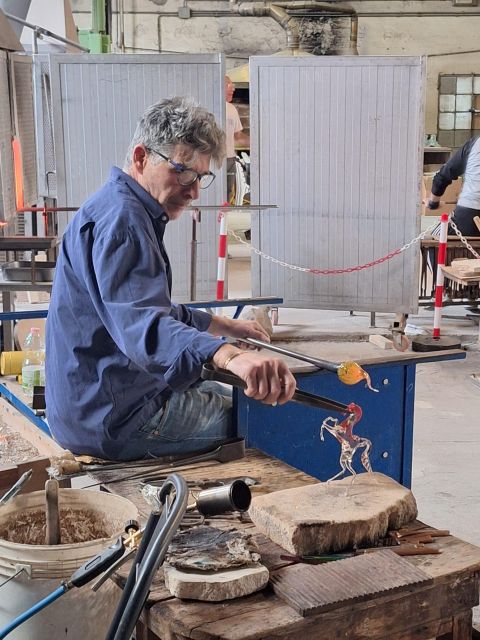
The heart of the experience happens during the guided session on Murano, starting and returning at the factory. The total duration is listed as 15 minutes, and the description also says the experience can last around 20 minutes. Either way, the schedule is short—meaning you’ll get the core of the process without losing half your day.
Here’s what you should expect in plain terms.
First, you’ll watch glass pulled from high heat and shaped in front of you. The process matters because glass isn’t like wood or metal. It’s more fragile, and it cools quickly once the work starts. That’s why live demos feel intense: you can see how fast the artisan must work and how precise their movements are.
Second, you’ll see the demo connect to two techniques: hot-blown and molded glass. The guide explains each method in detail for the language you requested (Italian, English, Spanish, or French). This is one of the best parts of the visit because you don’t just watch hands—you learn what you’re looking at.
A few guests specifically praised the craftsmanship moments, including seeing a piece take shape like a horse. Others liked that the artist explanations were clear enough to follow, and that the staff were friendly. If you’re the kind of traveler who likes to understand what’s happening, those explanations are the difference between a photo stop and a real experience.
Potential drawback: a couple of people noted that it could be hard to hear at times, especially in a busy room. My advice is simple: stand where you can see the guide’s face and listen directly rather than drifting to the back for photos. If you’re in a group, ask where the best spot is before the demo begins.
After the demo: the showroom and the real reason you came
Right after the glass processing demonstration, you’ll visit the showroom. The factory experience is described as including both the demo and a showroom visit, plus access to the shop where you can buy handmade items.
This part is valuable because it shows you what the demo is really for. Watching hot glass happen is fascinating, but it’s also abstract unless you can immediately connect it to finished pieces. The showroom lets you do that. It also gives you a chance to slow down and look at details—colors, surface texture, and how the finished objects hold the shape you saw being formed.
If you’re tempted to buy, think of it as a souvenir with context. You’re not just bringing home something pretty; you’re bringing home an object tied to a specific technique and a specific workshop line. And because this is a family-run factory, the shopping experience often feels more connected than large-scale “mass souvenir” setups.
One thing to keep your expectations realistic: the factory experience is described as short. So you might not have time for deep browsing if the group moves on quickly. Plan to spend most of your viewing time in the showroom, and if a specific piece catches your eye, prioritize it before the group gathers again.
Price and time value: is $5 for Murano craft fair?
At about $5 per person, this is priced like an impulse-friendly Murano activity. That can be a red flag for some tours, but here the structure helps. You’re paying for a real process demonstration plus a showroom stop. The duration is short, so you’re not paying for hours of content that you might not connect with.
The value is strongest if you have limited time on Murano. Venice days often get hijacked by lines, canal delays, and “just one more stop” energy. A 15-minute craft demo gives you a focused experience without demanding a full half-day commitment.
The value also makes sense for families. Kids under 15 are free, which can turn Murano from an expensive island day into something doable. And because pets are welcome, it can work for travelers who don’t want to leave an animal behind while they stretch their legs around the island.
That said, you’re also getting a compact experience, and that’s where some guest complaints make sense. A few people felt it was more like handling flow through a crowded space than a slow, detailed craft lesson. If you’re the type who wants extended Q&A, extended explanations, or multiple rounds of demonstrations, you might wish you had chosen a longer workshop-style visit instead.


What can go wrong: language fit, sound, and workshop interruptions
Most craft demos go smoothly, but a few issues have shown up in guest feedback worth taking seriously.
Language mismatch happens. One guest reported that the tour indicated Spanish support but it wasn’t provided as expected. This doesn’t mean it’s common, but it does mean you should confirm your language preference at booking and double-check when you arrive. If you don’t hear what you need right away, ask staff early rather than waiting until the demo is underway.
Sound and organization can vary. Another guest mentioned it was hard to hear at times. If you’re sensitive to audio or you’re traveling with older kids who lose patience easily, choose a good spot near the guide and be ready to lean in.
Interruptions can break the flow. One guest described the master artisan being frequently interrupted by another person discussing business matters, which made the viewer feel less respected. Even if interruptions are infrequent, it’s a reminder that this is a working factory. If you need a perfectly silent, museum-like experience, you may find it frustrating.
Finally, there’s the “day-of reality” risk. One guest said the showroom area was under refraction/repair and that no clear signage explained what was happening. That’s exactly the kind of situation you want to avoid by arriving with flexible expectations and asking staff what’s currently running if you don’t see the usual setup.
Who should book Ellegi Murano Glass, and who might skip it
This stop is best for travelers who want a fast, real-time Murano craft moment. If you like seeing how things are made, and you’re comfortable with a short demo, this fits perfectly.
You’ll especially enjoy it if:
- you’re pairing it with other Murano sights like the Glass Museum and Santa Maria e San Donato
- you want an experience that works for all age groups, including kids (free under 15)
- you travel with pets and need something welcoming
- you want explanations in English, Spanish, Italian, or French without hunting for a separate guide
You might consider skipping or swapping to a longer class if:
- you need guaranteed perfect audio and quiet
- you expect long-form storytelling and lots of time for questions
- you’re buying for a high-end collector purpose and want extensive time at the showroom
Should you book Ellegi Murano Glass?
I’d book it if you want a short, affordable Murano activity that shows real hot-glass techniques and gives you a showroom stop right after. The location near Faro and the low price make it easy to justify, especially if you’re already planning to see Murano’s big landmarks. The strongest reason to go is simple: you can see artistic glass being shaped at the furnace, and you get guided explanations in multiple languages.
I’d hold a more cautious mindset if you’re very sensitive to sound, need a specific language group to run perfectly, or will be upset if the demo feels rushed or disrupted. In those cases, arrive early, stand where you can hear, and ask staff what’s currently happening.
If your day on Murano is tight, this is the kind of stop that turns Murano from a photo list into an actual craft story you can point to.
FAQ
How long is the Ellegi Murano Glass tour?
The glass factory guided tour is listed as 15 minutes.
What’s included in the ticket?
Your visit includes a glass processing demonstration and time to visit the showroom.
Where do I meet for the tour?
Meet in the internal courtyard of the Ellegi Murano Glass factory. There’s a sign above the entrance with the factory name.
What languages are available for the live guide?
The live guide is available in Italian, English, Spanish, and French.
Is it wheelchair accessible?
Yes, the experience is wheelchair accessible, and access is described as smooth with no architectural barriers.
Are kids free and are pets allowed?
Kids until 15 years old are for free, and the factory welcomes pets.