REVIEW · VENICE
St Mark’s Basilica & Doge’s Palace with Secret Passages Access
Book on Viator →Operated by Walks - Italy & Spain · Bookable on Viator
Venice hides its power behind locked doors. This tour strings together Doge’s Palace secret itineraries and a guided visit to St Mark’s Basilica, with stories that explain how the city worked (and how it jailed people). You’ll move through rooms most visitors never see, including the prison areas tied to Casanova’s time.
I like the way the guide connects art and politics in real time. The palace side isn’t just pretty ceilings; it’s checks and balances explained, plus the contrast between grand ballrooms and harsh prison spaces. I also love the small group format (max 20), which means fewer bottlenecks and more time for the guide’s attention.
One drawback to plan for: this is not a sit-down, air-conditioned stroll. Expect tight spaces, stairs, and heat—some parts can feel stifling, and the tour isn’t suitable for people who are claustrophobic.
In This Review
- Key things to know before you go
- Why this Doge’s Palace + St Mark’s Basilica combo works
- Doge’s Palace secret itineraries: the backstage route
- Casanova’s cell, archives, and the psychology of escape
- Hidden council rooms, ballrooms, and the Veronese–Tintoretto power look
- Bridge of Sighs to the New Prisons: justice as architecture
- St Mark’s Basilica: east-meets-west, plus ID at the door
- Small group pace and what the guide actually does
- Heat, stairs, and narrow stone passages: plan like a pro
- How the price adds up for $131.87 per person
- Who should book this, and who might want a simpler option
- Final call: should you book this secret passages tour?
- FAQ
- How long is the tour?
- Is this tour offered in English?
- Where does the tour start and end?
- Do I need to bring an ID for St Mark’s Basilica?
- Is there skip-the-line access?
- Are children allowed on this tour?
- Is this tour suitable if I’m claustrophobic or have mobility issues?
Key things to know before you go
- Secret itineraries access: You go beyond the usual public route inside the Doge’s Palace.
- Casanova’s prison cell: You’ll see where he was held and hear the escape story.
- Bridge of Sighs link: You cross over to view the New Prisons area.
- Art history while you walk: You’ll spot major works connected to Venetian power, including paintings by Veronese and Tintoretto.
- St Mark’s Basilica timing plus security: You get a guided skip-the-line visit, but you’ll need a photo ID.
- Real comfort planning: There are lots of stairs and narrow passages; bring strategies for heat and standing.
Why this Doge’s Palace + St Mark’s Basilica combo works
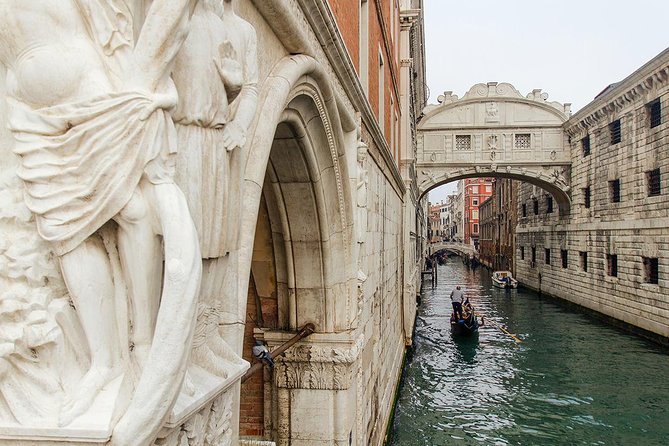
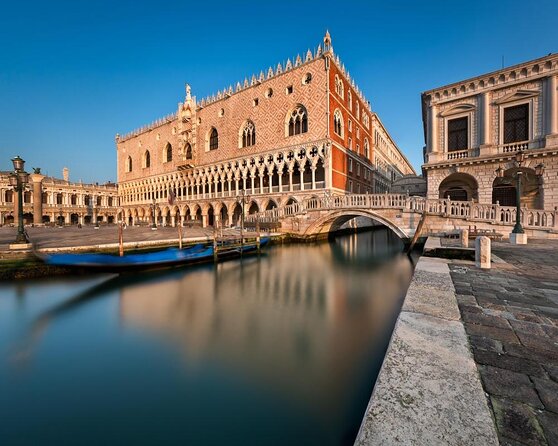
Doge’s Palace and St Mark’s Basilica sit only steps apart on Piazza San Marco, yet they feel like two different worlds. One is governance and justice—written in stone, sealed behind doors, and powered by fear and ceremony. The other is worship and spectacle, where the building itself tells a story of Venice reaching outward.
This combo matters because it’s efficient without feeling rushed. You start with the palace, where a guided walk can turn a maze into something you actually understand. Then you shift into St Mark’s Basilica with the same guide-led clarity—so you leave with a stronger picture of Venice as both a political machine and a religious showcase.
You also save the kind of time that’s hard to buy in Venice. The tour uses skip-the-line access for both the palace and St Mark’s Basilica, so you spend your energy looking, not queuing.
You can also read our reviews of more tours and experiences in Venice.


Doge’s Palace secret itineraries: the backstage route
The Doge’s Palace is famous for two things: pageantry and punishment. What you want from this tour is the middle part—the hidden corridors and rooms that explain how the system operated, not just what you can photograph.
You’ll enter with guided context and then follow a special route that takes you into areas outside the general public path. A guard opens a special door to let you access the hidden side of the palace, and that moment sets the tone: you’re not just touring; you’re moving through the palace like a worker from another era.
Inside, the palace becomes a story you can walk through:
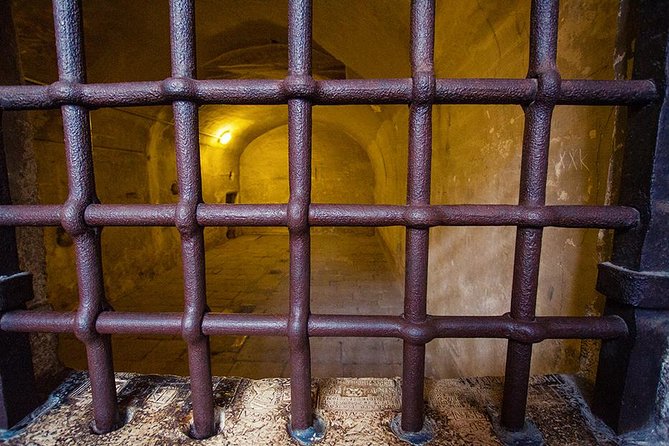
- Prison spaces and holding areas connected to high-level decisions
- Archives and back rooms where records and “secrets” had real consequences
- Council spaces that show how authority checked itself (at least in theory)
This is where a guide earns their pay. When you’re standing in a room, it’s easy to admire the architecture and miss the point. A good guide helps you connect what you see—doorways, stairways, and layouts—to why Venice built it that way.
Casanova’s cell, archives, and the psychology of escape
The highlight for many people is the prison area tied to Casanova. You’re not just told that he was held here—you’re brought to the cell associated with his imprisonment, and the guide explains how a famous escape could happen in a building designed to prevent exactly that.
What I like about this part is that it doesn’t feel like pure spectacle. The tour frames Casanova’s story as a human twist inside a larger system. You’ll also visit archive spaces where the concept of controlled information becomes physical—because in Venice, secrecy wasn’t a vibe. It was an operational tool.
If you enjoy history that feels personal, this section delivers. You can stand where decisions were recorded, then stand where consequences played out. It’s a useful reminder that the palace wasn’t only about rulers; it was also about mechanisms—process, paperwork, movement, and containment.
Hidden council rooms, ballrooms, and the Veronese–Tintoretto power look
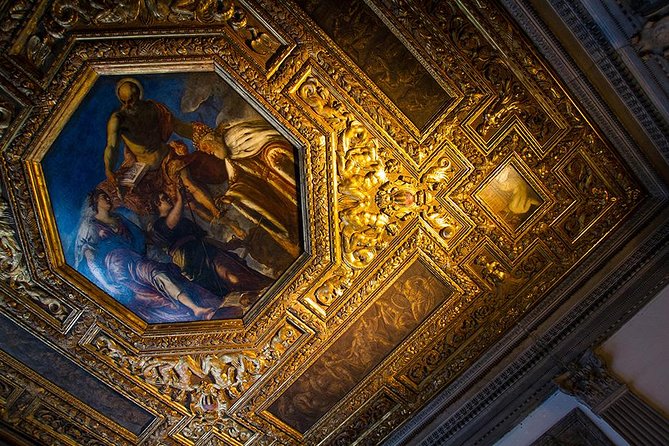
One of the smartest parts of the route is the built-in contrast. Venice didn’t put power in one style. It dressed power up, displayed it, and then quietly enforced it.
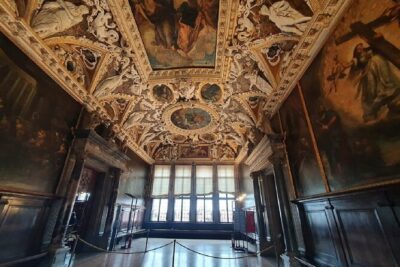
As you move through the palace, you’ll get access to major general-access areas that still feel far grander than their “museum tour” label. You’ll see huge audience rooms and ballrooms with major paintings by Veronese and Tintoretto. Those artworks aren’t decoration you can ignore; the guide helps connect them to how the state projected authority.
You’ll also visit private apartments associated with the Duke of Venice. Even if you only glance at the spaces, it helps you understand how the palace worked at two levels: the public face of Venice’s ruling class, and the less public machinery behind the walls.
This is also where the “checks and balances” angle becomes more than a phrase. You’ll hear how council structures shaped decision-making—an argument about stability that stands in contrast to the prison reality you’ve already seen.
Bridge of Sighs to the New Prisons: justice as architecture
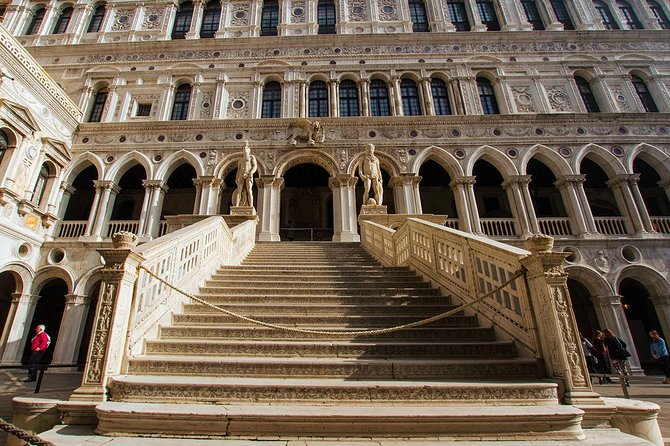
If you’ve only heard of the Bridge of Sighs as a photo spot, this tour gives it meaning. You’ll cross the bridge to see the New Prisons area, tying the palace’s ceremonial spaces to the places where punishment happened after decisions were made.
The bridge works as a hinge in the story. It visually connects the seat of power (where the decisions are) to the spaces where the consequences end up. That’s why it lands harder than you might expect from a single crossing.
Practical tip: bring your patience for stairs and tight turns here. Even on a short tour, Venice doesn’t do smooth walking. A small group helps because you can keep moving at a pace the guide controls, not the crowd controls.


St Mark’s Basilica: east-meets-west, plus ID at the door
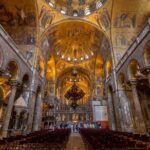
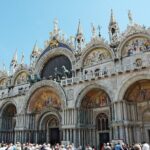
After the palace, you’ll head into St Mark’s Basilica for the guided portion. This is the moment the tour shifts from political drama to architectural wonder.
St Mark’s Basilica is famous for its east-meets-west feel, and a guided visit helps you notice the mix rather than just admire the overall look. The guide also explains how many of the basilica’s prized possessions ended up here by not-so-clean means—because Venice’s church power also came from acquisition, not just faith.
There’s also a very real practical side to St Mark’s. You need a photo ID to enter. If you show up without it, security staff can refuse entry, and the tour can’t fix that for you on the spot. Pack your passport or a valid government ID and keep it easy to reach.
The basilica time is shorter than the palace time, so your mindset should be: focus, look up, and listen for the structural explanations. Even 30 minutes can feel long if you’re paying attention.
Small group pace and what the guide actually does
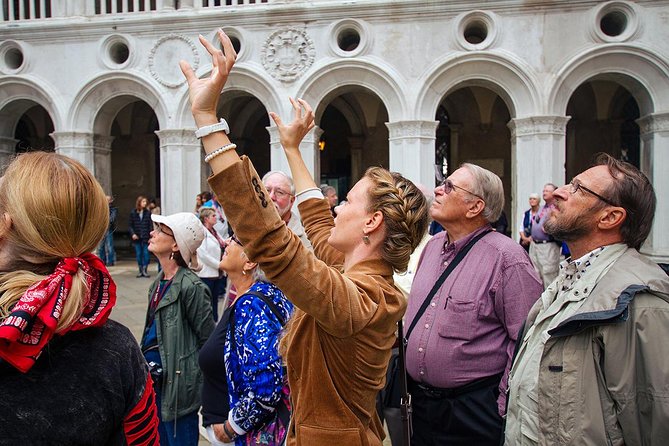
This is a max-20 experience, and it changes the feel. In the Doge’s Palace, space can get narrow and movement can get slow. A smaller group means the guide can keep everyone together without turning the tour into a waiting game.
You’ll also have an expert guide approach. Names that have been praised in the guide line-up include Marco, Georgia, Emmanuel, Susan, and Roberta. Even when the speaking style varies, the goal stays the same: turn political structures, art, and prison realities into a coherent walk you can follow.
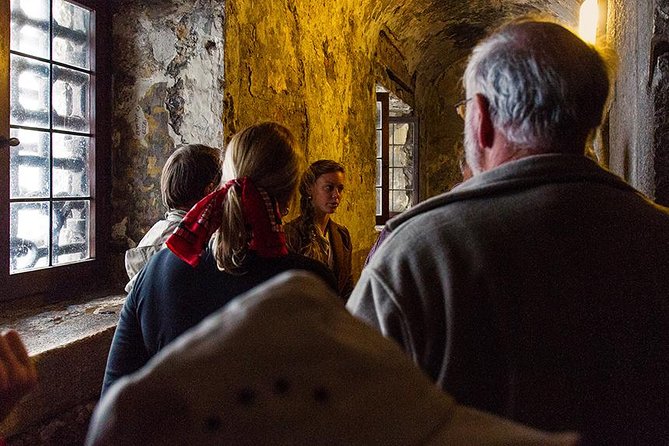
One comfort note from the experience format: wireless headsets can be glitchy in some narrow stone prison areas. If audio gets patchy, move toward the front of the group. It’s a small tweak that can save the tour from becoming guesswork.
Heat, stairs, and narrow stone passages: plan like a pro
This tour involves real physical effort. You’ll stand for extended periods, climb stairs, and move through tight spaces. People who are fine with a museum day usually do okay, but this is more “historic workout” than “easy sightseeing.”
A few comfort considerations you should take seriously:
- The palace and prison areas can run hot since some spaces aren’t air-conditioned.
- Expect a lot of stairs—one stretch has been described as very stair-heavy.
- Some narrow passages can feel cramped.
If you’re visiting in warmer months, strategy helps. I recommend an early start if your schedule allows. Bring a small fan if you run hot, and wear shoes with strong grip. You’ll be happier if your outfit is built for standing, not posing.
And one hard no: it’s not suitable for people who are claustrophobic. The route includes enclosed areas and tight corridors, not just open halls.
How the price adds up for $131.87 per person
At $131.87 per person, this isn’t the cheapest way to see either site. But it also isn’t trying to be. You’re paying for three things that are hard to reproduce on your own:
1) Secret access, not just skip-the-line.
The palace part includes special itineraries and backstage routes that go beyond what a standard ticket typically allows.
2) A guided narrative that connects rooms.
Venice’s best moments often require context. Here, the guide explains how prisons, records, and council spaces link together—and how art fits into power.
3) Time saved at two major monuments.
Skip-the-line access matters at St Mark’s Basilica as well as Doge’s Palace. The real value is the extra time you spend inside instead of in queues.
So the real question isn’t whether you can pay less somewhere else. It’s whether you’ll get more out of Venice by investing in access and interpretation. If you want the palace beyond the basics, this price starts to feel fair.
Who should book this, and who might want a simpler option
This tour is a strong match if you:
- Want Doge’s Palace secret passages content, not just the public galleries
- Like politics and human stories (Casanova is a hook with real place-based detail)
- Appreciate art explanations tied to power
It’s also ideal if you prefer a small group pace. The guide can manage movement through stairs and narrow rooms better than a solo attempt can.
You might skip this tour if:
- You’re claustrophobic
- You have mobility limits that make repeated stairs and tight spaces hard
- You’re looking for an easy, mostly-flat walk
If your goal is mostly photos and fast sightseeing, you might prefer simpler, less stair-heavy options. But if your goal is understanding Venice’s machine behind the scenes, this is one of the more focused ways to do it.
Final call: should you book this secret passages tour?
If you’re choosing between seeing the palace at the surface level or learning how it functioned, I’d lean toward booking this one. The reason is straightforward: you get access and guidance that turn a famous building into a readable story—prison to council, council to art, art to worship.
Book it especially if you’ll be short on time near Piazza San Marco. This tour is typically booked about 55 days in advance on average, so holding your spot earlier can reduce stress.
Just do your homework on comfort. Wear shoes for stairs, plan for warm stone corridors, and bring your photo ID for St Mark’s Basilica. If you do those two things well, you’ll get a Venice experience that feels like backstage access, not a generic checklist.
FAQ
How long is the tour?
The tour runs about 3 hours (approx.). The Doge’s Palace portion is longer than the St Mark’s Basilica portion.
Is this tour offered in English?
Yes, it’s offered in English.
Where does the tour start and end?
It starts at Museo CorrerP.za San Marco, 52, 30124 Venezia VE, Italy, and ends at Piazza San Marco, 30124 Venezia VE, Italy.
Do I need to bring an ID for St Mark’s Basilica?
Yes. A photo ID is required for entry to St Mark’s Basilica, and not having it can lead to security refusing entry.
Is there skip-the-line access?
Yes. You’ll have skip-the-line access for the Doge’s Palace and skip-the-line access to St Mark’s Basilica.
Are children allowed on this tour?
Children under age 6 are not permitted inside the secret itineraries of the Doge’s Palace, so they cannot take this tour.
Is this tour suitable if I’m claustrophobic or have mobility issues?
No for claustrophobia. The tour includes narrow spaces and stairs, and it requires moderate physical fitness.