REVIEW · VENICE
Small Group Tour to Venice departing from Abano Terme
Book on Viator →Operated by Lovivo Tour Experience · Bookable on Viator
Venice can be loud, but this route is quiet. This small-group walk strings together the Venice most people skip, from the Jewish Ghetto to the big-ticket icons around Piazza San Marco—with time to stop, sip espresso, and actually look around.
Two things I really like: first, the pacing. You’re not shoved through Venice like it’s an airport line. Second, the route makes smart use of neighborhoods—Cannaregio and San Polo first, then you earn the sweep of San Marco and the Grand Canal. It feels ordered, not chaotic.
One thing to consider: it’s a lot of walking on old stone and narrow streets. The tour asks for moderate fitness, so if you’re sensitive to long days on your feet, you’ll want a realistic plan for rest stops and shoes.
In This Review
- Key highlights you’ll feel on the day
- Getting to Venice from Abano Terme and finding the meeting point
- Jewish Ghetto morning walk: calm streets with real context
- Cannaregio: trains, Strada Nova, and the Venice locals actually use
- The espresso stop that makes the day feel Venetian
- San Polo: the relaxed sestiere with bacari energy
- Piazza San Marco: big sights, early grounding, and flood-awareness
- Bridge of Sighs and San Marco connections
- Rialto Bridge and Rialto Market: the trading heart you can still walk
- A special Grand Canal viewpoint: where the view feels private
- Lunch is your choice: plan for cicchetti time, not a full meal
- Ferry back to the station: easy if you expect it
- Group size and pacing: why this feels calmer than most Venice tours
- Price and value: $154.29 for a full Venice day
- Practical tips: clothing, comfort, and how to plan your energy
- Who should book this Venice walk?
- Should you book Lovivo’s Venice tour from Abano Terme?
- FAQ
- What time does the tour start?
- Where is the meeting point in Venice?
- How long is the tour?
- Is lunch included?
- What’s the group size?
- Is pickup available from Abano Terme?
- Do I need tickets or an admission fee?
- Is the ferry back included?
- Are there any dress requirements?
Key highlights you’ll feel on the day
- Small group (up to 8) keeps the pace human and the guide easier to hear on quiet streets
- Jewish Ghetto + Cannaregio connects culture, local shops, and everyday Venice without sprinting
- Espresso stop in a long-running café tradition adds a real Venice rhythm
- San Marco and Bridge of Sighs area gives the landmarks without forcing museum lines
- Rialto Bridge + Rialto Market puts you at the classic trading heart—and keeps it walkable
- Discreet Grand Canal viewpoint offers a rare perspective without the usual crowd crush
Getting to Venice from Abano Terme and finding the meeting point
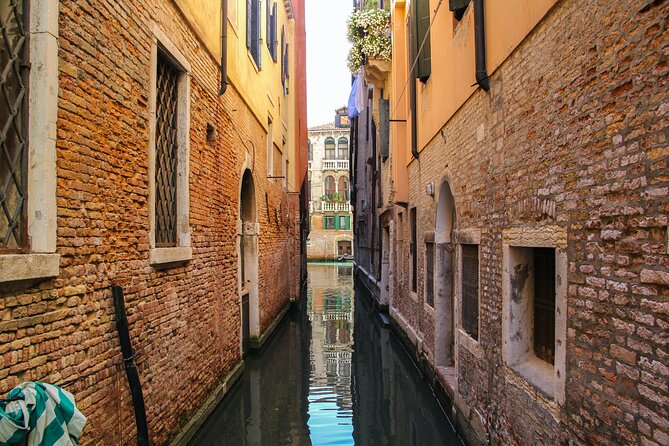
This is set up as a day tour that starts with transport. You get a round-trip transfer and pickup is offered from Abano Terme, then you’re delivered into Venice to begin at Venezia Santa Lucia (the station area). The tour start time is 9:00 am, which matters in Venice—going earlier helps you avoid the heaviest foot traffic.
The meeting point you’ll use is clearly tied to the station address: Venezia Santa Lucia, 30121 Venice. That’s convenient because you’re already oriented to Venice’s rail hub. You also end back at the meeting point, so you’re not trying to guess where your group vanishes into the maze.
One practical note: the tour includes a mobile ticket, so you’re not hunting through printed papers while standing over a canal bridge. Simple, but it helps.
You can also read our reviews of more tours and experiences in Venice.
Jewish Ghetto morning walk: calm streets with real context
The day begins with a walk through the Ghetto Ebraico, the historic Jewish quarter. The stop is short—around 10 minutes—but it sets the tone. This part of Venice is quieter than the postcard lanes near the major squares, and you’ll feel that shift quickly as the streets narrow and the pace settles.
What’s valuable here isn’t just where you walk. It’s the way the neighborhoods connect. You’re moving between the Cannaregio side and the Ancient Jewish Ghetto, which gives you context for how this city functioned beyond the tourist center.
You’ll also notice how shopfronts and windows matter in Venice. The description includes antiques shop windows and traditional Jewish shops, which is exactly what I’d want early in the day: places that look lived-in, not staged.
Cannaregio: trains, Strada Nova, and the Venice locals actually use
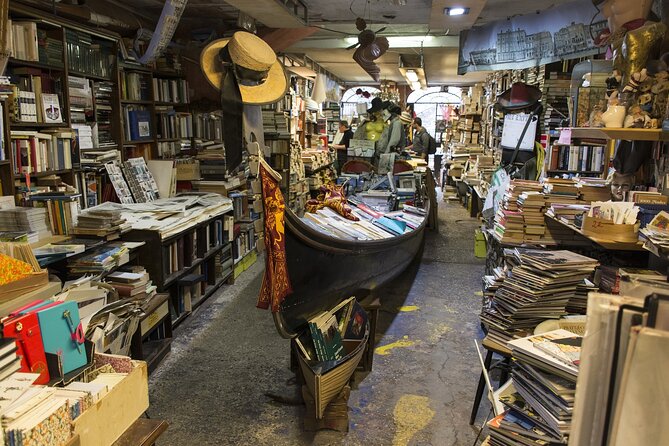
Next comes Cannaregio, and this stop covers more than one “sight.” You’ll pass by Venice Santa Lucia station and then head along the main street, Strada Nova, the corridor linking the station area to the Rialto zone.
Cannaregio has that “everyday Venice” feeling. It also connects to the story of the Jewish community, because this area relates to where the community was obliged to live during the Napoleonic era. You get the sense that Venice isn’t one uniform experience—it’s a chain of small cities stacked on water.
You’ll also hear about shopping streets like Strada Nova and Lista di Spagna. And importantly, the guide points out areas where locals meet—clubs and restaurants in the northern part of the sestiere between the Jewish Ghetto and Fondamenta Nuove.
If you’ve only visited Venice once and spent all your time near Rialto or San Marco, this is the piece that helps you understand the city’s daily life.
The espresso stop that makes the day feel Venetian
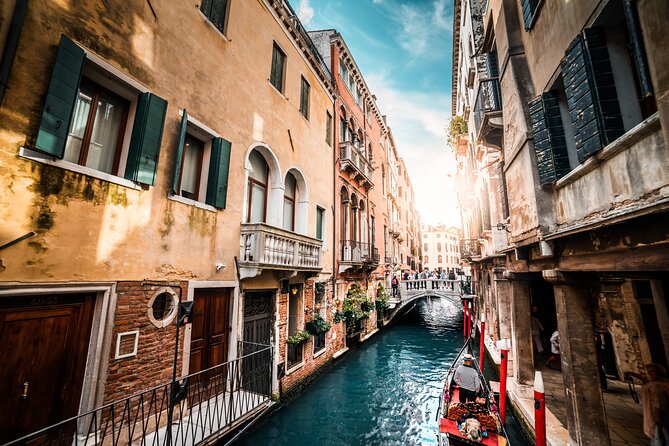
At some point during the walk through these quieter streets, you’ll get a break for espresso in a small coffee shop in a city that’s been using the same recipe for almost a century. That detail may sound small, but it changes the tone of the day.
Venice punishes you if you’re rushing. A short coffee stop does two things: it gives you a chance to look back at what you just walked past, and it keeps your energy steady for the heavier sights later.
I also like that the espresso is built into the route, not offered as an optional detour. In Venice, optional “we’ll see where we end up” plans often cost you time. Here, the timing feels intentional.
San Polo: the relaxed sestiere with bacari energy

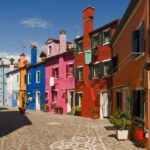
Then you move into San Polo, described as the smallest district of the six, and known for a relaxed atmosphere. It’s also a neighborhood that historically connected with what used to be Santa Croce, which helps you see Venice as it evolved rather than as a static museum.
San Polo is where the city’s everyday texture shows up: narrow streets, houses and shops where people work, and the variety of typical Venetian taverns known as bacari.
There’s also a built-in logic to why San Polo feels special. The name comes from Campo San Polo, which is described as the largest square after San Marco. This matters because even if you’re not entering major buildings, squares in Venice tell you where the social gravity is. Campo San Polo is surrounded by stately palaces, but the space itself reads as a people-centered hub—exactly the kind of contrast I enjoy before heading toward the grand public face of Venice.
Piazza San Marco: big sights, early grounding, and flood-awareness
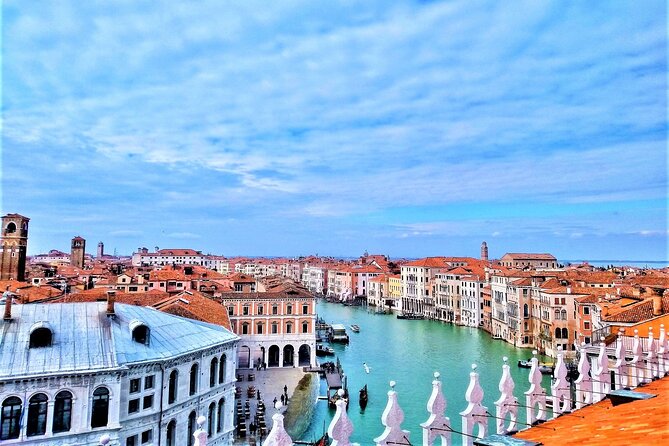
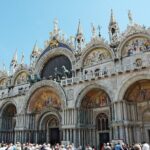
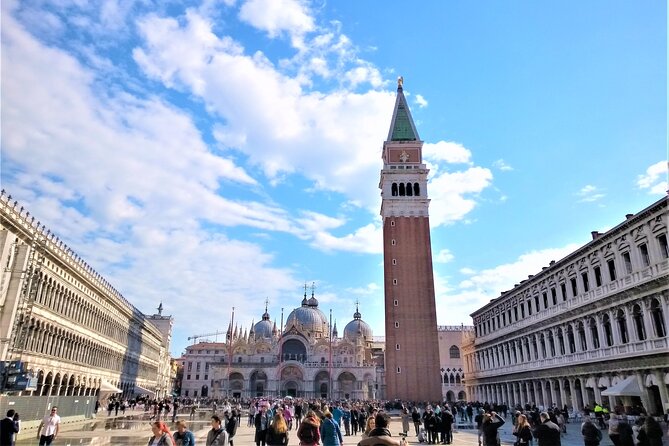
Piazza San Marco is the moment where Venice turns from neighborhood to monument. The tour gives you about 2 hours here, which is enough time to look at key buildings and still have breathing room.
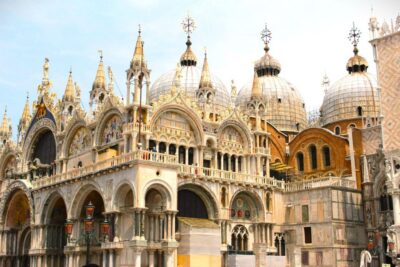
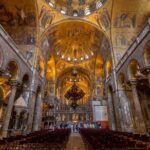
You’ll see the major faces of the square: the Basilica of San Marco, the Doge’s Palace, the Correr Museum, the Campanile, and the Clock Tower. Even if you don’t go inside (church and monument entrances are not included), the exterior viewing is still meaningful because you can map the city’s power structure right in front of you.
There’s also a practical fact worth knowing: Piazza San Marco is the lowest area of Venice and is the first flooded when water rises. That doesn’t mean you’ll be dealing with high water, but it’s a useful mental model. When the square gets slick, crowds behave differently—and having that awareness keeps you calm.
And you’ll hear the square described with a line about it being like the most beautiful salon in Europe. That’s not a museum description; it’s about how the space feels—flat, wide, theatrical compared with the narrow calli elsewhere.
Bridge of Sighs and San Marco connections
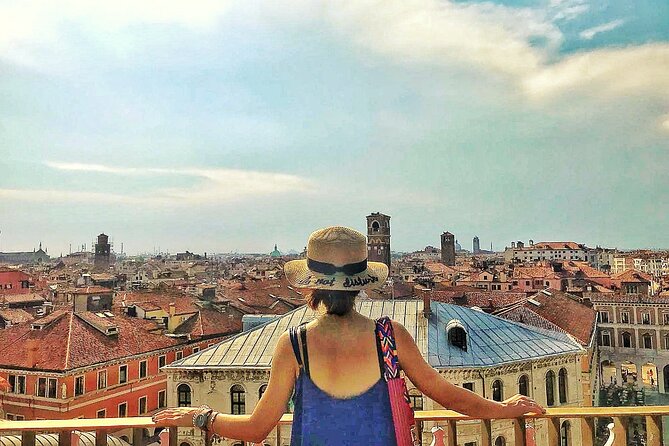
After San Marco, the tour route includes arriving at the Bridge of Sighs area. This is one of those Venice stops where you don’t need a long narrative to feel the impact; you just need the positioning.
Venice landmarks often work best as “connections,” not isolated photos. Seeing the bridge near the Doge’s Palace zone gives you a clearer mental map of what you’re looking at: where power sat, where passages led, and how the city’s story is layered above and around the water.
Rialto Bridge and Rialto Market: the trading heart you can still walk
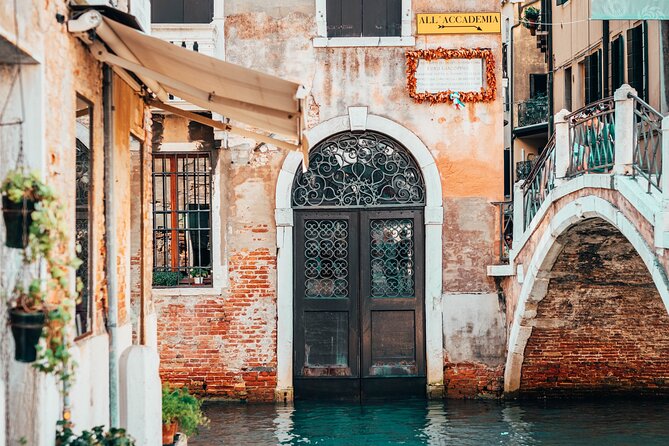
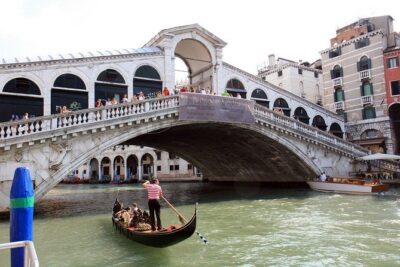
Next is the classic pivot to the Ponte di Rialto, the oldest of Venice’s four bridges over the Grand Canal. You’ll cross it and get a look at the architecture and history.
The tour notes the bridge you see today was built between 1588 and 1591, replacing an earlier wooden structure that collapsed more than once and burned. That kind of detail matters in Venice because it helps you see that even the “perfect” view is the result of repeated rebuilding, not magic.
The bridge is also described as having two inclined ramps joined by a portico in the center. Standing in the middle of Rialto gives you a natural “pause point.” You’re not stuck staring at one direction—you get a sense of both the canal sweep and how the crowd funnels beneath you.
From there, the plan includes taking a tour of the Rialto Market and then continuing your walk toward the ferry/return leg. The market part is where Rialto stops being only postcard material and starts becoming a place with function—vendors, shoppers, and that constant river-to-street flow.
A special Grand Canal viewpoint: where the view feels private
One of the standout parts of the day is the visit to a discreet place with a completely exclusive view of the Grand Canal. Venice is full of viewpoints, but most are either too public (you’re staring through selfie arms) or too contrived.
This stop is valuable because it’s positioned after you’ve walked through other neighborhoods and before you reach the final icons and departure. By the time you get your Grand Canal moment, you’ll appreciate the scale more. The guide helps you understand what you’re seeing, and you also get a breather before you re-enter heavier foot traffic.
Lunch is your choice: plan for cicchetti time, not a full meal
Lunch isn’t included. What you do get instead is the option structure around an ancient bacaro tucked among the narrow calli. This is a very Venetian way to eat: small plates, quick bites, and the idea that the meal is more about sampling than sitting for a long course-by-course event.
The tour description frames it as excellent traditionally Venetian cicchetti, with the guide offering recommendations if you prefer an alternative. That’s a smart approach for food because Venice is tricky: the tourist spots can be pricey, and the line may be long. A guide who knows where the cicchetti are good saves you time and frustration.
My advice: go with the flow, but decide in advance what kind of lunch you want. If you want a full sit-down meal, you’ll need a plan because the tour is built around bacaro-style eating. If you’re happy with small plates and wandering afterward, this works beautifully.
Ferry back to the station: easy if you expect it
After Piazza San Marco, the tour takes you to the rail station area by ferry boat. The itinerary lists this as a short segment—about 30 minutes—and also notes that admission for this ferry is not included.
That means you should budget a bit for water transport. Venice is water first. Once you accept that, the day feels smoother. If you’re expecting a purely walking tour, this one still ends in a way that makes sense: you get back near your starting point at Venezia Santa Lucia.
Group size and pacing: why this feels calmer than most Venice tours
This tour caps at 8 travelers, which is a big deal in Venice. With a larger group, you get swallowed on narrow streets. With eight people, the guide can slow down, point things out without rushing, and handle the practical parts—crossing bridges, finding the right corner for a viewpoint, keeping everyone together.
The reviews mention a guide named Chiara, and the theme is consistent: she matched the group pace instead of sprinting, helped arrange train tickets, and met people at the station to make logistics easier. That’s exactly what you want on a day tour. Venice is stressful enough without adding last-minute confusion to your schedule.
So if you want your guide to handle details—directions, timing, and food suggestions—this is the kind of group size that supports that.
Price and value: $154.29 for a full Venice day
At $154.29 per person, the biggest question is whether you’re paying for “sights” or for coordination. You’re paying for coordination.
For that price, you get:
- a 7.5-hour structured route through major Venice zones
- round-trip transfer from the departure area (Abano Terme)
- a guided walk that includes neighborhood context, not only monument photos
- insurance and technical organization
- mobile ticket convenience
- key stops that include major walking areas: Ghetto Ebraico, Cannaregio, San Polo, San Marco, Rialto Bridge and the market area
- a Grand Canal viewpoint and a built-in espresso pause
What’s not covered is also part of the value equation: lunch, entrances to churches/monuments, and the ferry return. Those are the typical “you choose your level of spending” items. If you’re the kind of traveler who already knows you’ll want cicchetti instead of a big lunch package, this price can feel fair.
Also keep in mind the note about a €5 access fee on certain dates for people staying outside Venice visiting for the day. The tour data points you to a site where you can check which days apply and exemptions. That’s not something you can ignore in budgeting.
Practical tips: clothing, comfort, and how to plan your energy
Venice temples have a dress requirement: for church visits, you need covered shoulders and legs. Even if you’re not going inside, it’s smart to carry a light layer. It prevents you from getting stopped at the door or having to improvise mid-walk.
Shoes matter more than you think. You’ll be on stones, bridges, and uneven surfaces for most of the day. If you want the day to feel fun rather than punishing, wear supportive walking shoes and bring water.
Finally, check your weather. The experience is weather-dependent. Venice days can change fast, especially in wet conditions around San Marco.
Who should book this Venice walk?
I’d book this if you want:
- a small-group day that covers the city’s major districts without turning into a stampede
- neighborhood context (Jewish Ghetto, Cannaregio, San Polo) before the big monuments
- a route that includes classic Venice icons plus at least one less-common viewpoint on the Grand Canal
- built-in food timing with an espresso stop and a bacaro lunch option
I’d think twice if you have very limited mobility, dislike long walks, or need a fully included lunch and transport all bundled. This tour gives you plenty, but it also leaves room for you to choose your food and pay for the ferry.
Should you book Lovivo’s Venice tour from Abano Terme?
Yes, if you’re looking for a calm, well-paced way to see Venice in one day—starting with the quieter, local-feeling streets and ending with the icons people travel for. The route structure makes sense: you warm up in Cannaregio and the Ghetto, then earn San Marco, then finish with Rialto and the Grand Canal viewpoint.
If your priority is only inside-the-buildings sightseeing, you might feel that the monument time is more “look and understand” than “ticket and enter.” But if you want to walk Venice with a guide who knows how to keep things moving without chaos, this is a solid value.
One last decision helper: if you can handle moderate walking, bring the right clothing for churches, and accept that you’ll pick your lunch and handle the ferry, this tour is likely to be a very satisfying day.
FAQ
What time does the tour start?
The tour starts at 9:00 am.
Where is the meeting point in Venice?
The meeting point is Venezia Santa Lucia (30121 Venice).
How long is the tour?
It’s listed at about 7 hours 30 minutes.
Is lunch included?
No. Lunch is not included.
What’s the group size?
The tour has a maximum of 8 travelers.
Is pickup available from Abano Terme?
Pickup is offered, and there is round-trip transfer to the place of departure.
Do I need tickets or an admission fee?
The tour notes that entrance fees are currently free for the listed items, but it also says entrances may be required in the future. Churches and monuments entrance fees are not included.
Is the ferry back included?
The return ferry is mentioned as part of the route, but it’s listed as not included (admission for the ferry boat return is not included).
Are there any dress requirements?
Yes. For churches, you need covered shoulders and legs.