REVIEW · VENICE
Giudecca Island Discovery Tour
Book on Viator →Operated by deTourist Venice Valerio Coppo · Bookable on Viator
Giudecca is the side of Venice you actually feel. This Giudecca Island Discovery Tour takes you past warehouses turned art spaces, churches, and industrial-to-residential conversions, all with a local guide who explains how the island’s role kept changing. What makes it extra interesting is the mix of stories you don’t hear in the usual Venice rush, plus the practical walk-through of where everyday life happens across the lagoon.
I like two things most: first, the guide-led storytelling is specific, including the origin of the name Giudecca from Venetian zudega, tied to rebel aristocrats banished there in the 9th century. Second, the route is built for finding places you would not stumble into on your own, from artist workshops in a former convent to views that frame San Marco and Punta della Salute at the end.
One thing to consider is weather. Giudecca can feel cooler and windier, especially in shade, so plan for layers if you’re going outside peak summer days.
In This Review
- Key highlights you’ll notice right away
- Giudecca: the Venice you skip without meaning to
- From Zattere to the lagoon: logistics that matter less than you think
- Stop-by-stop: Giudecca’s history explained in plain sight
- Fondamenta Sant’Eufemia: a Veneto-Byzantine church with a martyr story
- Hilton Molino Stucky: the Neo-Gothic flour mill that became luxury
- Fondamenta de le Convertite: institutional edges and a prison market
- A monastery turned into artist and artisan space
- Teatro Junghans: from glass factory to homes and theatre
- Palladio’s Redentore and the southern lagoon finale
- Chiesa del Santissimo Redentore: Palladio, plague, and a July pilgrimage
- Villa Heriot: an Art Nouveau villa with lagoon views
- Casa dei Tre Oci and the final viewpoint for San Marco
- Why the pace works: two hours, ten stops, and real orientation
- Price and value: $163.64 that buys time, context, and access
- Who should book this Giudecca tour
- Should you book it or skip it?
- FAQ
- How long is the Giudecca Island Discovery Tour?
- What’s the group size limit?
- Where do I meet, and where do I end?
- Do I need to buy the water bus ticket in advance?
- Are entrance tickets included for the stops?
- Is there an extra access fee for some visitors?
- Is cancellation free?
Key highlights you’ll notice right away
- Small group size (max 10) keeps the pace human and the Q&A real
- A name-and-story lesson on Giudecca that goes way past the usual myths
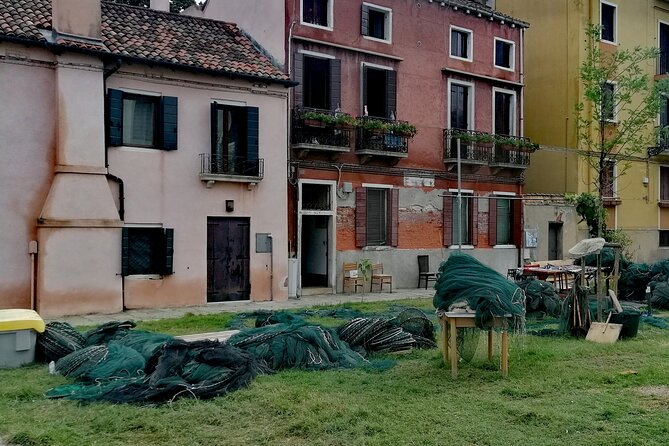
- Reused buildings: flour mill, glass factory, monastery, and factories repurposed for art and living
- Churches with strong backstories, including a Veneto-Byzantine martyr church and Palladio’s Redentore
- A finish with big lagoon views, not just another stop on a list
Giudecca: the Venice you skip without meaning to
Most first-time Venice visitors never go beyond the main islands, so Giudecca can feel like a secret even when it’s right there in front of you across the water. That’s exactly the point of this tour: you get context for what you see, then you walk through parts of the island that explain why Giudecca has always attracted people who didn’t fit the old rules.
The story starts with the island name. You’ll hear that Giudei, the Italian word people associate with Jews, isn’t the root of Giudecca. Instead, the name is tied to Venetian zudega, meaning the judged—connected to rebel aristocratic families exiled here during the 9th century. It’s a small linguistic detail, but it changes how you look at the place, turning it from a scenic neighbor into a location shaped by punishment, refuge, and reinvention.
Then the tour shifts forward into the more recent pull of the island. Large abandoned spaces eventually attracted artists who couldn’t afford studio rents in central Venice. That’s why the walk feels like a timeline you can touch: old structures remain, but the island keeps changing what they’re for.
If you love Venice for its layers—stone, brick, and shifting purpose—this is a very efficient way to learn those layers without spending a full day wandering with no plan.
You can also read our reviews of more tours and experiences in Venice.
From Zattere to the lagoon: logistics that matter less than you think
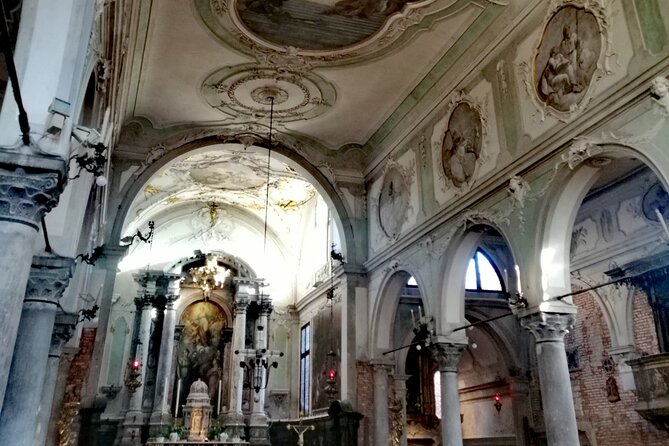
The tour meets at Zattere 30133 and ends at Le Zitelle, Fondamenta Zitelle 33. That end location is handy: you’re not forced to backtrack through the same ferry bottlenecks. You’ll finish near the Zitelle water bus stop, which makes it easier to connect back to the rest of the city.
Water transport is simple but not fully “included.” The water bus ticket to Giudecca is purchased on board. That means you should show up a bit early so you’re not stuck negotiating tickets while everyone else is already moving.
Timing is also comfortable. The tour runs about 2 hours, and the stops are structured so each one lasts around 15 minutes. You’ll get enough time to look closely and absorb the story, but not so much that you’re stuck in one place long after you’ve seen it.
Finally, the group size is limited to 10 travelers, which is one of the reasons the tour feels personal. Even if you’re traveling solo, you won’t be lost in a crowd of strangers or competing for the guide’s attention.
And one more practical note for cost planning: on certain dates, some day-trip visitors staying outside Venice may face a €5 access fee. It depends on the schedule, and you can check the official details at the link provided by the city.
Stop-by-stop: Giudecca’s history explained in plain sight
This route is laid out like a guided walk through changing functions—religious, industrial, institutional, and creative. Each stop adds a piece to the puzzle of why Giudecca looks the way it does and what it has been used for.
Fondamenta Sant’Eufemia: a Veneto-Byzantine church with a martyr story
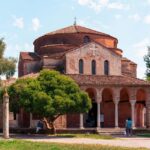
You start at Fondamenta Sant’Eufemia, where the narrative turns spiritual and dramatic. You’ll visit an AD 890 church with a simple Veneto-Byzantine structure, and the story is tied to a later 14th-century dating element. The church name honors a Byzantine Christian martyr thrown to hungry lions—legend says the lions bit off her hand but refused to eat the holy virgin flesh. It’s the kind of story that sounds like theater until you stand there and realize how much local identity is tied to these legends.
What I like here for first-time visitors: it gives you a baseline. Before you get to industrial buildings and studios, you understand that Giudecca has always been more than “quiet Venice across the water.”
Hilton Molino Stucky: the Neo-Gothic flour mill that became luxury
Then comes a major visual shift at Hilton Molino Stucky Venice. You’ll see a huge Neo-Gothic building that started as a flour mill powered by boats moving across the lagoon. It also operated as a pasta factory, and today it’s part of a luxury 5-star hotel.
The usefulness of this stop is how it trains your eye. You start noticing industrial scale and how architecture carries that history forward. It’s also a good moment to compare “then” and “now” without feeling like you’re only looking at a photo backdrop.
One drawback: because this building is now a hotel, the surroundings can feel more controlled than the quieter public edges of the island. It’s still worth it, but don’t expect the raw, everyday mood of a street market here.


Fondamenta de le Convertite: institutional edges and a prison market
Next you go to Fondamenta de le Convertite, where you’ll pass by an organic prison market adjacent to a women’s correction facility. It’s not presented as sensational drama. It’s a look at how parts of Giudecca served social systems that shaped daily life, labor, and movement.
I’d flag this for anyone who prefers light, purely scenic walks. This stop is more about context than beauty. Still, it’s exactly the kind of place that most Venice visitors miss, and it helps explain why Giudecca has never fit the postcard version of the city.
A monastery turned into artist and artisan space
At Artisti Artigiani del Chiostro – Ex Convento Santissimi Cosma e Damiano, you step into a former monastery that now functions as a center promoting local artists and artisans. This is where the tour’s theme clicks: exile and abandoned space didn’t only create emptiness. Over time, it helped create workshops, studios, and community spaces for making things.
If you’re someone who cares about how art connects to place, you’ll appreciate this stop. It’s not just “look, art.” It’s reuse with a purpose.
Teatro Junghans: from glass factory to homes and theatre
At Teatro Junghans, the building story shifts again. You’ll see how a former glass factory became a modern residential neighborhood, plus a contemporary theatre facing the southern lagoon. It’s an unusual combo: living space and a performance venue under the same former industrial identity.
This is a stop where you can take your time watching light on surfaces. The architecture is doing two jobs at once: it still carries the factory shape, while the new use changes the feel of the place.
Palladio’s Redentore and the southern lagoon finale
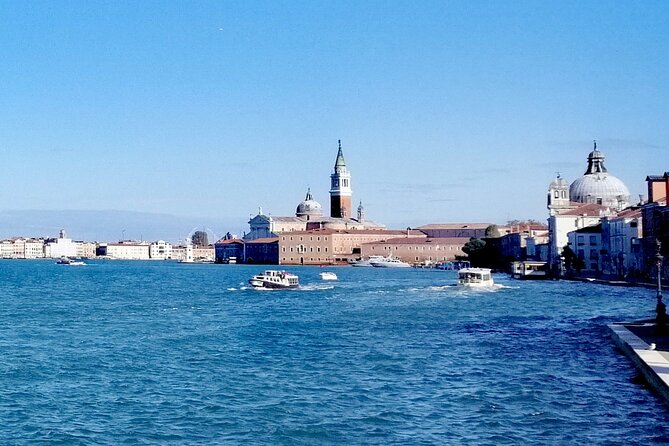
The last third of the tour moves toward big moments and open views, while keeping the history thread.
Chiesa del Santissimo Redentore: Palladio, plague, and a July pilgrimage
At Chiesa del Santissimo Redentore, you’ll see a church designed by Palladio, built to celebrate Venice’s deliverance from the black death. The story is also practical in spirit: survival isn’t taken for granted in a tidal city, so people build rituals around gratitude.
You’ll hear about a tradition that still matters: every July, Venetians make a pilgrimage across the canal to the church using a shaky pontoon bridge from Zattere, a practice tied to 1578.
This is a fantastic stop for photos and for understanding Venice’s relationship with risk. You see a monumental building, then you hear how it connects to real civic memory and recurring behavior, not one-off sightseeing.
Villa Heriot: an Art Nouveau villa with lagoon views
After that, you head to Villa Heriot, an Art Nouveau villa tucked off the main path. The reward here is the setting: views over the southern lagoon. This stop is less about a museum-like explanation and more about perspective—getting your bearings toward the wider water world Venice depends on.
Casa dei Tre Oci and the final viewpoint for San Marco
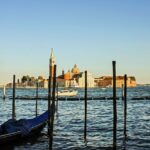
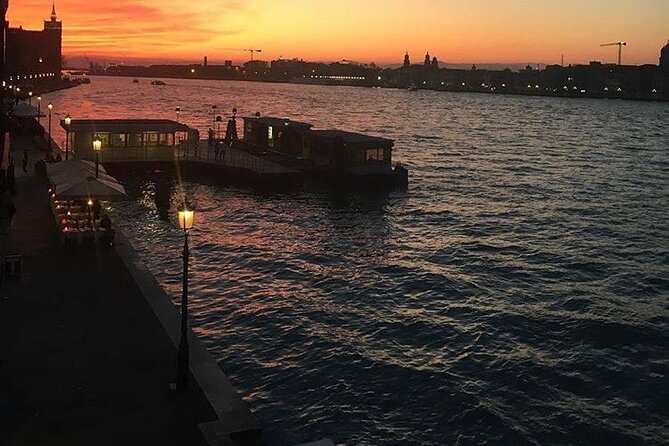
The tour ends at Casa dei Tre Oci, where you get scenic views over San Marco and Punta della Salute. You’ll also walk by a palace with a distinctive neo-gothic brick facade and three arched windows. The finish makes sense: after all the island history, you’re rewarded with the city skyline framing the lagoon.
This ending is one reason people rate the tour so highly. It turns what could have been a history-only walk into a “history plus view” experience.
Why the pace works: two hours, ten stops, and real orientation
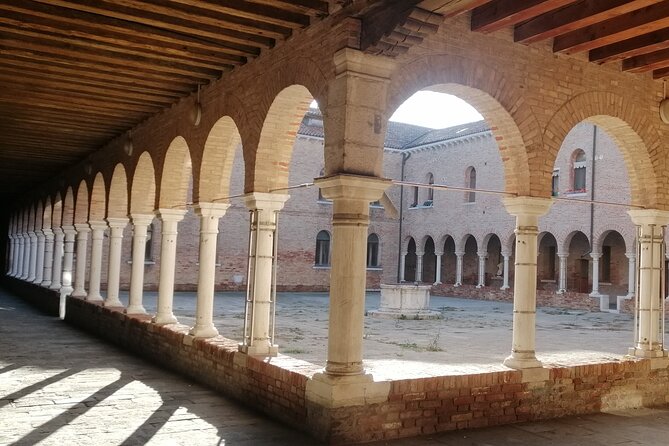
At about 2 hours with short segments, this tour is designed to help you get oriented without exhausting you. Each stop gets roughly 15 minutes, so you can absorb the story and still keep moving.
That pacing is especially helpful if this is your first time on Giudecca. You don’t just see places—you understand why they ended up there, and you start recognizing the island’s patterns: religious buildings near the edges, industrial behemoths reshaped into other functions, then the quieter corners where artists and locals fit their routines.
From the guide style (and what’s repeated in the strongest feedback), the communication matters. You’ll hear humor mixed with local detail, and the tour is flexible enough to answer questions. Some families have enjoyed it too, which tells me the guide knows how to keep explanations from turning into lectures.
Price and value: $163.64 that buys time, context, and access
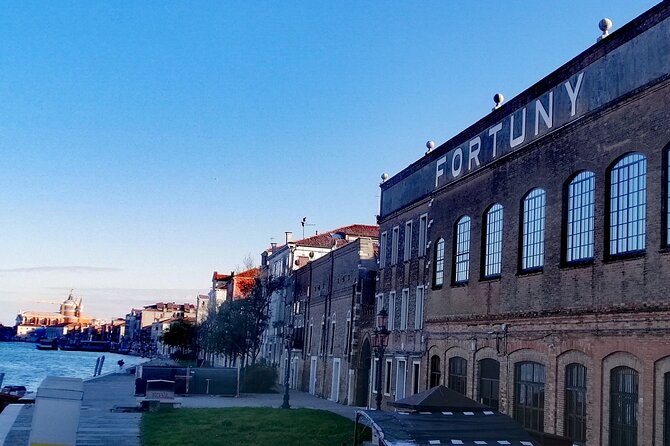
At $163.64 per person, you’re not buying a “cheap” city walk. But you are buying something Venice often sells in short supply: a structured route with a knowledgeable local guide, small group limits, and entry-free stops.
A key detail for value: the stops list shows admission ticket free for the key places included in the route. You’re paying mainly for the guidance and interpretation, not for a stack of museum tickets.
Also, the tour uses a mobile ticket and includes group discounts. So if you’re traveling with someone else, you may not be paying the full per-person sticker price you expect.
The water bus is the main extra cost because the ticket is bought on board. If you plan for that in advance, the rest stays pretty straightforward.
Who should book this Giudecca tour
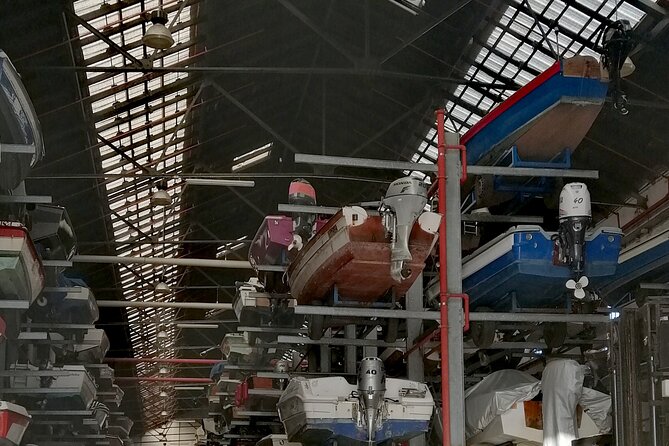
This tour is ideal if you want:
- A break from the crowd patterns on the main islands
- A route that shows you how industrial buildings became art and living spaces
- A guide who can explain the why behind what you’re seeing, including the Giudecca name story and the plague-era Redentore tradition
It’s also a strong fit for people who have visited Venice many times but still feel like they only know the surface. Giudecca helps you see a different side of how the city functions and changes over time.
If you’re looking for nonstop scenic viewpoints only, note that there are also institutional-story stops (like Fondamenta de le Convertite). For many people, that balance is the whole point.
Should you book it or skip it?
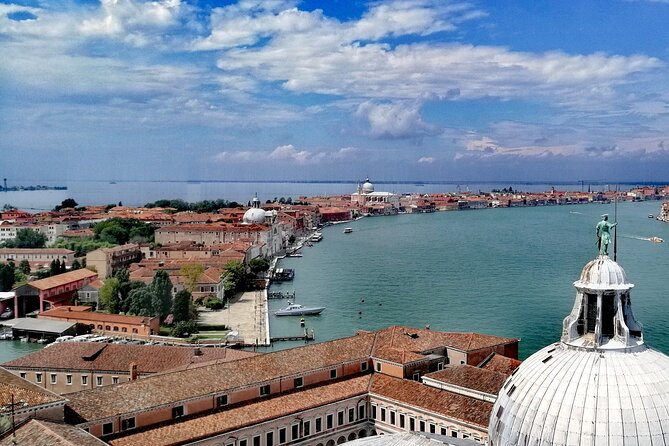
I’d book it if you care about context and you want a small-group walk that sends you off the most obvious route. The stop mix is practical: churches with strong stories, reused industrial architecture, a monastery turned into maker space, then a finish with major lagoon views.
I’d think twice only if you hate anything that feels cold, windy, or shaded in winter/shoulder seasons, or if you prefer purely aesthetic sightseeing with zero institutional topics. In most cases, though, a few layers fix the weather issue, and the human stories make the walk more memorable.
FAQ
How long is the Giudecca Island Discovery Tour?
It’s listed at about 2 hours.
What’s the group size limit?
The tour has a maximum of 10 travelers.
Where do I meet, and where do I end?
You start at Zattere 30133 and end at Le Zitelle, Fondamenta Zitelle 33, near the Zitelle water bus stop.
Do I need to buy the water bus ticket in advance?
No. The water bus ticket to Giudecca is purchased on board.
Are entrance tickets included for the stops?
The stop details show admission ticket free for the included points on the itinerary.
Is there an extra access fee for some visitors?
On certain dates, day-trippers staying outside Venice may need to pay a €5 access fee. Details and exemptions are available at https://cda.ve.it.
Is cancellation free?
Yes, you can cancel for a full refund if you cancel at least 24 hours in advance.