REVIEW · BURANO
Venice Explorer Pass: Gondolas, Museums & Island Tours
Book on Viator →Operated by Turbopass GmbH · Bookable on Viator
Venice can feel like a maze. This pass is built to help you hit major sights fast, with Doge’s Palace included and a gondola ride to cut through the land-crowd rhythm. The best part is how the day can flow from palaces and art rooms to lagoon islands without constant ticket math.
I love the skip-the-line entry for Doge’s Palace, because it’s one of the only things in Venice you really don’t want to wait for. I also like the mix of stops, from the Biblioteca Nazionale Marciana (Greek, Latin, and old-world map history) to the interactive Museo Leonardo da Vinci style experience.
One key drawback to watch: not every site is guaranteed skip-the-line, and the pass details can be confusing if staff recognize different versions of city passes. Double-check what’s actually included on your voucher before you queue up, especially for big-name sites like St. Mark’s.
In This Review
- Key things worth knowing before you buy
- Is This Venice Explorer Pass Really Worth $102?
- Doge’s Palace: The Best Reason to Start Here
- Venice’s Museum Core: From Ancient Sculpture to Settecento Rooms
- National Archaeological Museum (ancient world, Venice connections)
- Biblioteca Nazionale Marciana (maps, languages, and old scholarship)
- Ca’ Rezzonico and the Museo del Settecento Veneziano (how the rich lived)
- Ca’ Pesaro (modern art plus Oriental Art)
- Leonardo da Vinci Without Waiting Forever
- Confraternities and Churches: Venice’s Art in Religious Clothing
- Scuola Grande San Rocco (13th-century confraternity + major art)
- Scuola Grande San Giovanni Evangelista (paintings, architecture, and the famous stair)
- Museo Correr (Venetian Republic story, in objects)
- The Spiral Staircase Stop: Scala Contarini del Bovolo
- Gondola Ride: A Shared Boat, Still a Worth-It Moment
- Murano, Burano, and Torcello in One Island Block
- Murano: glass tradition and a glass museum add-on
- Burano: color and lace culture
- Torcello: older churches and quiet history
- Extra Palazzo Stops: Fortuny, Goldoni, and Mocenigo
- Casa di Carlo Goldoni (theatre history in a home)
- Museo di Palazzo Fortuny (lighting, art design, and interiors)
- Palazzo Mocenigo (fabrics, costumes, fashion, and perfume)
- Price and Logistics: The Caveats That Can Spoil a Good Day
- Who This Pass Suits Best (and Who Might Get Frustrated)
- Should You Book This Venice Explorer Pass?
- FAQ
- How much is the Venice Explorer Pass?
- How long is the pass valid?
- Is Doge’s Palace skip-the-line entry included?
- What attractions and experiences are included?
- Does the pass include public transportation?
- What language is the experience offered in?
- What group size should I expect?
- What is the cancellation policy?
Key things worth knowing before you buy
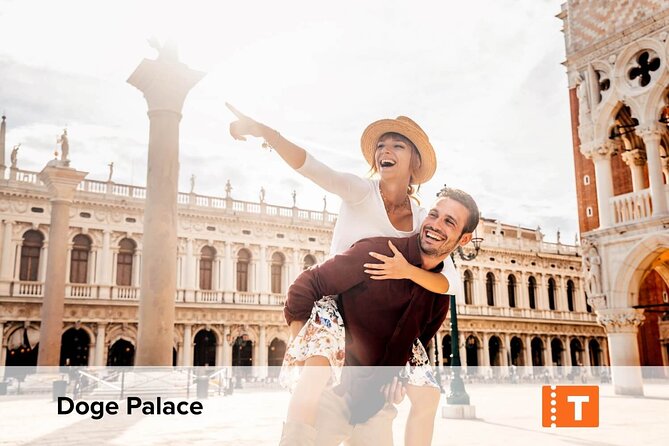
- Skip-the-line for Doge’s Palace: that one choice alone can save serious time
- Gondola ride included: you get a canal perspective without paying the going rate
- Island tour time-saver: Murano, Burano, and Torcello in about one half-day block
- A museum-and-church heavy route: palazzos, confraternities, and art rooms more than marketplaces
- Smaller group size: capped at 10 travelers, which usually helps your pacing
- Public transport is optional: you can add it, but it is not automatically included
Is This Venice Explorer Pass Really Worth $102?
At about $102.01 per person, this is the kind of pass you buy when you want structure. In Venice, structure is money. It keeps you from wandering in circles, and it reduces that nasty feeling of realizing you’ve spent time and still don’t have the right tickets.
What makes the value work is the combination. You’re not only getting museum admissions, you’re also getting a gondola ride and a Murano–Burano–Torcello island tour included. Those are the two parts of Venice that are easy to overpay for when you’re standing there, hungry, and the lines look like they go forever.
That said, the price is not automatically a bargain for everyone. If you only want one or two top sights, you might do better buying tickets directly. This pass shines when you plan to use several included stops across a 1 to 5 day trip.
You can also read our reviews of more tours and experiences in Burano.
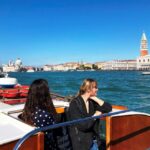

Doge’s Palace: The Best Reason to Start Here

Doge’s Palace is the big name for a reason. You walk into gothic splendor and former power rooms, the kind of Venice architecture that makes you slow down without meaning to.
The pass includes entry to Palazzo Ducale with skip-the-line access. That matters because Doge’s Palace is one of the most visited sights in the city, and you can lose a lot of vacation time to slow-moving lines.
Practical advice: go earlier in the day if you can. Even with skip-the-line entry, it’s a popular building. If your visit overlaps with peak times, you’ll still enjoy it more if you start before your legs turn into tourist noodles.
Venice’s Museum Core: From Ancient Sculpture to Settecento Rooms
The itinerary leans heavily into museums and cultural sites, and that’s a smart move if you want to understand Venice beyond postcards.
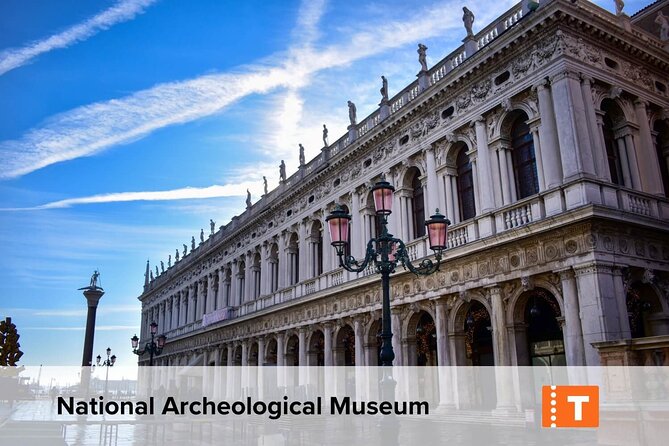
National Archaeological Museum (ancient world, Venice connections)
The National Archeological Museum focuses on ancient Greek and Roman sculpture. One detail I’d actually use as a guide for what to pay attention to is the story behind the pieces: many were donated from private collections of Venetian aristocrats. That means you’re not just seeing artifacts. You’re seeing how Venetian elites curated antiquity as status.
Tip: if you like art history, spend a little extra time in the sculpture galleries. It’s easier to get lost in grand buildings than in quiet rooms where the details matter.
Biblioteca Nazionale Marciana (maps, languages, and old scholarship)
This library is not a passive stop. The Biblioteca Nazionale Marciana is known for an important collection of Greek, Latin, and Oriental works, with a strong focus on Venetian history, classical linguistics, and ancient geography maps.
Libraries in Venice can feel like a hidden side quest. Here, the payoff is mental. You leave thinking about how Venice documented the world, not just how it decorated it.
Ca’ Rezzonico and the Museo del Settecento Veneziano (how the rich lived)
Ca’ Rezzonico is a palace that gives you the 18th-century upper-class view of Venice. The Museo del Settecento Veneziano includes art and interiors from the heyday of Venetian painting, including names like Pietro Longhi, Canaletto, Francesco Guardi, and the Tiepolo father-and-son duo. You’ll also see furniture and fittings brought here from other palaces and villas.
If you care about realism, look for how the rooms connect to the artwork. The palace is part of the exhibit, not just a container for it.
Ca’ Pesaro (modern art plus Oriental Art)
If you want a break from older Venice, Ca’ Pesaro gives you 19th- and 20th-century collections. You may see major names such as Gustav Klimt and Auguste Rodin, along with Italian artists including Giacomo Balla. There are also temporary exhibitions, and the third floor hosts a Museum of Oriental Art.
This is a good pairing with Ca’ Rezzonico. One is Venice’s older wealth and style. The other is what art looked like when Venice stepped into later centuries.
Leonardo da Vinci Without Waiting Forever
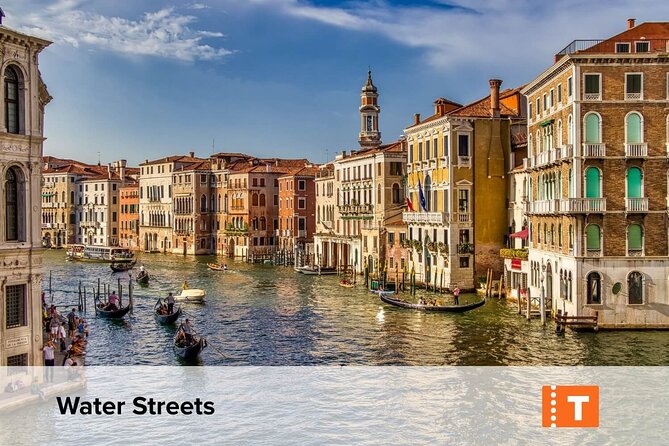
The Museo Leonardo da Vinci is described as interactive, with a focus on da Vinci’s life and masterpieces. This is one of the stops where the pass helps you because it’s not only a ticket. It’s time-and-energy friendly, especially if you want something more hands-on than galleries of paintings.
Practical pacing: da Vinci-style interactive museums can move fast once you’re inside. If you love experiments and visual learning, plan to slow down. If you’re more into architecture and churches, you can still enjoy it, but don’t expect it to replace a full art museum.
Confraternities and Churches: Venice’s Art in Religious Clothing
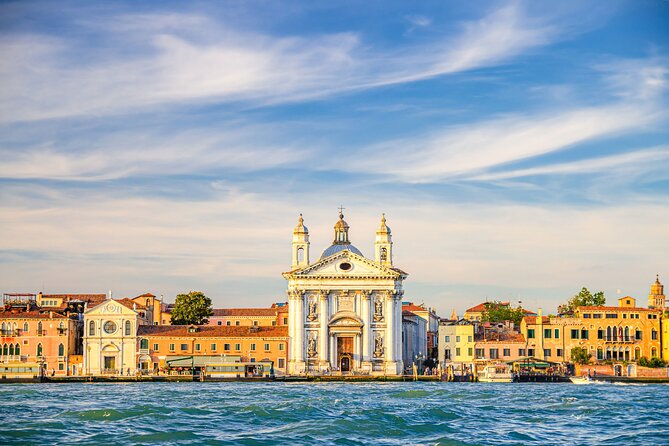
Venice has a special talent for making religion and art share the same room.
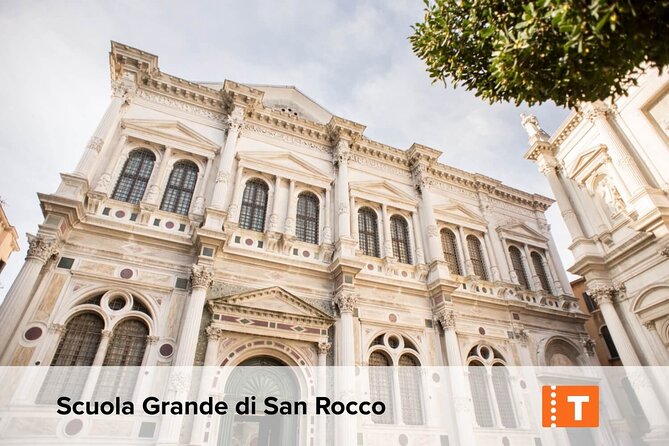
Scuola Grande San Rocco (13th-century confraternity + major art)
The Scuola Grande San Rocco started in the 13th century and grew into one of Venice’s influential confraternities. The real value for most visitors is the scale and the art. These places often feel grander than the churches you expect, and that’s because confraternities were power centers.
Scuola Grande San Giovanni Evangelista (paintings, architecture, and the famous stair)
Another stop in this lane is Scuola Grande San Giovanni Evangelista (since 1261). You get a long timeline of styles listed as Gothic, Renaissance, Baroque, and Rococo. The art is tied to big names such as Tintoretto, Tiepolo, Jacopo Palma il giovane, and others.
Two details you’ll likely hear mentioned inside: the staircase by Mauro Codussi and the marble septum. Even if you’re not an architecture buff, these are the kind of features you can point to and say, yes, that’s why this place matters.
Museo Correr (Venetian Republic story, in objects)
Museo Correr focuses on the life and culture of the Venetian Republic. It covers that story through bronze statues, paintings, and books. This one helps connect the dots between Doge’s Palace (political power) and the rest of Venice’s culture.
The Spiral Staircase Stop: Scala Contarini del Bovolo
Not every good Venice stop is a giant museum. Scala Contarini del Bovolo is the famous spiral staircase attached to Palazzo Contarini del Bovolo.
It’s a short, visual break that works when you’re between big-ticket rooms. You get movement, a distinctive structure, and a chance to catch different angles of the surrounding area.
If you’re the type who likes taking one or two architectural photos that don’t look like every other Venice photo, this is a good use of your time.
Gondola Ride: A Shared Boat, Still a Worth-It Moment
The pass includes a 20-minute gondola ride. The listing frames it around a view of Venice from the Canal Grande and smaller canals near the Piazza San Marco area.
Here’s how to think about it. A gondola ride is not private-time magic; it’s shared water time. But even shared, the ride changes how you understand Venice. You’re suddenly looking at buildings as they relate to waterways, bridges, and tight canal angles.
And yes, you can pay a lot extra if you buy gondola rides on the spot. The included option can be a relief when you see the in-person pricing creep up.
Small reality check: 20 minutes is short. Make it count by preparing your photo angles before boarding and choosing a side that matches your idea of the views.
Murano, Burano, and Torcello in One Island Block

If you only do Venice proper on land, you miss a huge part of the city’s personality. This pass includes a lagoon tour to Murano, Burano, and Torcello for about 5 hours.
Murano: glass tradition and a glass museum add-on
Murano is famous for handmade glass. The island tour includes a chance to visit a glassblowing workshop, and there’s also a Glass Museum (Murano) included.
The museum is presented in seven chronologically arranged sections, from antiquity to the present. The last sections highlight the rebirth of Murano glass since the second half of the 19th century, including classic and Art Nouveau objects, plus modern work.
If you like craft history, this is a great pair: watch glassmaking, then understand the timeline afterward.
Burano: color and lace culture
Burano is known for vibrant colors and lace. On the tour, you’ll get bobbin lacework context, and there’s also a Museo del Merletto di Burano stop included.
This museum is tied to the historical palace setting connected to the Burano Lace School, which (per the provided info) operated from 1872 to 1970. It’s the kind of place where you can see rare pieces and understand how the craft evolved.
Torcello: older churches and quiet history
Torcello adds age and calm. The tour lists visits to St. Maria Assunta Cathedral and the St. Forsa Church, described as created in the 11th and 12th century.
This is the part that often feels less touristy than the bright streets of Burano. It’s a good contrast to the more colorful, busier islands.
Extra Palazzo Stops: Fortuny, Goldoni, and Mocenigo
This pass also sprinkles in cultural palaces that don’t feel like the usual “big five” checklist.
Casa di Carlo Goldoni (theatre history in a home)
Casa di Carlo Goldoni is dedicated to the playwright and librettist Carlo Goldoni. It’s described as his birthplace and childhood home, now serving as a museum and a theatre studies institute.
If you like Venice’s creative side, this gives you a different thread than art museums and political palaces.
Museo di Palazzo Fortuny (lighting, art design, and interiors)
Palazzo Fortuny focuses on Mariano Fortuny, with paintings, photographs, and fabrics. The interesting detail here is that Fortuny’s home interior and work areas are part of the story, tied to his interest in perfect lighting for art and performances.
You get a sense of Venice as a design city, not just an art city.
Palazzo Mocenigo (fabrics, costumes, fashion, and perfume)
Palazzo Mocenigo centers on fabrics and clothing, with a section dedicated to perfume. It’s described as a study center for the history of fabrics, costumes, and fashion, and the rooms evoke Venetian noble life in the 17th and 18th centuries.
If you want a fun sensory angle in Venice, perfume and textiles can be a surprisingly memorable break from painting-heavy days.
Price and Logistics: The Caveats That Can Spoil a Good Day
This pass is strong when it’s used smoothly. The weak point is understanding the fine print of what’s actually timed, what’s skip-the-line, and what needs extra booking.
Here are the practical issues I’d plan around:
- Skip-the-line might be limited. The pass clearly highlights skip-the-line for Doge’s Palace. For other sights, you should not assume the same treatment.
- Voucher names can be misleading. If your voucher references a site like St. Mark’s Basilica, confirm what is included and what you must reserve separately before you show up at the doors.
- Pass recognition may vary at the local level. Some places may not recognize the pass label instantly. Bring your voucher and ID, and be ready to explain what you have.
- Support responsiveness matters when plans go wrong. If you’re someone who needs help quickly, keep your expectations realistic and avoid waiting until the last minute to sort anything out.
If you want this pass to feel effortless, use it like a plan. Pick your early morning anchors (like Doge’s Palace). Then build the rest of your day around included sites.
Who This Pass Suits Best (and Who Might Get Frustrated)
This is a good fit if you:
- Want to pack a lot of Venice into a short stay
- Like museums and historic interiors more than shopping marathons
- Care about saving time on Doge’s Palace
- Want a gondola and island tour without buying each item separately
This can be frustrating if you:
- Only want one or two major attractions
- Hate any uncertainty about whether a skip-the-line entry is truly included for every stop
- Prefer highly guided, one-stop-per-hour scheduling with minimal self-navigation
Group size is limited to 10 travelers, so you may find it easier to keep your pacing in line with the itinerary than with huge bus groups.
Should You Book This Venice Explorer Pass?
Book it if you’re planning a multi-stop Venice visit and you’re excited about Doge’s Palace plus a mix of museums and lagoon experiences. At around $102, the included Doge’s Palace timing advantage, the gondola, and the Murano–Burano–Torcello block are the core value drivers.
Skip it if you’re not using the included sights. If you only care about a couple icons and you’ll spend the rest of your time wandering, individual tickets might be simpler and cheaper.
My final advice: treat it like a smart framework, not magic. You’ll get the best experience when you start early, confirm voucher details on the big-ticket sites, and build your days around what’s genuinely included.
FAQ
How much is the Venice Explorer Pass?
The price is listed at $102.01 per person.
How long is the pass valid?
It’s offered for trips that range from 1 to 5 days (approx.).
Is Doge’s Palace skip-the-line entry included?
Yes. Doge’s Palace is listed as including skip-the-line access.
What attractions and experiences are included?
Included items listed are Doge’s Palace, a gondola ride, a local guided walking tour, the Murano–Burano–Torcello island tour, and the da Vinci interactive museum.
Does the pass include public transportation?
Public transport is not included unless you select the optional public transportation ticket.
What language is the experience offered in?
It’s offered in English.
What group size should I expect?
The maximum group size is listed as 10 travelers.
What is the cancellation policy?
You can cancel for a full refund if you cancel up to 24 hours in advance of the experience start time.